
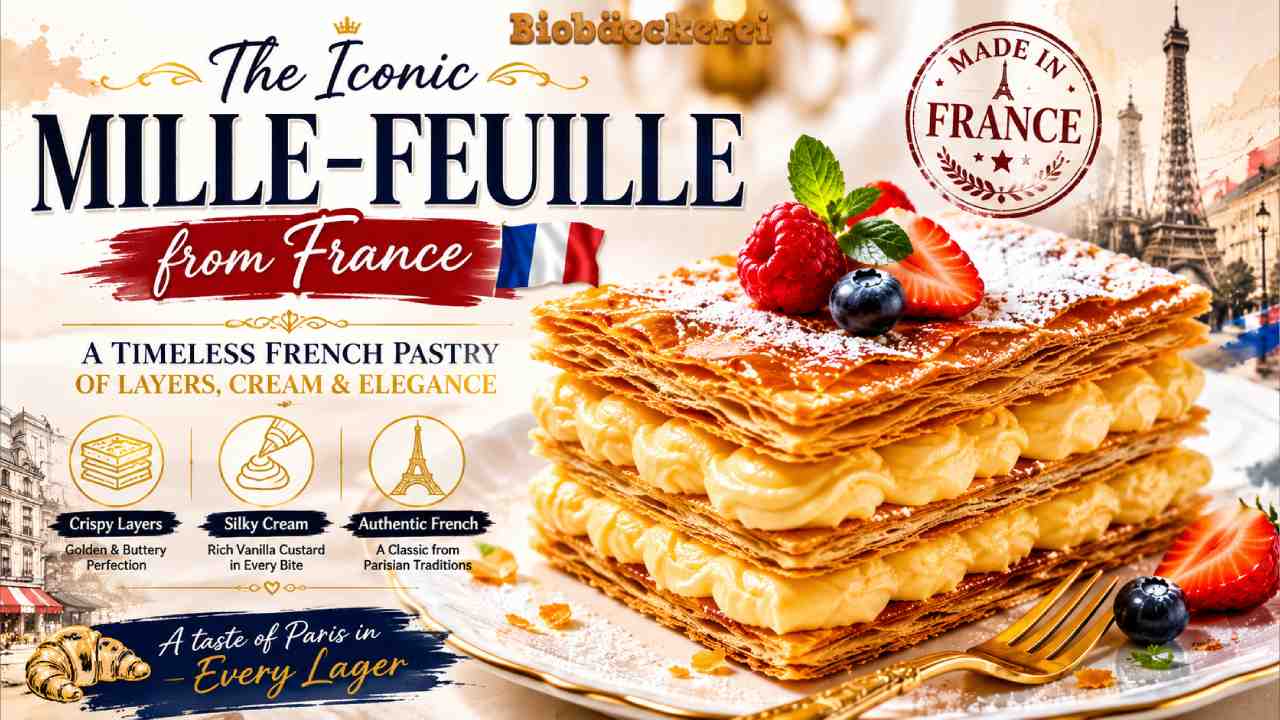
Mille-Feuille from France, The Elegant Pastry Loved Worldwide
Biobaeckerei – Mille-Feuille is experiencing renewed popularity as pastry lovers around the world rediscover the beauty of classic French desserts. While modern sweets often chase trends and social media appeal, this iconic French pastry continues to prove that timeless craftsmanship never goes out of style. With its delicate layers, rich history, and luxurious texture, Mille-Feuille remains one of the most celebrated creations in the world of pastry.
Mille-Feuille Represents the Art of French Pastry Perfection
Few desserts capture the essence of French pastry craftsmanship as beautifully as Mille-Feuille. Often translated as “a thousand leaves,” the name refers to the many delicate layers of puff pastry that create its signature texture. At first glance, the dessert appears elegant and simple. However, behind every slice lies a remarkable level of skill and precision. French pastry chefs spend years mastering techniques that allow them to create perfectly flaky layers without compromising structure. As a result, Mille-Feuille has become a symbol of excellence within the pastry world. Moreover, its enduring popularity demonstrates how traditional recipes can remain relevant despite changing consumer preferences. While many desserts come and go, Mille-Feuille continues to hold a prestigious place in bakeries, cafés, and luxury hotels throughout France and beyond.
Read also: Ciabatta from Italy, The Artisan Bread That Conquered the World
The Fascinating Origins Behind France’s Iconic Dessert
The story of Mille-Feuille dates back several centuries and reflects the rich evolution of French gastronomy. Although historians continue to debate its exact origins, many culinary experts trace the dessert’s development to the 17th century. During this period, French chefs began experimenting with layered pastries and refined baking techniques. Over time, these innovations evolved into the modern Mille-Feuille known today. Interestingly, the dessert gained significant recognition during the 19th century when Parisian pastry shops elevated it into a culinary masterpiece. Furthermore, as French cuisine spread across Europe and later around the world, Mille-Feuille became a symbol of sophistication and refinement. Its historical journey mirrors France’s broader influence on global culinary culture, making it far more than just a sweet treat.
The Secret Behind Mille-Feuille’s Delicate Layers
One of the most remarkable aspects of Mille-Feuille is its texture. Achieving the perfect balance between crisp pastry and smooth filling requires patience, precision, and expertise. Traditional Mille-Feuille consists of three layers of puff pastry separated by rich pastry cream. The puff pastry itself undergoes a complex process known as lamination, where butter and dough are repeatedly folded together to create hundreds of thin layers. During baking, these layers expand and separate, producing the characteristic flaky texture that pastry lovers admire. In addition, the pastry cream adds a luxurious contrast that enhances every bite. Consequently, the combination of crunch and creaminess creates a sensory experience that few desserts can match. This unique texture remains one of the primary reasons why Mille-Feuille continues to attract admirers worldwide.
Why Mille-Feuille Remains Popular in Modern Bakeries
Despite the rise of trendy desserts and social media-driven food crazes, Mille-Feuille continues to thrive. One reason is its ability to balance tradition with innovation. Modern pastry chefs frequently reinterpret the classic recipe by introducing seasonal fruits, flavored creams, and contemporary presentation styles. Nevertheless, the core identity of Mille-Feuille remains unchanged. Consumers appreciate its authenticity and craftsmanship, especially in an era where mass-produced desserts dominate many markets. Additionally, food enthusiasts increasingly seek products that tell a story and reflect genuine culinary heritage. Mille-Feuille satisfies both desires. Therefore, it remains a staple offering in many artisan bakeries and fine dining establishments around the globe.
Read also: The Fascinating Story Behind Xiaolongbao, China’s Famous Soup Dumplings
Mille-Feuille Reflects the French Philosophy of Culinary Excellence
French cuisine has long emphasized technique, quality ingredients, and attention to detail. Mille-Feuille embodies these principles perfectly. Every component must be carefully prepared to achieve the desired result. Even minor imperfections can affect the final texture and presentation. Consequently, pastry chefs view Mille-Feuille as a benchmark of professional skill. Beyond its technical challenges, the dessert also represents the French belief that food should provide pleasure as well as nourishment. This philosophy has helped shape France’s global culinary reputation. Therefore, when people enjoy a slice of Mille-Feuille, they are also experiencing a small part of French cultural heritage.
The Global Influence of Mille-Feuille on Contemporary Desserts
As French culinary traditions spread internationally, Mille-Feuille inspired countless adaptations. Today, versions of the dessert can be found in bakeries throughout Asia, North America, the Middle East, and Australia. Some regions incorporate local ingredients such as matcha, tropical fruits, or chocolate variations. Others maintain a more traditional approach that closely follows French methods. Regardless of the adaptation, the fundamental concept remains the same: layers of delicate pastry combined with luxurious filling. This adaptability has allowed Mille-Feuille to maintain relevance across diverse culinary landscapes. Furthermore, its influence can be seen in many modern layered desserts that borrow elements from its structure and presentation.
Social Media Has Introduced Mille-Feuille to a New Generation
In recent years, visual platforms such as Instagram, TikTok, and Pinterest have contributed to a renewed appreciation for classic pastries. Mille-Feuille, with its elegant layers and refined appearance, photographs exceptionally well. As a result, pastry chefs and food influencers frequently showcase creative interpretations of the dessert online. These images often generate significant engagement and inspire younger audiences to explore traditional French baking. Moreover, social media has helped transform Mille-Feuille from a specialty pastry into a globally recognized culinary icon. This digital exposure demonstrates how classic recipes can successfully adapt to modern marketing channels without losing their authenticity.
The Future of Mille-Feuille in an Evolving Culinary World
Looking ahead, Mille-Feuille appears well-positioned to remain a beloved dessert for generations to come. Consumer interest in artisan foods, authentic culinary experiences, and traditional craftsmanship continues to grow. At the same time, pastry chefs are discovering innovative ways to reinterpret classic recipes while preserving their heritage. Mille-Feuille benefits from both trends. Its rich history provides authenticity, while its versatile structure allows endless creativity. Consequently, the dessert continues to evolve without losing the qualities that made it famous. In a culinary world constantly searching for the next trend, Mille-Feuille stands as a reminder that true excellence never goes out of fashion.
