
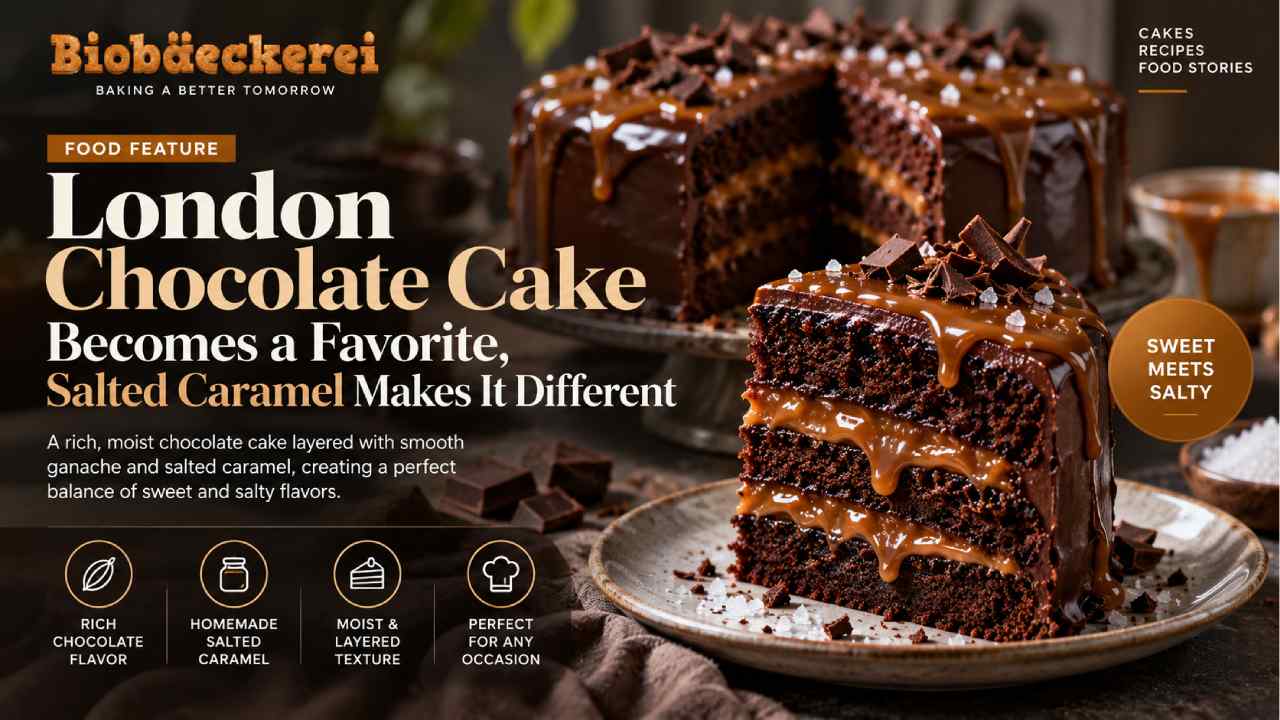
London Chocolate Cake Becomes a Favorite, Salted Caramel Makes It Different
Biobaeckerei – London Chocolate Cake offers a rich combination for anyone who loves deep chocolate flavor with a sweet and salty contrast. This version combines a moist chocolate cake with smooth chocolate ganache and homemade salted caramel. Together, these elements create a layered dessert that feels indulgent without relying on complicated decoration. However, the name should not be confused with one universally recognized traditional British cake. There is no single standardized recipe called London Chocolate Cake. Bakeries and home bakers may use the name for different chocolate creations. Therefore, this recipe is best described as a modern chocolate layer cake inspired by contemporary bakery-style desserts. Salted caramel becomes the key element that gives it a distinctive character. A small amount of salt balances the sweetness and makes the caramel flavor more noticeable. Meanwhile, dark chocolate adds a pleasant bitterness that prevents the finished cake from tasting overly sweet.
Baca Juga: Lotus Biscoff Crepe Cake Brings Caramelized Flavor to Every Layer
Simple Ingredients Create a Moist Chocolate Cake
For one 18–20 cm layer cake, prepare 200 grams of all-purpose flour, 60 grams of unsweetened cocoa powder, and 180 grams of granulated sugar. You will also need one teaspoon of baking powder, one teaspoon of baking soda, and half a teaspoon of salt. For the wet ingredients, prepare two large eggs, 120 ml of neutral vegetable oil, 180 ml of milk, and one teaspoon of vanilla extract. Finally, add about 120 ml of hot coffee or hot water. Coffee is optional, although its roasted notes can complement the flavor of cocoa. Hot water works well if you prefer a cake without coffee. The hot liquid also helps hydrate the cocoa powder. As a result, its flavor and color can distribute more evenly throughout the batter. Whenever possible, weigh the ingredients with a kitchen scale. Baking depends heavily on accurate ratios, so measuring by weight usually produces more consistent results than relying only on cups.
Mix the Batter Gently for a Softer Texture
Preheat the oven to 175°C or about 350°F. Next, grease two 18–20 cm round cake pans and line the bottoms with parchment paper. Combine the flour, cocoa powder, sugar, baking powder, baking soda, and salt in a large bowl. In another bowl, whisk the eggs, milk, oil, and vanilla until combined. Then, pour the wet mixture into the dry ingredients. Stir gently until no obvious pockets of flour remain. Afterward, slowly add the hot coffee or water. The batter may look thinner than traditional butter cake batter, which is normal for this type of chocolate cake. Most importantly, avoid excessive mixing once the flour becomes hydrated. Too much mixing can develop more gluten and produce a firmer texture. Divide the batter evenly between the prepared pans. Using two pans makes the layers easier to assemble and reduces the need to cut one thick cake horizontally.
Bake Until Moist Crumbs Remain on the Tester
Bake the cakes for approximately 25–35 minutes. However, oven temperatures and baking pans can vary. Therefore, treat the suggested time as a guide rather than an absolute rule. Start checking the center toward the end of the baking period. Insert a toothpick into the middle. The cake is ready when the tester comes out without wet batter. A few moist crumbs are perfectly acceptable. In fact, waiting until the cake becomes completely dry can result in overbaking. Once finished, leave the cakes in their pans for about 10 minutes. Then, carefully transfer them to a cooling rack. Allow both layers to cool completely before decorating. This step matters because warm cake can soften the ganache and salted caramel. As a result, the layers may slide during assembly. In my view, proper cooling is one of the easiest ways to achieve a cleaner homemade layer cake without needing professional decorating equipment.
Salted Caramel Gives the Cake Its Signature Contrast
Salted caramel is the ingredient that makes this London Chocolate Cake stand out. Prepare 150 grams of granulated sugar, 60 grams of unsalted butter, 100 ml of heavy cream, and roughly ¼–½ teaspoon of fine sea salt. Heat the sugar in a saucepan over medium heat until it melts and develops an amber color. Watch it carefully because caramel can move from golden to burnt quickly. Once the sugar has melted, carefully add the butter. The mixture will bubble vigorously. Next, slowly pour in the cream while stirring. Using cream that is not extremely cold can make the temperature change less dramatic. Continue stirring until the sauce becomes smooth. Remove it from the heat before gradually adding the salt. Remember, salted caramel should still taste primarily like caramel. The salt is there to provide contrast rather than dominate the sauce. Also, melted sugar reaches extremely high temperatures. Never touch or taste fresh caramel before it has cooled sufficiently.
Chocolate Ganache Adds a Smooth and Rich Finish
Chocolate ganache creates another layer of flavor while helping the cake look polished. Finely chop about 250 grams of dark or semisweet chocolate and place it in a heat-resistant bowl. Meanwhile, heat 200 ml of heavy cream until it begins to steam gently. It does not need a vigorous boil. Pour the hot cream over the chopped chocolate and leave it untouched for two or three minutes. Then, stir slowly from the center until the mixture becomes smooth and glossy. Let the ganache cool at room temperature until it reaches a spreadable consistency. If it remains too warm, it may slide down the cake rather than forming a stable coating. Dark chocolate works especially well with salted caramel because its bitterness provides additional balance. However, semisweet chocolate is a good alternative for anyone who prefers a sweeter finish. Since chocolate is a major component of this recipe, choose one with a flavor you genuinely enjoy eating on its own.
Assemble the Layers Without Letting Caramel Escape
Once every component has cooled, place the first chocolate cake layer on a serving plate. Spread a thin layer of ganache over the surface. Next, pipe or spread a thicker ring of ganache around the outer edge. This border acts like a small barrier that helps keep the salted caramel in the center. Spoon a moderate amount of caramel inside the ring and spread it carefully. Avoid adding an excessively thick layer because too much sauce can make the cake unstable. Place the second cake layer on top and press it very gently into position. Then, cover the top and sides with the remaining ganache. For a more dramatic finish, drizzle a little cooled salted caramel over the top. Make sure the caramel is no longer warm. Otherwise, it can soften the chocolate coating. Chill the finished cake briefly to help the layers settle before slicing.
Salt Changes How Sweetness and Chocolate Are Perceived
The appeal of salted caramel is not simply that it tastes both sweet and salty. Salt can influence how other flavors are perceived. In desserts, a carefully controlled amount can make sweetness feel more balanced while highlighting certain aromatic notes. This effect becomes especially useful in chocolate desserts. Cocoa naturally brings bitterness and roasted characteristics. Caramel contributes sweetness alongside toasted flavors created as sugar is heated. Salt then adds contrast between these elements. Consequently, the finished cake can taste more complex than a dessert built around sweetness alone. However, adding more salt does not automatically improve the result. Different types of salt also have different crystal sizes, which can make volume measurements inconsistent. For home baking, begin with a small amount and adjust carefully once the caramel is cool enough to taste. The goal is a balanced salted caramel, not a noticeably salty chocolate cake.
Adjust the Chocolate to Control the Overall Sweetness
One advantage of London Chocolate Cake is that its sweetness can be adjusted without changing the entire concept. Dark chocolate with a higher cocoa percentage generally produces a more intense ganache. Semisweet chocolate, meanwhile, creates a softer and sweeter profile. However, cocoa percentage is only one factor. The amount of salted caramel between the layers also has a major impact. Therefore, use caramel as an accent instead of making it excessively thick. You can also serve smaller portions because chocolate ganache and caramel make this dessert naturally rich. Fresh berries can provide acidity and freshness if you want an additional contrast. Nevertheless, they remain optional rather than essential to the recipe. The best version is not necessarily the one with the most toppings. Instead, balance matters. Chocolate, caramel, salt, and cake should complement one another rather than compete for attention.
Proper Storage Helps Preserve Texture and Flavor
Because this cake contains heavy cream in both the ganache and caramel, storage deserves attention. Keep the finished cake covered in the refrigerator when it will not be served promptly. An airtight container also helps protect it from absorbing other refrigerator odors. For the best eating experience, take individual slices out shortly before serving. This allows the ganache to soften slightly and makes the chocolate flavor easier to appreciate. However, avoid leaving cream-based cakes at warm room temperatures for extended periods. You can also prepare the components ahead of time. Bake the chocolate layers first, allow them to cool completely, and wrap them well. Salted caramel can also be prepared separately and refrigerated in a clean container. If it becomes too thick, warm it gently until it returns to a spoonable consistency. Preparing the components separately can make final assembly faster and less stressful.
London Chocolate Cake Works as a Modern Bakery-Style Dessert
Ultimately, London Chocolate Cake with salted caramel is appealing because each component serves a clear purpose. The moist chocolate cake provides the foundation. Ganache adds richness and a creamy chocolate finish. Meanwhile, salted caramel creates a sweet-salty contrast that keeps each bite interesting. Still, it is important to describe the recipe accurately. London Chocolate Cake is not a single standardized historic British cake with one official formula. In this article, the term refers to a modern bakery-style chocolate layer cake. That flexibility also makes the recipe easy to personalize. You can increase the intensity of the chocolate, reduce the amount of caramel, or keep the decoration simple. What matters most is balance. When the chocolate, caramel, and salt work together, the cake delivers a layered flavor without needing excessive toppings. That combination makes it an attractive choice for celebrations, afternoon desserts, or anyone looking for a richer alternative to an ordinary chocolate cake.
