
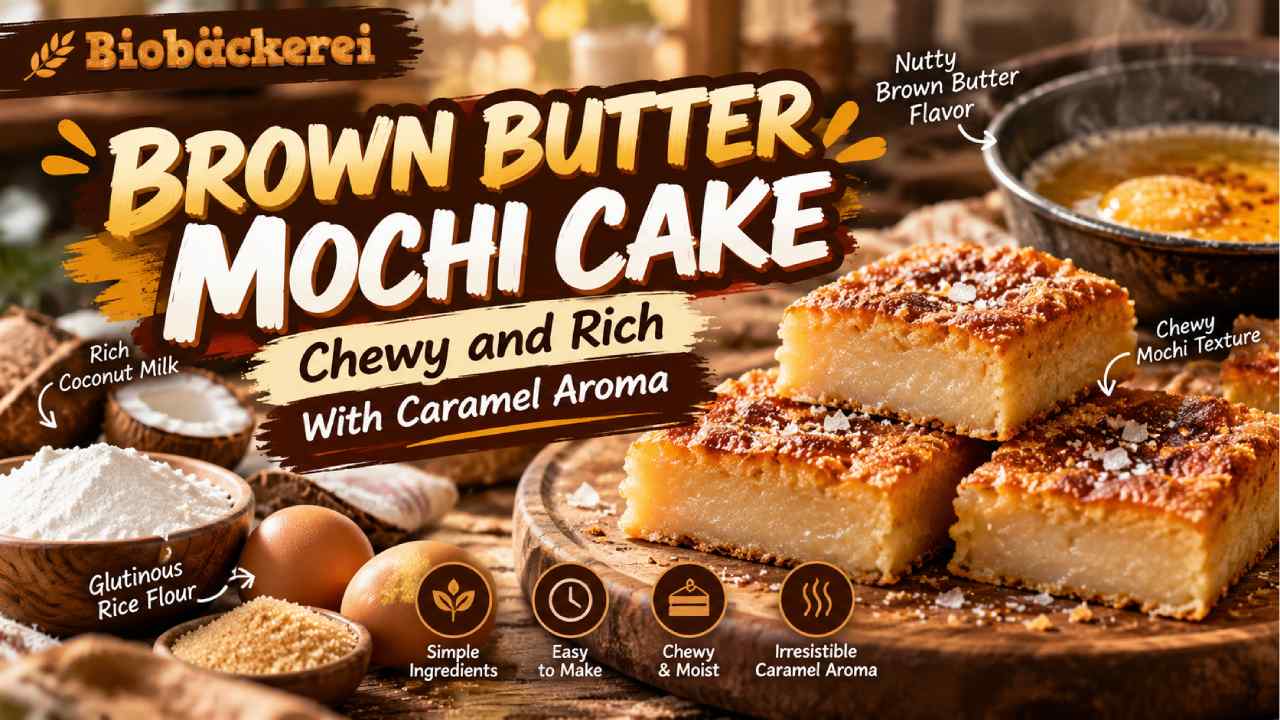
Brown Butter Mochi Cake, Chewy and Rich With Caramel Aroma
Biobaeckerei – Brown Butter Mochi Cake combines the distinctive chew of glutinous rice flour with the deep, nutty flavor of browned butter. The dessert takes inspiration from butter mochi, a baked sweet strongly associated with Hawai‘i and influenced by Japanese mochi traditions. However, this brown-butter version adds another layer of flavor through a simple cooking technique. Butter is heated until its milk solids turn golden brown. As a result, it develops toasted, nutty, and caramel-like notes. Those flavors work especially well with the mild sweetness of mochi cake. Meanwhile, glutinous rice flour creates a texture that differs greatly from ordinary wheat-based cake. The center stays pleasantly chewy, while the edges can become slightly crisp after baking. Therefore, each slice offers several textures at once. This recipe is also naturally wheat-free when all ingredients used are verified gluten-free. Still, glutinous rice flour contains no gluten despite its confusing name. It refers to the sticky texture of the cooked rice, not gluten protein.
Read Also: Classic American S’mores with Gooey Marshmallow and Melted Chocolate
Brown Butter Creates the Dessert’s Signature Toasted Aroma
Browning the butter is the first important step. Place 115 grams of unsalted butter in a light-colored saucepan over medium heat. The butter will melt, foam, and eventually begin developing golden-brown milk solids at the bottom. Stir or swirl the pan regularly so those solids brown evenly. Soon, the aroma should change from simply buttery to noticeably nutty and toasted. Remove the pan from the heat once the milk solids reach a deep golden-brown shade. Do not wait until they turn black, since burnt butter can introduce unpleasant bitterness. Transfer the butter, including the flavorful browned solids, into a heat-safe bowl. Then, let it cool slightly before mixing it with eggs. Brown butter does not literally create caramel because no sugar is caramelized during this process. Instead, browning reactions in the milk solids create flavors often described as nutty, toasted, and caramel-like. That distinction helps explain why Brown Butter Mochi Cake tastes unusually rich despite using familiar ingredients.
Glutinous Rice Flour Is Essential for the Characteristic Chew
The defining ingredient in Brown Butter Mochi Cake is glutinous rice flour. Despite its name, this flour is gluten-free by nature. It comes from sticky or sweet rice and develops an elastic, chewy texture after cooking. Regular rice flour behaves differently and should not be used as a direct substitute. For this recipe, prepare 225 grams of glutinous rice flour. Mochiko or another finely milled sweet rice flour works well. Combine it with 150 grams of granulated sugar, 1 teaspoon baking powder, and ¼ teaspoon salt. Mixing the dry ingredients first helps distribute the leavening evenly. Unlike traditional wheat cake, this batter does not depend on gluten development for structure. Therefore, there is less concern about overmixing after the flour enters the wet ingredients. However, smooth batter still matters. Lumps of dry flour can produce uneven pockets after baking. Sifting the flour is optional, but it can help when the package has been stored for some time and the flour has become compacted.
Coconut Milk Adds Richness Without Overpowering the Brown Butter
For the wet mixture, whisk 2 large eggs, 300 milliliters full-fat coconut milk, 120 milliliters whole milk, 1 teaspoon vanilla extract, and the cooled brown butter. Coconut milk contributes richness and complements the toasted flavor beautifully. It is also a familiar ingredient in many styles of butter mochi. However, balance remains important. Too much coconut flavor can hide the delicate brown-butter aroma. Whole milk softens the coconut profile while keeping the batter creamy. Next, slowly combine the wet and dry mixtures. Whisk until the batter looks smooth and fluid. Unlike a conventional sponge cake batter, mochi cake batter can appear relatively thin before baking. That is normal. Glutinous rice flour absorbs moisture and transforms significantly under heat. At this stage, taste should not be used as the main guide because the batter contains raw eggs. Instead, check its consistency visually. It should pour easily while remaining evenly mixed, without obvious flour pockets or separated pools of butter.
Baking Slowly Helps Develop Crisp Edges and a Chewy Center
Preheat the oven to 175°C or 350°F. Lightly grease an approximately 20-centimeter square baking pan and line it with parchment paper if easier removal is desired. Pour in the batter and gently tap the pan against the counter to release large air pockets. Bake the Brown Butter Mochi Cake for approximately 45–55 minutes. Oven performance varies, so use visual cues rather than relying only on the clock. The top should appear golden, while the edges should look set and slightly darker. The center should no longer behave like liquid batter when the pan is moved gently. Unlike ordinary cake, mochi cake remains dense and chewy inside. Therefore, a skewer may not emerge as completely dry as it would from a sponge cake. Avoid excessive baking in pursuit of a dry tester. Overbaking can make the edges unnecessarily firm. Once baked, place the pan on a cooling rack. The cake continues settling as its internal temperature gradually falls.
Cooling Is Essential Before Cutting Clean Mochi Cake Slices
Freshly baked mochi cake can be tempting to slice immediately. However, patience produces a much better texture. Glutinous rice starch continues setting while the cake cools. Cutting too early can create an overly sticky interior and irregular slices. Therefore, allow the Brown Butter Mochi Cake to cool thoroughly before removing it from the pan. Once cool, use a lightly greased or clean sharp knife to divide it into squares or rectangles. Wiping the blade between cuts can produce neater edges. The finished texture should feel tender and elastic rather than dry or crumbly. Meanwhile, the exterior should provide slightly more resistance than the center. This contrast is one reason mochi cake remains so satisfying. Unlike classic cake, it does not need an airy crumb to feel successful. Its appeal comes from density, elasticity, and moisture. Brown butter then gives that familiar chewy foundation a warmer flavor profile. As a result, a simple-looking square can deliver a surprisingly complex eating experience.
A Thin Caramelized Crust Can Add Even More Contrast
The browned surface is already flavorful, but a light sugar finish can emphasize the dessert’s caramel-like character. Before baking, sprinkle a very thin layer of coarse or granulated sugar over the batter. As the cake bakes, the sugar can help create a slightly more textured surface. Another option is to finish the cooled cake with toasted coconut flakes. Coconut complements both glutinous rice and brown butter without dramatically changing the dessert. However, restraint is useful. The strongest feature of Brown Butter Mochi Cake should remain its chewy center and toasted butter aroma. Heavy frosting would cover those qualities rather than improve them. A small pinch of flaky salt on top can also provide contrast, especially if the cake is relatively sweet. Salt does not merely make desserts taste salty. In moderate amounts, it can sharpen other flavors and reduce the perception of one-dimensional sweetness. Therefore, a simple finishing touch often works better than an elaborate topping for this particular cake.
The Recipe Can Be Adjusted Without Losing Its Main Identity
Once the basic recipe works, several variations are possible. Toasted sesame seeds can provide a deeper roasted flavor. Matcha can introduce earthy bitterness, although it will compete somewhat with the brown butter. Meanwhile, toasted coconut creates a more pronounced tropical character. Vanilla bean paste can replace vanilla extract when a stronger vanilla aroma is preferred. However, avoid adding too many strong flavors at once. Brown Butter Mochi Cake works because its components remain easy to recognize. The rice flour provides chew, coconut milk brings richness, and brown butter contributes toasted complexity. Any additional ingredient should support that foundation. Chocolate chips, for example, can work in a small quantity, but a heavy amount may dominate the cake. The same principle applies to sweet sauces. A light drizzle may complement the dessert, while excessive sauce can hide its texture. For a first attempt, making the basic version is useful. Afterward, adjustments become easier because you already understand how the original batter behaves.
Storage Changes the Texture of Mochi Cake Over Time
Mochi-based desserts have a distinctive texture because of their starch structure. Consequently, storage can change the eating experience. Fresh Brown Butter Mochi Cake usually offers its most appealing balance of soft chew and lightly crisp edges on the day it is baked. Once stored, the exterior gradually loses some crispness. Keep completely cooled pieces in an airtight container. For short storage, follow sensible room-temperature guidance based on your environment and ingredients. For longer storage, refrigeration is safer, although chilling can make the cake firmer. A brief gentle reheating can soften refrigerated pieces before serving. However, avoid overheating them because the texture can become excessively sticky. Freezing individual portions is another practical option when properly wrapped. Let them thaw before gently warming. Regardless of the method, avoid leaving the cake uncovered. Moisture loss can make the outer surface tough. Proper storage protects the texture that makes this dessert different from ordinary cake in the first place.
Brown Butter Turns a Simple Mochi Cake Into Something Memorable
The appeal of Brown Butter Mochi Cake comes from technique rather than complicated decoration. Browning one familiar ingredient transforms the entire flavor profile. At first, the cake delivers a toasted butter aroma. Then, coconut and vanilla create a soft sweetness. Finally, the chewy rice-flour texture gives every bite a satisfying finish. That combination makes the dessert feel comforting yet distinctive. It also shows why thoughtful technique can matter more than a long ingredient list. Still, accuracy is important when describing the result. Brown butter produces caramel-like aromas, but it is not actual caramel. Likewise, mochi cake is related to the wider family of glutinous-rice desserts, yet its baked form differs from traditional Japanese pounded mochi. Understanding those distinctions makes the recipe more meaningful. For home bakers, the practical advantage is equally attractive. The batter requires no complicated shaping or bread fermentation. Once the brown butter is ready, most of the work involves mixing, baking, cooling, and resisting the temptation to cut the cake too soon.
