
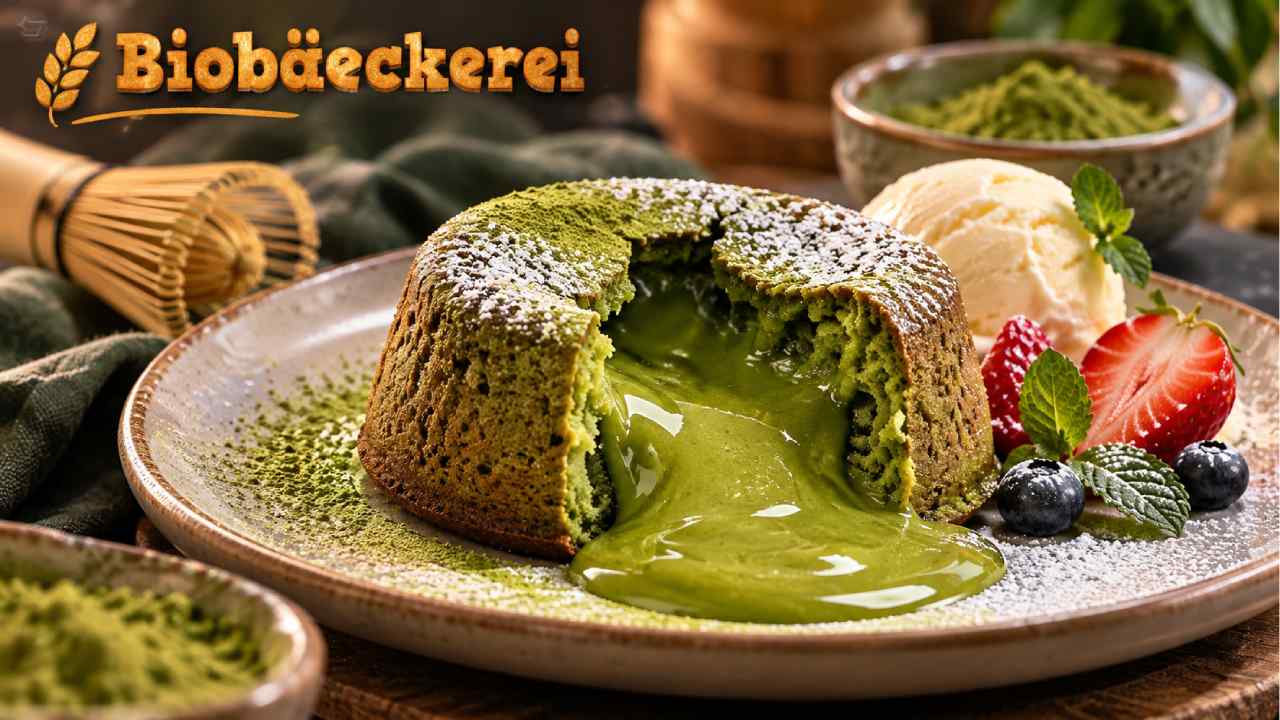
Matcha Lava Cake Goes Viral With an Irresistibly Molten Center
Biobaeckerei – Few desserts create an instant reaction quite like Matcha Lava Cake. At first glance, it resembles a small, elegant chocolate-style fondant with a soft green interior. However, the real attraction appears when the spoon reaches the center. A warm matcha filling slowly flows onto the plate, creating the dramatic molten effect that makes this dessert highly photogenic. The concept borrows from the familiar molten lava cake while giving it a Japanese-inspired flavor profile. Matcha contributes earthy notes, mild bitterness, and a distinctive green color. Meanwhile, butter, sugar, eggs, and white chocolate can provide richness and sweetness. This contrast makes the dessert more interesting than a standard sweet cake. Its visual appeal also works naturally for short-form food content. Yet appearance is only part of the story. A well-made version should balance sweetness and matcha rather than allowing one flavor to dominate the entire dessert.
Read Also: Pistachio Milk Pudding Recipe, Creamy and Irresistibly Nutty
Why Matcha Works So Well in a Molten Dessert
Matcha is finely ground green tea traditionally associated with Japanese tea culture. Unlike ordinary steeped green tea, matcha is consumed as a suspended powder. Therefore, its flavor can be noticeably concentrated. Culinary matcha also works particularly well in desserts because its vegetal and slightly bitter character can balance rich ingredients. In Matcha Lava Cake, that contrast becomes important. White chocolate is commonly paired with matcha because its creamy sweetness softens the tea’s bitterness. Butter adds richness, while eggs help create structure around the liquid center. However, more matcha does not automatically produce a better cake. Too much powder can make the dessert bitter or chalky. On the other hand, using too little may leave only a pale color without enough tea character. Therefore, achieving balance matters more than creating the brightest possible green shade. Good matcha should contribute aroma and flavor, not merely function as food coloring.
The Molten Center Is the Dessert’s Biggest Attraction
The defining feature of a lava cake is its flowing center. Therefore, timing becomes one of the most important parts of preparation. The exterior needs enough heat to develop structure, while the middle must remain soft. Bake the cake for too long and the center will set completely. Remove it too early and the exterior may lack enough structure to hold its shape. This narrow window creates much of the excitement surrounding Matcha Lava Cake. When prepared correctly, cutting through the center releases a smooth green filling that contrasts beautifully with the baked exterior. Some recipes create this effect by intentionally underbaking a batter that is formulated for molten cakes. Others place a chilled matcha ganache filling inside the batter before baking. The ganache method can make the center easier to control. Either approach requires careful attention to temperature, ramekin size, and baking time.
Choosing Matcha Can Make a Noticeable Difference
Not every matcha powder behaves or tastes exactly the same. Its flavor, aroma, color, and bitterness can vary according to origin, processing, storage, and grade. For baking, an expensive ceremonial-style matcha is not always necessary. A good culinary matcha can provide enough flavor for desserts, particularly when combined with chocolate and butter. More importantly, the powder should taste fresh and retain a lively green appearance. Matcha exposed to excessive heat, light, moisture, or oxygen can lose quality over time. For that reason, proper storage matters. Keep the powder tightly sealed and follow the manufacturer’s storage instructions. When making Matcha Lava Cake, sift the matcha before mixing it into the batter. This simple step helps prevent dry green clumps. Additionally, avoid relying on artificial coloring to judge quality. A beautiful cake should deliver a recognizable tea aroma and pleasant bitterness alongside its attractive appearance.
A Simple Matcha Lava Cake Recipe for Home Bakers
Making this dessert at home does not require complicated pastry equipment. For about four small portions, prepare 100 g white chocolate, 80 g unsalted butter, 2 large eggs, 2 egg yolks, 45 g sugar, 30 g all-purpose flour, 8–10 g matcha powder, and a small pinch of salt. First, grease four oven-safe ramekins and lightly dust them with flour. Next, melt the white chocolate and butter gently until smooth. In another bowl, whisk the eggs, yolks, and sugar until combined. Add the melted chocolate mixture gradually. Then, sift in the flour, matcha, and salt. Fold everything just until the batter looks smooth. Divide it evenly between the ramekins. Bake in a preheated oven at about 200°C for roughly 8–11 minutes, depending on the ramekin and oven. The edges should appear set while the center remains soft. Rest briefly before carefully turning each cake onto a plate. Because ovens vary, treat the baking time as a starting range rather than an absolute rule.
Small Baking Details Can Protect the Flowing Center
A successful Matcha Lava Cake depends heavily on preparation. First, preheat the oven fully before the cakes go inside. An oven that is still warming may cook the batter too slowly and reduce control over the center. Second, use ramekins of similar size so every portion cooks at roughly the same rate. Third, avoid opening the oven repeatedly. Heat loss can change the baking process. If you are testing the recipe for the first time, bake one ramekin before committing the entire batch. Then, check whether the center reaches your preferred consistency. If it becomes completely firm, reduce the baking time slightly for the next portion. Conversely, add a little more time if the cake cannot hold its shape. These small adjustments are more reliable than following one universal baking time because home ovens often behave differently. Precision matters, but observation matters just as much.
The Best Toppings Add Contrast Without Hiding Matcha
Presentation can elevate this dessert without making it complicated. A light dusting of matcha creates an elegant finish and reinforces the main flavor. Fresh strawberries or raspberries can also provide acidity, which helps cut through the richness of white chocolate and butter. Meanwhile, vanilla ice cream creates an appealing temperature contrast when served beside the warm cake. Whipped cream offers a lighter alternative. However, excessive toppings can hide the character that makes the dessert special. The molten green center should remain the focal point. For a more modern presentation, serve the cake on a neutral plate with a small amount of fruit and a restrained matcha garnish. Then, open the center just before eating. The warm filling will spread naturally across the plate. This simple moment is one reason Matcha Lava Cake feels particularly suited to contemporary café menus and visually driven food trends.
Why the Dessert Looks Perfect for Social Media
Food trends increasingly depend on experiences that can be understood within seconds. Matcha Lava Cake fits that environment almost perfectly. Before it is opened, the cake creates anticipation. Then, one spoonful reveals the flowing center and provides an immediate visual payoff. In other words, the dessert contains its own miniature story. The bright green matcha also stands apart from the familiar brown interior of classic chocolate lava cake. That distinction makes photos and short videos easy to recognize. Still, viral presentation alone cannot sustain interest. A dessert may look impressive on camera yet disappoint if the flavor is overly sweet or the matcha tastes weak. For cafés and home bakers alike, the strongest version combines both qualities. It should create the dramatic molten reveal that people expect while preserving the earthy tea character that made matcha popular in desserts in the first place.
Matcha Lava Cake Is More Than Just a Green Chocolate Fondant
The appeal of Matcha Lava Cake comes from contrast. Its outer layer feels structured, while the center remains creamy and fluid. Sweet white chocolate meets the subtle bitterness of matcha. A warm cake can also meet cold ice cream on the same plate. Together, these contrasts create a dessert that feels familiar and different at once. However, matcha also carries cultural significance beyond modern food trends. It has deep roots in Japanese tea traditions, so treating it merely as a green coloring ingredient misses much of its character. In contemporary baking, matcha works best when its flavor remains recognizable. Therefore, the most memorable lava cake is not necessarily the brightest or sweetest one. Instead, it balances aroma, bitterness, richness, sweetness, texture, and presentation. When those elements come together, the dramatic molten center becomes more than a social-media moment—it becomes the finishing touch to a genuinely enjoyable dessert.
