
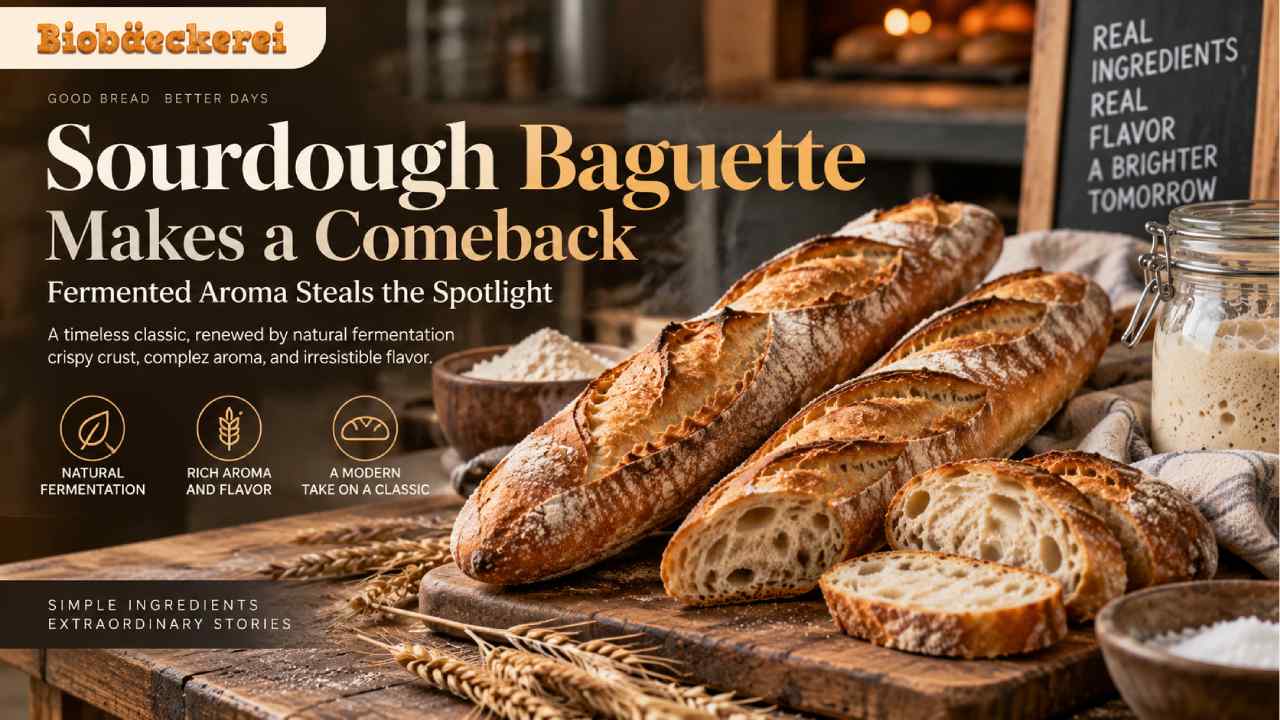
Sourdough Baguette Makes a Comeback, Fermented Aroma Steals the Spotlight
Biobaeckerei – Sourdough Baguette is drawing fresh attention among bread lovers who want more than a crisp crust. Its appeal comes from combining the familiar shape of a baguette with the complex character of natural fermentation. Unlike a conventional baguette made primarily with commercial baker’s yeast, sourdough relies on a starter containing communities of yeasts and lactic acid bacteria. These microorganisms ferment the dough and contribute organic acids and many aroma compounds. As a result, the finished loaf can develop flavors that range from mildly tangy to nutty, creamy, or toasted. However, fermentation does not automatically make every loaf intensely sour. Starter condition, flour, temperature, hydration, and fermentation time all influence the final character. That unpredictability is also part of the attraction. Each well-managed batch can reveal subtle differences while preserving the baguette’s recognizable crisp exterior and tender interior.
Read Also: Taiwanese Taro Ball Dessert, A Colorful Treat Worth Trying
Natural Fermentation Gives the Baguette Its Distinctive Character
The defining feature of a sourdough baguette begins long before it enters the oven. Bakers maintain a starter by regularly supplying flour and water. Within this mixture, yeasts and lactic acid bacteria create an active fermentation ecosystem. Yeasts help produce carbon dioxide, which contributes to dough expansion. Meanwhile, bacterial metabolism produces organic acids and other compounds that influence aroma and taste. Therefore, fermentation is not simply a method for making bread rise. It is also a major part of flavor development. A well-managed starter can give a baguette greater aromatic complexity without making the bread aggressively acidic. Moreover, the fermentation schedule matters. Warm and cool conditions can encourage different microbial activity, while flour selection provides different nutrients and flavor precursors. For artisan bakers, understanding these variables is essential. A successful sourdough baguette needs enough fermentation to develop character while retaining the structure required for its long, slender form.
The Aroma Starts Developing Before Baking
One reason sourdough attracts devoted bread enthusiasts is its layered aroma. During fermentation, microorganisms transform carbohydrates and other compounds in the dough. This process contributes acids, alcohols, esters, and additional volatile compounds. Once the loaf reaches the oven, another transformation begins. Heat drives Maillard reactions and caramelization at the surface, producing roasted and toasted notes associated with a deeply colored crust. Consequently, the aroma of a finished sourdough baguette comes from several stages rather than one ingredient. The starter builds a fermented foundation, while baking adds a warm and roasted dimension. Flour also plays an important role. A small proportion of whole-grain or rye flour, for example, can change both fermentation activity and flavor. Yet stronger is not always better. Skilled bakers aim for balance. Ideally, acidity supports the grain and toasted flavors instead of overpowering them. This balance creates the complex aroma that makes freshly baked sourdough especially memorable.
A Crisp Crust and Open Crumb Create the Signature Texture
Texture remains just as important as flavor. A good baguette should offer noticeable contrast between its crust and interior. The outside is thin and crisp, while the crumb remains tender and pleasantly chewy. Sourdough can add another layer to this experience because longer fermentation influences dough development and flavor. However, achieving an open crumb requires more than simply increasing hydration. Gluten strength, fermentation, shaping, and handling all work together. If fermentation goes too far, the dough may lose strength. Conversely, insufficient fermentation can leave the crumb tight and heavy. Bakers must also shape the dough carefully because excessive pressure can remove gas that developed during fermentation. Steam during the early stage of baking is another key element. It delays crust setting and allows the loaf to expand before the surface becomes firm. Therefore, the dramatic interior often seen in artisan baguettes is not accidental. It reflects careful control across mixing, fermentation, shaping, proofing, scoring, and baking.
Long Fermentation Rewards Patience Rather Than Speed
Sourdough baking rarely follows the fastest path from flour to finished bread. Depending on the formula, bakers may use several hours of bulk fermentation followed by proofing or cold retardation. Refrigerating shaped or partially fermented dough can also make production schedules easier to manage. More importantly, time allows fermentation to continue developing flavor. Still, a longer process is not automatically superior. Dough temperature and starter strength determine how quickly fermentation progresses. Therefore, a fixed number of hours can be misleading when conditions change. Experienced bakers often evaluate the dough itself. They watch its volume, elasticity, bubbles, and overall strength before moving to the next stage. This approach makes sourdough feel closer to a craft than a simple timer-based recipe. The baker responds to a living fermentation process. For consumers, that slower preparation also contributes to the artisan image surrounding sourdough baguettes. Yet the real advantage is not slowness alone. Controlled fermentation is what creates consistency, structure, and desirable flavor.
Sourdough Does Not Need to Taste Extremely Sour
The word “sourdough” sometimes creates the impression that every loaf should have a sharp acidic taste. In reality, acidity varies considerably. Fermentation temperature, starter maintenance, flour type, inoculation level, and proofing time can all influence flavor. A baguette often benefits from a restrained sourness because its relatively high crust-to-crumb ratio already provides strong toasted notes. Therefore, many bakers aim for a mild fermented flavor rather than overwhelming acidity. This approach allows wheat aromas to remain noticeable. It also makes the bread easier to pair with butter, cheese, soup, eggs, or sandwiches. Furthermore, sourdough starter cultures are not identical. Their microbial communities can differ according to ingredients, maintenance practices, and environment. As a result, two bakeries using similar formulas may produce baguettes with noticeably different aromatic profiles. That diversity is one of sourdough’s most interesting qualities. Instead of delivering one universal flavor, natural fermentation gives bakers a broad range of possibilities to shape.
Artisan Bakeries Have Helped Keep Sourdough Relevant
Sourdough’s current visibility is closely connected with the wider revival of artisan bread. Small bakeries often make the fermentation process part of the product story. Customers can see blistered crusts, irregular scoring, open crumbs, and darker baking as signs of a different approach from standardized packaged bread. However, appearance alone does not establish quality. Consistency, fermentation control, flour quality, food safety, and proper baking remain more meaningful measures. Sourdough also has a much longer history than modern social media trends suggest. Fermented dough existed for thousands of years before commercial baker’s yeast became widely available. Therefore, describing sourdough as a completely new food trend would be inaccurate. What has changed is how modern consumers encounter it. Artisan bakeries, home baking communities, and visually driven food culture have introduced traditional fermentation techniques to new audiences. The sourdough baguette fits naturally into this movement because it combines an iconic bread format with a fermentation method rooted in longstanding baking practice.
Simple Ingredients Leave Little Room for Mistakes
A sourdough baguette may contain little more than flour, water, salt, and starter. Yet that short ingredient list makes technique especially important. There are few strong flavors available to hide poor fermentation or weak flour quality. Water affects hydration and dough handling. Salt contributes flavor while also influencing fermentation and gluten behavior. Flour provides both structure and much of the bread’s underlying taste. Meanwhile, the starter supplies the microorganisms that drive fermentation. Every stage must work together. Even scoring serves a functional purpose because the cuts provide controlled expansion points during oven spring. Without effective scoring, pressure may force the loaf to rupture elsewhere. Baking temperature and steam also influence crust thickness, color, and crispness. In my view, this simplicity explains much of sourdough’s appeal. The finished baguette looks straightforward, yet producing it consistently requires experience. Small adjustments can change the crumb, crust, acidity, and aroma, making each stage meaningful rather than decorative.
The Bread Works With Both Simple and Modern Meals
A well-made sourdough baguette does not require elaborate toppings. Butter can highlight its toasted crust and fermented aroma. Olive oil provides another simple pairing, while cheese introduces contrasting fat and salt. The bread can also accompany soup or become the foundation for sandwiches. Because the crumb has more character than many neutral sandwich breads, ingredients should ideally complement rather than overwhelm it. For breakfast, toasted slices can work with eggs, soft cheese, or preserves. Meanwhile, savory sandwiches benefit from a crust sturdy enough to hold moist fillings. Day-old baguette does not necessarily need to go to waste either. It can become croutons, breadcrumbs, crostini, or French toast. Therefore, the appeal of sourdough baguette extends beyond bakery aesthetics. Its usefulness at the table matters just as much. A loaf that delivers good texture when fresh and remains useful afterward offers practical value alongside its artisan character.
Sourdough Baguette Connects Tradition With Modern Bread Culture
The renewed interest in Sourdough Baguette reflects a broader appreciation for fermentation, craftsmanship, and recognizable ingredients. Yet its appeal should not be reduced to trendiness. The bread brings together two established traditions: the slender baguette format and sourdough fermentation. When handled carefully, that combination produces a crisp crust, airy yet structured crumb, and layered aroma. At the same time, the process reminds consumers that simple bread can require considerable technical knowledge. Fermentation must be monitored, dough strength must be preserved, and baking conditions must support proper expansion. These details create differences that can be tasted rather than merely photographed. Ultimately, sourdough baguette feels modern precisely because its foundations are old. Bakers are not reinventing fermentation. Instead, they are adapting established techniques to contemporary tastes and bakery culture. That balance between tradition and experimentation gives the loaf a compelling reason to remain on bakery counters long after individual food trends disappear.
