
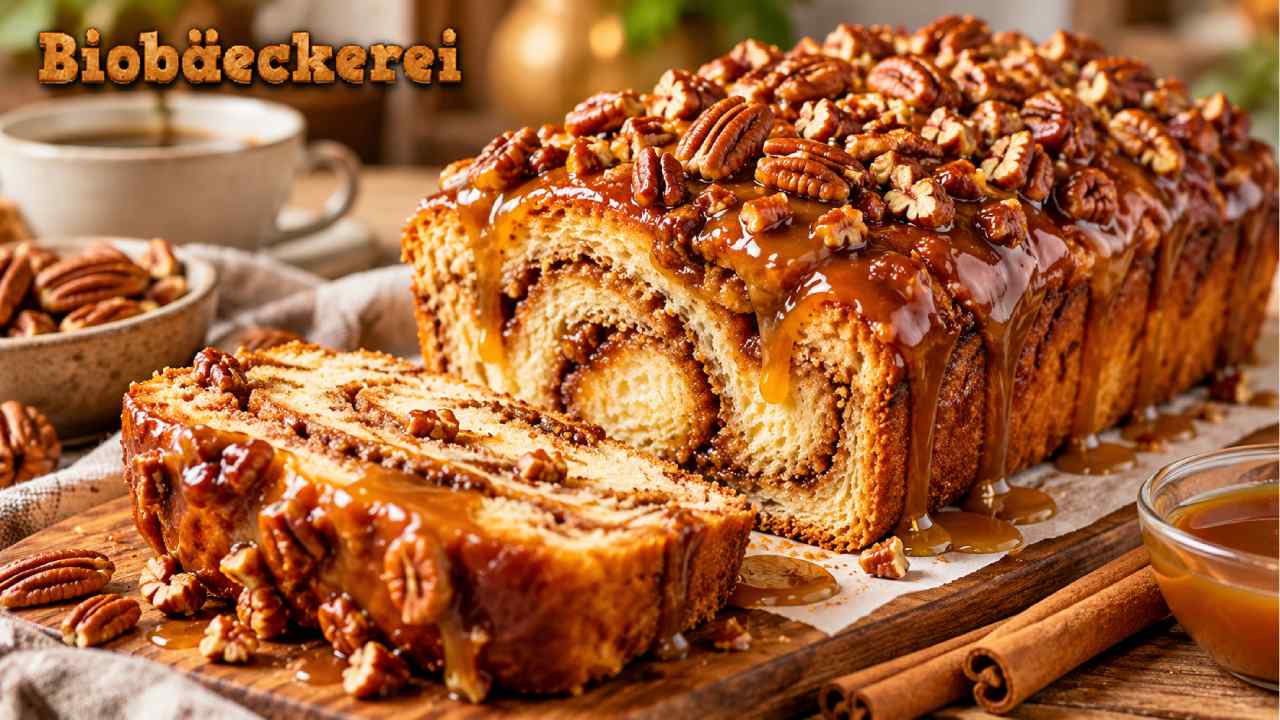
Caramel Pecan Cinnamon Bread Recipe: Sticky, Buttery, and Crunchy
Biobaeckerei – Few things make a kitchen feel warmer than the smell of cinnamon bread baking in the oven. This Caramel Pecan Cinnamon Bread takes that familiar comfort one step further. It combines soft, buttery bread with fragrant cinnamon, crunchy pecans, and a glossy caramel topping. Every slice offers a satisfying contrast between a tender center and sticky, nutty edges. Moreover, the recipe works beautifully for breakfast, brunch, dessert, or an afternoon treat with coffee. Although the finished loaf looks impressive, the method remains approachable for home bakers. The key is patience. Giving the dough enough time to rise creates a lighter texture, while properly cooking the caramel develops a deeper flavor. As a result, this homemade cinnamon bread feels indulgent without becoming overwhelmingly sweet.
Read Also: Chicken Lettuce Wrap, a Fresh and Healthy Protein-Packed Meal
Why Caramel Pecan Cinnamon Bread Feels So Irresistible
The appeal of Caramel Pecan Cinnamon Bread comes from its balance of flavor and texture. Cinnamon brings warmth, while brown sugar creates a rich sweetness with subtle molasses notes. Meanwhile, pecans provide a toasted crunch that prevents each bite from feeling too soft or sugary. The caramel ties everything together with its buttery, slightly sticky finish. Unlike a basic cinnamon loaf, this bread develops several distinct layers as it bakes. Some areas remain fluffy and tender, whereas the edges absorb more caramel and become deliciously chewy. Furthermore, the pecans toast gently in the oven, which strengthens their naturally nutty character. That contrast makes every slice slightly different. In my view, this is exactly why the bread works so well. It does not rely on sweetness alone. Instead, aroma, texture, butter, spice, and toasted nuts create a much more complete experience.
Ingredients for a Soft and Flavorful Cinnamon Bread
A successful loaf begins with simple ingredients used in the right proportions. For the dough, prepare 3 cups all-purpose flour, 2¼ teaspoons instant yeast, ¼ cup granulated sugar, ½ teaspoon salt, ¾ cup warm whole milk, ¼ cup unsalted butter, and 1 large egg. For the cinnamon filling, combine ½ cup packed brown sugar with 1½ tablespoons ground cinnamon and 3 tablespoons softened butter. You will also need about ¾ cup roughly chopped pecans. For the caramel topping, prepare ½ cup brown sugar, ¼ cup unsalted butter, 3 tablespoons heavy cream, a small pinch of salt, and ½ teaspoon vanilla extract. Fresh pecans are especially important because older nuts can develop a slightly bitter or stale taste. Additionally, avoid overheating the milk. It should feel pleasantly warm rather than hot, since excessive heat can weaken the yeast and slow the rise.
Preparing the Dough for a Light, Tender Texture
Start by combining the flour, instant yeast, sugar, and salt in a large mixing bowl. Next, add the warm milk, melted butter, and egg. Stir until a rough dough begins to form. Transfer it to a lightly floured surface and knead for about eight to ten minutes. The dough should gradually become smooth, elastic, and slightly tacky. However, avoid adding too much extra flour. A softer dough usually produces a more tender Caramel Pecan Cinnamon Bread after baking. Place the dough in a lightly greased bowl, cover it, and let it rise in a warm area for about 60 to 90 minutes. Ideally, it should nearly double in size. This resting period is essential because yeast creates the air pockets that give the bread its soft structure. Therefore, rushing the first rise can leave the finished loaf noticeably dense and heavy.
Building the Cinnamon and Pecan Layers
Once the dough has risen, gently press out excess air and place it on a lightly floured surface. Roll it into a rectangle roughly 12 by 16 inches. Spread the softened butter evenly across the dough, leaving a narrow border around the edges. Then, mix the brown sugar and cinnamon before sprinkling the mixture over the butter. Scatter most of the chopped pecans across the surface. Next, roll the dough tightly from the longer side to create a neat log. You can place the log directly into a loaf pan or slice it into thick portions for a pull-apart presentation. Either method works well. However, keeping the layers relatively tight helps distribute the cinnamon filling throughout the bread. After shaping, cover the dough again and allow it to rise for another 30 to 45 minutes. Consequently, the loaf becomes noticeably softer once baked.
Making a Rich Caramel Without Overcooking It
While the shaped dough completes its second rise, prepare the caramel. Melt the butter in a small saucepan over medium-low heat. Add the brown sugar and heavy cream, then stir until the sugar begins to dissolve. Allow the mixture to simmer gently for two to three minutes. Afterward, remove the pan from the heat and stir in the vanilla and a small pinch of salt. The caramel should look smooth and glossy rather than extremely thick. Remember that it will continue to thicken as it cools. Therefore, cooking it for too long can produce a hard or overly chewy topping. Pour part of the warm caramel into the bottom of the prepared loaf pan and scatter in some pecans. This technique allows the bread to absorb caramel during baking. Reserve the remaining sauce for finishing the loaf later, when its warm surface can catch every sticky drop.
Baking Until Golden While Keeping the Center Moist
Preheat the oven to 350°F or 175°C. Place the risen bread on the center rack and bake for approximately 30 to 38 minutes. Because ovens vary, begin checking the loaf near the 28-minute mark. The surface should appear deeply golden, while the center should feel set rather than doughy. If the top browns too quickly, loosely cover it with aluminum foil during the final stage of baking. This simple step protects the crust while giving the center enough time to finish. After removing the loaf from the oven, let it rest in the pan for around ten minutes. Then carefully transfer it to a serving plate. Do not leave it in the pan for too long because the caramel can cool and stick firmly. Finally, spoon the reserved caramel over the warm bread and finish with the remaining chopped pecans.
The Secret to That Sticky Caramel and Crunchy Pecan Contrast
Texture is arguably the strongest feature of this recipe. The bread itself should remain soft enough to pull apart easily, while the caramel creates sticky pockets around the cinnamon layers. At the same time, pecans introduce a crisp bite that keeps the loaf interesting. For even better flavor, toast the pecans for five to seven minutes before using them. This quick step releases their natural oils and creates a stronger roasted aroma. However, watch them carefully because nuts can burn quickly. Another useful technique is adding pecans at different stages. Place some inside the cinnamon filling, some underneath the dough with the caramel, and some on top after baking. Consequently, you get several textures instead of one uniform crunch. A tiny pinch of salt in the caramel also helps because it balances the sugar and makes the buttery notes taste more pronounced.
Serving Caramel Pecan Cinnamon Bread at Its Best
This bread tastes especially good while slightly warm, when the caramel remains soft and the cinnamon aroma is strongest. Slice it with a serrated knife or simply pull apart individual sections if you shaped it that way. For breakfast or brunch, pair it with black coffee, espresso, or unsweetened tea. The slight bitterness of these drinks balances the rich caramel beautifully. Meanwhile, for dessert, a small scoop of vanilla ice cream can turn one warm slice into a more indulgent dish. Nevertheless, the bread already has plenty of flavor, so additional toppings are optional. If serving it to guests, drizzle a small amount of warm caramel over each portion just before presenting it. The glossy finish makes the bread look especially inviting. More importantly, every serving retains the combination that defines this recipe: fluffy bread, aromatic cinnamon, sticky caramel, and crisp pecans.
Storage and Reheating Without Losing the Soft Texture
If you have leftovers, allow the bread to cool completely before storing it. Place it in an airtight container and keep it at room temperature for up to two days. For longer storage, refrigerate it for around four to five days. However, refrigeration can make bread feel firmer because the starches change as they cool. Fortunately, gentle reheating restores much of its original softness. Warm an individual slice in the microwave for roughly 10 to 15 seconds, or place several slices in a low oven for a few minutes. Avoid excessive heating because the caramel can become extremely hot. You can also freeze individual portions in airtight wrapping for convenient future servings. Thaw them before warming. Although freshly baked bread offers the best aroma and texture, careful storage means this Caramel Pecan Cinnamon Bread can remain a satisfying treat for several days.
