
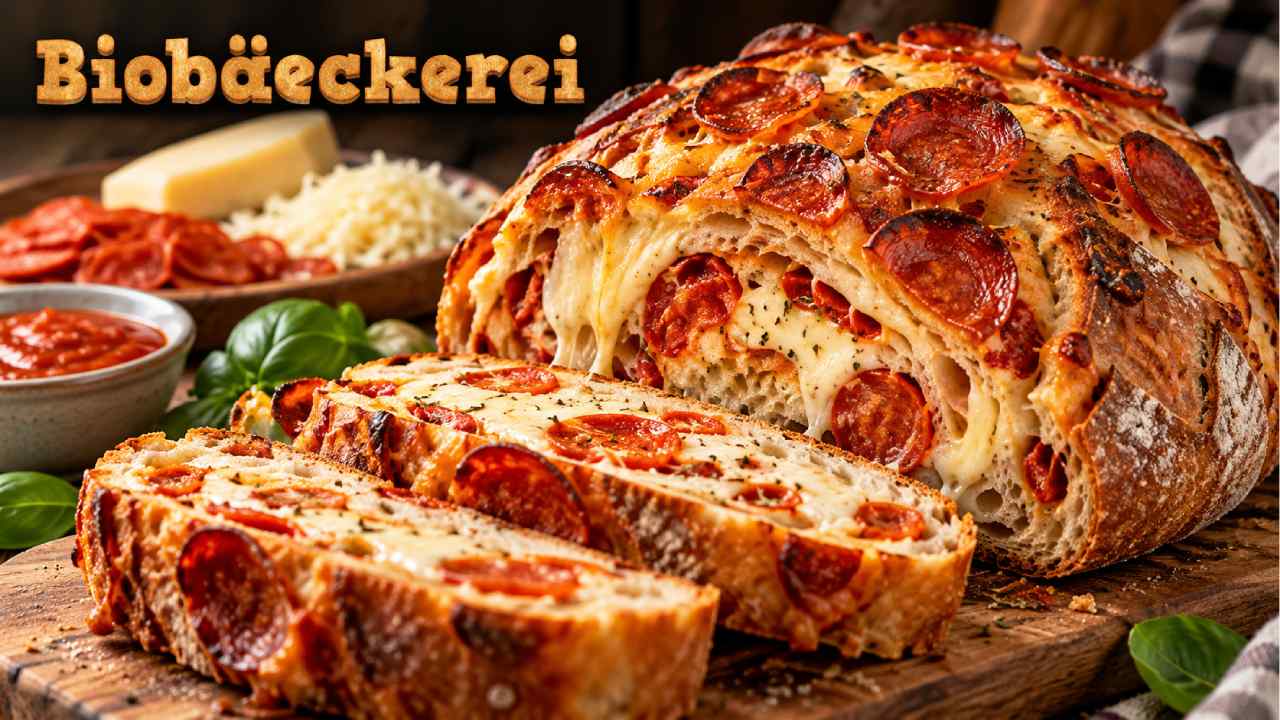
Pepperoni Pizza Sourdough Goes Viral with Generous Savory Fillings
Biobaeckerei – Pepperoni Pizza Sourdough is quickly becoming one of the most tempting bread trends for people who love bold, comforting flavors. It combines the tangy character of naturally fermented sourdough with familiar pizza ingredients such as pepperoni, melted cheese, herbs, and rich tomato notes. As a result, every slice feels more exciting than ordinary bread. The crust remains pleasantly chewy, while the inside stays soft and packed with savory pockets. Moreover, the colorful filling creates an impressive cross-section when the loaf is sliced. That visual appeal has helped this creative sourdough variation attract attention online. However, its popularity is not based on appearance alone. The combination also makes sense from a flavor perspective. The gentle acidity of sourdough balances the richness of cheese and pepperoni, creating a loaf that feels indulgent without becoming overwhelmingly heavy.
Read Also: Korean BBQ Meatballs Recipe, Juicy and Packed with Flavor
Pepperoni Pizza Sourdough Turns Familiar Flavors Into Something New
At first glance, Pepperoni Pizza Sourdough may sound like two completely different foods pushed together. Yet the combination works surprisingly well. Traditional sourdough already offers a slightly tangy flavor and chewy texture. Meanwhile, pizza toppings bring saltiness, richness, and aromatic spices. When these elements meet inside one loaf, the result feels familiar but still fresh. Pepperoni adds smoky and savory notes, while cheese creates creamy pockets throughout the crumb. In addition, dried oregano or Italian herbs can strengthen the classic pizza character. Some bakers also include small amounts of tomato paste or sun-dried tomatoes for deeper flavor. However, balance remains important. Too much filling can interfere with the dough structure. Therefore, careful layering usually produces a better loaf than simply adding as many ingredients as possible. This balance is one reason the trend feels more thoughtful than a typical novelty recipe.
Why This Savory Sourdough Is Attracting Attention Online
Food trends often spread because they look dramatic on camera, and this bread certainly has that advantage. Once sliced, the loaf can reveal melted cheese, red pepperoni pieces, herbs, and an airy sourdough crumb. Consequently, it creates the kind of visual contrast that works well in short cooking videos and food photography. Still, appearance tells only part of the story. Home bakers have also become increasingly adventurous with savory sourdough ideas. Instead of treating sourdough as plain breakfast bread, they use the dough as a foundation for stronger flavors. Pepperoni pizza ingredients fit naturally into that movement because they are widely recognizable and easy to customize. Furthermore, the finished loaf can work for breakfast, lunch, or a casual snack. That versatility gives the trend more staying power. Rather than being something people make once for a photograph, it can become a practical addition to a home baker’s regular rotation.
The Fermented Dough Creates a More Complex Flavor
The sourdough base plays an important role in making this bread distinctive. Unlike standard dough made primarily with commercial yeast, traditional sourdough relies on a fermented starter containing wild yeast and lactic acid bacteria. During fermentation, these microorganisms help create the characteristic aroma and acidity associated with sourdough. Consequently, the bread develops more complexity before pepperoni or cheese even enters the picture. Longer fermentation can also deepen its flavor, although timing depends on starter activity, dough temperature, and hydration. When savory fillings are added, that natural acidity becomes especially useful. It cuts through fatty ingredients and prevents the overall flavor from feeling flat. In my view, this contrast explains why pizza-inspired sourdough can taste more interesting than simply wrapping pizza toppings inside ordinary white bread. Each component has a clear role. The dough provides character, while the fillings deliver the immediate comfort-food appeal that makes the first bite memorable.
Pepperoni and Cheese Need the Right Balance
Generous filling sounds appealing, but successful Pepperoni Pizza Sourdough still requires restraint. Pepperoni naturally releases fat as it heats, while many cheeses release both moisture and oil. If a baker adds excessive amounts, the dough may struggle to hold its structure. Therefore, the ingredients should be distributed evenly rather than concentrated in one thick layer. Low-moisture mozzarella can provide satisfying cheese pulls without introducing too much liquid. Parmesan, meanwhile, adds stronger savory depth with a relatively small amount. Pepperoni can be chopped into smaller pieces so every slice receives some flavor. Additionally, blotting particularly oily pepperoni before using it may help control excess grease. Bakers can also add oregano, basil, garlic powder, or chili flakes for extra personality. Ultimately, the goal is not to hide the sourdough beneath the toppings. Instead, the best loaf allows the fermented bread and pizza-inspired filling to complement each other.
Folding the Filling Into the Dough Makes a Difference
Technique becomes especially important when a sourdough loaf contains multiple inclusions. Rather than mixing all the pepperoni and cheese into the dough at the beginning, many bakers can incorporate them later during stretching, folding, or lamination. This approach helps distribute the ingredients while preserving more of the dough’s internal structure. For example, the dough can be gently stretched into a wide sheet before a thin layer of pepperoni, cheese, and herbs is scattered across the surface. It is then folded carefully so the filling becomes trapped between layers. However, the dough should not be overloaded. Large chunks can tear gluten strands, while excessive cheese can create weak sections. After shaping, sufficient proofing remains essential because the dough needs time to relax and expand. Although the process takes patience, it creates a satisfying payoff. Cutting the baked loaf reveals irregular pockets of savory filling instead of one dense mass concentrated in the center.
Baking Creates the Signature Crispy and Chewy Contrast
The baking stage transforms the loaf from filled dough into something that genuinely resembles pizza in bread form. High heat encourages strong oven spring while helping the outer crust develop a deep color. If a Dutch oven is used, trapped steam can keep the surface flexible during the early part of baking. Later, removing the lid allows the crust to become crisp and aromatic. Meanwhile, cheese close to the surface may caramelize slightly, creating small toasted areas with intense savory flavor. Pepperoni can also become darker around exposed edges. These details add character without requiring additional toppings after baking. Nevertheless, the loaf needs enough time to cool before slicing. Cutting it immediately may release steam and make the crumb appear wetter than it actually is. Waiting can be difficult because the aroma is powerful, but patience improves the texture. Once cooled properly, the contrast between crisp crust, chewy crumb, and soft filling becomes much clearer.
Each Slice Can Be Served in Several Different Ways
One advantage of Pepperoni Pizza Sourdough is that it does not require an elaborate serving method. A warm slice can stand on its own because the main pizza flavors are already inside the bread. However, lightly toasting it can make the cheese aromatic again while giving the edges extra crunch. For a stronger pizza experience, the bread can be served with warm tomato sauce for dipping. Garlic butter is another option, although a small amount is usually enough because pepperoni and cheese already provide considerable richness. Meanwhile, a fresh salad can create a useful contrast if the bread is served as part of lunch or dinner. The loaf can even become the base for an open-faced sandwich with tomatoes, arugula, or roasted vegetables. Therefore, leftovers do not have to feel repetitive. A single loaf can move easily from a casual snack to a more complete meal depending on how each slice is prepared.
Custom Variations Keep the Trend Interesting
The pizza concept also leaves plenty of room for experimentation. Pepperoni may be the headline ingredient, but it does not have to remain the only option. Roasted mushrooms can provide earthy depth, while olives contribute a sharper salty note. Jalapeños or chili flakes can make the bread noticeably hotter. Meanwhile, roasted garlic adds sweetness and aroma without overpowering the sourdough. Different cheeses can also change the personality of the loaf. Mozzarella produces a mild and stretchy texture, whereas cheddar gives a sharper flavor. Parmesan works particularly well as an accent rather than the main cheese. Still, wetter ingredients require extra care because too much moisture can affect the crumb. For that reason, vegetables should often be cooked or drained before they are folded into the dough. This adaptability makes pizza sourdough more than one fixed recipe. It becomes a format that home bakers can adjust according to taste and available ingredients.
Pepperoni Pizza Sourdough Has More Than Viral Appeal
Some viral foods disappear quickly because their main attraction is novelty. Pepperoni Pizza Sourdough has a stronger foundation because the idea combines two foods people already enjoy. Sourdough contributes fermentation, texture, and craftsmanship, while pizza flavors provide familiarity and comfort. More importantly, neither element needs to lose its identity. A well-made loaf still tastes unmistakably like sourdough, yet every slice carries the savory character of pepperoni and cheese. That combination gives home bakers room to experiment without requiring complicated decorative techniques. It also creates a loaf that looks impressive when sliced, which certainly helps its online appeal. However, the strongest reason to try it is simpler: the flavors genuinely work together. When fermentation, filling, shaping, and baking are handled carefully, this trend becomes more than social-media food. It turns into a practical savory bread worth baking again.
