
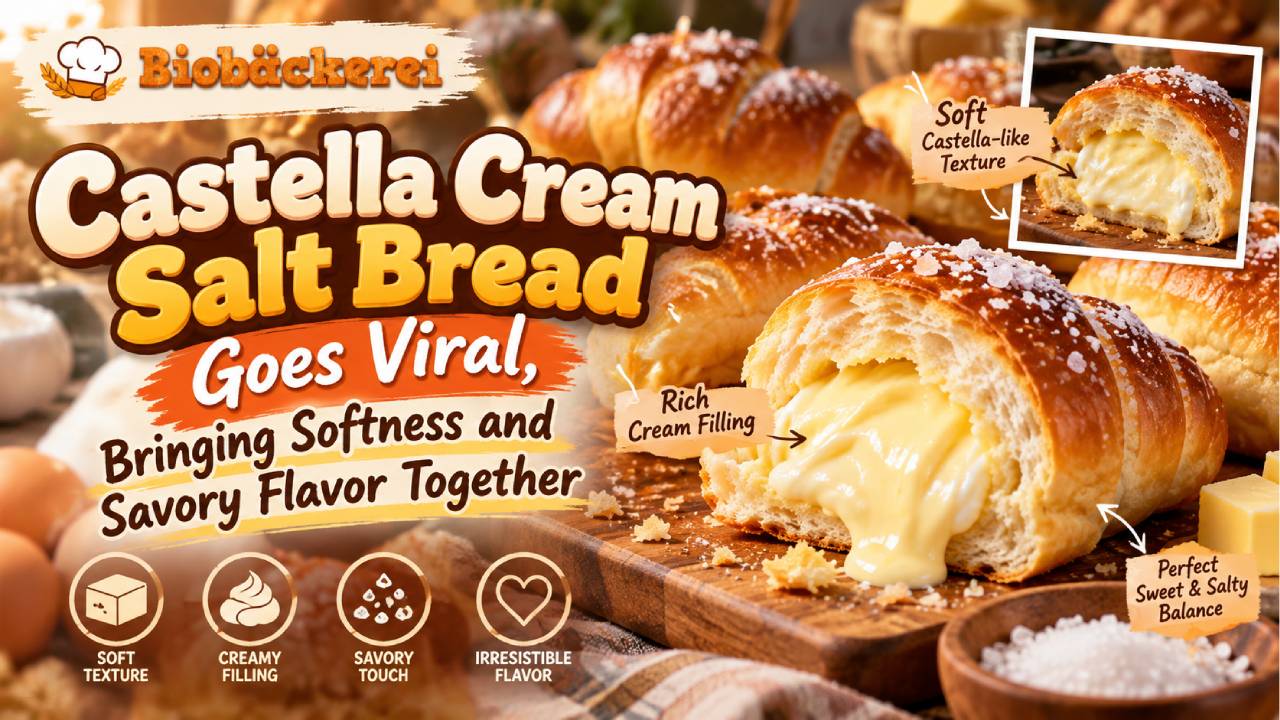
Castella Cream Salt Bread Goes Viral, Bringing Softness and Savory Flavor Together
Biobaeckerei – Castella Cream Salt Bread is gaining attention as a modern bakery creation that combines contrasting textures and flavors. The idea brings together the airy softness associated with castella-inspired cakes and the buttery, salty character found in contemporary salt bread. A smooth cream filling adds another layer, creating a bread that can feel rich without relying on overwhelming sweetness. Visually, the combination is also appealing. The golden exterior provides contrast against the pale cream inside, especially when the bread is sliced or pulled apart. However, the name should not be confused with one standardized traditional recipe. Castella has a long history connected with Japan and Portuguese influence, while Japanese shio pan and Korean-style salt bread belong to a different bakery tradition. The viral version is better understood as a contemporary fusion that borrows ideas from several popular Asian bakery styles.
Read Also: How to Make Classic Italian Affogato with Espresso and Gelato
Castella Has a History Much Older Than Today’s Viral Bread
Castella itself is far from a new food trend. Japan’s Nagasaki tourism authorities describe castella as a specialty associated with the city for centuries. Its origins are connected with Portuguese traders who reached Japan in the 16th century. Over time, Japanese bakers adapted the cake into the soft, fine-textured form now closely associated with Nagasaki. Traditional castella is generally built around a relatively simple mixture of eggs, sugar, flour, and sweetener such as syrup. Therefore, its identity differs significantly from buttery salt bread. The modern Castella Cream Salt Bread concept does not erase that distinction. Instead, it uses the recognizable idea of castella-like softness as inspiration. This historical context matters because viral food names can sometimes make separate culinary traditions appear interchangeable. They are not. The newer bread represents experimentation rather than a replacement for traditional castella.
Salt Bread Provides the Buttery and Savory Side
The other side of the combination comes from salt bread. Japanese shio pan, literally salt bread, became popular for its simple but satisfying contrast between butter, bread, and salt. Modern Korean bakeries have also developed their own highly visible salt-bread culture, with bakeries offering numerous flavors and fillings. A good salt bread usually aims for more than simple softness. Butter can create a crisp or lightly caramelized bottom, while the interior remains tender and pleasantly chewy. A small amount of salt then sharpens the buttery flavor. This contrast explains why salt bread works well as a foundation for new variations. Cream, chocolate, garlic, cheese, and other fillings can be added without completely hiding the original buttery character. Castella-inspired cream is another logical direction because its mild sweetness can balance those savory notes.
The Cream Filling Changes the Entire Eating Experience
Cream plays an important role because it connects the sweeter and saltier elements. A well-balanced filling should feel smooth and light enough to complement the bread. If it becomes excessively sweet, the subtle butter and salt can disappear. Conversely, too little sweetness may prevent the castella-inspired character from standing out. Therefore, balance matters more than sheer richness. Pastry cream, whipped cream, milk cream, or a combination can create slightly different results. Some modern bakery interpretations may also use custard-style fillings. Once the bread is opened, the cream provides a cool and silky contrast against the soft crumb. Meanwhile, the exterior can retain a slightly firmer texture. That combination gives every bite several sensations at once. It is also one reason cream-filled breads photograph so effectively for social media: the filling becomes immediately visible when the bread is cut or torn apart.
Texture Is the Real Attraction Behind the Combination
Flavor may attract the first bite, but texture often makes modern bakery products memorable. Castella Cream Salt Bread can offer several layers of texture when prepared carefully. First, the exterior should have enough structure to hold the filling. Next, the center needs to remain soft and tender. Meanwhile, the cream introduces a silky texture that contrasts with the bread itself. A buttery bottom can add another subtle layer of crispness. However, achieving all these characteristics simultaneously requires careful preparation. Too much moisture from the filling can make the bread soggy. Overbaking can make the crumb dry. Furthermore, excessive butter can leave the finished product greasy rather than pleasantly rich. Successful versions therefore depend on balance. This is also why the trend fits modern bakery culture, where texture has become almost as important as flavor and visual presentation.
Sweet and Savory Flavors Create a More Balanced Bite
One reason salt works so effectively in desserts and sweet breads is its ability to modify how other flavors are perceived. A small amount can make sweetness feel more defined while preventing the overall profile from becoming monotonous. In Castella Cream Salt Bread, this creates a clear flavor sequence. The first impression may be buttery and slightly salty. Then, the soft crumb brings mild sweetness. Finally, the cream provides a richer finish. Consequently, the bread can appeal to people who enjoy desserts but prefer something less aggressively sweet. However, the exact balance depends heavily on the recipe. A heavily sweetened cream will produce a dessert-like bread. A restrained filling will keep the result closer to a breakfast pastry or café bread. Neither approach is automatically better. The attraction lies in how easily the basic concept can be adjusted.
Asian Bakery Culture Keeps Encouraging New Salt Bread Variations
Salt bread has become a flexible platform for bakery experimentation, particularly across Japan and South Korea. Modern bakeries regularly reinterpret familiar breads with fillings, toppings, and seasonal flavors. Social media has accelerated that process because customers can discover bakery products before tasting them. A visually distinctive loaf can quickly inspire similar interpretations elsewhere. Yet viral popularity does not necessarily mean one recipe has become an established culinary standard. Castella Cream Salt Bread is a good example. The name describes a recognizable combination of ideas, but bakeries may interpret those ideas differently. One version may emphasize sponge-like softness. Another may focus on salted butter and a generous cream center. Therefore, consumers should expect variation rather than one definitive formula. This flexibility is part of what keeps contemporary bakery trends moving quickly.
A Golden Exterior Makes the Bread Naturally Photogenic
Food trends increasingly depend on visual appeal, and this bread has several advantages. Its golden surface immediately communicates warmth and freshness. Once sliced, the pale cream creates a strong visual contrast. In addition, a soft crumb can be shown through close-up photographs or pull-apart videos. Those details work particularly well in short-form food content. Bakers can also keep decoration minimal because the cross-section already provides visual interest. A few salt crystals, a light dusting of powdered sugar, or a simple castella crumb topping may be enough. However, presentation should support the eating experience rather than overwhelm it. Too many toppings can hide the bread’s main identity. The strongest visual concept remains simple: golden bread outside, soft crumb inside, and a generous but controlled cream center.
Freshness Matters More with Cream-Filled Bread
Cream-filled products require more attention to storage than plain bread. The appropriate handling depends on the filling and its ingredients. Creams containing dairy or eggs can be perishable and generally require temperature control. The U.S. Food and Drug Administration advises keeping refrigerators at 40°F, or about 4°C, or below for food safety. Perishable foods should also not remain at room temperature for extended periods. Therefore, home bakers should follow a tested recipe and its storage instructions rather than treating cream-filled bread like an ordinary shelf-stable loaf. Bakeries likewise need suitable refrigeration and food-safety procedures. Beyond safety, storage also affects texture. Refrigeration can gradually make bread firmer, while moisture from cream can soften the crumb. For that reason, many cream-filled breads are most enjoyable relatively fresh.
The Bread Can Be Adapted Without Losing Its Main Character
The basic concept leaves considerable room for creativity. Vanilla cream offers a clean and familiar flavor. Meanwhile, custard can provide a richer profile. Matcha, black sesame, coffee, or chocolate could create more distinctive versions. Bakers could also experiment with honey or caramel, although additional sweetness should remain balanced against the salted butter. Another approach is to change the topping instead of the filling. Fine castella crumbs can reinforce the cake-inspired theme, while flaky salt can highlight the savory side. However, too many elements may make the bread confusing. A strong variation should still preserve the three qualities that define the concept: soft bread, creamy filling, and a noticeable but restrained salty-buttery note. Keeping those elements recognizable helps the bread maintain its identity even as flavors change.
Castella Cream Salt Bread Fits the Modern Café Experience
The trend also makes sense within contemporary café culture. Consumers often want a bakery item that feels special but remains easy to eat with coffee or tea. Castella Cream Salt Bread fits that space well. It is richer than ordinary bread but less formal than a plated dessert. Moreover, its sweet-savory profile can work with several drinks. Black coffee provides bitterness that cuts through the cream. Milk-based coffee emphasizes the bread’s softer character. Meanwhile, unsweetened tea can provide a cleaner contrast. Portion size also matters. Because butter and cream both add richness, a moderate serving can feel satisfying without becoming excessive. For cafés, the bread offers another advantage: it looks distinctive in a display case while remaining familiar enough for customers to understand quickly.
Viral Popularity Should Not Be Confused with a Traditional Recipe
Food trends often develop faster than culinary terminology. As a result, names can spread before clear definitions exist. That distinction is important with Castella Cream Salt Bread. Traditional castella and salt bread have their own histories and techniques. Combining their characteristics creates a modern fusion rather than a newly discovered traditional dish. Calling it a contemporary bakery creation is therefore more accurate. This framing also gives bakers greater creative freedom. They can explore castella-inspired crumbs, custard fillings, salted butter layers, or other interpretations without claiming that one version is historically definitive. For readers, understanding this distinction makes the trend more interesting. It shows how modern bakery culture takes recognizable ideas and reshapes them for new tastes, visual styles, and café experiences.
Castella Cream Salt Bread Turns Contrast Into Its Biggest Strength
Castella Cream Salt Bread succeeds as an idea because it brings several contrasts into one bite. Soft bread meets silky cream. Sweetness meets salt. A tender center can sit beside a lightly crisp, buttery exterior. Meanwhile, its golden appearance makes the finished bread naturally attractive for bakery displays and social media. The trend also reflects a broader pattern in contemporary Asian baking, where familiar products are continually reinterpreted through new fillings and textures. However, its viral identity should remain separate from the historical traditions behind castella and salt bread. The modern version is best understood as a fusion. When prepared with balance, it can deliver the softness, creaminess, and savory finish promised by its name without allowing any single element to dominate.
