
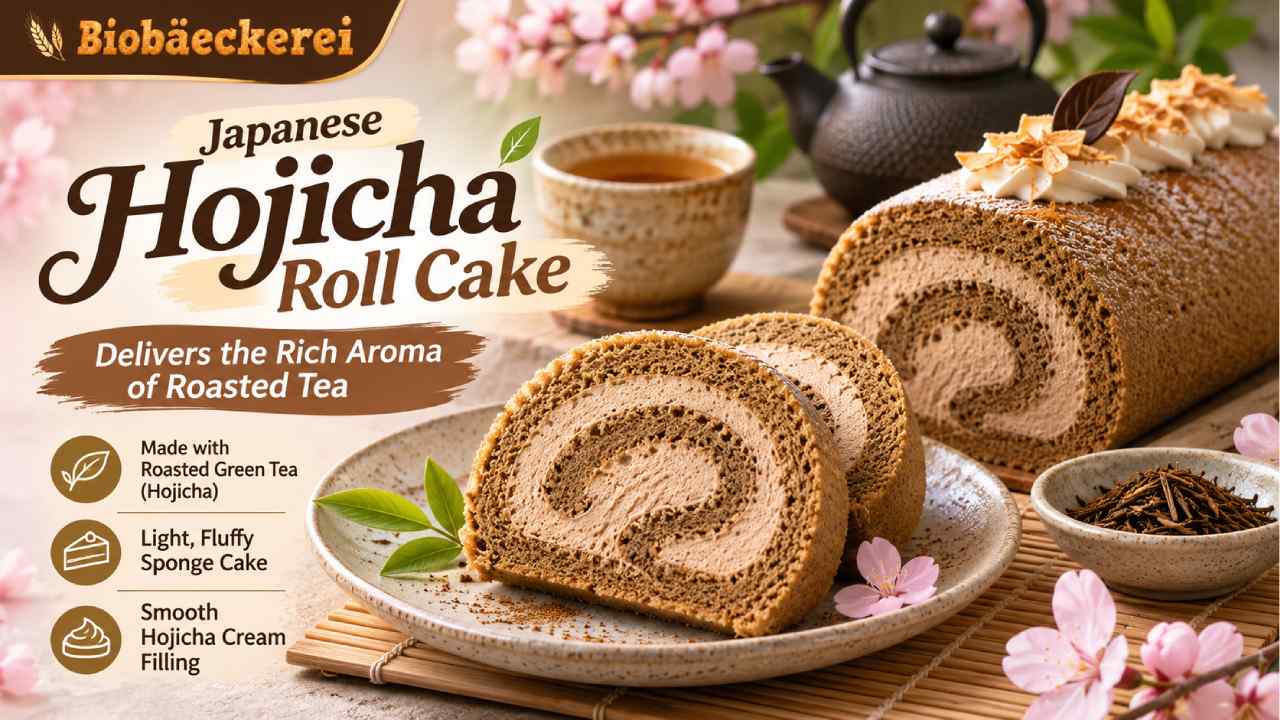
Japanese Hojicha Roll Cake Delivers the Rich Aroma of Roasted Tea
Biobaeckerei – Japanese Hojicha Roll Cake brings a distinctive flavor experience to the world of modern desserts. This Japanese-inspired pastry combines a delicate sponge cake with smooth roasted green tea cream. Unlike traditional green tea desserts, hojicha offers a warm, nutty aroma with subtle caramel-like notes. Moreover, its roasted character creates a comforting flavor that complements soft cake beautifully. The dessert also features an elegant appearance, making it suitable for afternoon tea or special occasions. Meanwhile, its light texture provides a pleasant contrast to the rich cream filling. Hojicha originates from Japan, where green tea leaves undergo roasting to develop their characteristic aroma. Therefore, incorporating this ingredient into a roll cake creates an interesting connection between Japanese tea culture and modern baking. The result is a refined dessert that celebrates simplicity, balanced sweetness, and aromatic depth.
Read Also: Healthy Stuffed Bell Peppers with Quinoa and Fresh Vegetables
Roasted Japanese Hojicha Creates a Unique Dessert Flavor
Hojicha stands apart from many other Japanese teas because of its distinctive roasting process. Traditional hojicha is made by roasting green tea leaves, stems, or a combination of both. This technique transforms the tea’s aroma and produces a warm brown appearance. Additionally, roasting develops toasted, woody, and slightly caramel-like flavor notes. These characteristics make hojicha especially suitable for creamy desserts. Unlike matcha, which often delivers grassy and vegetal flavors, hojicha offers a softer roasted profile. However, its intensity depends on the tea variety and roasting conditions. Some hojicha powders produce stronger flavors than others. Therefore, bakers should adjust the amount according to their preferred taste. When combined with whipped cream, hojicha creates a balanced filling without excessive sweetness. This combination gives Japanese Hojicha Roll Cake its recognizable personality and inviting aroma.
Essential Ingredients for a Soft Japanese Hojicha Roll Cake
Preparing Japanese Hojicha Roll Cake requires carefully measured ingredients to achieve a light sponge and stable cream filling. Cake flour provides a tender texture, while eggs help create volume. Additionally, hojicha powder delivers the signature roasted tea flavor. Fresh whipping cream creates a smooth filling that complements the cake’s delicate structure. For the best results, choose finely ground hojicha powder suitable for baking. The following ingredients produce approximately eight slices from one medium roll cake.
Ingredients for the Hojicha Sponge Cake:
● 4 large eggs, separated
● 70 g cake flour
● 15 g hojicha powder
● 75 g granulated sugar
● 45 ml whole milk
● 40 ml neutral vegetable oil
● 1 teaspoon vanilla extract
● ¼ teaspoon salt
Ingredients for the Hojicha Cream Filling:
● 250 ml cold heavy whipping cream
● 30 g powdered sugar
● 8 g finely ground hojicha powder
● 1 teaspoon vanilla extract
● 1 tablespoon warm milk
Optional Decorations:
● Lightly sifted hojicha powder
● White chocolate shavings
● Fresh strawberries
● Toasted almond flakes
How to Prepare a Light and Fluffy Hojicha Sponge Cake
The sponge cake forms the foundation of Japanese Hojicha Roll Cake. Therefore, proper mixing techniques are essential for achieving a soft and flexible texture. The cake should remain moist enough to roll without cracking. Additionally, carefully whipped egg whites help create a light structure. Avoid overmixing because excessive stirring can reduce the batter’s volume. Follow these steps to prepare the sponge.
Step-by-Step Sponge Cake Instructions:
- Preheat the oven to 170°C and line a 28 × 28 cm baking pan with parchment paper.
- Separate the egg yolks and whites into two clean bowls.
- Whisk the egg yolks with milk, vegetable oil, and vanilla extract.
- Sift cake flour and hojicha powder into the yolk mixture.
- Stir gently until the batter becomes smooth.
- Add salt to the egg whites and begin whipping.
- Gradually add granulated sugar while continuing to whip.
- Stop when the meringue forms medium-stiff peaks.
- Fold one-third of the meringue into the hojicha batter.
- Gently incorporate the remaining meringue without deflating the mixture.
- Spread the batter evenly across the prepared baking pan.
- Bake for approximately 15–18 minutes until the sponge springs back when lightly touched.
Allow the cake to cool briefly before preparing it for rolling.
Making Smooth Hojicha Cream with a Rich Roasted Tea Aroma
The cream filling provides a delicious contrast to the airy hojicha sponge. Its texture should feel smooth, light, and stable enough to maintain the cake’s shape. Moreover, the roasted tea flavor should remain noticeable without overwhelming the sweetness. Using cold whipping cream helps achieve a consistent texture. Meanwhile, dissolving the hojicha powder before mixing can reduce unwanted lumps.
Step-by-Step Hojicha Cream Preparation:
- Combine hojicha powder with one tablespoon of warm milk.
- Stir until the mixture forms a smooth paste.
- Allow the hojicha mixture to cool completely.
- Pour cold heavy whipping cream into a chilled mixing bowl.
- Add powdered sugar and vanilla extract.
- Whip the cream until soft peaks begin to form.
- Add the cooled hojicha mixture gradually.
- Continue whipping until medium-stiff peaks develop.
- Stop mixing once the cream becomes smooth and holds its shape.
- Refrigerate the filling until ready for assembly.
The finished cream should have a gentle brown color and a pleasant roasted tea aroma.
Rolling Japanese Hojicha Cake Without Cracking the Sponge
Rolling a sponge cake requires patience because delicate cake layers can break under excessive pressure. However, proper moisture and temperature make the process easier. A flexible sponge should bend smoothly without developing deep cracks. Additionally, spreading the cream evenly helps maintain a consistent spiral. Follow these steps to assemble the cake.
Step-by-Step Cake Assembly:
- Place the slightly warm sponge cake on a clean sheet of parchment paper.
- Gently roll the cake with the parchment paper while it remains flexible.
- Allow the rolled sponge to cool completely.
- Carefully unroll the cake and remove the inner parchment.
- Spread the chilled hojicha cream evenly across the surface.
- Leave approximately 2 cm of space along the far edge.
- Roll the cake gently from one side using the parchment as support.
- Keep the roll firm without squeezing out the cream.
- Wrap the finished cake tightly in parchment paper.
- Refrigerate for at least one hour before slicing.
This method helps create a beautiful spiral with a balanced distribution of sponge and cream.
Expert Baking Tips for Perfect Japanese Hojicha Roll Cake
Several practical techniques can improve the texture and appearance of Japanese Hojicha Roll Cake. First, accurate measurements help maintain the correct balance between dry and liquid ingredients. Additionally, gentle folding preserves the air incorporated into the egg whites. The roasting intensity of hojicha powder also influences the final flavor. Therefore, selecting a quality ingredient makes a noticeable difference.
Helpful Baking Tips:
- Use room-temperature eggs for easier mixing and better volume.
- Sift hojicha powder with flour to prevent dry lumps.
- Avoid overbeating the egg whites until they become dry.
- Fold the meringue gently to preserve the batter’s lightness.
- Do not overbake because a dry sponge cracks more easily.
- Roll the sponge while slightly warm to improve flexibility.
- Allow the sponge to cool completely before adding cream.
- Keep whipping cream cold to maintain a stable filling.
- Refrigerate the finished roll before cutting.
- Use a clean, sharp knife for smooth and attractive slices.
These techniques help produce a tender cake with a consistent roasted tea flavor.
Japanese Hojicha Roll Cake Offers an Elegant Afternoon Tea Experience
Japanese Hojicha Roll Cake makes an appealing addition to afternoon tea gatherings and modern dessert menus. Its delicate appearance creates an elegant presentation without requiring elaborate decorations. Moreover, the roasted tea aroma complements the creamy filling and soft sponge. A thin dusting of hojicha powder can enhance its visual character. Meanwhile, white chocolate shavings provide a gentle sweetness that balances the toasted flavor. Fresh strawberries can also introduce a refreshing contrast. However, excessive toppings may overpower the cake’s natural aroma. Therefore, simple decoration often works best. Serving the cake with unsweetened tea can further highlight its balanced flavor. For coffee lovers, a mild latte also makes a suitable pairing. This versatility allows the dessert to fit both casual gatherings and more refined dining occasions.
Hojicha Roll Cake Reflects the Creativity of Modern Japanese Baking
Japanese baking often emphasizes delicate textures, balanced sweetness, and thoughtful presentation. Hojicha Roll Cake reflects these qualities through its light sponge and aromatic filling. Additionally, the dessert demonstrates how traditional tea ingredients can inspire modern pastry creations. Roasted green tea provides a flavor that differs from conventional chocolate or vanilla cakes. Therefore, it offers an interesting option for customers seeking something less familiar. However, achieving the right flavor balance requires careful ingredient selection. Excessive hojicha powder can introduce unwanted bitterness, while too little may weaken the roasted aroma. Meanwhile, the sponge must remain tender enough to complement the cream. By balancing these elements, bakers can create a dessert that feels distinctive without becoming overly complicated. The combination highlights the versatility of Japanese tea in contemporary baking.
Proper Storage Helps Preserve the Freshness of Hojicha Roll Cake
Freshness is essential for maintaining the quality of Japanese Hojicha Roll Cake. Because the filling contains whipped cream, refrigeration is necessary for safe storage. Therefore, the finished cake should remain in an airtight container at 4°C or below. Additionally, proper wrapping helps prevent the sponge from drying out. For the best texture and flavor, enjoy the cake within 24–48 hours. However, its quality may gradually change during refrigeration. The sponge can lose some softness, while the cream may absorb surrounding odors. Therefore, storing the cake away from strongly scented foods is helpful. Avoid leaving the finished dessert at room temperature for longer than two hours. If preparing the cake for an event, keep it refrigerated until shortly before serving. These simple precautions help preserve its creamy texture, delicate structure, and distinctive roasted tea aroma.
