
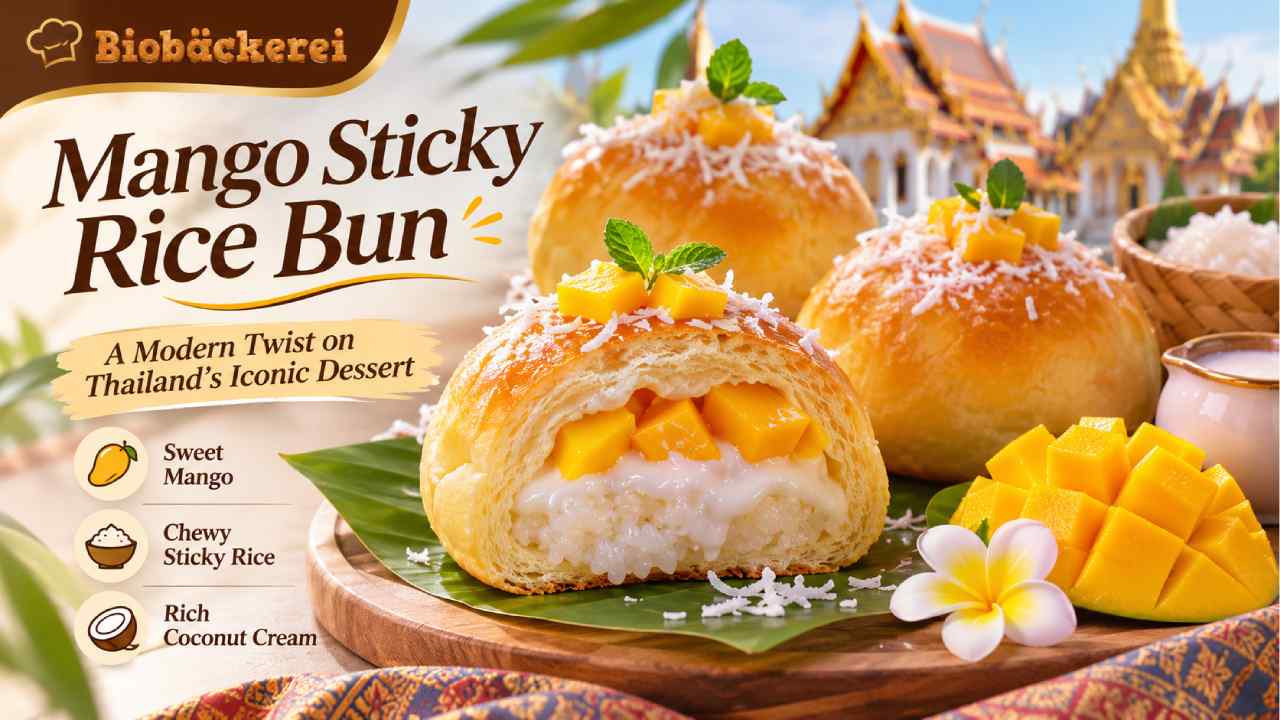
Mango Sticky Rice Bun Brings a Modern Twist to Thai Desserts
Biobaeckerei – Mango Sticky Rice Bun offers a creative interpretation of Thailand’s beloved mango sticky rice dessert. This modern pastry combines fluffy bread, sweet mango, coconut cream, and tender sticky rice. As a result, it creates an interesting balance of tropical flavors and comforting textures. Traditional mango sticky rice is usually served with fresh mango and coconut-infused glutinous rice. However, the bun version transforms those familiar ingredients into a convenient bakery treat. The soft bread provides a gentle contrast to the chewy rice filling. Meanwhile, coconut cream adds richness without overpowering the fruit. This combination offers an appealing option for people who enjoy Asian-inspired desserts. Moreover, its colorful presentation makes it suitable for creative bakery menus and homemade celebrations.
Read Also: Panda Express Unveils Triple Chocolate Rangoons, a New Dessert Sensation
Traditional Mango Sticky Rice Inspires a Modern Bakery Creation
The inspiration behind Mango Sticky Rice Bun comes from khao niao mamuang, a traditional Thai dessert. This classic dish features glutinous rice, ripe mango, and sweetened coconut milk. Its popularity reflects the natural harmony between tropical fruit and creamy rice. However, adapting these ingredients into bread introduces a different eating experience. The bun provides a soft exterior that complements the familiar filling. Additionally, the combination allows bakers to explore new textures while preserving recognizable flavors. Unlike traditional plated desserts, this version can be served as an individual pastry. Therefore, it offers greater convenience for casual dining and bakery displays. The concept demonstrates how traditional culinary elements can inspire modern creations without replacing their cultural origins.
Sweet Mango and Coconut Cream Create a Balanced Flavor
The flavor of Mango Sticky Rice Bun depends heavily on ingredient quality. Ripe mango provides natural sweetness, fragrance, and a refreshing tropical character. Meanwhile, coconut cream introduces a smooth texture and gentle richness. Together, these ingredients create a balanced filling that complements soft bread. However, excessive sugar can overwhelm the mango’s natural flavor. Therefore, bakers should adjust sweetness according to the fruit’s ripeness. A small amount of salt can also enhance the coconut flavor. Additionally, using fresh mango helps maintain a pleasant contrast between creamy and fruity elements. The result should taste rich without becoming overly heavy. This careful balance makes the dessert enjoyable while preserving the recognizable character of Thai mango sticky rice.
Soft Bread and Chewy Sticky Rice Offer Unique Textures
Texture plays an important role in the appeal of Mango Sticky Rice Bun. The bread should feel light, tender, and slightly buttery. In contrast, glutinous rice provides a soft yet pleasantly chewy filling. This combination creates a distinctive experience with every bite. Moreover, coconut cream helps connect the different textures through its smooth consistency. However, preparing the rice correctly is essential. Undercooked grains can feel unpleasantly firm, while excessive moisture may make the bread soggy. Therefore, the sticky rice should be cooked thoroughly and cooled before assembly. Bakers can also use a thicker coconut filling to improve stability. With careful preparation, the finished bun offers a satisfying contrast between fluffy bread and traditional Thai dessert ingredients.
Creative Presentation Makes Mango Sticky Rice Bun More Appealing
Presentation can transform Mango Sticky Rice Bun into an attractive bakery centerpiece. Its golden bread exterior provides a warm background for bright yellow mango pieces. Meanwhile, white coconut cream adds an elegant visual contrast. Bakers can create an open-faced bun with mango slices arranged across the top. Alternatively, they can fill the bread and finish it with a small swirl of coconut cream. Additionally, toasted coconut flakes provide extra texture and visual interest. However, decoration should remain simple enough to highlight the main ingredients. A carefully arranged bun often looks more appealing than one covered with excessive toppings. Therefore, thoughtful presentation can enhance the dessert’s identity while keeping its tropical character recognizable.
Mango Sticky Rice Bun Reflects the Creativity of Fusion Baking
Fusion baking encourages the combination of familiar culinary traditions with new preparation methods. Mango Sticky Rice Bun represents this approach through its blend of Thai dessert flavors and soft bakery bread. Although the concept is modern, its foundation remains connected to traditional ingredients. Moreover, the combination allows bakers to experiment with different bread styles. Japanese milk bread, brioche, or lightly sweetened rolls can provide suitable bases. Each option creates a slightly different texture and flavor. However, the mango and coconut elements should remain central to the recipe. Otherwise, the dessert may lose its distinctive identity. By maintaining that balance, bakers can develop creative pastries that respect their culinary inspiration.
Homemade Mango Sticky Rice Buns Offer Room for Experimentation
Preparing Mango Sticky Rice Buns at home allows greater control over ingredients and sweetness. Home bakers can begin with a simple enriched bread dough. After baking, the buns should cool before receiving their fillings. Meanwhile, glutinous rice can be steamed and mixed with sweetened coconut milk. Fresh mango should be added close to serving time to preserve its texture. Additionally, a thick coconut cream filling can help prevent excessive moisture. Bakers may also experiment with different mango varieties according to availability. However, very watery fruit can affect the bread’s structure. Therefore, careful ingredient preparation remains important. With a little practice, this dessert can become an enjoyable homemade treat for family gatherings or special occasions.
Tropical Dessert Flavors Create Opportunities for Bakery Menus
Mango Sticky Rice Bun offers an interesting option for bakeries exploring tropical dessert flavors. Its familiar ingredients can appeal to customers who already enjoy mango sticky rice. Meanwhile, the bread format introduces a convenient alternative to traditional plated desserts. This combination may work well in cafés, specialty bakeries, and seasonal menus. Additionally, individual portions allow businesses to experiment with presentation and serving sizes. However, commercial success depends on more than appearance. Ingredient costs, freshness, preparation time, and customer preferences also matter. Fresh mango and coconut-based fillings require careful handling to maintain quality. Therefore, bakeries should evaluate storage conditions and production methods before introducing the product. A well-developed recipe can provide a distinctive addition to a creative dessert selection.
Fresh Ingredients and Proper Storage Help Maintain Dessert Quality
Freshness is especially important when preparing Mango Sticky Rice Bun. Ripe mango delivers the best flavor when handled carefully and served promptly. Meanwhile, coconut cream and cooked sticky rice require appropriate temperature control. These ingredients can deteriorate when left at room temperature for extended periods. Therefore, filled buns should be refrigerated promptly and kept at 4°C or below. However, refrigeration can gradually change the texture of bread and sticky rice. For the best eating experience, bakers can store components separately and assemble them shortly before serving. Additionally, clean utensils and food-safe containers help reduce contamination risks. Proper preparation and storage allow the dessert to retain its appealing flavor, texture, and presentation.
