
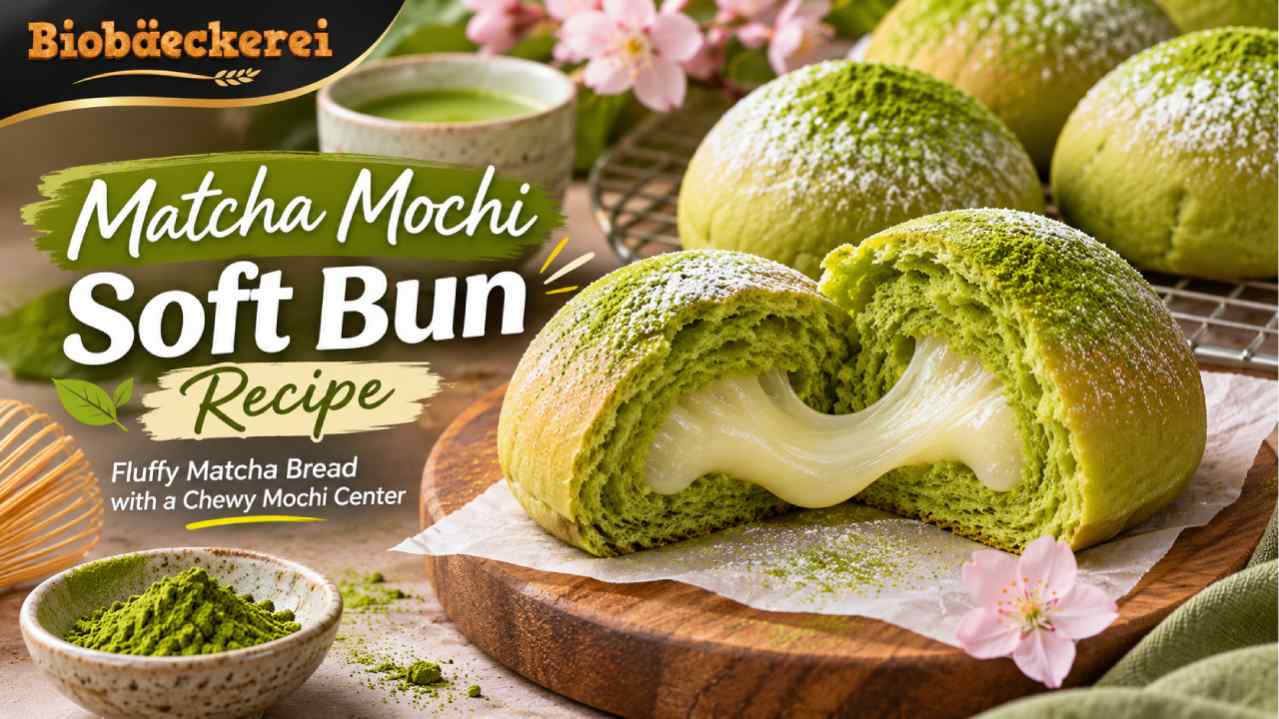
Matcha Mochi Soft Bun Recipe with an Irresistibly Chewy Center
Biobaeckerei – Matcha Mochi Soft Bun combines fluffy green tea bread with a pleasantly chewy mochi center. This Japanese-inspired bakery treat offers two contrasting textures in every bite. Moreover, its gentle sweetness balances the earthy flavor of matcha beautifully. The vibrant green appearance also makes these buns especially appealing. Unlike ordinary sweet bread, this recipe introduces a soft rice cake filling inside a tender bun. As a result, each bite feels more interesting and satisfying. The combination works particularly well with warm tea or freshly brewed coffee. Additionally, home bakers can adjust the sweetness to suit their preferences. With simple ingredients and careful preparation, this delightful treat can become a favorite homemade dessert.
Read Also: Salmon Quinoa Burger: A Healthy, Protein-Packed Modern Delight
Why Matcha and Mochi Create Such an Appealing Combination
Matcha brings a distinctive earthy flavor that complements the mild sweetness of mochi. Meanwhile, the chewy rice cake filling adds a playful contrast to the fluffy bread. Together, these elements create a balanced dessert with an appealing texture. Furthermore, matcha contains natural compounds called catechins, which contribute to its antioxidant properties. However, this sweet bread remains an occasional treat rather than a health food. Its main appeal comes from its flavor and texture. Interestingly, the combination also reflects the creativity of modern Asian-inspired baking. Traditional ingredients can produce exciting results when paired with familiar bread-making techniques.
Essential Ingredients for Making Matcha Mochi Soft Bun
Preparing Matcha Mochi Soft Bun requires two main components. The first creates a fluffy matcha bread, while the second provides a chewy mochi filling. Therefore, measuring each ingredient carefully helps produce consistent results. For the bread dough, prepare 250 grams of bread flour, 15 grams of matcha powder, and 35 grams of granulated sugar. Additionally, use 4 grams of instant yeast, 3 grams of salt, one large egg, 110 milliliters of lukewarm milk, and 30 grams of softened unsalted butter. Meanwhile, the mochi filling requires 100 grams of glutinous rice flour, 30 grams of sugar, 150 milliliters of milk, and 10 grams of butter. Keep 15 grams of cornstarch available for dusting if needed. These quantities make approximately eight medium-sized buns. Culinary-grade matcha works particularly well because it provides a pleasant flavor and attractive color.
How to Prepare the Perfect Matcha Bread Dough
The bread dough forms the soft outer layer of each bun. Therefore, proper mixing and kneading are essential for achieving a light texture. First, combine bread flour, matcha powder, sugar, instant yeast, and salt in a large mixing bowl. Next, add the egg and lukewarm milk while mixing until a rough dough forms. Knead the mixture for approximately five minutes until it begins developing elasticity. Afterward, gradually incorporate the softened butter and continue kneading for another eight to ten minutes. The finished dough should feel smooth, elastic, and slightly tacky. Then, transfer it into a lightly greased bowl and cover it with a clean kitchen towel. Allow the dough to rise for approximately 60–90 minutes or until doubled in size. Meanwhile, avoid adding excessive flour because this can produce dense bread. Proper fermentation helps create the fluffy texture that makes these buns especially enjoyable.
Making a Smooth and Chewy Mochi Filling
The mochi filling gives this recipe its signature chewy center. Unlike the bread dough, mochi relies on glutinous rice flour for its elastic texture. Consequently, the cooking process requires gentle heat and consistent stirring. First, combine glutinous rice flour, sugar, and milk in a nonstick saucepan. Whisk thoroughly until the mixture becomes smooth and free from lumps. Next, cook over low heat while stirring continuously with a silicone spatula. As the mixture heats, it gradually becomes thicker and more elastic. Continue cooking until the mochi looks glossy and stretchy, ensuring the flour cooks completely. Afterward, remove the saucepan from the heat and incorporate the butter. Transfer the mixture onto a lightly greased plate and allow it to cool. Finally, divide the mochi into eight equal portions. Lightly greasing your hands helps prevent sticking during shaping.
Shaping Matcha Mochi Soft Bun for a Beautiful Finish
Once the dough has risen, shaping becomes the next important stage. Proper sealing helps prevent the mochi filling from escaping during baking. Furthermore, evenly sized portions promote consistent cooking. First, gently press the risen dough to release excess gas. Divide it into eight equal portions and roll each piece into a smooth ball. Next, allow the dough balls to rest for approximately ten minutes. Flatten one portion into a small circle while keeping the center slightly thicker. Then, place one portion of cooled mochi filling in the middle. Carefully gather the dough edges around the filling and pinch them together securely. Afterward, position the bun seam-side down on a lined baking tray. Repeat the process until all eight buns are assembled. Additionally, leave enough space between each bun to accommodate the final rise. Gentle handling helps preserve the dough’s elasticity and creates a more attractive bakery-style appearance.
Baking Matcha Mochi Soft Bun Until Light and Fluffy
Baking requires a balanced temperature to preserve the buns’ softness. Excessive heat can dry the bread and darken its delicate green color. Therefore, moderate oven temperatures generally produce better results. First, cover the shaped buns loosely with a clean kitchen towel. Allow them to rise for another 30–45 minutes until noticeably puffy. Meanwhile, preheat the oven to 170°C or 340°F using conventional heat. Next, lightly brush the buns with milk to create a delicate finish. Bake for approximately 15–20 minutes until the bread becomes fully cooked. The outer layer should feel set and spring back gently when touched. Afterward, remove the buns from the oven and transfer them onto a cooling rack. Allow them to cool slightly before serving. Since oven temperatures vary, monitor the buns during the final minutes. This approach helps maintain tender bread and pleasantly chewy mochi.
Simple Baking Tips for Better Texture and Flavor
Small adjustments can significantly improve homemade Matcha Mochi Soft Bun. In particular, ingredient temperature and dough consistency influence the finished texture. Therefore, careful preparation matters as much as the baking process. First, choose fresh culinary-grade matcha for a pleasant flavor without excessive bitterness. Next, measure the flour accurately using a kitchen scale. This technique helps prevent dry or dense bread. Additionally, use lukewarm milk because excessive heat can damage the yeast. Knead the dough until it becomes smooth and elastic to support a fluffy structure. Meanwhile, allow the mochi filling to cool before assembling the buns. Warm filling can make the dough difficult to seal. Furthermore, monitor fermentation carefully rather than relying entirely on timing. Finally, avoid overbaking because excessive heat reduces moisture. These simple techniques help create softer bread, better flavor, and a satisfying chewy center.
Creative Variations to Make Matcha Mochi Buns More Exciting
Although the original recipe tastes delicious, several variations can introduce new flavors. For example, white chocolate creates a sweeter contrast against earthy matcha. Meanwhile, red bean paste adds a traditional Japanese-inspired element. Another interesting option involves placing a small amount of sweetened cream cheese alongside the mochi. This combination creates a creamy and chewy center. However, avoid overfilling the buns because excess moisture can weaken the dough. For a richer dessert, drizzle cooled buns with melted white chocolate. Alternatively, sprinkle a little matcha powder over the surface. Toasted sesame seeds can also introduce a subtle nutty flavor. These finishing touches enhance presentation without requiring complicated techniques. As a result, home bakers can create several variations from one versatile recipe. Experimenting with different fillings also makes the baking experience more enjoyable.
Serving Matcha Mochi Soft Bun for the Best Experience
Freshly baked Matcha Mochi Soft Bun tastes especially enjoyable when slightly warm. At this temperature, the bread remains tender while the mochi offers a satisfying chew. Moreover, the matcha aroma becomes more noticeable. For breakfast, pair the buns with unsweetened green tea or warm milk. Meanwhile, afternoon gatherings offer an excellent opportunity to serve them with freshly brewed coffee. The mild bitterness of these drinks balances the bread’s sweetness. Presentation also contributes to the overall experience. Arrange the buns on a simple ceramic plate and add a light matcha dusting. For a more indulgent serving, include fresh strawberries or a small portion of whipped cream. These additions create an attractive dessert without overwhelming its original flavors. Additionally, serving the buns while fresh allows everyone to appreciate their contrasting textures.
How to Store and Reheat Homemade Matcha Mochi Buns
Proper storage helps maintain the quality of homemade buns. However, mochi naturally changes texture as it cools and ages. Therefore, these buns taste best on the day of baking. For short-term storage, place completely cooled buns inside an airtight container. Keep them at room temperature for up to one day in a cool environment. In hot or humid conditions, refrigerate them promptly instead. Alternatively, freeze individual buns in tightly sealed freezer-safe packaging for up to one month. When ready to enjoy, thaw them in the refrigerator. Then, reheat gently until the bread becomes soft and the center warms through. For refrigerated leftovers, reheat until steaming hot throughout. Avoid repeated reheating because it can dry the bread and toughen the mochi. With careful storage, these homemade treats can remain enjoyable beyond their first serving.
