
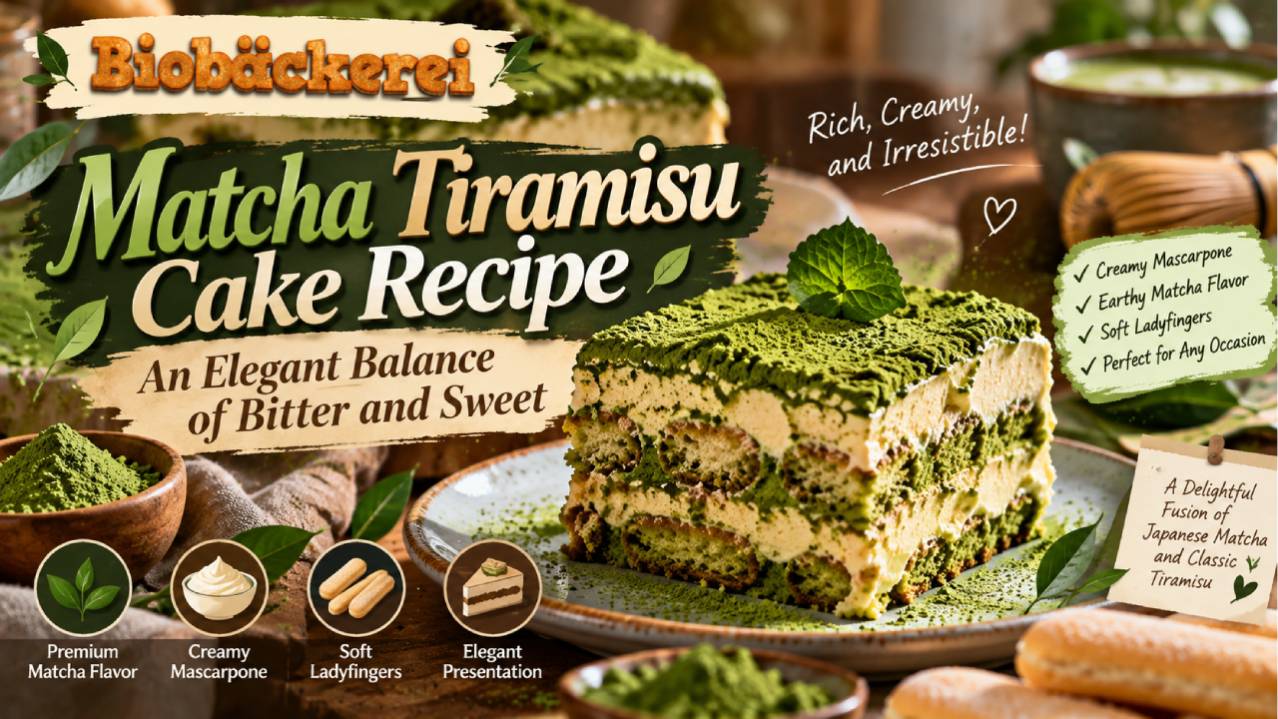
Matcha Tiramisu Cake Recipe, an Elegant Balance of Bitter and Sweet
Biobaeckerei – A Matcha Tiramisu Cake Recipe brings Japanese green tea character into an Italian-inspired layered dessert. Traditional tiramisu usually combines coffee-soaked ladyfingers with a rich mascarpone mixture and cocoa. In this variation, matcha replaces the dominant coffee flavor and adds a fresh, earthy bitterness. As a result, every spoonful feels creamy yet balanced rather than overwhelmingly sweet. The green color also gives the dessert an elegant appearance without complicated decoration. However, choosing good matcha matters because the powder shapes both the flavor and color. A fresh matcha with a vibrant green tone usually delivers a cleaner taste than an old or poorly stored powder. Meanwhile, mascarpone provides the familiar richness associated with tiramisu. Ladyfingers create structure while absorbing the matcha mixture between each layer. Therefore, the finished cake offers several contrasts at once: soft and creamy, sweet and bitter, familiar yet slightly unexpected.
Read Also: Classic French Paris-Brest with Silky Praline Cream
Ingredients for a Creamy Matcha Tiramisu Cake
The ingredients for this Matcha Tiramisu Cake Recipe are simple, but their quality can influence the final result. Use fresh mascarpone and heavy cream for a smooth filling. In addition, sift the matcha before mixing because the fine powder can form small lumps. This version uses a no-raw-egg cream, which keeps preparation straightforward. The recipe works well in an approximately 20-centimeter square dish.
For the matcha soak:
● 2 tablespoons matcha powder
● 240 ml warm water, about 80°C
● 2 tablespoons granulated sugar
For the mascarpone cream:
● 250 g mascarpone cheese
● 300 ml cold heavy whipping cream
● 70 g powdered sugar
● 1 teaspoon vanilla extract
● A small pinch of salt
For assembling:
● 200–250 g ladyfingers
● 1–2 tablespoons matcha powder for dusting
These quantities produce distinct layers without making the cream excessively heavy. However, the amount of ladyfingers may vary slightly depending on the size and shape of the serving dish.
Prepare the Matcha Mixture Without Making It Too Bitter
Good matcha preparation gives this dessert a cleaner finish. First, sift two tablespoons of matcha into a medium bowl. Next, add a small amount of warm water and whisk until the mixture becomes smooth. Gradually pour in the remaining water while continuing to whisk. Then, stir in the sugar until it dissolves. Avoid boiling water because very hot water can emphasize harsh or astringent notes. Water around 80°C works well for this dessert. Afterward, leave the mixture to cool completely before dipping the ladyfingers. This step is important because warm liquid can soften the biscuits too quickly. Moreover, it may affect the texture of the mascarpone layer during assembly. Taste the matcha mixture once it has cooled. It should have noticeable bitterness with gentle sweetness in the background. That contrast forms the foundation of this Matcha Tiramisu Cake Recipe, so avoid adding excessive sugar merely to hide matcha’s natural character.
Whip the Mascarpone Cream Until Light and Smooth
The cream should feel rich without becoming dense. Begin by placing the cold heavy cream and powdered sugar in a clean bowl. Whip them until soft to medium peaks form. In another bowl, gently loosen the mascarpone with vanilla and a small pinch of salt. Do not beat mascarpone aggressively because excessive mixing can make its texture grainy or unstable. Next, fold part of the whipped cream into the mascarpone. Once incorporated, gently fold in the remaining cream. Use a spatula and broad movements to preserve as much air as possible. The finished mixture should hold its shape while remaining soft enough to spread. This texture creates the signature creamy sensation of a Matcha Tiramisu Cake Recipe. If the cream feels too loose, refrigerate it briefly before assembling the dessert. Conversely, avoid continuing to whip an already firm mixture. Overworking dairy can separate the fat and liquid, producing a less attractive filling. Gentle handling gives the cake a smoother, more luxurious finish.
Build the Layers Without Oversoaking the Ladyfingers
Assembly is where the dessert begins to take shape. First, pour the cooled matcha mixture into a shallow bowl. Dip each ladyfinger quickly on both sides. A brief dip is enough because the biscuits continue absorbing moisture while the cake rests. If they remain submerged for too long, the finished dessert may become watery. Arrange the dipped ladyfingers closely across the bottom of the dish. Next, spread half of the mascarpone cream evenly over them. Add another layer of matcha-dipped ladyfingers, followed by the remaining cream. Smooth the surface with an offset spatula or the back of a spoon. At this stage, the Matcha Tiramisu Cake Recipe should already display clear biscuit and cream layers. However, do not dust the final matcha immediately if you plan to refrigerate it overnight. Matcha can absorb surface moisture and darken. For a brighter presentation, add the final powder shortly before serving.
Chilling Gives Matcha Tiramisu Its Signature Texture
Patience makes a noticeable difference in tiramisu. Once assembled, cover the dish and place it in the refrigerator for at least six hours. Overnight chilling is even better when time allows. During this period, the ladyfingers absorb moisture from the matcha soak and mascarpone cream. Therefore, the layers become tender while still retaining enough structure to serve neatly. The flavors also have time to settle together. The initial bitterness of matcha becomes more integrated with the creamy filling. Meanwhile, vanilla and mascarpone soften its sharper edges. This resting period is one reason a Matcha Tiramisu Cake Recipe works well as a make-ahead dessert. You can prepare it in the evening and serve it the following day without rushing. Keep the cake refrigerated because mascarpone and whipped cream are perishable dairy products. Also, return leftovers to the refrigerator promptly after serving. Proper chilling protects both the dessert’s texture and its food safety.
A Final Matcha Dusting Creates an Elegant Finish
Presentation does not need to be complicated. Shortly before serving, place matcha powder in a fine sieve. Dust a thin, even layer across the chilled mascarpone surface. The vivid green powder immediately gives the cake a refined appearance. However, more matcha does not automatically produce a better dessert. A very thick coating can dominate the first bite and create an unpleasant powdery texture. Instead, use enough to provide aroma, color, and gentle bitterness. For individual servings, cut the chilled cake with a clean knife and wipe the blade between slices. You can also serve it directly from the dish with a wide spoon for a softer, rustic presentation. White ceramic plates work particularly well because they emphasize matcha’s natural green color. Meanwhile, fresh strawberries can provide a colorful accent, although they are optional. The strongest version of this Matcha Tiramisu Cake Recipe remains visually simple. Its appeal comes from clean layers, creamy texture, and the contrast between pale mascarpone and green tea.
Small Adjustments Can Make the Flavor More Balanced
A successful matcha dessert depends on balance. If the finished cake tastes too sweet, slightly reduce the powdered sugar in the mascarpone cream next time. If matcha feels overpowering, reduce the amount used in the soak rather than compensating with excessive sugar. Meanwhile, anyone who prefers stronger green tea character can add a small amount of sifted matcha to the mascarpone mixture. However, add it gradually. Matcha differs in intensity between products, so a fixed amount will not taste identical with every brand. Also, keep the powder sealed away from heat, moisture, light, and strong odors. These factors can affect its aroma and color. Most importantly, remember that this Matcha Tiramisu Cake Recipe is built around contrast. The slight bitterness should remain noticeable because it prevents the dairy filling from becoming overly rich. When the proportions are right, matcha and mascarpone complement rather than compete with each other.
