
Twisted Bread Goes Viral as Its Beautiful Shape Makes Bread More Appealing
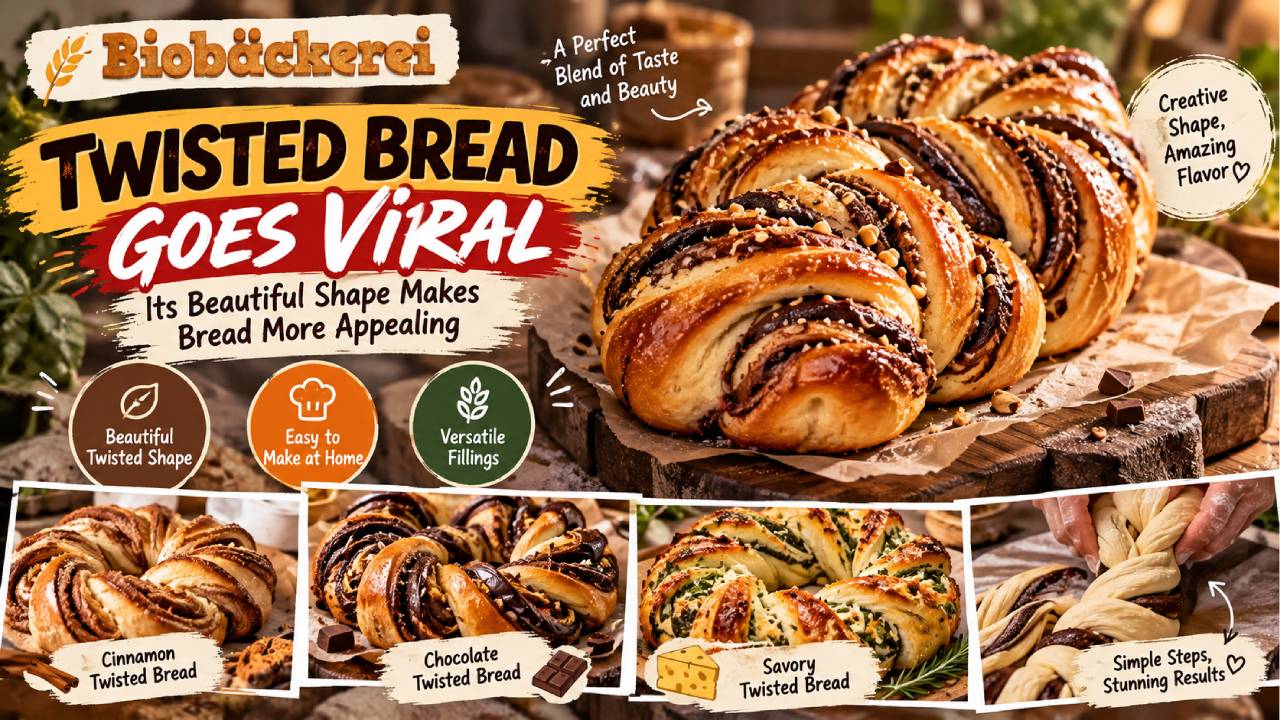
Biobaeckerei – Viral Twisted Bread shows how creative shaping can transform ordinary dough into a striking centerpiece. Instead of forming the dough into a basic loaf, bakers roll, fill, cut, and twist it before baking. The technique exposes multiple layers and creates an attractive pattern across the surface. As a result, the finished bread can look complicated even when the basic dough remains relatively simple. Similar shaping methods have existed for years across many baking traditions. Therefore, twisted bread should not be treated as one newly invented or standardized recipe. The modern trend is better understood as a broad baking style. Social media has simply given these decorative loaves a larger audience. Sweet versions may feature cinnamon, chocolate, nuts, or fruit preserves. Meanwhile, savory versions can include cheese, herbs, garlic, or pesto. This flexibility is one reason the style continues to attract home bakers.
Read Also: Brazilian-Italian Flavors Collide at New Los Angeles Restaurant Briciola
The Twisted Shape Creates Its Signature Visual Appeal
The shape is naturally the first thing people notice. Bakers commonly roll dough into a rectangle before spreading a relatively thin layer of filling across it. Next, they roll the dough into a log. Depending on the desired design, the log can be sliced lengthwise and twisted with its cut surfaces facing outward. This exposes the filling and creates visible layers. Another approach divides the dough into ropes before twisting or braiding them together. Although the techniques differ, the goal remains similar. Each turn creates contrast between the dough and filling. Furthermore, the surface develops more ridges and edges during baking. Those raised areas can brown more prominently than protected sections. Consequently, the loaf gains visual depth. However, beautiful shaping still depends on proper dough handling. Dough that is extremely sticky or overly soft can lose definition, while dough that is too dry may become difficult to stretch without tearing.
Twisted Bread Has Connections to Several Baking Traditions
Decorative twisted bread is not exclusive to a single country. Braiding and twisting have long appeared in different bread traditions. Challah, for example, is widely recognized for braided forms, although its traditional identity extends far beyond appearance. Central and Eastern European baking traditions also include elaborate enriched breads. Meanwhile, babka is known for rolled dough with filling that can create dramatic interior swirls. Scandinavian baking provides additional examples of shaped sweet buns featuring cinnamon and other aromatic fillings. Modern twisted loaves can borrow visual ideas from these techniques without necessarily being authentic versions of those traditional breads. That distinction matters. Calling every chocolate-filled twist “babka,” for example, can erase meaningful differences in recipes and cultural histories. A more accurate description is simply twisted or braided bread unless a recipe intentionally follows a particular tradition. Modern bakers can then experiment freely while still respecting the origins of established baked goods.
A Soft Enriched Dough Works Well for Many Variations
Many decorative twisted breads use enriched yeast dough because it combines softness with enough structure for shaping. Flour provides the framework, while yeast creates fermentation. Milk or water supplies hydration. Meanwhile, eggs, butter, sugar, or oil may enrich the dough depending on the recipe. These ingredients can produce a softer crumb and richer flavor than lean bread made only with flour, water, yeast, and salt. However, enrichment also changes fermentation. Large amounts of fat and sugar can slow yeast activity, so enriched dough may require more patience. Gluten development is equally important. Properly developed dough stretches more easily during rolling and shaping. Therefore, kneading should continue until the dough becomes smooth and elastic according to the recipe being followed. Nevertheless, adding excessive flour simply because the dough feels slightly tacky can produce a drier loaf. Accurate measurements and attention to dough texture usually provide better results than constantly dusting the work surface.
Chocolate Creates a Dramatic Pattern Inside Every Twist
Chocolate is particularly effective in twisted bread because its dark color contrasts strongly with pale dough. Bakers can use chocolate spread, finely chopped chocolate, cocoa-based filling, or a combination of ingredients. However, the filling should remain controlled. An excessively thick layer can squeeze out when the dough is rolled and twisted. Therefore, leaving a small border around the edges can make shaping easier. After the filled dough becomes a log, cutting it lengthwise reveals the chocolate layers inside. The two exposed strands can then be twisted together. Once baked, the alternating dough and chocolate create an attractive pattern. Nuts can provide additional texture, while citrus zest can balance sweetness with fresh aroma. Even so, the final flavor depends on ingredient proportions rather than appearance alone. A visually impressive loaf still needs balanced sweetness, sufficient salt, and properly fermented dough to become genuinely enjoyable.
Cinnamon Sugar Offers a Simple Starting Point for Home Bakers
Cinnamon sugar is another practical filling for twisted bread. It requires relatively few ingredients, yet it creates clear layers and a familiar aroma. A common approach uses softened butter followed by sugar and cinnamon. Some recipes may also include cardamom, brown sugar, nuts, or vanilla. The filling should spread evenly so every section receives similar flavor. However, too much loose sugar can escape during shaping and caramelize on the baking surface. For beginners, a moderate amount is usually easier to manage. Once shaped, the loaf can be placed in a pan or baked free-form if the dough has enough structure. An egg wash may help produce a glossy surface, depending on the recipe. After baking, a light glaze can add sweetness. Alternatively, leaving the loaf unglazed highlights its golden crust and twisted structure. This straightforward combination makes cinnamon twisted bread a useful introduction to decorative bread shaping.
Savory Twisted Bread Opens Another Range of Possibilities
Twisted bread does not need to be sweet. Savory fillings can turn the same shaping concept into bread for lunch, dinner, or sharing. Garlic butter and herbs provide a simple starting point. Cheese can add richness, while pesto creates both flavor and visual contrast. Other combinations might include caramelized onion, roasted vegetables, or carefully selected spices. However, moisture becomes especially important with savory ingredients. Wet vegetables or excessive sauce can make the dough slippery and prevent clean layers. Therefore, fillings should generally be cooled and drained when necessary before they touch the dough. Cheese also needs thoughtful placement because melted filling may escape during baking. Despite these challenges, savory twists can be highly versatile. They can accompany soup, become part of a brunch table, or work as a shareable snack. The decorative appearance also makes them suitable for gatherings without requiring elaborate finishing after baking.
Fermentation Still Matters More Than an Attractive Shape
A beautiful twist cannot compensate for poorly fermented dough. Yeast needs sufficient time to produce gas and develop flavor. However, proofing times should be treated as guidelines rather than absolute rules because dough temperature, room temperature, yeast quantity, and recipe composition all affect fermentation speed. During the first rise, bakers should observe the dough rather than relying only on a timer. After shaping, a second proof usually allows the dough to expand again before baking. Underproofed bread may have a dense crumb and can split unpredictably. On the other hand, excessive proofing can weaken the structure and reduce oven spring. Decorative breads introduce another challenge because intricate shapes can make expansion less uniform. Therefore, gentle handling is important after shaping. A slightly imperfect twist can still bake beautifully, while aggressively manipulating well-proofed dough may remove too much accumulated gas.
Proper Baking Determines Texture as Much as the Recipe
Oven temperature plays an important role in the final result. If the oven is too cool, enriched bread may dry before developing an appealing crust. Meanwhile, excessive heat can darken exposed twists before the center finishes baking. The ideal temperature depends on loaf size, ingredients, pan material, and recipe design. Therefore, bakers should follow a tested recipe instead of assuming one temperature suits every twisted loaf. An instant-read thermometer can also help when internal doneness is difficult to judge, although appropriate target temperatures vary somewhat by bread type and formulation. Visual signs remain useful. A properly baked loaf should have good color and a set structure. If the surface browns too quickly, loosely covering it during the later stage of baking may help. After baking, cooling is also important because the crumb continues setting as heat and moisture redistribute through the loaf.
Social Media Gives Decorative Bread a Natural Advantage
Twisted bread fits particularly well into visual platforms because the baking process contains several satisfying stages. A simple sheet of dough becomes filled, rolled, sliced, twisted, proofed, and finally baked. Each step creates a clear transformation that works well in short-form videos. Cutting the finished loaf provides another visual moment because the interior layers become visible. However, online popularity does not automatically mean one particular twisted bread recipe has become universally popular. Trends can vary by platform, country, creator, and audience. Therefore, the word “viral” is best used to describe strong online attention rather than a precise measure of worldwide popularity. What is clear is that decorative bread has characteristics that suit social media extremely well. It is recognizable, visually satisfying, customizable, and possible to recreate at home. Those qualities give twisted bread lasting potential beyond a single viral post.
Beginners Can Get Better Results by Keeping the Design Simple
The most elaborate twisted breads can look intimidating, but beginners do not need complicated patterns. A two-strand twist is enough to create a dramatic loaf. Start with dough that has been kneaded and fermented properly. Then, roll it evenly and apply a thin layer of filling. After forming a log, chilling it briefly may make cutting easier in some recipes, especially when using soft fillings. A sharp knife or bench scraper can help produce cleaner sections. Next, keep the exposed layers facing upward while twisting the strands. The pattern does not need to be perfectly symmetrical. In fact, slight irregularities often create an appealing handmade appearance after the dough expands in the oven. Most importantly, bakers should avoid sacrificing dough quality for decoration. Good fermentation, balanced filling, and proper baking remain the foundations. Once those skills become comfortable, more complex knots and braids become much easier to explore.
Food Safety Remains Important When Using Perishable Fillings
Decorative bread can include ingredients that require additional food-safety attention. Cream cheese, custard, meat, and certain dairy-heavy fillings should not be treated like shelf-stable cinnamon sugar. Storage requirements depend on the final recipe and its ingredients. The U.S. Food and Drug Administration recommends keeping refrigerators at 40°F (4°C) or below for foods requiring refrigeration. Therefore, bakers should follow appropriate storage guidance when using perishable fillings. Clean hands, utensils, and work surfaces are also important throughout preparation. Additionally, raw flour and raw eggs should not be tasted in uncooked dough. Baking makes the finished product safe when appropriate temperatures and handling practices are followed. These details may seem less exciting than shaping, but they are part of responsible baking. A beautiful loaf should be enjoyable visually while also being prepared and stored with appropriate care.
Viral Twisted Bread Proves Presentation Can Transform a Familiar Loaf
Viral Twisted Bread demonstrates how shaping can give familiar ingredients an entirely different personality. Flour, yeast, liquid, salt, and optional enrichment can become something visually impressive through a few careful cuts and twists. Sweet fillings such as cinnamon or chocolate create dramatic layers. Meanwhile, cheese, herbs, and pesto can turn the concept into a savory centerpiece. Still, the trend is not defined by one universal recipe. Twisting and braiding belong to a much longer history of decorative breadmaking across different cultures. Modern social media has simply introduced these techniques to new audiences and encouraged endless variations. For home bakers, that flexibility is part of the appeal. The first loaf does not need perfect symmetry. Good dough, controlled filling, proper fermentation, and careful baking matter more. Once those foundations are established, every twist becomes an opportunity to turn ordinary bread into something both delicious and visually memorable.
