
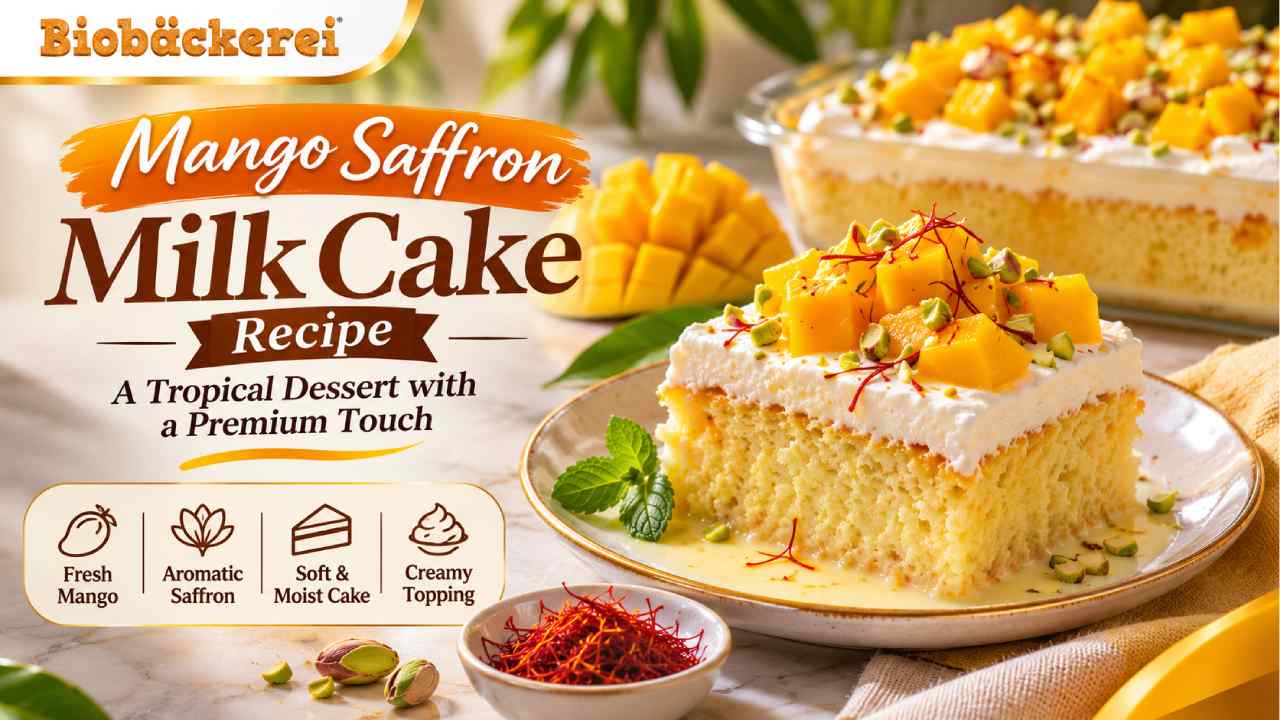
Mango Saffron Milk Cake Recipe: A Tropical Dessert with a Premium Touch
Biobaeckerei – Desserts become memorable when familiar ingredients create something unexpectedly special. The Mango Saffron Milk Cake offers exactly that experience through its delicate texture, tropical sweetness, and aromatic finish. Inspired by the comforting appeal of milk-soaked cakes, this dessert combines fluffy vanilla sponge with fragrant saffron-infused milk. Fresh mango adds natural sweetness and a refreshing contrast to the creamy layers. Meanwhile, saffron introduces a subtle floral aroma and a beautiful golden color. Together, these ingredients create a dessert that feels luxurious without requiring complicated techniques. Moreover, the recipe works beautifully for family gatherings, celebrations, or relaxed weekend treats. Its elegant presentation makes it particularly appealing to anyone who enjoys modern bakery-style desserts. Unlike traditional butter-heavy cakes, this version focuses on moisture and lightness. As a result, every spoonful delivers a soft, creamy texture balanced by the bright flavor of ripe mango.
Read Also: Spinach Tamagoyaki Combines Fluffy Eggs with Fresh Green Spinach
The Secret Behind the Perfect Mango and Saffron Combination
The beauty of Mango Saffron Milk Cake comes from the natural harmony between its main ingredients. Mango provides fruity sweetness, while saffron contributes a warm, floral fragrance. However, achieving the right balance requires careful ingredient selection. Fully ripe mangoes work best because their flesh tastes naturally sweet and offers a smooth texture. Alphonso, Kesar, or other fragrant dessert mango varieties are excellent choices when available. Meanwhile, saffron should be used sparingly because its flavor can become overpowering. A small pinch is usually enough to perfume the milk mixture. Additionally, warm milk helps release saffron’s color and aroma before the liquid reaches the cake. This simple step creates a more evenly flavored dessert. The combination also benefits from a lightly sweetened sponge, which prevents the final result from becoming excessively rich. Consequently, the mango remains the main flavor, while saffron adds a refined finishing touch.
Essential Ingredients for a Soft and Creamy Milk Cake
Preparing Mango Saffron Milk Cake begins with simple baking ingredients and a few special additions. The sponge requires eggs, flour, sugar, vanilla, and baking powder. Meanwhile, the soaking mixture combines milk, evaporated milk, condensed milk, and saffron. Fresh mango and whipped cream complete the topping. Each component serves a specific purpose in the finished dessert. Eggs help create a light sponge, while flour provides enough structure to absorb the milk. Furthermore, evaporated milk adds richness without making the soaking mixture excessively thick. Condensed milk contributes sweetness, so additional sugar is unnecessary in the milk mixture. For the topping, cold whipping cream produces a smooth texture that complements the fruit. It is also important to choose ripe but firm mangoes. Overripe fruit may release too much liquid and soften the topping. With these ingredients prepared, the recipe becomes straightforward and manageable for home bakers.
Ingredients for the Sponge Cake:
● 4 large eggs, at room temperature
● 100 g granulated sugar
● 120 g all-purpose flour
● 1 teaspoon baking powder
● 1 teaspoon vanilla extract
● 40 ml whole milk
● 30 ml neutral vegetable oil
● ¼ teaspoon salt
Ingredients for the Saffron Milk Soak:
● 200 ml whole milk
● 150 ml evaporated milk
● 100 ml sweetened condensed milk
● 12–15 saffron threads
● 2 tablespoons warm milk for blooming the saffron
Ingredients for the Mango Cream Topping:
● 250 ml cold heavy whipping cream
● 2 tablespoons powdered sugar
● 150 g fresh mango puree
● 1 ripe mango, diced
● 1 tablespoon chopped pistachios, optional
● A few saffron threads for decoration, optional
Preparation Time: 25 minutes
Baking Time: 25–30 minutes
Chilling Time: 4 hours
Servings: 8 portions
Recommended Pan: 20 cm square baking pan
How to Prepare the Perfect Light and Fluffy Sponge Cake
A successful Mango Saffron Milk Cake starts with a sponge that can absorb liquid without collapsing. First, preheat the oven to 170°C and line a 20 cm square baking pan with parchment paper. Next, beat the eggs and sugar until the mixture becomes pale, thick, and noticeably increased in volume. This process usually takes several minutes with an electric mixer. Meanwhile, sift the flour, baking powder, and salt into a separate bowl. Gently fold the dry ingredients into the egg mixture without removing too much air. Then, combine the milk, oil, and vanilla in a small bowl. Mix a little batter into this liquid before folding everything together. Pour the batter into the prepared pan and bake until the center springs back lightly. Finally, allow the cake to cool before adding the saffron milk mixture.
Step-by-Step Baking Instructions:
- Preheat the oven to 170°C and prepare the baking pan.
- Beat the eggs and sugar for approximately 5–7 minutes until thick and fluffy.
- Sift together the flour, baking powder, and salt.
- Gently fold the dry ingredients into the whipped eggs.
- Combine the milk, oil, and vanilla, then incorporate them into the batter.
- Pour the batter into the pan and smooth the surface.
- Bake for 25–30 minutes, or until a toothpick comes out clean.
- Remove the cake from the oven and allow it to cool completely.
Creating the Fragrant Saffron Milk Soaking Mixture
The saffron milk mixture transforms an ordinary sponge into a rich and memorable dessert. Begin by placing the saffron threads in two tablespoons of warm milk. Allow them to steep for approximately ten minutes until the liquid develops a golden color. Meanwhile, combine whole milk, evaporated milk, and sweetened condensed milk in a mixing bowl. Stir until the ingredients form a smooth mixture. Next, add the saffron infusion, including the softened threads, and mix gently. The resulting liquid should taste creamy, lightly sweet, and delicately aromatic. However, avoid adding excessive saffron because its flavor can dominate the mango. Once the sponge has cooled, use a skewer to create small holes across its surface. Slowly pour the milk mixture over the cake in several additions. This gradual method helps distribute moisture evenly. Afterward, refrigerate the soaked cake before adding the topping.
Steps for Preparing the Saffron Milk:
- Warm two tablespoons of milk without bringing it to a boil.
- Add the saffron threads and steep for 10 minutes.
- Combine whole milk, evaporated milk, and condensed milk.
- Stir in the saffron infusion until evenly blended.
- Pierce the cooled sponge with a skewer.
- Slowly pour the milk mixture over the cake.
- Cover and refrigerate for at least 2 hours before decorating.
Making a Smooth Mango Cream for the Perfect Topping
The mango cream topping gives Mango Saffron Milk Cake its signature tropical character. Unlike a heavy buttercream, this topping should feel light and refreshing. Begin by chilling the mixing bowl and beaters for several minutes. Next, whip the cold heavy cream with powdered sugar until medium peaks form. The cream should hold its shape while remaining smooth and spreadable. Meanwhile, prepare the mango puree using ripe fruit without adding water. Gently fold the puree into the whipped cream in small additions. This approach helps maintain the cream’s airy structure. However, avoid overmixing because the topping may lose volume. If the mango puree appears watery, strain some excess liquid before using it. Once the soaked cake has chilled, spread the mango cream evenly across its surface. Finally, add fresh mango pieces and optional pistachios for an elegant bakery-inspired presentation.
Steps for Preparing the Mango Cream:
- Chill the mixing bowl and whipping cream.
- Beat the cream with powdered sugar until medium peaks form.
- Blend ripe mango into a smooth puree.
- Gently fold the mango puree into the whipped cream.
- Spread the cream evenly over the chilled cake.
- Decorate with diced mango, pistachios, and optional saffron.
- Refrigerate until the topping becomes firm enough to slice.
Why Chilling Makes Mango Saffron Milk Cake Taste Better
Chilling is an essential part of preparing a beautifully textured Mango Saffron Milk Cake. Although the dessert can be assembled quickly, its flavors need time to settle. During refrigeration, the sponge gradually absorbs the saffron milk mixture. Consequently, the cake develops a moist and tender texture throughout. Meanwhile, the mango cream becomes firmer, making the dessert easier to serve. A minimum chilling period of four hours works well for the completed cake. However, allowing it to rest overnight can create an even more consistent texture. The cool temperature also makes the mango taste particularly refreshing. For food safety, keep the dessert refrigerated at 4°C or below because it contains dairy and fresh fruit. Additionally, cover the cake carefully to prevent it from absorbing refrigerator odors. Proper chilling improves both presentation and eating quality, turning a simple homemade recipe into an elegant dessert experience.
Creative Presentation Ideas for a Premium Tropical Dessert
Presentation plays an important role in making Mango Saffron Milk Cake feel luxurious. Fortunately, this dessert offers several attractive serving possibilities. For a classic appearance, spread the mango cream evenly and arrange small mango cubes across the surface. Alternatively, create a decorative pattern using thin mango slices. Their natural golden color pairs beautifully with the pale cream topping. Moreover, chopped pistachios introduce a subtle green contrast and a pleasant crunch. A few saffron threads can also enhance the visual appeal without overwhelming the flavor. For individual servings, prepare the cake in small dessert cups using layers of sponge, saffron milk, and mango cream. This variation works particularly well for celebrations and dessert tables. Meanwhile, a rectangular baking dish creates a relaxed, family-style presentation. Regardless of the serving method, keeping the decorations simple allows the natural colors and textures to remain the main attraction.
Common Mistakes to Avoid When Making Mango Milk Cake
Even simple desserts can become disappointing when small preparation details are overlooked. One common mistake involves pouring too much milk onto a sponge that lacks sufficient structure. Although milk cake should be moist, it should not become a shapeless mixture. Therefore, allow the sponge to bake completely before soaking it. Another mistake is using mangoes that are too sour or watery. These fruits can create an unbalanced flavor and weaken the whipped cream topping. Additionally, excessive saffron may introduce bitterness instead of a delicate fragrance. Using a small quantity helps maintain harmony between the ingredients. Overwhipping the cream can also produce a grainy texture, so stop once medium peaks develop. Finally, avoid serving the dessert immediately after assembly. Without enough chilling time, the sponge may absorb the milk unevenly. Careful preparation helps produce a cake with consistent moisture, balanced sweetness, and an appealing appearance.
Easy Variations to Personalize Your Mango Saffron Milk Cake
One of the most appealing qualities of Mango Saffron Milk Cake is its flexibility. Home bakers can adjust several ingredients while preserving the dessert’s tropical character. For example, a small amount of ground cardamom can complement the saffron and introduce a warm aromatic note. Meanwhile, coconut milk may replace part of the whole milk for a more pronounced tropical flavor. However, this adjustment will change the richness and texture slightly. Those who prefer a less sweet dessert can reduce the condensed milk and replace the difference with regular milk. Additionally, toasted coconut flakes offer an alternative to pistachios for decoration. For special occasions, individual dessert glasses provide a convenient way to serve guests. Each variation creates a slightly different experience without changing the basic preparation method. Ultimately, the combination of soft sponge, fragrant milk, and ripe mango provides a versatile foundation for creative homemade desserts.
