
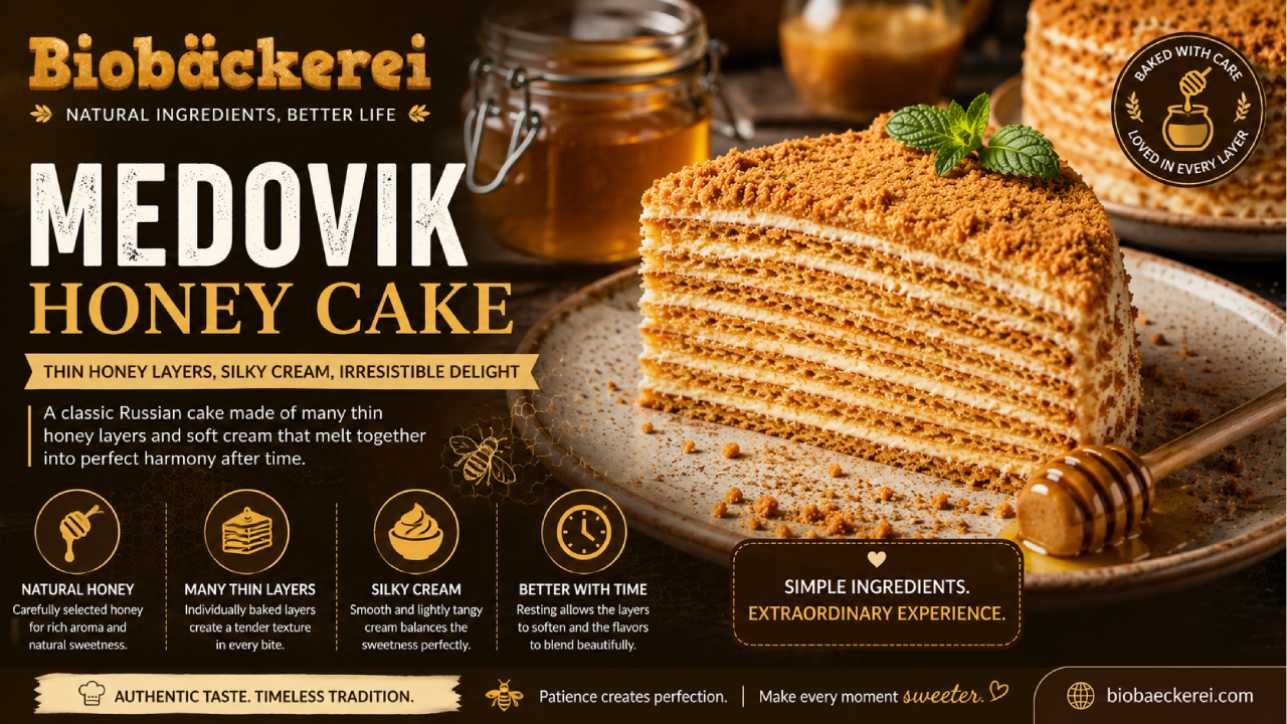
Medovik Cake Charms with Thin Honey Layers and Silky Cream
Biobaeckerei – Medovik honey cake immediately catches the eye with its many thin layers and soft cream filling. Unlike a tall sponge cake, Medovik builds its structure from individually baked honey cake layers. These layers are relatively firm when they first leave the oven. However, something interesting happens after assembly. Moisture from the cream gradually moves into the cake layers. As a result, the entire dessert becomes tender and easy to slice after resting. Honey also contributes more than sweetness. During heating and baking, it helps create warm aromas and deeper toasted notes. Therefore, the finished cake can offer hints of caramel alongside its recognizable honey character. Its appearance is equally distinctive. Fine crumbs often cover the top and sides, giving Medovik a rustic yet elegant finish. Although the dessert requires patience, its construction is not simply decorative. Every thin layer helps create the signature balance of cake, cream, and honey in each bite.
Read Also: Funfetti Cake Is the Happiest Cake You’ll Ever Bake
The Cake Has Strong Roots in Russian Culinary Tradition
Medovik is widely associated with Russian and broader Eastern European baking traditions. Its name comes from the Russian word myod, meaning honey. Several popular stories connect the dessert with Russia’s imperial era. However, precise origin stories are difficult to verify, so they should be treated as culinary folklore rather than established historical fact. What is clear is that layered honey cakes became an enduring part of regional dessert culture. Over time, bakers developed different approaches to both the cake and filling. Some versions use sour cream-based fillings, while others combine sour cream with whipped cream. Custard-style and condensed-milk variations also exist. Consequently, there is no single universal Medovik formula used in every household or bakery. That flexibility is part of its appeal. Despite regional and personal variations, two characteristics remain central: thin honey-flavored layers and enough resting time for the cream to soften them. Those elements create the recognizable texture that separates Medovik from conventional layer cakes.
Honey Creates More Than Simple Sweetness
Honey is the defining ingredient in Medovik honey cake, yet its role goes beyond adding sugar. Different honeys can contribute floral, herbal, fruity, or deeper malty notes. Therefore, the choice of honey can subtly change the final character of the dessert. A mild honey keeps the flavor gentle. In contrast, a darker variety can produce a stronger profile. During preparation, honey is commonly warmed with other ingredients before the dough is formed. Depending on the recipe, baking soda may also be incorporated into the warm mixture. This stage helps develop the cake’s familiar golden-brown character. Nevertheless, excessive heat should be avoided because burnt honey can introduce unpleasant bitterness. Balance matters as well. Since the filling often contains tangy dairy ingredients, the acidity can offset the sweetness of the honey. That contrast prevents the cake from tasting one-dimensional. Instead, a well-made Medovik develops a rounded flavor with sweetness, gentle acidity, toasted notes, and a lingering honey aroma.
Thin Cake Layers Create Medovik’s Signature Texture
The numerous layers are not merely there to make Medovik look impressive. They determine how the cake feels when eaten. The dough is usually divided into several portions before each piece is rolled thinly and baked separately. Because the layers are thin, they bake relatively quickly. They can initially feel closer to soft biscuits than traditional sponge cake. However, that firmness is temporary. Once cream is spread between the layers, moisture begins to soften them. This transformation is essential to authentic Medovik texture. Therefore, bakers should not judge the final cake immediately after assembly. A freshly stacked Medovik may still feel resistant when sliced. After several hours of refrigeration, the layers become noticeably softer. Overnight resting often produces an even more cohesive result. Meanwhile, the many alternating layers distribute cream evenly throughout each slice. The result is tender rather than fluffy. In my view, this slow transformation is what makes Medovik particularly interesting: time effectively becomes another ingredient in the recipe.
Soft Cream Balances the Richness of the Honey Layers
The filling provides an important counterpoint to the baked honey layers. Sour cream is especially common because its mild acidity balances the dessert’s sweetness. Some recipes blend it with whipped cream to create a lighter texture. Others use different dairy-based fillings depending on regional or family preferences. Regardless of the variation, consistency matters. A filling that is extremely loose may make assembly difficult. Conversely, a very dense filling may not soften the layers as effectively. Ideally, the cream should spread easily while remaining stable enough to hold the stack together. Furthermore, sweetness should remain controlled. The honey layers already provide considerable flavor, so an overly sugary filling can overwhelm their complexity. A slight tang makes the dessert feel fresher and more balanced. Vanilla may also be added, although it should support rather than dominate the honey. When these elements work together, Medovik develops a creamy texture without becoming excessively heavy. Each bite then carries cake and cream in nearly equal proportions.
Resting Time Turns Separate Layers into One Cohesive Cake
Patience is one of the most important requirements when preparing Medovik honey cake. Immediately after assembly, the layers and filling still behave like separate components. During refrigeration, however, moisture gradually migrates from the cream into the baked layers. Consequently, the cake becomes softer and more unified. This process also explains why Medovik is an excellent make-ahead dessert. Preparing it a day before serving can improve both texture and flavor. Nevertheless, the cake should remain properly refrigerated because its filling contains perishable dairy ingredients. Covering it also prevents unwanted refrigerator aromas from affecting its delicate flavor. When it is time to serve, clean slices reveal the many alternating lines inside. That cross-section is one of Medovik’s most recognizable visual features. More importantly, resting ensures that a fork can pass through several layers without excessive resistance. Therefore, skipping this stage may produce a technically finished cake that has not yet developed its intended texture.
Cake Crumbs Give Medovik Its Classic Rustic Finish
Traditional-looking Medovik often has a fine coating of golden crumbs across its surface. These crumbs can be made from baked cake trimmings, which makes the decoration both practical and visually appealing. After individual layers are cut into even shapes, the leftover pieces can be baked until dry if needed. Then, they are crushed into fine crumbs. Once the cake is assembled and coated with cream, the crumbs adhere easily to the top and sides. This finish hides minor imperfections while reinforcing the dessert’s honey-colored appearance. Moreover, it avoids the need for elaborate piping or heavy decorations. Some modern bakers add berries, nuts, chocolate, or edible flowers. Those additions can look attractive, but they are not necessary for Medovik’s identity. In fact, a simple crumb coating often suits the cake particularly well. The understated exterior creates a pleasant contrast with the intricate interior. Once sliced, the numerous thin layers provide all the visual drama the dessert needs.
Medovik Rewards Careful Baking More Than Complicated Decoration
Although Medovik contains many layers, the basic techniques are approachable. The real challenge is consistency. Each dough portion should be rolled to a similar thickness so the finished stack remains balanced. Likewise, baking time requires attention because thin layers can move from golden to overbaked quickly. Preparing the layers one after another may feel repetitive. However, organizing the process makes it easier. For example, bakers can portion the dough first and prepare sheets of baking paper before rolling begins. Cutting the layers while they are still warm can also help create cleaner edges, depending on the recipe. After that, assembly becomes straightforward: cake, cream, cake, cream, and so on. Importantly, perfection is not required. Small cracks or uneven edges can disappear beneath the cream and crumb coating. Therefore, Medovik is a useful example of a dessert where careful technique matters more than elaborate decoration. The final effect comes primarily from repetition, balance, and patience.
Why Medovik Honey Cake Continues to Feel Special
The enduring appeal of Medovik honey cake comes from contrast. Its construction looks elaborate, yet the core ingredients are familiar. The baked layers begin relatively firm, but resting transforms them into something remarkably tender. Honey brings sweetness, while tangy cream introduces freshness and balance. Meanwhile, the crumb-covered exterior appears modest until the first slice reveals the intricate interior. These contrasts give Medovik a distinctive personality among layered cakes. It also adapts well to different preferences. Bakers can adjust the honey intensity, cream style, number of layers, or decorative finish without losing the basic concept. However, restraint remains important. Too much sugar can hide the honey, while overly thick layers can change the characteristic texture. A successful Medovik allows each element to support the others. That harmony, rather than sheer richness, explains why this traditional layered dessert continues to attract bakers and dessert lovers far beyond its original culinary region.
