
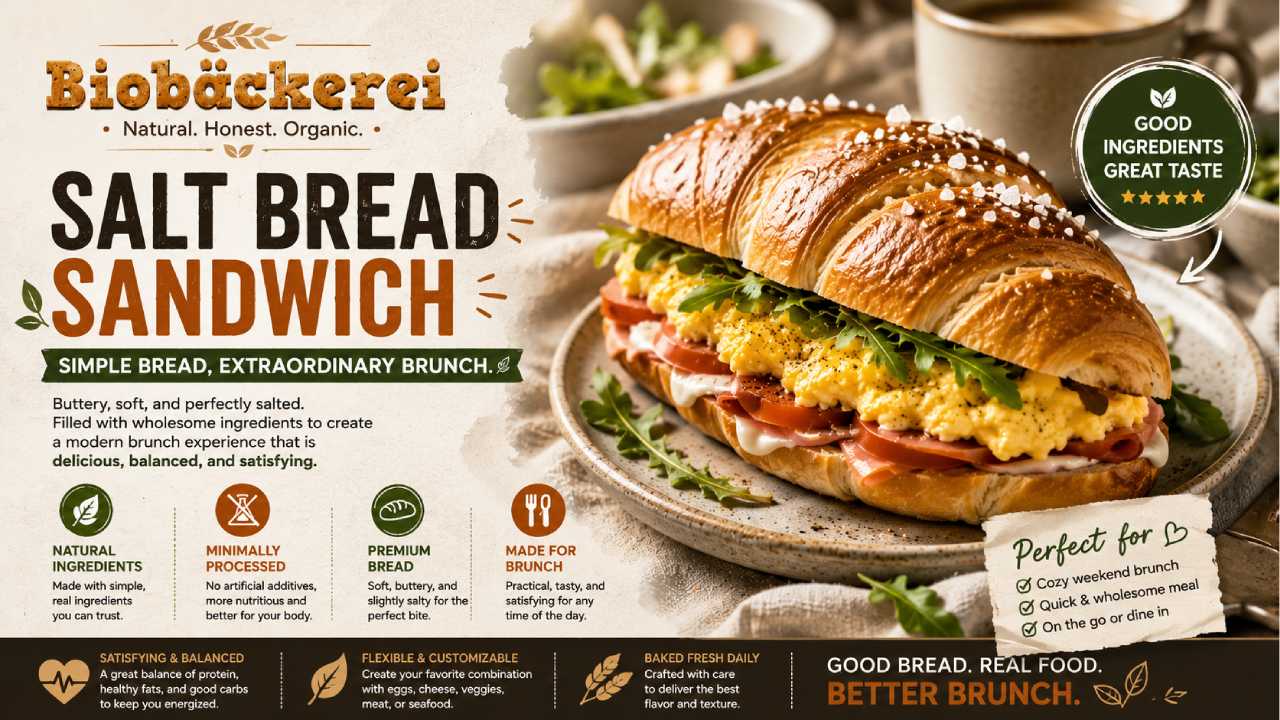
Salt Bread Sandwich Turns a Simple Savory Roll Into a Modern Brunch Favorite
Biobaeckerei – The Salt Bread Sandwich takes a relatively simple savory roll and turns it into a versatile brunch dish. Salt bread is known for its buttery aroma, lightly salty flavor, and soft interior. Depending on the recipe, the exterior can also develop a delicate crispness during baking. Instead of serving the bread plain, modern bakeries now use it as a base for savory fillings. Eggs, cheese, vegetables, smoked salmon, chicken, or other proteins can sit inside the sliced roll. As a result, the bread becomes more substantial without losing its original character. This transformation also reflects a broader brunch trend. Diners increasingly want food that feels familiar but still offers something visually appealing and slightly different. Salt bread fits that demand well. It is approachable, compact, and easy to customize. Therefore, turning it into a sandwich feels like a natural evolution rather than an entirely new concept.
Read Also: Waffle Cone Cake Reinvents the Classic Ice Cream Experience
The Rise of Salt Bread Started Across East Asian Bakeries
Salt bread has gained considerable attention through bakery culture in East Asia. In Japan, a similar buttery roll is widely known as shio pan, with “shio” meaning salt. Meanwhile, Korean bakeries helped push salt bread into a highly visible contemporary food trend. Different bakeries naturally develop their own versions, so texture, shape, and butter content can vary. However, the recognizable formula remains straightforward. The bread combines a tender crumb with butter and a noticeable salty finish. Some versions develop a crisp bottom because melted butter collects beneath the dough during baking. This contrast gives the bread more character than its simple appearance suggests. As salt bread became more familiar, bakers began experimenting with fillings and toppings. Consequently, the Salt Bread Sandwich emerged as an appealing extension. Rather than replacing the original roll, the sandwich format gives bakeries another way to present it. That flexibility has helped salt bread move comfortably from bakery counters into brunch menus.
Butter and Salt Create the Flavor Foundation
A successful Salt Bread Sandwich begins with bread that already has enough personality to stand on its own. Butter provides richness, while salt sharpens the overall flavor. Meanwhile, fermentation and baking create aroma and texture. When these elements are balanced, the roll tastes satisfying even before any filling is added. This matters because an overly complicated sandwich can easily hide the bread itself. For that reason, simple fillings often work particularly well. Soft scrambled eggs can complement the buttery crumb without overwhelming it. Likewise, mild cheese adds richness while fresh vegetables introduce contrast. A touch of acidity from pickles, mustard, or a light dressing can also prevent the sandwich from becoming too heavy. In my view, this balance explains much of the format’s appeal. The best version does not simply pile ingredients into trendy bread. Instead, every component supports the original salty and buttery profile. Therefore, restraint can produce a more memorable result than excessive toppings.
Eggs Turn Salt Bread Into a Natural Brunch Dish
Eggs are among the most logical fillings for a Salt Bread Sandwich. They are familiar, versatile, and strongly associated with breakfast and brunch. Soft scrambled eggs create a creamy texture, while fried eggs provide a richer center. Alternatively, a folded omelet can make the sandwich easier to handle. Cheese can then add another layer of flavor. However, the buttery bread already contributes considerable richness. Therefore, additional ingredients should remain balanced. Fresh lettuce, arugula, tomato, cucumber, or herbs can introduce brightness and texture. A small amount of mustard or tangy sauce can also cut through the fat. Furthermore, eggs provide protein, making the sandwich more substantial than plain bread. This combination allows one compact roll to become a complete light meal. For cafés, that practicality is valuable because the dish works for breakfast and late brunch. For home cooks, it offers another advantage: most of the ingredients are easy to find and require relatively little preparation.
Savory Fillings Expand the Sandwich Beyond Breakfast
Although eggs are an obvious choice, the Salt Bread Sandwich does not need to remain strictly a breakfast item. Chicken, tuna, smoked salmon, roast beef, mushrooms, tofu, or grilled vegetables can create different versions. Each filling changes the character of the bread while preserving its recognizable shape. Smoked salmon, for example, works well with cream cheese, cucumber, and herbs. Chicken can pair with lettuce and a light mustard dressing. Meanwhile, roasted mushrooms offer an earthy option that complements butter particularly well. The key is controlling moisture. Very wet fillings can soften the bread quickly and reduce the contrast between its crust and crumb. Therefore, sauces should generally be used with restraint. Vegetables can also be drained or dried before assembly. This small preparation step makes a noticeable difference. Ultimately, the sandwich works best when the filling adds flavor without turning the bread soggy. That principle is simple, yet it separates a carefully built brunch sandwich from an overloaded one.
Texture Makes the Salt Bread Sandwich More Interesting
Flavor attracts attention, but texture often determines whether a sandwich feels satisfying. A good Salt Bread Sandwich can provide several textures in a single bite. The outer bread may be lightly crisp, while the center remains tender and chewy. Then, creamy eggs or cheese create softness. Fresh vegetables can add crunch, while toasted seeds or nuts offer another layer of contrast. However, the bread should remain the structural foundation. If it becomes too soft, the sandwich may feel heavy. Conversely, excessive toasting can remove the delicate quality that makes salt bread distinctive. Gentle reheating is usually enough to refresh the roll before filling it. Furthermore, warm bread can release more buttery aroma. This creates a stronger sensory experience without requiring additional seasoning. For brunch menus, such details matter because customers often expect both comfort and refinement. Salt bread achieves that combination through relatively simple techniques. Its texture makes an ordinary-looking sandwich feel more carefully designed.
Presentation Helps Salt Bread Fit Modern Café Culture
Modern brunch is strongly influenced by visual presentation. Food must taste good, but cafés also pay attention to shape, color, and plating. The Salt Bread Sandwich naturally suits this environment because the curved roll creates a distinctive silhouette. When sliced carefully, colorful fillings remain visible without making the sandwich look messy. Green vegetables, golden eggs, pale cheese, and pink smoked salmon can create attractive contrast. However, presentation should still serve the eating experience. An oversized filling may photograph well but become difficult to bite. Likewise, excessive sauce can quickly make the plate untidy. A more thoughtful approach keeps the sandwich compact and balanced. Cafés can serve it with salad, roasted potatoes, or fruit for a complete brunch plate. Alternatively, a smaller version can work as a grab-and-go item. This adaptability helps explain why salt bread translates effectively from bakery culture into contemporary cafés. The same roll can feel casual, premium, or playful depending on its presentation.
Salt Bread Can Be Prepared at Home With Careful Technique
Home cooks can also make a Salt Bread Sandwich without turning brunch into a complicated project. The easiest approach is to begin with freshly baked or store-bought salt bread. Warm the roll briefly, then slice it without cutting completely through the bottom. Next, prepare a filling such as scrambled eggs, cheese, and fresh greens. Add only enough sauce to provide moisture and acidity. Then, assemble the sandwich shortly before serving. If homemade salt bread is preferred, dough recipes typically rely on wheat flour, yeast, water or milk, salt, and butter. Exact formulas differ, so bakers should follow a tested recipe rather than relying on one universal ratio. Dough fermentation also affects flavor and structure. Additionally, butter placement can influence the characteristic richness of the finished roll. Once the bread is ready, the sandwich itself becomes straightforward. This makes it suitable for relaxed weekend cooking. The result can feel café-inspired without requiring unusually expensive ingredients or advanced culinary equipment.
Balanced Fillings Keep the Brunch From Feeling Too Heavy
Butter-rich bread combined with cheese and creamy sauces can become heavy very quickly. Therefore, balance is particularly important when building a Salt Bread Sandwich. A practical approach is to pair one main protein with vegetables and a modest amount of sauce. For example, eggs can be combined with arugula and tomato. Smoked salmon works with cucumber and fresh herbs. Grilled chicken can pair with lettuce and mustard. These combinations introduce freshness without removing the indulgent character of the bread. Portion size also matters. Salt bread is relatively rich, so a smaller sandwich may still feel satisfying. Furthermore, brunch does not need to follow a single nutritional formula. Individual energy and dietary needs vary considerably. Someone seeking a lighter meal may increase vegetables and choose lean protein. Another person may prefer a richer version for an occasional weekend treat. The most useful principle is flexibility. A modern brunch dish can remain enjoyable while still considering variety, portion size, and overall dietary balance.
Salt Bread Sandwich Shows How Simple Foods Can Evolve
The popularity of the Salt Bread Sandwich illustrates how food trends often develop through small changes rather than dramatic inventions. Salt bread already offers a compelling combination of butter, salt, aroma, and texture. Turning it into a sandwich simply expands its role. Instead of being eaten only as a bakery snack, it can become breakfast, brunch, lunch, or a convenient takeaway meal. Moreover, the format encourages creativity. Cafés can develop signature fillings, while home cooks can use ingredients already available in the refrigerator. Yet the most successful versions still respect the bread itself. Too many toppings can hide the qualities that made salt bread appealing in the first place. Therefore, thoughtful simplicity remains its greatest strength. The trend also reflects a wider movement in contemporary food culture: familiar comfort foods are being redesigned for modern eating habits. In this case, one buttery savory roll becomes a flexible brunch centerpiece without losing the straightforward character that made it popular.
