
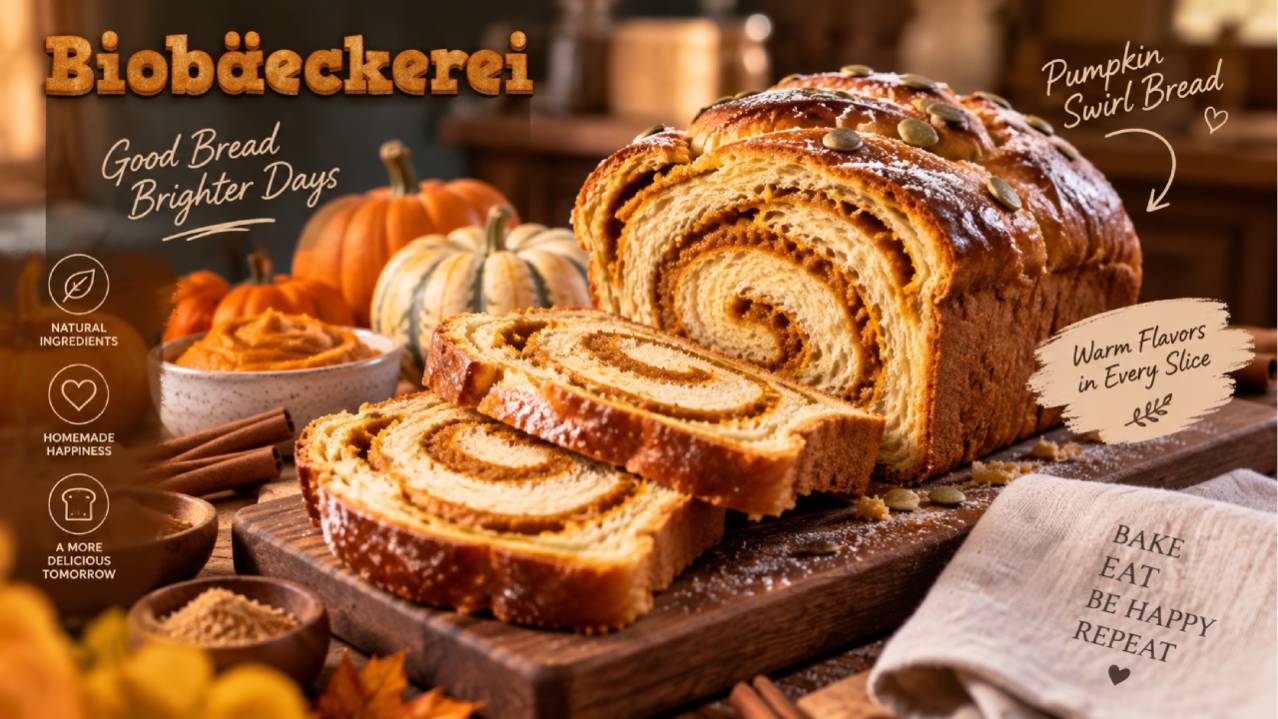
Pumpkin Swirl Bread, A Beautiful Loaf with Pumpkin Filling
Biobaeckerei – Pumpkin Swirl Bread combines soft bread with a rich pumpkin filling and warm spices. Once sliced, the loaf reveals beautiful orange swirls between its fluffy layers. This visual effect makes the bread feel special without requiring complicated decoration. Pumpkin also provides natural moisture and a mild sweetness. Meanwhile, cinnamon and nutmeg add the familiar aroma often associated with fall baking. The result sits somewhere between everyday bread and a comforting sweet treat. Moreover, the recipe is flexible enough for breakfast, afternoon coffee, or a homemade dessert. Its appearance is another major attraction. Instead of hiding the filling inside the dough, the rolling technique creates visible layers. Therefore, every slice looks slightly different and gives the loaf a handmade character.
Read Also: Easy Chè Thái Recipe with Colorful Tropical Fruits and Jelly
Pumpkin Puree Creates a Smooth and Flavorful Filling
Pumpkin puree is the heart of this recipe. For reliable results, plain pumpkin puree works better than prepared pumpkin pie filling. The latter usually contains added sugar and spices, which makes flavor control more difficult. Pumpkin contains substantial water, so moisture balance also matters. A filling that is too wet can make the inner layers dense or gummy. Therefore, thick puree is easier to work with. If homemade puree contains excess liquid, gently reducing or draining it can improve consistency. Brown sugar pairs naturally with pumpkin because it contributes sweetness and deeper caramel notes. Cinnamon, nutmeg, ginger, or cloves can then provide warmth. However, the spices should support the pumpkin rather than overpower it.
A Soft Dough Builds the Perfect Base
A beautiful swirl needs dough that is soft yet strong enough to hold its shape. Bread flour can provide additional structure because of its higher protein content. However, all-purpose flour can also produce good homemade bread. Yeast creates the rise, while milk or water supplies hydration. Butter gives the crumb extra richness and tenderness. In addition, an egg can improve both structure and flavor. The most important step is controlling the flour. Adding too much may produce a dry and heavy loaf. Instead, the dough should remain slightly tacky after kneading. It should also become smooth and elastic as gluten develops. This texture allows the dough to stretch around the pumpkin filling without tearing easily.
Proper Kneading Gives the Bread Better Structure
Kneading plays a major role in the final texture of Pumpkin Swirl Bread. During this process, gluten proteins form a flexible network inside the dough. That network traps carbon dioxide produced by yeast. As a result, the loaf can rise instead of remaining flat and dense. A stand mixer makes the process convenient, although kneading by hand also works well. Rather than relying only on time, watch the texture. Properly kneaded dough should feel smoother and more elastic than it did at the beginning. It should stretch without immediately breaking. Afterward, place it in a lightly greased bowl and allow it to rise. A warm environment helps, but excessive heat can damage yeast activity.
The Swirl Technique Creates Its Signature Appearance
The dramatic interior looks sophisticated, yet the technique is relatively straightforward. After the first rise, gently roll the dough into a rectangle. Next, spread a thin and even layer of pumpkin filling across the surface. Leave a small border around the edges to reduce leaking. Then, roll the dough tightly from one side, similar to preparing cinnamon rolls. The rolled dough can go directly into a loaf pan for a classic spiral. Alternatively, it can be sliced lengthwise and twisted for a more decorative finish. However, avoid overfilling the dough. Too much pumpkin mixture can escape during shaping and create wet sections after baking. A controlled layer produces a cleaner swirl and more consistent crumb.
The Second Rise Makes a Noticeable Difference
Once shaped, the loaf needs another period of fermentation. This second rise helps restore the air lost during rolling and shaping. Consequently, the finished bread becomes lighter and softer. Timing can vary because yeast responds to temperature, dough composition, and room conditions. Therefore, visual cues are more useful than following the clock alone. The dough should look noticeably expanded and airy before entering the oven. However, allowing it to rise for too long can weaken its structure. Underproofed dough creates the opposite problem and may produce a tight crumb. Patience is important at this stage. The goal is a loaf that has enough internal gas to rise well while still retaining the strength needed for baking.
Baking Turns the Pumpkin Layers into a Golden Loaf
As Pumpkin Swirl Bread bakes, several transformations happen at once. Heat causes trapped gases to expand, giving the loaf its final lift. At the same time, the crust develops its golden appearance through browning reactions. The pumpkin filling becomes more concentrated, while the spices release a stronger aroma. If the top browns too quickly, loosely covering it with foil can help protect the crust. However, appearance alone does not always indicate that the center is finished. Enriched breads can brown before their interior is fully baked. Therefore, checking the center carefully is useful. Once baked, transfer the loaf to a cooling rack. Cutting immediately may compress the crumb and make the pumpkin layers appear wetter than they actually are.
Simple Ingredients Can Make the Loaf Even Better
The basic recipe already offers plenty of flavor. Still, several additions can create different versions. Chopped pecans or walnuts add crunch and complement pumpkin naturally. Raisins or dried cranberries can provide small bursts of sweetness. Meanwhile, a thin maple glaze creates a dessert-style finish. Cream cheese glaze is another option for a richer loaf. For a simpler breakfast version, the bread can remain unglazed. Toasting a slice the following day can also revive its aroma and create crisp edges. Nevertheless, additions should remain balanced. Too many heavy ingredients may interfere with the swirl and make the loaf difficult to shape. The pumpkin should remain the main flavor rather than disappearing behind toppings.
Pumpkin Swirl Bread Looks Impressive Without Being Complicated
The charm of Pumpkin Swirl Bread comes from the contrast between simple ingredients and an elegant final appearance. Flour, yeast, pumpkin, butter, sugar, and spices can transform into a loaf with striking layers. More importantly, the recipe teaches several useful bread-making skills at once. Bakers practice kneading, fermentation, rolling, filling, and shaping within a single recipe. The process also leaves room for creativity. Some loaves can feature a tight spiral, while others can use a twisted shape with exposed layers. Either approach creates a warm homemade bread that looks attractive on the table. For home bakers who want something beyond ordinary pumpkin bread, this swirled version offers both visual appeal and comforting flavor.
