
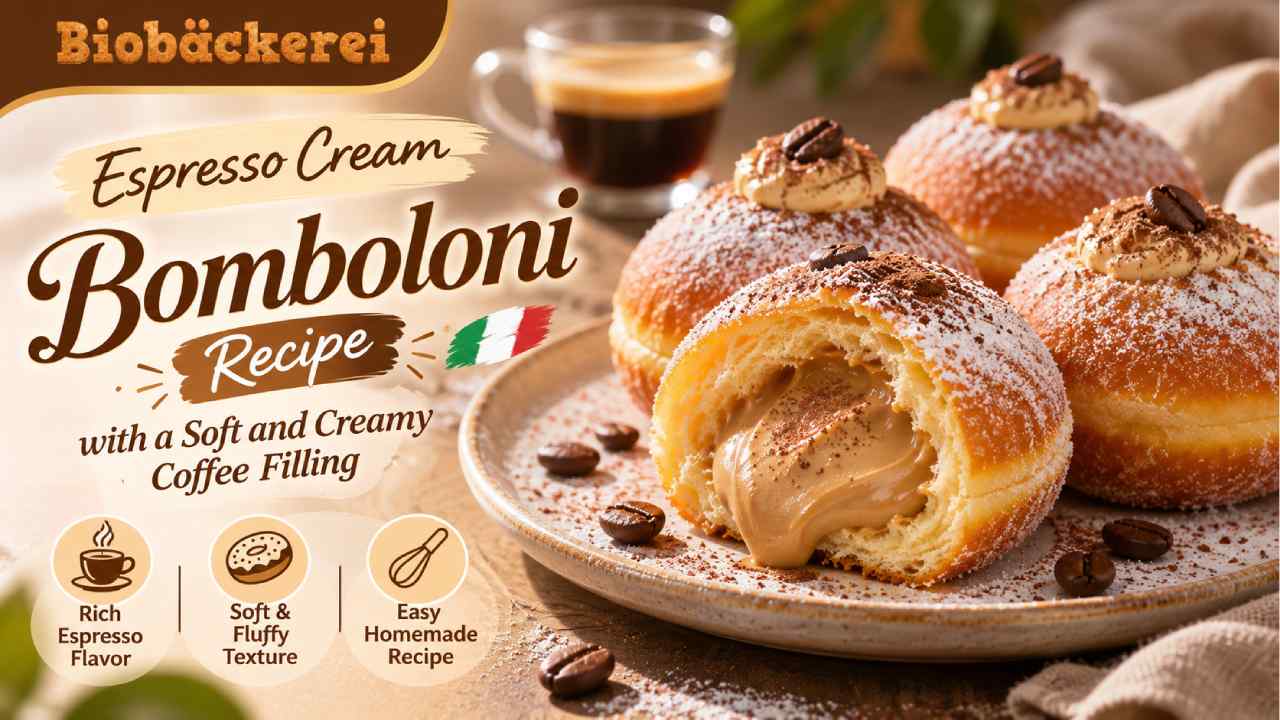
Espresso Cream Bomboloni Recipe with a Soft and Creamy Coffee Filling
Biobaeckerei – Espresso Cream Bomboloni offers a delightful combination of fluffy doughnuts and rich coffee cream. Inspired by traditional Italian bomboloni, this dessert introduces a smooth espresso filling that complements its soft exterior. Moreover, the gentle bitterness of coffee balances the sweetness of the dough. Each bite delivers a satisfying contrast between airy pastry and creamy filling. Unlike ordinary ring doughnuts, bomboloni typically feature a round shape without a central hole. Their generous filling makes them especially appealing to dessert lovers. Additionally, the golden surface creates an inviting presentation when finished with powdered sugar. This recipe offers an enjoyable baking project for anyone who appreciates coffee-inspired sweets. With careful preparation, homemade Espresso Cream Bomboloni can deliver bakery-style flavor and texture without complicated equipment.
Read Also: Margherita Pizza Recipe with Melted Mozzarella and Fresh Basil Aroma
Italian Bomboloni Inspire a Modern Coffee Dessert Creation
Bomboloni are traditional Italian filled doughnuts known for their tender texture and sweet fillings. They commonly contain pastry cream, chocolate, or fruit preserves. However, espresso cream introduces a different flavor experience through its distinctive coffee aroma. This combination connects classic Italian pastry techniques with modern dessert preferences. Furthermore, espresso pairs naturally with milk, cream, and vanilla. These ingredients create a filling that tastes rich without becoming excessively sweet. The dough also provides a neutral base that allows the coffee flavor to stand out. Meanwhile, a light sugar coating adds a pleasant finishing touch. Although the recipe requires patience during proofing, the process remains manageable for home bakers. The finished dessert offers a comforting balance of familiar ingredients and creative flavor.
Essential Ingredients for Soft Espresso Cream Bomboloni
Preparing Espresso Cream Bomboloni begins with accurate ingredient measurements. Bread flour helps develop a soft structure, while butter adds richness. Additionally, instant yeast allows the dough to rise and become airy. The filling uses espresso, milk, and cream for a smooth consistency. Fresh ingredients and careful measurements help produce reliable results.
Yield: 10–12 medium bomboloni
Preparation: Approximately 30 minutes active work, plus proofing and cooling
Ingredients for the Dough:
● 350 g bread flour
● 45 g granulated sugar
● 7 g instant yeast
● 150 ml lukewarm whole milk
● 1 large egg
● 45 g unsalted butter, softened
● ½ teaspoon salt
● 1 teaspoon vanilla extract
● Neutral vegetable oil for deep-frying
● 40 g powdered sugar for coating
Ingredients for the Espresso Cream Filling:
● 250 ml whole milk
● 2 egg yolks
● 55 g granulated sugar
● 25 g cornstarch
● 40 ml freshly brewed espresso, cooled
● 15 g unsalted butter
● ½ teaspoon vanilla extract
● 100 ml cold heavy whipping cream
How to Prepare Fluffy and Tender Bomboloni Dough
The dough forms the foundation of delicious Espresso Cream Bomboloni. Therefore, proper kneading and proofing are essential. A well-developed dough should feel soft, elastic, and slightly tacky. Meanwhile, controlled fermentation helps create a light interior. Avoid adding excessive flour because it can make the finished doughnuts dense.
Step-by-Step Dough Preparation:
- Combine bread flour, sugar, and instant yeast in a large mixing bowl.
- Add lukewarm milk, egg, and vanilla extract.
- Mix until the ingredients form a rough dough.
- Add salt and knead for approximately five minutes.
- Gradually incorporate softened butter into the dough.
- Continue kneading for 8–12 minutes until smooth and elastic.
- Transfer the dough into a lightly greased bowl.
- Cover and allow it to rise for 60–90 minutes, or until approximately doubled.
- Gently deflate the dough and divide it into 10–12 equal portions.
- Shape each portion into a smooth ball.
The shaped dough is now ready for its final proof before frying.
Frying Bomboloni to Achieve a Golden and Airy Texture
Frying requires careful temperature control to achieve the ideal bomboloni texture. Oil that is too hot may brown the exterior before the center cooks. Conversely, low temperatures can produce greasy doughnuts. Therefore, maintaining consistent heat is essential. A cooking thermometer helps make the process more reliable.
Step-by-Step Frying Instructions:
- Place the shaped dough balls on individual squares of parchment paper.
- Cover loosely and allow them to proof for 35–50 minutes until noticeably puffy.
- Heat vegetable oil in a deep, heavy-bottomed pot to approximately 165–175°C.
- Carefully lower a few dough balls into the oil.
- Remove the parchment paper once it separates from the dough.
- Fry for approximately 2–3 minutes per side, adjusting for size.
- Turn gently until both sides develop an even golden color.
- Check that the centers are fully cooked before removing the batch.
- Transfer the bomboloni onto a wire rack lined with paper towels.
- Allow them to cool completely before adding the espresso cream.
This method helps create a golden exterior and soft interior.
Making Smooth Espresso Cream with a Rich Coffee Flavor
The espresso cream filling gives these bomboloni their distinctive character. Its flavor combines gentle coffee bitterness with creamy sweetness. Additionally, whipped cream creates a lighter texture than traditional pastry cream alone. However, the custard must cool completely before combining both components. This prevents the whipped cream from melting.
Step-by-Step Espresso Cream Preparation:
- Whisk egg yolks, sugar, and cornstarch in a medium bowl.
- Heat the milk in a saucepan until steaming.
- Slowly pour some warm milk into the egg mixture while whisking.
- Return the mixture to the saucepan with the remaining milk.
- Cook over medium-low heat, stirring continuously until thickened and bubbling.
- Continue cooking briefly while stirring to fully cook the starch.
- Remove from the heat and mix in espresso, butter, and vanilla.
- Transfer the custard into a shallow container and cover its surface.
- Refrigerate promptly until completely chilled.
- Whip the cold heavy cream to medium-stiff peaks.
- Gently fold the whipped cream into the chilled espresso custard.
The finished filling should feel smooth, creamy, and stable enough for piping.
Filling Espresso Cream Bomboloni for a Bakery-Style Finish
Filling the bomboloni transforms ordinary fried dough into an indulgent coffee dessert. However, the pastries must cool completely before assembly. Warm doughnuts can soften the filling and reduce its stability. Additionally, using a piping bag makes the process cleaner and more consistent.
Step-by-Step Filling Instructions:
- Transfer the chilled espresso cream into a piping bag fitted with a filling nozzle.
- Make a small opening on the side of each cooled bombolone.
- Insert the piping nozzle gently into the opening.
- Squeeze the filling slowly until the doughnut feels noticeably heavier.
- Avoid overfilling because excessive pressure may split the dough.
- Repeat until all bomboloni contain a generous amount of espresso cream.
- Lightly dust the tops with powdered sugar.
- Add a small decorative swirl of cream if desired.
- Finish with a very light sprinkle of cocoa powder for presentation.
- Serve immediately or refrigerate promptly until ready to enjoy.
Each finished bombolone should contain a balanced amount of dough and coffee cream.
Expert Tips for Perfect Espresso Cream Bomboloni at Home
Several practical techniques can improve the quality of homemade Espresso Cream Bomboloni. First, proper dough development helps create a soft and airy texture. Additionally, carefully controlling the oil temperature prevents uneven cooking. The espresso filling also requires attention because excessive liquid can weaken its consistency.
Helpful Baking Tips:
- Use a digital kitchen scale for more accurate measurements.
- Knead the dough until elastic rather than adding unnecessary flour.
- Allow sufficient proofing time to develop a lighter texture.
- Maintain the frying temperature between 165°C and 175°C.
- Avoid overcrowding the pot because it lowers the oil temperature.
- Use freshly brewed espresso for a stronger coffee aroma.
- Chill the pastry cream completely before adding whipped cream.
- Fill the doughnuts only after they have cooled.
- Use a piping nozzle to distribute the cream evenly.
- Refrigerate filled bomboloni promptly to maintain food safety.
These simple techniques help improve texture, flavor, and presentation.
Espresso Cream Bomboloni Make an Attractive Modern Bakery Dessert
Espresso Cream Bomboloni can become an appealing addition to modern bakery menus. Their round shape and golden exterior create an inviting appearance. Meanwhile, the creamy espresso filling offers a flavor that coffee enthusiasts may appreciate. Additionally, individual portions make the dessert convenient for cafés and special occasions. Bakers can experiment with different presentations without changing the essential recipe. For example, a light cocoa dusting creates a classic coffee-inspired finish. Alternatively, a small cream swirl adds visual interest. However, presentation should not overpower the pastry’s natural character. Ingredient quality and freshness remain more important than elaborate decorations. For small bakery businesses, production costs and refrigerated storage also require consideration. With careful planning, these filled doughnuts can provide a distinctive alternative to conventional sweet pastries.
Proper Storage Keeps Espresso Cream Bomboloni Fresh and Delicious
Proper storage is essential because Espresso Cream Bomboloni contain dairy and egg-based filling. These ingredients require refrigeration to reduce food safety risks. Therefore, filled doughnuts should be stored in airtight containers at 4°C or below. Moreover, they should not remain at room temperature for longer than two hours. For the best texture and flavor, enjoy them within 24 hours. Refrigeration may gradually affect the softness of the fried dough. Consequently, preparing the components separately can be helpful when serving larger quantities. Unfilled doughnuts may also be frozen after cooling, then thawed before filling. However, freezing assembled bomboloni may negatively affect the cream’s texture. By following appropriate storage practices, homemade espresso bomboloni can remain enjoyable while maintaining better quality.
