
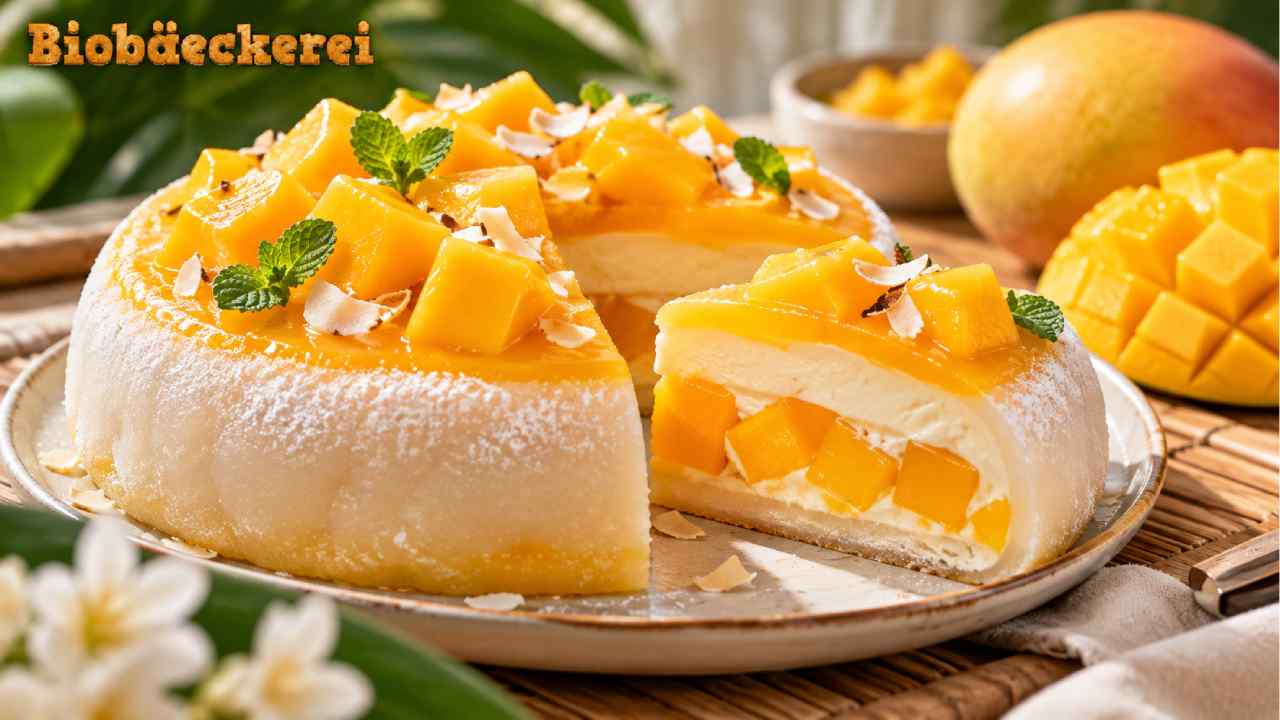
Mango Mochi Cake Goes Viral, Bringing a Chewy and Fresh Delight
Biobaeckerei – Mango Mochi Cake is quickly gaining attention among dessert lovers who enjoy playful textures and refreshing flavors. At first glance, this dessert looks simple. However, one bite reveals why it has become so appealing. The cake combines the soft, chewy character of mochi with the bright sweetness of ripe mango. As a result, every bite feels rich without becoming too heavy. Social media has also helped introduce this colorful dessert to a wider audience. Short videos often highlight its stretchy texture, smooth surface, and vibrant mango filling. Moreover, the contrast between the tender exterior and fruity center makes it visually satisfying. Unlike a traditional sponge cake, this creation focuses strongly on texture. That difference gives it a modern personality. For many dessert fans, Mango Mochi Cake offers something familiar yet exciting, making it easy to understand why the trend continues to attract attention.
Read Also: Angel Food Cake, The Fluffy Classic Everyone Loves Again
The Chewy Texture Creates Its Most Memorable Experience
Texture plays a major role in the popularity of Mango Mochi Cake. Traditional mochi usually relies on glutinous rice flour to create its famous elasticity. When adapted into a cake-inspired dessert, that same characteristic produces a tender and pleasantly chewy bite. Therefore, the eating experience feels different from ordinary cakes made mainly with wheat flour. The texture also creates an interesting contrast with creamy or juicy mango components. Instead of disappearing immediately in the mouth, each bite takes a little longer to enjoy. That slower experience can make a small portion feel surprisingly satisfying. Meanwhile, achieving the right consistency requires balance. A cake that is too dense may feel rubbery, while an overly soft version can lose the signature mochi character. The most appealing versions sit somewhere between those extremes. They remain soft enough to enjoy easily while retaining enough elasticity to deliver the satisfying chew that makes mochi desserts distinctive.
Fresh Mango Brings Natural Sweetness and Bright Flavor
Mango gives this viral dessert much more than an attractive yellow color. Its natural sweetness brings freshness to the chewy mochi base, while its gentle acidity prevents the dessert from tasting flat. In particular, ripe mango can provide a fragrant tropical aroma that becomes noticeable before the first bite. Because of that, fruit quality matters greatly. A naturally sweet and aromatic mango usually produces a more balanced result than an underripe fruit. In addition, mango works well with creamy ingredients such as whipped cream, coconut cream, or mild dairy fillings. These elements can soften the fruit’s sharper notes without hiding its character. However, too much added sugar can easily overwhelm the natural flavor. A better approach is to let ripe fruit provide much of the sweetness. Consequently, Mango Mochi Cake can taste indulgent while still retaining the lively, refreshing quality that separates it from heavier chocolate or caramel-based desserts.
Social Media Turns a Simple Dessert Into a Visual Trend
Modern dessert trends often spread because they look as exciting as they taste, and Mango Mochi Cake fits that pattern perfectly. On short-form video platforms, creators can easily showcase its soft exterior, stretchy bite, and colorful center. Cutting the cake open also creates an appealing visual moment, especially when fresh mango or creamy filling appears inside. Furthermore, its bright yellow and pastel tones photograph beautifully under natural light. These qualities make the dessert highly suitable for food-focused social content. Yet visual appeal alone rarely creates lasting interest. People still expect enjoyable flavor and texture after trying something they discovered online. Mango Mochi Cake has an advantage because its appearance reflects the actual eating experience. The soft shape suggests tenderness, while the mango color signals freshness. Therefore, the dessert does not depend entirely on presentation. Its social-media-friendly appearance simply gives people an immediate reason to become curious about a combination that already has strong culinary appeal.
Asian Dessert Inspiration Meets a Modern Cake Concept
The popularity of Mango Mochi Cake also reflects the growing influence of Asian-inspired desserts in contemporary food culture. Mochi has long been associated with Japanese confectionery traditions, although modern interpretations now appear in countless forms around the world. Bakers have combined mochi-inspired textures with brownies, doughnuts, waffles, and cakes. Mango adds another familiar Asian flavor to this creative direction. As a result, the dessert feels both culturally recognizable and distinctly modern. This type of adaptation also shows how food trends evolve across borders. Rather than simply copying a traditional sweet, contemporary bakers often borrow a technique or texture and combine it with new ingredients. When done thoughtfully, the result can introduce more people to unfamiliar culinary ideas. Mango Mochi Cake demonstrates this process clearly. It respects the appeal of mochi’s chewy character while presenting it in a format that feels approachable to people who already enjoy cakes, fruit desserts, and creamy pastries.
Temperature Can Completely Change the Eating Experience
Serving temperature can noticeably influence how Mango Mochi Cake tastes and feels. When slightly chilled, the mango filling often becomes more refreshing, while cream-based components gain a firmer texture. This makes a chilled version particularly appealing during warm weather. However, very cold temperatures may make some mochi-style cakes noticeably firmer. Therefore, allowing the dessert to rest briefly before serving can help restore a softer chew. A room-temperature version offers a different experience. The mango aroma may become stronger, while the mochi texture can feel more tender and elastic. Neither approach is automatically better. Instead, the ideal temperature depends on the recipe and filling. Cakes with fresh cream usually need appropriate refrigeration for food safety, whereas simpler baked mochi cakes may have different storage requirements. Ultimately, temperature becomes another tool for shaping the dessert experience. A small adjustment can change its aroma, softness, sweetness, and overall balance more than many people might expect.
Homemade Versions Allow Endless Flavor Experiments
One reason Mango Mochi Cake has strong trend potential is its flexibility. Home bakers can adjust the concept without losing its recognizable identity. For example, coconut can introduce a richer tropical note, while lime zest can add a brighter aroma. Matcha offers a slightly bitter contrast to sweet mango, whereas vanilla creates a softer and more familiar profile. Additionally, bakers can experiment with fresh mango cubes, mango purée, jam, or cream-based fillings. Each option changes the texture and intensity. Nevertheless, balance remains important. Adding too many flavors can distract from the simple combination that makes the dessert appealing. Mango should remain noticeable, while the chewy mochi element should provide its distinctive structure. For beginners, a straightforward version may actually deliver the best result. Once the basic texture is mastered, additional flavors become easier to control. This adaptability helps Mango Mochi Cake remain interesting because every baker can give the trend a slightly different personality.
Why Mango Mochi Cake Has More Than Viral Appeal
Food trends can disappear quickly, especially when appearance matters more than flavor. Mango Mochi Cake, however, has several qualities that could give it greater staying power. First, its chewy texture creates an experience that ordinary sponge cakes cannot easily reproduce. Second, mango brings a recognizable flavor that appeals to many dessert lovers. Furthermore, the recipe can evolve without losing its core identity. Cafés may serve elegant individual portions, while home bakers can prepare simpler versions for family gatherings. The dessert also fits several occasions, from afternoon treats to festive tables. Most importantly, its popularity is built around contrast. It can be chewy yet soft, rich yet refreshing, and modern while drawing inspiration from established Asian dessert traditions. Those contrasts make each bite interesting. Trends may introduce people to Mango Mochi Cake, but flavor and texture determine whether they return. In this case, the combination offers enough character to remain memorable beyond a single viral moment.
