
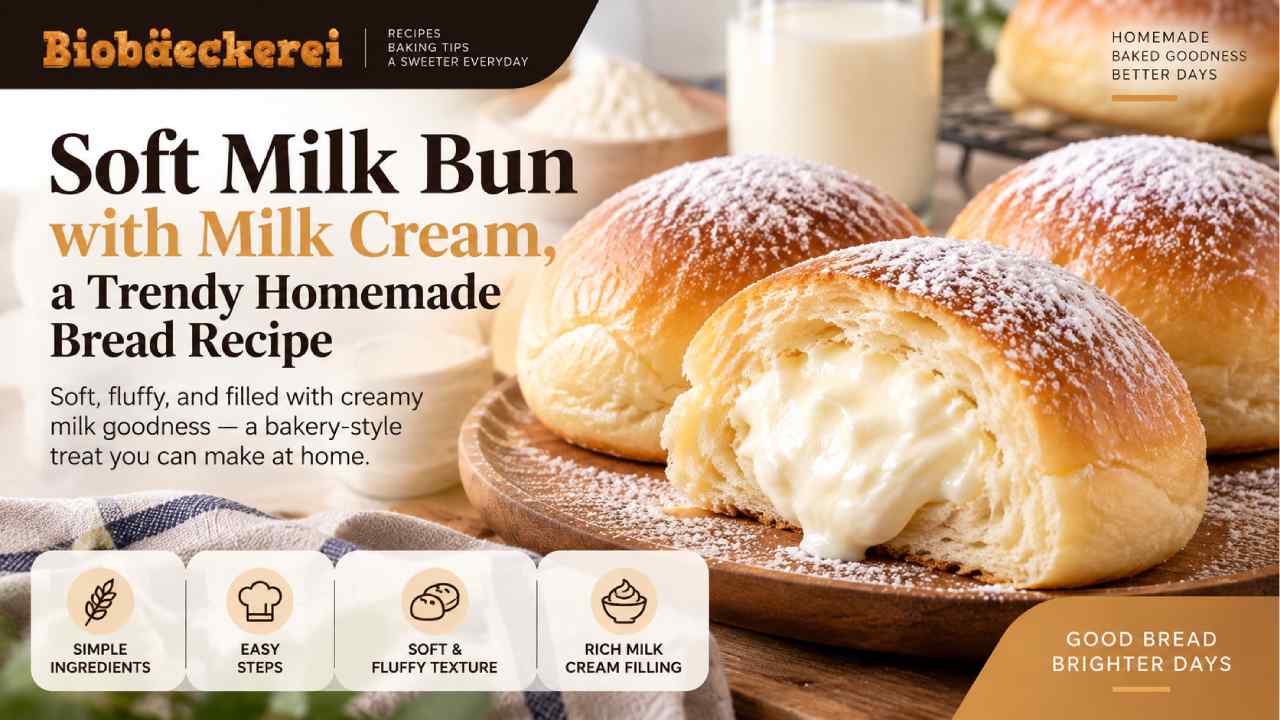
Soft Milk Bun with Milk Cream, a Trendy Homemade Bread Recipe
Biobaeckerei – A Milk Bun Recipe is an appealing choice for anyone who loves soft bread with a creamy center. These buns combine an enriched yeast dough with a smooth milk-based filling. As a result, each bite offers a light crumb followed by a richer finish. Milk buns do not refer to one universally standardized recipe. Instead, the name covers several modern bakery styles inspired by soft Asian milk breads. Some versions use tangzhong, while others rely on enriched dough and careful fermentation. For this homemade version, the goal is straightforward: create tender buns that remain manageable for home bakers. Milk, butter, egg, and bread flour provide richness and structure. Meanwhile, yeast fermentation creates the gas needed for a light crumb. The cream filling goes in only after the buns have completely cooled. Therefore, the bread stays airy while the filling remains smooth and fresh.
Read Also: Healthy Breakfast Burrito: A Fresh Take on a Classic Morning Favorite
The Ingredients Keep the Dough Rich but Balanced
For eight medium buns, prepare 350 grams of bread flour, 7 grams of instant yeast, 40 grams of sugar, and 5 grams of salt. Next, prepare 180 milliliters of lukewarm whole milk, one large egg, and 40 grams of unsalted butter. The butter should be soft but not melted. For the filling, use 200 milliliters of cold heavy cream, 25 grams of powdered sugar, and 30 grams of milk powder. Add half a teaspoon of vanilla extract if desired. These amounts create a rich bun without making the dough excessively heavy. Bread flour works particularly well because its higher protein content helps develop a strong gluten network. However, flour absorption varies between brands. Therefore, avoid adding extra flour too quickly if the dough initially feels sticky. After several minutes of kneading, its texture should become smoother and more elastic. Accurate weighing also improves consistency, especially for flour and yeast.
Start by Building Gluten Before Adding All the Butter
Place the flour, instant yeast, sugar, and salt in a mixing bowl. Keep the salt from sitting directly on concentrated yeast before mixing. Then, add the milk and beaten egg. Mix until no large patches of dry flour remain. Knead for several minutes before gradually incorporating the softened butter. This order makes gluten development easier because a large amount of fat can coat flour proteins and slow hydration. Continue kneading until the dough becomes smooth, elastic, and slightly tacky. With a stand mixer, this may take roughly 10 to 15 minutes, although the exact time depends on the machine and speed. Hand kneading usually takes longer. Instead of relying only on the clock, watch the dough itself. A well-developed dough can stretch into a thin membrane before tearing. However, stop if the dough becomes unusually hot. Excessive heat can make enriched dough greasy and harder to handle.
The First Rise Builds Flavor and a Lighter Structure
Transfer the kneaded dough into a lightly greased bowl and cover it. Allow it to ferment in a comfortably warm place until it has expanded substantially, usually close to double its original volume. This often takes about 60 to 90 minutes. However, room temperature and yeast activity can change the timing considerably. Therefore, visual cues are more reliable than a strict timer. Fermentation is essential because yeast consumes available sugars and releases carbon dioxide. The gluten network traps that gas, helping the dough become lighter. Meanwhile, fermentation also contributes aroma and flavor. Avoid placing the bowl in an excessively hot environment simply to accelerate the process. Very high temperatures can weaken dough quality and harm yeast activity. Once the dough has risen well, gently press out large pockets of gas. There is no need to flatten it aggressively. The goal is to prepare an even dough for shaping while preserving its developed structure.
Shape the Milk Buns Gently for an Even Crumb
Divide the fermented dough into eight equal pieces. A kitchen scale makes this step easier and produces buns of similar size. Next, gently flatten each piece and bring its edges toward the center. Turn it over and roll it against the work surface until the top becomes smooth. Arrange the shaped buns on a lined baking tray with enough room for expansion. Cover them loosely and begin the final proof. Depending on room temperature, this stage may take around 40 to 60 minutes. The buns should look noticeably puffy before baking. If they are underproofed, they may develop a dense crumb or split unpredictably in the oven. On the other hand, severe overproofing can weaken their structure. A gentle finger press can provide a useful clue. Properly proofed dough should slowly spring back while leaving a slight indentation. Therefore, patience during this stage can make a significant difference to the finished texture.
Bake Until Golden Without Drying the Bread
Preheat the oven to 175°C before the final proof is complete. If desired, brush the tops lightly with milk or beaten egg for additional color. Bake the buns for approximately 15 to 20 minutes. Oven performance varies, so start checking toward the lower end of the range. The surface should become lightly golden, while the interior should be fully baked. For greater precision, enriched bread is generally done when its center reaches roughly 88–93°C. Avoid baking much longer simply to achieve a darker crust. Excessive baking removes more moisture and can reduce the soft texture that defines this Milk Bun Recipe. Once baked, transfer the buns to a wire rack. A thin coating of melted butter on top is optional and can soften the crust further. Most importantly, let the buns cool completely before adding the cream. Filling warm bread can cause whipped cream to soften, melt, or separate.
Make the Milk Cream Only After the Buns Have Cooled
For the filling, place the cold heavy cream in a chilled bowl. Add powdered sugar and milk powder, then whip at medium speed. Stop when the cream reaches firm but smooth peaks. Finally, mix in vanilla if you want a gentle aromatic note. Avoid whipping for too long because heavy cream can become grainy and eventually separate into butter and liquid. The milk powder adds concentrated dairy flavor while also contributing dry milk solids. However, it should not be treated as a universal stabilizer for whipped cream. Keep the prepared filling refrigerated until needed. Once the buns are completely cool, make a small opening in the side or bottom of each bun. Transfer the cream into a piping bag and fill each bun carefully. Add enough cream to create a noticeable center without forcing the bread apart. This method keeps the exterior neat while creating the creamy surprise associated with modern filled milk buns.
Tangzhong Is an Optional Upgrade for Longer-Lasting Softness
Home bakers who want to experiment can introduce tangzhong into the recipe. This technique cooks a small portion of flour with liquid before adding it to the main dough. Heating flour with water or milk gelatinizes some of its starch. Consequently, the mixture can hold more water within the bread structure. Tangzhong is commonly associated with especially soft Asian-style breads and can help improve moisture retention. However, it should not simply be added to the recipe without adjusting the flour and liquid totals. A common approach is to use roughly 5–10% of the recipe’s flour for the cooked mixture. The exact formula can vary. Therefore, beginners may prefer to master the basic Milk Bun Recipe first. The standard enriched dough already produces a tender result when properly kneaded, proofed, and baked. Once those fundamentals become familiar, tangzhong offers an interesting way to explore texture rather than serving as a requirement.
Temperature Matters More Than Chasing an Exact Proofing Time
One of the easiest mistakes in bread making is treating fermentation times as fixed rules. A kitchen at 20°C behaves very differently from one at 28°C. Therefore, a dough that rises in an hour on one day may need considerably longer under cooler conditions. Ingredients also affect fermentation. Butter, sugar, and egg make enriched dough behave differently from lean bread dough. Instead of forcing the process, watch for physical changes. The first rise should produce substantial expansion and a softer, aerated dough. During the second rise, shaped buns should become light and visibly puffy. This observation-based approach makes the recipe more reliable across different kitchens. In addition, avoid pouring very hot milk over yeast. Lukewarm milk is sufficient. If the liquid feels hot enough to be uncomfortable, allow it to cool first. Good bread rarely comes from rushing fermentation. In many cases, giving the dough enough time produces better volume, texture, and aroma.
Proper Storage Is Important Because These Buns Contain Dairy Cream
Unfilled milk buns can usually be stored at room temperature for a short period in an airtight container. However, the situation changes once dairy cream is added. Filled buns should be refrigerated promptly because whipped cream is a perishable food. Keep them covered to reduce drying and unwanted odors from other foods. For the best texture, enjoy the filled buns relatively soon rather than storing them for several days. Refrigeration can gradually make bread feel firmer because starches reorganize as bread ages. Therefore, another practical option is to store the unfilled buns separately and pipe in fresh cream shortly before serving. The plain buns can also be frozen once completely cool. Thaw them before filling. This approach offers better control over freshness and food safety. Most importantly, do not leave cream-filled buns sitting at room temperature for extended periods, especially in a warm kitchen.
Homemade Milk Buns Reward Technique More Than Complicated Ingredients
The appeal of this Milk Bun Recipe comes from contrast. The bread is soft and lightly sweet, while the milk cream provides a cool and richer center. Yet the recipe does not depend on unusual ingredients or complicated decoration. Its success comes from several basic techniques performed carefully. Develop the gluten properly, allow enough fermentation, avoid overbaking, and cool the bread before filling it. Those steps have a greater effect than adding excessive sugar or cream. Moreover, the recipe can become a foundation for other variations. Matcha, cocoa, coffee, or fruit flavors can be incorporated thoughtfully into the filling. However, the original milk version remains appealing because its flavors are simple and balanced. For home bakers, that simplicity is part of the charm. With careful timing and attention to dough texture, bakery-style cream-filled milk buns can be made successfully without professional equipment.
