
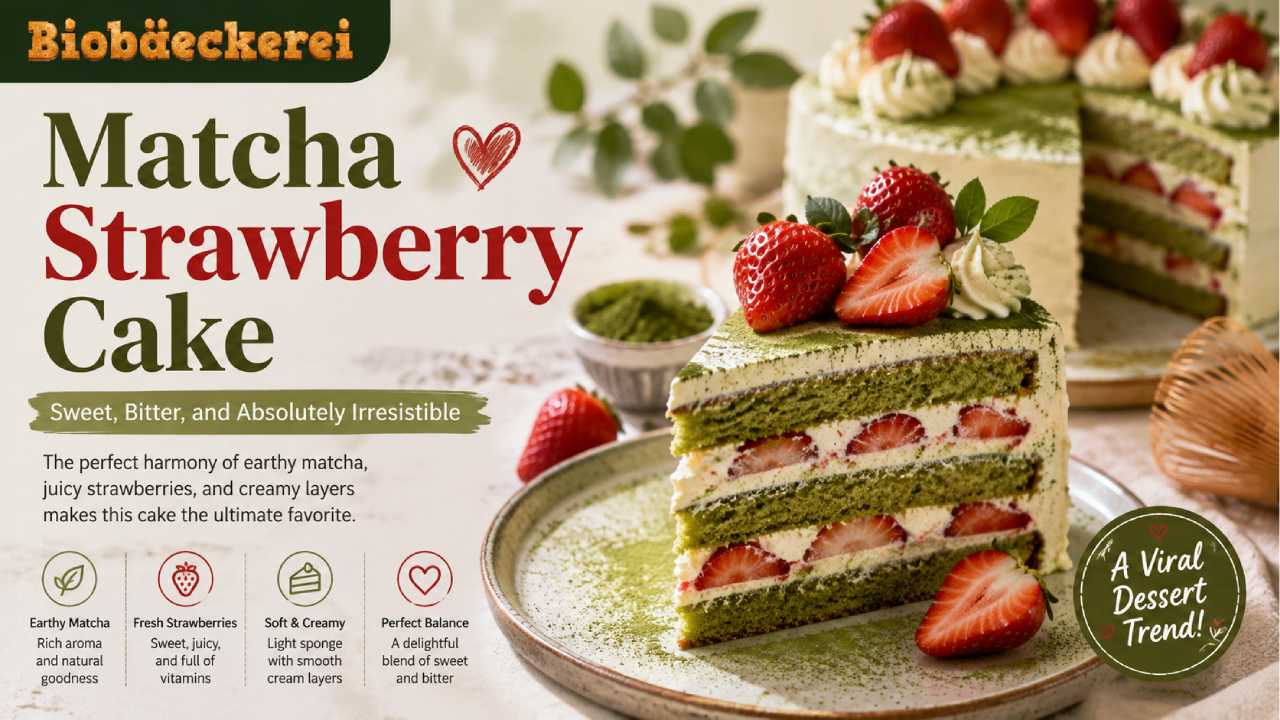
Matcha Strawberry Cake Is Trending, Sweet and Bitter Flavors Win Fans
Biobaeckerei – Matcha Strawberry Cake is gaining attention for a simple reason: its flavors create an interesting contrast. Matcha contributes earthy bitterness and umami notes. Strawberries add fruity sweetness and gentle acidity. Meanwhile, cream and sponge cake soften both flavors and bring everything together. Visually, the dessert is just as appealing. Vibrant green matcha and bright red strawberries create a striking color combination. As a result, the cake looks naturally photogenic without requiring complicated decoration. However, balance remains essential. Too much matcha can overpower the fruit, while excessive sugar can hide its distinctive bitterness. When the proportions are right, each bite moves between creamy, fruity, sweet, and slightly bitter notes. That complexity helps explain why this combination feels more exciting than an ordinary strawberry cream cake.
Read Also: Krispy Kreme Turns Pikachu Into a Doughnut for Pokémon’s 30th Anniversary
Why Matcha and Strawberry Work So Well Together
Matcha and strawberry may seem like unusual partners at first. Nevertheless, their flavor profiles complement each other surprisingly well. Matcha has vegetal, earthy, and mildly bitter characteristics. Strawberries provide sweetness, acidity, and a fresh aroma. Therefore, the fruit can brighten a dessert that might otherwise feel too rich or intensely grassy. Dairy ingredients also play an important role. Whipped cream, mascarpone, or cream cheese can soften matcha’s sharper edges. At the same time, creamy components provide a neutral bridge between tea and fruit. The result depends heavily on proportion. A cake with excessive strawberry filling can overwhelm the matcha. Conversely, too much matcha powder may produce an unpleasantly bitter finish. A successful recipe allows both ingredients to remain recognizable. That balance is what makes this pairing memorable rather than simply colorful.
The Green-and-Red Look Adds to Its Appeal
Food trends are increasingly visual, and Matcha Strawberry Cake naturally fits that environment. Its green and red color palette creates immediate contrast. Add a layer of white cream, and the cake becomes even more distinctive when sliced. However, presentation should support flavor rather than replace it. Fresh strawberries can be arranged between sponge layers instead of being used only as decoration. Matcha can also be incorporated into the sponge or cream. This approach ensures the interior tastes as appealing as the exterior looks. For a cleaner finish, bakers can keep decorations minimal. A light dusting of matcha and several strawberry pieces are often enough. Moreover, natural variation in strawberry size can make a homemade cake look inviting rather than overly manufactured. The strongest visual identity comes from ingredients already present in the recipe.
Choosing Matcha Makes a Noticeable Difference
Not every matcha powder tastes identical. Quality, origin, processing, storage, and age can influence its color and flavor. For baking, an extremely expensive ceremonial-style matcha is not always necessary because other ingredients can mask its subtler qualities. However, the powder should still have a pleasant aroma and flavor. Dull or poorly stored matcha may produce a less attractive cake. It can also taste excessively flat or bitter. Store matcha in an airtight container away from heat, moisture, and strong light. Once opened, freshness becomes increasingly important. In cake batter, start with a moderate quantity rather than adding large amounts immediately. Remember that stronger does not always mean better. The goal is to create recognizable tea flavor while leaving enough room for strawberries and cream.
Fresh Strawberries Bring Acidity and Juiciness
Strawberries do more than provide sweetness. Their acidity is particularly useful in a cream-based dessert because it keeps each bite from becoming monotonous. Fresh fruit also creates textural contrast against soft sponge and smooth cream. Choose strawberries that are ripe but still firm. Very soft berries may release too much liquid inside the cake. After washing them, dry the fruit thoroughly before slicing. Excess surface moisture can make cream layers unstable. If fresh strawberries are not flavorful enough, a quick strawberry compote can provide a more concentrated taste. However, cool the compote completely before assembling the cake. Otherwise, warm filling can soften or melt the cream. For the best result, combine freshness with restraint. The strawberry component should brighten the cake without turning every layer excessively wet.
Soft Sponge Keeps the Dessert Light
A good sponge is the foundation of this cake. Because matcha, strawberries, and cream already provide several strong elements, the cake itself should remain relatively light. A chiffon-style sponge works particularly well because of its airy texture. Genoise can also work when prepared correctly. Whichever style you choose, avoid overmixing after adding flour. Excessive mixing can reduce the air incorporated into the batter and create a denser texture. Matcha should also be sifted with the dry ingredients to reduce clumps. Once baked, allow the sponge to cool completely before assembling the layers. Cutting a warm cake can cause crumbling. More importantly, warm sponge can destabilize whipped cream. Preparing the sponge ahead of time often makes assembly easier and cleaner.
A Simple Matcha Strawberry Cake Recipe
You can make Matcha Strawberry Cake at home without complicated pastry equipment. For a practical version, prepare the following ingredients:
- 4 large eggs
- 100 g granulated sugar
- 100 g cake flour
- 8–10 g matcha powder
- 30 g unsalted butter, melted
- 30 ml milk
- 300 ml cold heavy whipping cream
- 25–35 g powdered sugar
- 250–300 g fresh strawberries
- 1 teaspoon vanilla extract, optional
These measurements provide a useful starting point rather than an absolute formula. Different flour brands, ovens, cake pans, and matcha powders can affect the result. For a stronger tea flavor, slightly increase the matcha. However, avoid adding too much at once because bitterness can quickly dominate the cake. The sweetness of the cream can also be adjusted according to the strawberries. Naturally sweet berries require less added sugar.
How to Make the Matcha Sponge
First, preheat the oven to around 170°C. Prepare a round cake pan with parchment paper according to your preferred sponge method. Next, sift the cake flour and matcha together. This step distributes the powder evenly and reduces green clumps in the batter. Beat the eggs and sugar until the mixture becomes pale, thick, and voluminous. Then, fold in the dry ingredients gradually with a spatula. Use gentle movements so the batter retains as much air as possible. Combine the melted butter and milk separately. Mix a small portion of batter into the butter mixture first. Afterward, fold it back into the main batter. Pour everything into the prepared pan and bake until the center springs back lightly when touched. Baking time varies with pan size and oven performance. Therefore, visual and physical cues are more reliable than following a fixed minute count alone.
Prepare the Cream and Strawberries Carefully
While the sponge cools, prepare the filling. Wash the strawberries and dry them thoroughly. Remove the stems, then slice the berries for the inner layers. Reserve several attractive pieces for decoration. Next, pour cold heavy cream into a chilled bowl. Add powdered sugar and vanilla if desired. Whip until the cream holds enough structure for layering. Avoid whipping far beyond that point because cream can become grainy and eventually separate. Keep it refrigerated until assembly. If the strawberries are particularly juicy, place the sliced pieces briefly on a paper towel before using them. This small step can help prevent excess liquid from seeping into the cream. Once all components are cold, the cake becomes much easier to assemble.
Build the Layers Without Making Them Too Heavy
Cut the cooled matcha sponge horizontally into two or three even layers. Place the first layer on a cake board or serving plate. Spread a moderate amount of whipped cream over the surface. Then, arrange sliced strawberries evenly. Add another thin layer of cream to fill the gaps. Place the next sponge layer on top and repeat. Avoid pressing down aggressively because the soft cake can compress. Once all layers are stacked, cover the exterior with a thin layer of cream. The finish does not have to be perfectly smooth. In fact, a lightly rustic coating works beautifully with this dessert. Finish with fresh strawberries and a small amount of sifted matcha. Chill the assembled cake before slicing so the layers have time to stabilize.
The Biggest Mistake Is Using Too Much Matcha
Matcha desserts can become bitter surprisingly quickly. Therefore, adding more powder does not automatically create a better cake. Matcha contains compounds that contribute bitterness and astringency alongside its characteristic savory and vegetal notes. In a balanced dessert, those qualities contrast with sugar and dairy. When the concentration becomes excessive, however, the cake may taste dry or harsh. Start conservatively, especially if you are unfamiliar with the particular matcha being used. You can always intensify the tea character through a lightly flavored cream or dusting. Similarly, avoid compensating for excessive bitterness by adding huge amounts of sugar. That approach often hides both the strawberry and matcha. Balance should come from proportion rather than sweetness alone.
Matcha Strawberry Cake Can Take Many Forms
The combination is not limited to a traditional layer cake. Bakers can transform it into shortcake, roll cake, cupcakes, mousse cake, or even a small lunchbox cake. A Japanese-inspired strawberry shortcake version is especially suitable because its light sponge and whipped cream allow matcha to remain noticeable. For a richer interpretation, mascarpone or cream cheese can be incorporated into the filling. Meanwhile, a mousse version offers a smoother and more refined texture. The strawberry component can also change. Fresh berries create freshness, while compote delivers a deeper fruit flavor. Freeze-dried strawberries can add concentrated acidity and a slightly crisp texture. However, adding too many variations at once can make the dessert confusing. Choose one dominant format and let matcha and strawberry remain the main characters.
Is Matcha Strawberry Cake Actually Healthy?
Matcha contains naturally occurring plant compounds, including catechins. Strawberries also provide vitamin C and other nutrients. However, that does not automatically turn Matcha Strawberry Cake into a health food. Cake still commonly contains sugar, cream, butter, and refined flour. Therefore, it is more accurate to describe it as a dessert that includes matcha and fruit rather than a “healthy cake.” Portion size and the overall eating pattern matter far more than a single ingredient. This distinction is important because trendy ingredients are often surrounded by exaggerated wellness claims. Enjoying the cake for its flavor is a perfectly valid reason. There is no need to give dessert a nutritional halo simply because it contains tea powder and berries.
Why This Combination Has Staying Power
Many visually impressive desserts disappear quickly because their appeal depends almost entirely on appearance. Matcha and strawberry have a stronger foundation. Their contrast works on several levels at once. Green and red create visual drama. Earthy bitterness meets fruity sweetness. Cream adds richness, while strawberry acidity keeps the dessert lively. Furthermore, the recipe can be adapted into many formats without losing its identity. That versatility gives Matcha Strawberry Cake more staying power than a novelty dessert built around decoration alone. For home bakers, it also offers room for creativity without requiring unusual techniques. Ultimately, the best version is not necessarily the most elaborate one. A soft matcha sponge, lightly sweetened cream, and ripe strawberries can already deliver everything that makes this pairing special.
