
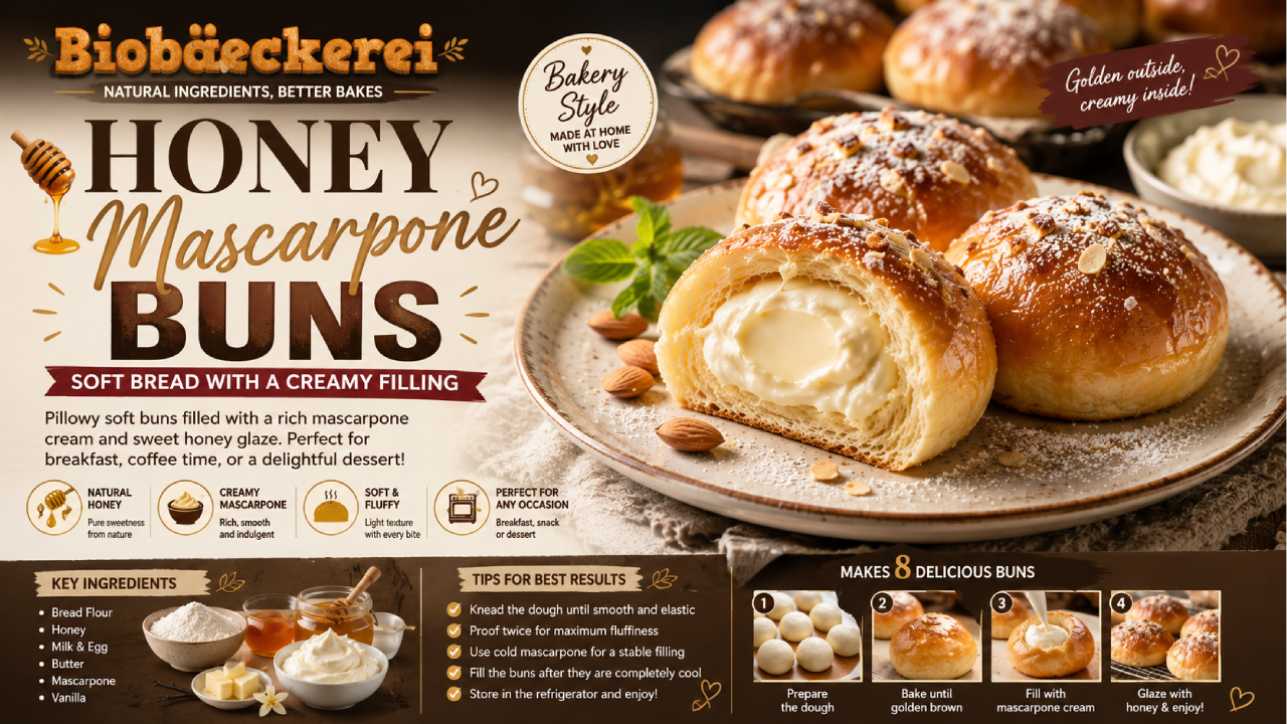
Honey Mascarpone Buns Recipe: Soft Bread with a Creamy Honey Filling
Biobaeckerei – There is something especially comforting about pulling warm, golden buns from the oven. Honey Mascarpone Buns take that familiar pleasure further by pairing tender enriched bread with a smooth mascarpone filling. Honey provides gentle floral sweetness, while mascarpone adds richness without becoming overwhelmingly sugary. More importantly, the contrast between fluffy bread and cool, creamy filling makes every bite feel more interesting. This recipe uses common enriched-dough techniques, including milk, egg, butter, and yeast. However, careful proofing matters more than adding excessive fat. The mascarpone cream is added after baking and cooling, which helps preserve its smooth texture. Meanwhile, a light honey glaze gives the buns an attractive bakery-style finish. Although the recipe looks impressive, the individual techniques remain approachable for home bakers. With accurate measurements and patient fermentation, these buns can deliver a soft crumb, balanced sweetness, and creamy center suitable for breakfast, afternoon coffee, or dessert.
Read Also: Berry Bread Pudding: A Comforting Dessert Bursting with Fresh Berry Flavor
Honey Mascarpone Buns Balance Sweetness and Richness
The appeal of Honey Mascarpone Buns comes from balance rather than excessive sweetness. Mascarpone is an Italian fresh cheese known for its rich, smooth texture and mild dairy flavor. Therefore, it works particularly well in fillings where a creamy texture is more important than sharpness. Honey adds another layer without completely masking that delicate character. Meanwhile, the bread itself should remain moderately sweet. This distinction matters because heavily sweetened dough combined with a rich filling can quickly become overwhelming. Instead, this recipe lets each component contribute something different. The bun provides a fluffy structure, mascarpone creates richness, and honey delivers sweetness with aromatic depth. Additionally, a small amount of vanilla can round out the filling. The finished bun feels closer to an elegant bakery pastry than a heavily frosted dessert. For the best experience, serve it slightly cool or at room temperature. That way, the filling remains creamy while the bread retains its soft and tender texture.
Ingredients for Soft and Fluffy Honey Buns
For the dough, prepare 350 grams bread flour, 40 grams granulated sugar, 6 grams instant yeast, 5 grams fine salt, 180 milliliters lukewarm whole milk, one large egg, 45 grams unsalted butter, and 25 grams honey. These quantities create an enriched dough that remains soft without becoming excessively heavy. Bread flour provides enough gluten-forming protein to support the enriched mixture. Meanwhile, milk, butter, and egg contribute tenderness and flavor. Honey adds sweetness while complementing the filling later. Make sure the milk is lukewarm rather than hot because excessive heat can damage yeast activity. Also, soften the butter before mixing it into the dough. If bread flour is unavailable, all-purpose flour can work, although the final crumb may differ slightly. Most importantly, avoid adding large amounts of extra flour while kneading. Enriched dough can initially feel sticky. However, continued kneading gradually develops gluten and improves handling. Using a kitchen scale will provide the most consistent results.
Prepare the Dough Until Smooth and Elastic
Start by combining bread flour, sugar, instant yeast, and salt in a large mixing bowl. Keep concentrated salt from sitting directly against the yeast before mixing. Next, add the lukewarm milk, egg, and honey. Mix until a rough dough forms. Then, knead for several minutes before gradually incorporating the softened butter. At first, the dough may become slippery and difficult to handle. Nevertheless, continue kneading rather than immediately adding more flour. As gluten develops, the mixture should become smoother and more elastic. A stand mixer fitted with a dough hook makes this process easier, although hand kneading also works. Depending on the flour and mixing method, kneading may take around 10–15 minutes. The finished dough should feel soft and slightly tacky instead of wet. You can also perform a basic windowpane test by gently stretching a small piece. If it forms a thin membrane before tearing, gluten development is generally sufficient. Proper kneading gives Honey Mascarpone Buns their light, structured crumb.
Give the Dough Enough Time for Its First Rise
Transfer the kneaded dough into a lightly greased bowl and cover it. Allow it to rise in a comfortably warm place until roughly doubled in volume. Depending on room temperature and yeast activity, this usually takes about 60–90 minutes. However, visual cues are more reliable than following the clock alone. Fermentation produces gas inside the gluten network, helping the buns develop a lighter texture. Therefore, rushing this stage can produce dense bread. On the other hand, excessively long proofing can weaken the dough and affect its shape. Once the dough has expanded sufficiently, gently press it to release large gas pockets. Avoid aggressively punching or tearing it. Next, transfer the dough to a clean work surface and divide it into eight equal portions. Using a kitchen scale makes each bun more consistent. Shape each piece into a smooth ball by creating gentle surface tension. This simple shaping step helps Honey Mascarpone Buns rise evenly and develop an attractive rounded appearance during baking.
Shape and Proof the Buns Before Baking
Arrange the shaped dough balls on a parchment-lined baking tray, leaving enough space between them for expansion. Cover them loosely and allow a second proof for approximately 35–50 minutes. Again, temperature can change the exact timing. The buns should become noticeably puffy and feel airy when gently touched. Meanwhile, preheat the oven to 175°C or 350°F. Before baking, brush the tops lightly with milk or beaten egg for a more polished surface. Bake the buns for around 16–20 minutes, or until they develop an even golden-brown color. If checking with an instant-read thermometer, enriched bread is generally baked when its center reaches roughly 88–93°C (190–200°F). However, appearance and texture remain useful practical indicators. Remove the tray from the oven and let the buns cool. Do not fill them while they are hot. Otherwise, the mascarpone mixture can soften excessively or melt. Patience at this stage preserves the contrasting textures that make Honey Mascarpone Buns particularly appealing.
Make a Stable and Creamy Mascarpone Filling
For the filling, use 250 grams cold mascarpone, 100 milliliters cold heavy cream, 35 grams honey, and one teaspoon vanilla extract. Start by briefly stirring the mascarpone until smooth. Next, add the honey and vanilla. In a separate bowl, whip the cold heavy cream until it reaches soft-to-medium peaks. Then, gently fold the whipped cream into the mascarpone mixture. Avoid aggressive or prolonged mixing because mascarpone can become loose or grainy when overworked. The finished cream should be smooth enough for piping while remaining stable inside the bun. Taste it before adding more honey. Since the bread and finishing glaze also contain sweetness, the filling does not need to resemble frosting. Additionally, different varieties of honey have different flavor intensities. Mild floral honey allows the dairy flavor to remain noticeable, while darker honey creates a stronger profile. Once prepared, refrigerate the cream until the buns are completely cool. Keeping the filling chilled also makes piping cleaner and easier.
Fill Each Bun for a Bakery-Style Center
Once the buns have cooled completely, make a small opening in the side or bottom of each one. A narrow knife or piping nozzle can help create space without splitting the bread. Transfer the chilled mascarpone mixture to a piping bag fitted with a suitable round nozzle. Next, pipe the cream gradually into each bun. Stop when the bun feels slightly heavier and the filling reaches the opening. Avoid forcing in too much cream because the bread can split. For a more decorative presentation, you can cut the top partially open and pipe a visible swirl of mascarpone cream. However, an enclosed center provides a pleasant surprise when the bun is broken apart. Because the filling contains fresh dairy, filled Honey Mascarpone Buns should not remain at room temperature for extended periods. Refrigerate leftovers promptly in a covered container. For the best texture, allow a refrigerated bun to sit briefly at room temperature before serving. This softens the bread while keeping the center pleasantly creamy.
A Light Honey Glaze Adds the Final Touch
A simple honey finish gives these buns a glossy surface without covering them in heavy icing. Mix 20 grams honey with about 10 grams melted unsalted butter. Brush a thin layer over the cooled or slightly warm buns. The butter makes the glaze easier to spread, while honey creates an attractive sheen and reinforces the central flavor. However, use the glaze sparingly. Too much can make the surface sticky and push the overall sweetness beyond balance. For additional texture, sprinkle a small amount of toasted sliced almonds or finely chopped pistachios over the top. Alternatively, leave the buns plain for a cleaner presentation. A tiny dusting of powdered sugar can also work, although it is optional. The goal is to let the bread and mascarpone remain the main attraction. Visually, the golden crust and pale cream already create an appealing contrast. Consequently, Honey Mascarpone Buns do not need elaborate decoration to look refined and inviting on a serving plate.
Small Baking Details Make a Noticeable Difference
Several small choices can determine whether Honey Mascarpone Buns become exceptionally soft or merely acceptable. First, weigh the flour rather than measuring it by volume whenever possible. Too much flour creates a firmer, drier crumb. Second, give the gluten enough time to develop before deciding the dough needs additional flour. Third, judge proofing by the dough’s appearance rather than relying only on fixed times. Room temperature significantly affects fermentation speed. Furthermore, let the baked buns cool before introducing the mascarpone cream. This protects both food quality and filling consistency. Freshly baked unfilled buns can be kept covered for a short period, while dairy-filled buns require refrigeration. For serving, coffee or unsweetened tea works particularly well because both beverages offset the rich filling. Ultimately, the recipe succeeds through contrast: airy bread surrounds a smooth center, while honey adds sweetness without dominating every bite. That combination gives this homemade pastry its distinctive bakery-style character.
