
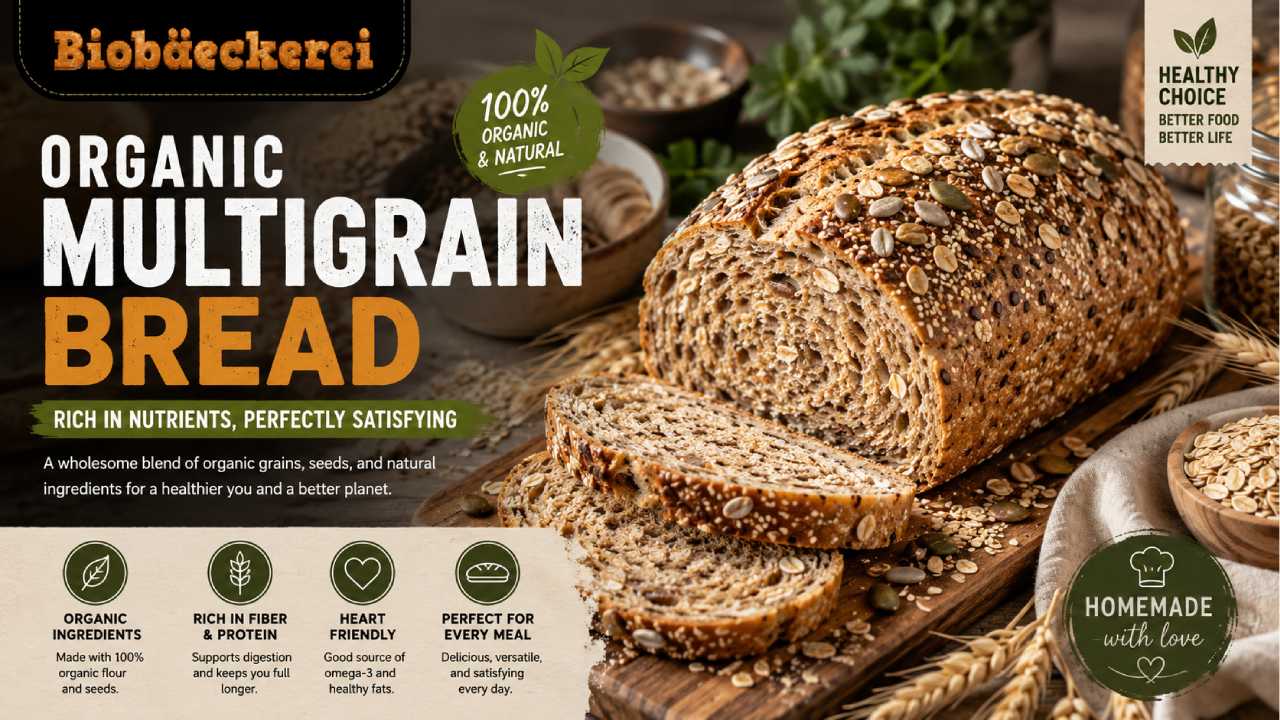
Organic Multigrain Bread Recipe Rich in Nutrients and Perfect for Everyday Meals
Biobaeckerei – The Organic Multigrain Bread Recipe has become a favorite among people who want healthier homemade meals without sacrificing flavor. Unlike conventional white bread, multigrain bread combines several nutrient-rich grains that provide more fiber, vitamins, and minerals. As a result, every slice offers better nutritional value while maintaining a satisfying texture. Moreover, many home bakers appreciate the ability to control ingredient quality by using organic flour and seeds. This approach reduces unnecessary additives and highlights the natural taste of wholesome grains. Although baking bread requires patience, the final result is rewarding. Freshly baked organic multigrain bread fills the kitchen with an inviting aroma and delivers a balanced flavor that pairs well with both sweet and savory toppings.
Read Also: Chai Spice Cake: A Warm and Comforting Cake Inspired by Traditional Tea
Choosing High-Quality Organic Ingredients
Every successful Organic Multigrain Bread Recipe begins with premium ingredients. Organic bread flour provides a strong gluten structure, while whole wheat flour contributes a hearty flavor and additional nutrients. Furthermore, grains such as rolled oats, flaxseeds, sunflower seeds, pumpkin seeds, and millet create a satisfying texture and nutritional diversity. Natural sweeteners like organic honey or maple syrup support yeast fermentation without overwhelming the bread’s flavor. Likewise, extra virgin olive oil adds softness and extends freshness. Using filtered water and sea salt completes the foundation of a well-balanced loaf. Although ingredient quality may seem like a small detail, it significantly influences both the texture and overall taste of homemade bread.
Ingredients for Organic Multigrain Bread
Preparing this recipe is straightforward because the ingredients are widely available in organic grocery stores.
Ingredients:
- 500 g organic bread flour
- 100 g organic whole wheat flour
- 50 g rolled oats
- 30 g flaxseeds
- 30 g sunflower seeds
- 20 g pumpkin seeds
- 10 g millet (optional)
- 10 g instant yeast
- 12 g sea salt
- 25 g organic honey
- 30 ml extra virgin olive oil
- 420 ml lukewarm water
Optional topping:
- Mixed seeds
- Rolled oats
This combination creates a loaf with a soft crumb, crispy crust, and naturally nutty flavor.
Step-by-Step Baking Instructions
First, combine the bread flour, whole wheat flour, oats, flaxseeds, sunflower seeds, pumpkin seeds, millet, yeast, and salt in a large mixing bowl. Next, add the honey, olive oil, and lukewarm water. Mix everything until a rough dough forms. Afterward, knead the dough for about 10 to 12 minutes until it becomes smooth and elastic. Place the dough in a lightly oiled bowl, cover it, and let it rise for approximately one hour or until doubled in size. Once risen, gently shape the dough into a loaf and transfer it into a greased bread pan. Allow the second proof for another 40 to 50 minutes. Finally, sprinkle mixed seeds on top and bake at 190°C (375°F) for about 35–40 minutes until golden brown. Cool completely before slicing.
Nutritional Benefits of Multigrain Bread
One reason the Organic Multigrain Bread Recipe continues to gain popularity is its impressive nutritional profile. Whole grains naturally contain dietary fiber that supports digestive health and promotes longer-lasting fullness. Additionally, flaxseeds contribute omega-3 fatty acids, while sunflower and pumpkin seeds provide healthy fats, protein, magnesium, and zinc. Oats also supply beta-glucan fiber, which may support heart health when consumed as part of a balanced diet. Because the bread contains several grains instead of refined flour alone, it offers a more gradual release of energy throughout the day. Consequently, many people choose multigrain bread for breakfast or lunch to maintain stable energy levels.
Delicious Ways to Serve Organic Multigrain Bread
Fresh organic multigrain bread is incredibly versatile. For breakfast, toast a slice and top it with mashed avocado, eggs, or almond butter. Meanwhile, lunch becomes more satisfying when the bread is used for sandwiches filled with grilled vegetables, roasted chicken, or smoked salmon. In the evening, pair warm slices with homemade soup or fresh salads for a comforting meal. Furthermore, the bread works wonderfully with organic fruit preserves, natural cheese, or Greek yogurt spreads. Because of its balanced flavor, it complements both savory and sweet ingredients without overpowering them.
Tips for Achieving Bakery-Quality Results
Although homemade bread is forgiving, several techniques can improve the final outcome. First, measure ingredients accurately using a digital kitchen scale. Next, avoid adding excessive flour during kneading because overly dry dough produces dense bread. Additionally, give the dough enough proofing time since proper fermentation develops better flavor and texture. Baking with steam during the first few minutes also helps create a crisp crust. Finally, allow the loaf to cool before cutting. Although warm bread is tempting, cooling preserves the crumb structure and prevents the interior from becoming gummy.
Organic Multigrain Bread Is Worth Baking at Home
The Organic Multigrain Bread Recipe proves that healthy baking can also be delicious and enjoyable. By combining organic flour, wholesome grains, and natural ingredients, this bread delivers excellent flavor, satisfying texture, and valuable nutrition in every slice. Moreover, making bread at home allows complete control over ingredient quality while eliminating many unnecessary preservatives found in commercial products. Although the process requires time and patience, the reward is a fresh loaf that supports a healthier lifestyle. Whether served for breakfast, lunch, or dinner, organic multigrain bread remains a timeless choice for families seeking nutritious homemade food with authentic artisan quality.
