
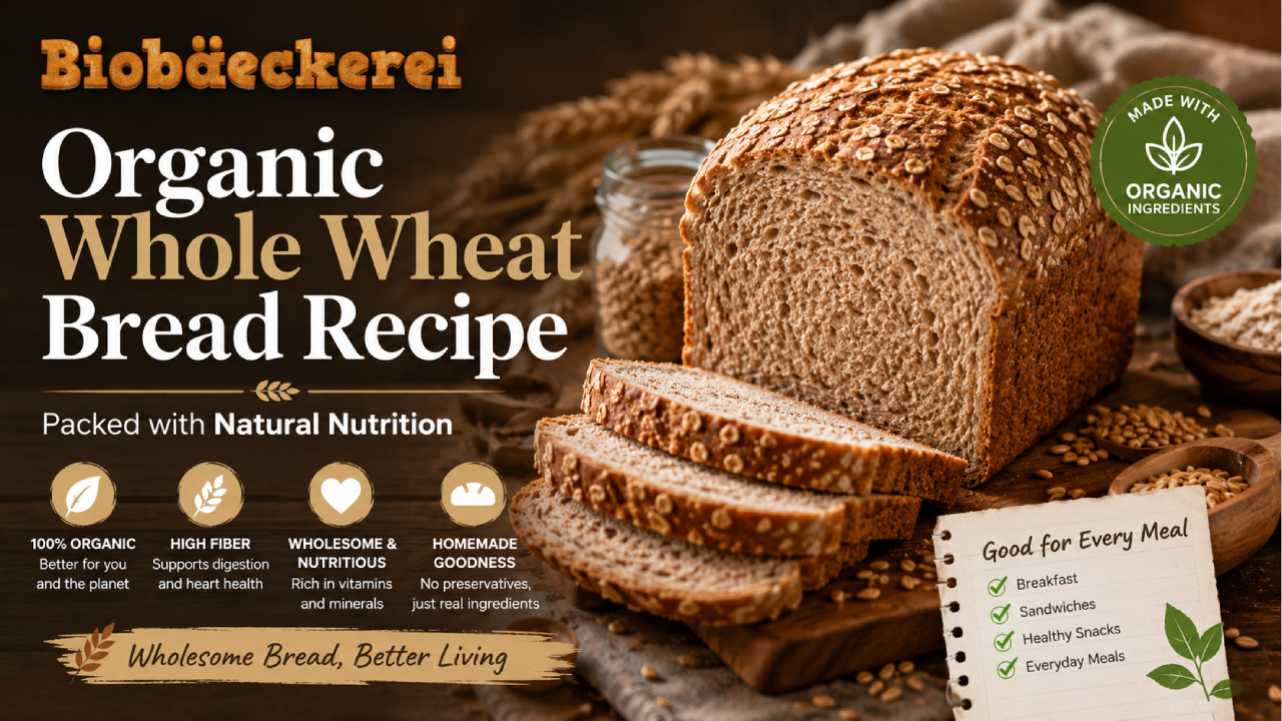
Organic Whole Wheat Bread Recipe Packed with Natural Nutrition
Biobaeckerei – Organic whole wheat bread has become a favorite among health-conscious consumers because it combines rich flavor with excellent nutritional value. Unlike bread made from refined flour, organic whole wheat bread retains the bran, germ, and endosperm, allowing it to preserve more fiber, vitamins, and minerals. Moreover, using organic ingredients minimizes exposure to synthetic pesticides and artificial additives. As a result, this homemade bread delivers a wholesome eating experience while supporting a balanced lifestyle. Whether served for breakfast or enjoyed as an afternoon snack, organic whole wheat bread offers a satisfying texture and authentic flavor that continues to appeal to families seeking healthier meal options.
Read Also: Easy Padang Shrimp Recipes with Rich and Spicy Seafood Taste
Why Organic Whole Wheat Bread Is a Healthier Choice
Organic whole wheat bread stands out because it uses flour that contains every part of the wheat kernel. Consequently, it provides more dietary fiber than refined white bread. Fiber helps support healthy digestion, promotes fullness, and contributes to better blood sugar control. Furthermore, organic farming practices prioritize soil health and environmental sustainability. Therefore, choosing organic whole wheat bread benefits both personal wellness and responsible food production. Many nutrition experts recommend incorporating whole grains into daily meals as part of a balanced diet.
Ingredients Needed for the Recipe
Preparing organic whole wheat bread requires only a few quality ingredients. You will need 500 grams of organic whole wheat flour, 7 grams of instant yeast, 350 milliliters of warm water, 2 tablespoons of extra virgin olive oil, 1 tablespoon of honey, 1 teaspoon of sea salt, and optional seeds such as sunflower, pumpkin, or flaxseed for added texture. Because each ingredient serves a specific purpose, using fresh and high-quality products will improve the final result. Additionally, organic ingredients enhance the bread’s natural flavor without relying on artificial preservatives.
Step-by-Step Preparation Process
Begin by combining the warm water, honey, and yeast in a bowl. Allow the mixture to rest for about ten minutes until it becomes foamy. Next, mix the flour and sea salt before gradually adding the yeast mixture and olive oil. Knead the dough for approximately ten minutes until it becomes smooth and elastic. Afterward, place the dough in a lightly oiled bowl, cover it with a clean towel, and let it rise for about one hour. Once doubled in size, shape the dough, transfer it to a loaf pan, and let it rise again before baking at 190°C for around 35 to 40 minutes.
Whole Wheat Flour Provides Essential Nutrients
One of the greatest advantages of whole wheat flour is its impressive nutritional profile. It naturally contains B vitamins, iron, magnesium, zinc, and antioxidants that support overall health. In addition, the high fiber content helps maintain digestive health and encourages a longer feeling of fullness after meals. Unlike refined flour, whole wheat flour retains valuable nutrients that are often removed during processing. Consequently, organic whole wheat bread becomes a practical option for individuals who want healthier carbohydrate sources without sacrificing taste.
Tips for Achieving Soft and Flavorful Bread
Although whole wheat bread tends to be denser than white bread, several techniques can improve its texture. First, avoid adding too much flour during kneading because excessive flour may produce a dry loaf. Second, allow the dough enough time to rise fully. Proper fermentation develops better flavor and creates a lighter crumb. Additionally, brushing the crust with a small amount of olive oil after baking helps keep the exterior soft. Finally, cooling the bread completely before slicing preserves its structure and prevents crumbling.
Delicious Serving Ideas for Every Meal
Organic whole wheat bread pairs well with a variety of nutritious toppings. For breakfast, spread natural peanut butter and sliced bananas over toasted bread. Meanwhile, avocado, tomatoes, and poached eggs create a balanced lunch option. During the afternoon, homemade fruit jam or Greek yogurt with berries offers a lighter alternative. Because the bread has a hearty texture and mild nutty flavor, it complements both sweet and savory ingredients equally well. Therefore, it easily fits into different meal plans throughout the day.
Homemade Bread Supports a Healthy Lifestyle
Making bread at home provides greater control over ingredient quality and nutritional value. Unlike many commercially produced breads, homemade organic whole wheat bread contains fewer preservatives, less sugar, and no unnecessary additives. Furthermore, baking at home allows families to customize recipes according to dietary preferences. Some people add chia seeds for additional omega-3 fatty acids, while others include oats or nuts for extra crunch. Consequently, each loaf can be tailored to individual nutritional needs and personal taste.
Organic Whole Wheat Bread Remains a Nutritious Everyday Choice
Organic whole wheat bread continues to gain popularity because it combines wholesome nutrition with satisfying flavor. Its rich fiber content, natural ingredients, and simple preparation make it an excellent addition to a balanced diet. Moreover, preparing bread from scratch creates a rewarding cooking experience while encouraging healthier eating habits. Although many bread varieties are available today, organic whole wheat bread remains a timeless choice for those seeking nutritious, homemade food that supports long-term wellness.
