
Rustic Country Bread with Natural Fermentation: An Organic Bread Recipe Worth Baking
Biobaeckerei – Rustic Country Bread has become increasingly popular among home bakers and artisan bread enthusiasts. Its crisp crust, chewy texture, and rich flavor make it stand out from ordinary sandwich bread. Moreover, naturally fermented bread offers a unique depth of taste that develops over time instead of relying on commercial yeast alone. Many people also appreciate its rustic appearance, which reflects traditional European baking methods passed down through generations. As interest in organic ingredients continues to grow, Rustic Country Bread has become a symbol of simple, wholesome baking. Although the recipe requires patience, the final loaf rewards every step with remarkable aroma, texture, and flavor that are difficult to replicate using faster baking techniques.
Read Also: Popeyes’ Viral Chicken Tender Tower Dominates Food Trends
Natural Fermentation Creates a Richer Flavor Profile
One of the defining characteristics of Rustic Country Bread is its natural fermentation process. Instead of depending entirely on instant yeast, many bakers use a sourdough starter made from flour and water. During fermentation, naturally occurring wild yeast and beneficial bacteria slowly develop complex flavors inside the dough. As a result, the bread gains subtle tangy notes while maintaining a pleasant wheat aroma. Furthermore, the slow fermentation process improves the bread’s texture and contributes to a beautifully open crumb. Because the dough develops gradually, gluten strengthens naturally without requiring excessive kneading. Consequently, every slice delivers a satisfying balance between softness and chewiness.
Choosing High-Quality Organic Ingredients Matters
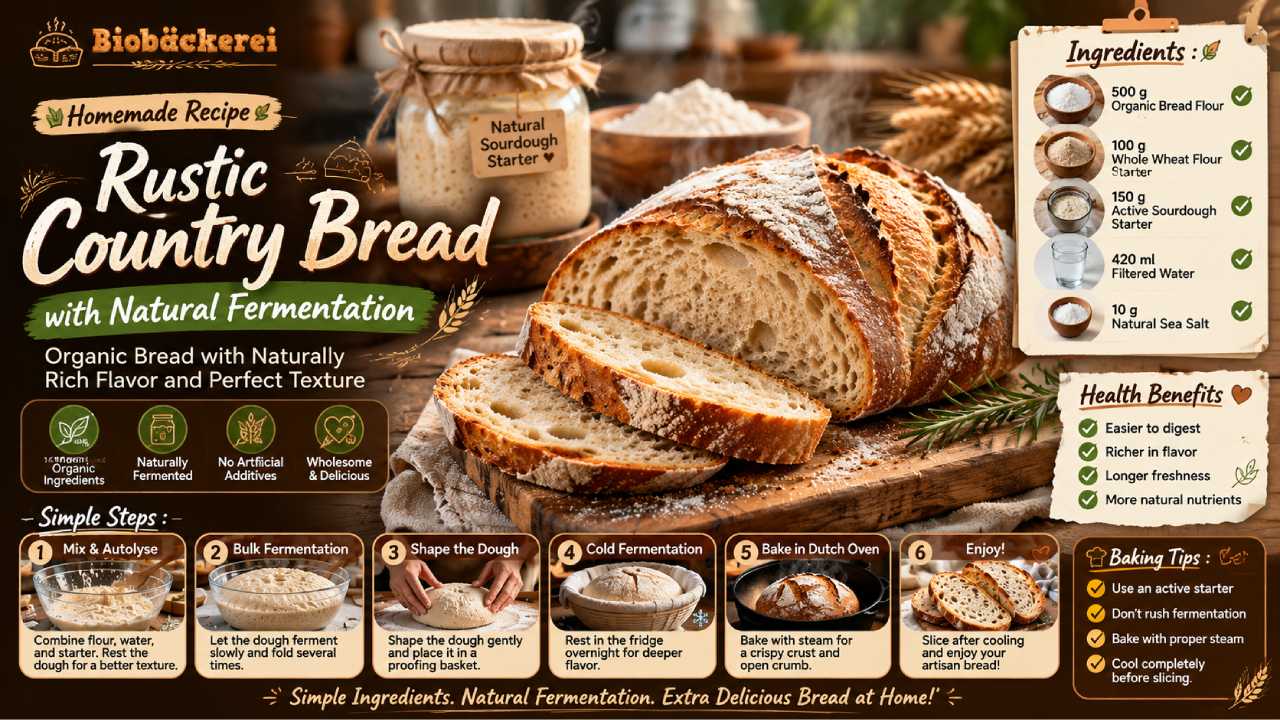
Excellent Rustic Country Bread always begins with carefully selected ingredients. Organic bread flour provides a strong gluten structure that supports proper fermentation. Meanwhile, whole wheat flour adds additional flavor, nutrients, and a slightly earthy character. Clean filtered water, natural sea salt, and an active sourdough starter complete the basic formula. Since there are very few ingredients, each one plays an important role in determining the final quality of the loaf. Therefore, investing in premium ingredients often produces noticeably better results. Organic flour also appeals to many bakers who prefer minimally processed products while supporting sustainable agricultural practices.
How to Make Rustic Country Bread at Hom
Preparing Rustic Country Bread requires several simple yet important steps. First, combine bread flour, whole wheat flour, water, and sourdough starter before allowing the dough to rest during the autolyse stage. Next, add salt and gently fold the dough several times throughout bulk fermentation. Afterward, shape the dough carefully and place it into a proofing basket. Many bakers refrigerate the dough overnight because cold fermentation develops even deeper flavor. Finally, bake the loaf inside a preheated Dutch oven to trap steam during the first stage of baking. This technique creates the signature crispy crust while allowing the interior to remain light and airy.
A Crispy Crust Meets a Soft and Airy Crumb
One reason Rustic Country Bread continues to gain popularity is its outstanding texture. The exterior develops a golden, crackling crust that produces a satisfying crunch with every bite. Meanwhile, the inside remains soft, moist, and filled with irregular air pockets created during fermentation. This contrast makes the bread enjoyable on its own or paired with butter, olive oil, cheese, soups, or roasted vegetables. Additionally, the loaf stays fresh longer than many commercially produced breads because natural fermentation helps retain moisture. Consequently, home bakers often find that one loaf can remain delicious for several days when stored properly.
Health Benefits Often Associated with Naturally Fermented Brea
Many people choose Rustic Country Bread not only for its flavor but also for its nutritional qualities. Natural fermentation may help reduce certain compounds found in grains, making minerals more available during digestion. Additionally, the slower fermentation process can contribute to improved flavor complexity and better overall bread quality. However, it is important to understand that naturally fermented bread is not a medical treatment or a guaranteed healthier choice for everyone. Individual nutritional needs vary, so balanced eating habits remain essential. Nevertheless, many consumers enjoy naturally fermented bread as part of a varied and nutritious diet.
Tips for Baking a Better Artisan Loaf
Achieving excellent Rustic Country Bread requires attention to detail throughout the baking process. First, maintain a healthy and active sourdough starter before mixing the dough. Next, avoid rushing the fermentation because adequate time allows flavor and structure to develop fully. Additionally, use a kitchen scale instead of measuring cups to improve consistency. Proper steam during the first part of baking also helps create an attractive crust and better oven spring. Finally, allow the loaf to cool completely before slicing. Although waiting may be difficult, this step preserves the crumb structure and prevents excess moisture from escaping too quickly.
Rustic Country Bread Brings Tradition and Simplicity Together
Ultimately, Rustic Country Bread demonstrates that outstanding bread does not require complicated ingredients or advanced equipment. Instead, patience, careful fermentation, and high-quality organic ingredients create a loaf with exceptional flavor and texture. In my view, baking naturally fermented bread is both a rewarding culinary experience and an opportunity to reconnect with traditional baking techniques. Furthermore, every loaf tells its own story because fermentation naturally creates subtle differences each time. As artisan baking continues to grow worldwide, Rustic Country Bread remains a timeless favorite for people who value authentic flavor, wholesome ingredients, and the simple pleasure of homemade bread.
