
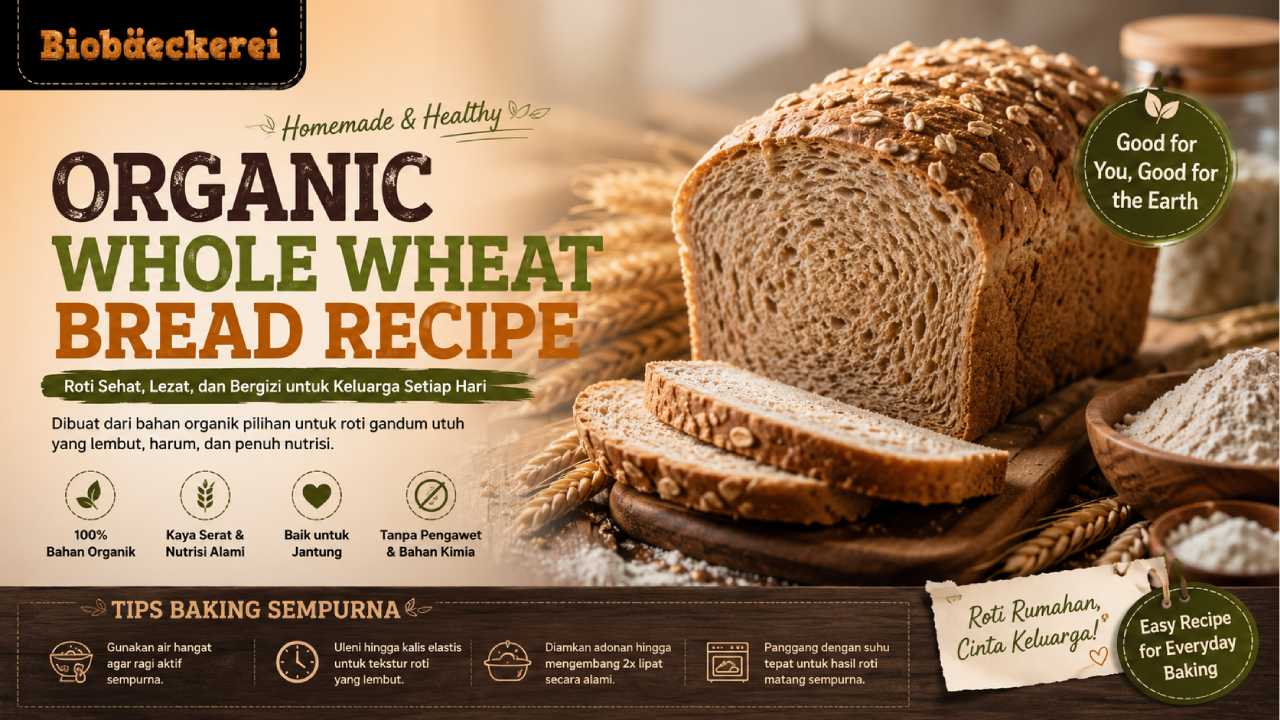
Homemade Organic Whole Wheat Bread Recipe for Everyday Baking
Biobaeckerei – Organic Whole Wheat Bread Recipe has become increasingly popular among home bakers who want to enjoy fresh, nutritious bread without unnecessary additives. Unlike many commercial loaves, homemade whole wheat bread offers better control over ingredient quality, allowing you to use organic flour, natural sweeteners, and wholesome fats. Moreover, baking bread at home creates a satisfying experience while filling the kitchen with a comforting aroma. Therefore, this recipe is ideal for everyday meals, whether you enjoy it for breakfast, sandwiches, or healthy snacks. With the right techniques and quality ingredients, anyone can bake soft, flavorful whole wheat bread that supports a balanced lifestyle.
Read Also: Roasted Vegetables: A Simple Way to Enjoy Healthy Everyday Meals
Why Organic Whole Wheat Bread Is Worth Baking
Whole wheat bread provides more fiber, vitamins, and minerals than bread made with refined flour. Furthermore, organic whole wheat flour is produced without synthetic pesticides, making it an appealing choice for many health-conscious families. Although nutrition should be viewed as part of an overall balanced diet, choosing high-quality ingredients can improve both flavor and texture. As a result, homemade organic bread offers freshness and quality that many store-bought products cannot match.
Ingredients for Organic Whole Wheat Bread Recipe
Preparing this bread requires simple ingredients that are widely available. You will need 500 grams of organic whole wheat flour, 7 grams of instant yeast, 320 milliliters of warm water, 2 tablespoons of honey, 2 tablespoons of olive oil, 1 teaspoon of salt, and optional sunflower or pumpkin seeds for topping. Because every ingredient has a specific purpose, measuring accurately helps achieve a soft and evenly baked loaf.
Preparing the Dough Step by Step
Begin by dissolving the yeast and honey in warm water for about five minutes. Meanwhile, combine the flour and salt in a large mixing bowl. Next, pour the yeast mixture and olive oil into the flour before mixing until a dough forms. After that, knead the dough for approximately ten minutes until it becomes smooth and elastic. Consequently, proper kneading develops gluten that helps the bread rise beautifully during fermentation.
Let the Dough Rise Naturally
Transfer the dough into a lightly greased bowl and cover it with a clean kitchen towel. Then, allow it to rise in a warm place for around one hour or until it doubles in size. During this stage, the yeast produces carbon dioxide that creates tiny air pockets inside the dough. Therefore, patience is essential because proper fermentation directly affects the bread’s softness and final texture.
Shaping and Baking the Bread
Once the dough has risen, gently press out the excess air before shaping it into a loaf. Place the dough inside a greased loaf pan and let it rise again for another 30 to 40 minutes. Meanwhile, preheat the oven to 190°C (375°F). Before baking, sprinkle seeds on top if desired. Bake for approximately 35 to 40 minutes until the crust becomes golden brown and the loaf sounds hollow when tapped.
Tips for Achieving Soft Whole Wheat Bread
Whole wheat flour naturally absorbs more water than refined flour. Therefore, avoid adding excessive flour during kneading because it may produce dense bread. Additionally, using fresh yeast and allowing sufficient rising time significantly improves texture. If you prefer an even softer loaf, replacing a small portion of whole wheat flour with bread flour can create a lighter crumb while still maintaining excellent nutritional value.
Healthy Ways to Enjoy Whole Wheat Bread
Freshly baked whole wheat bread pairs well with numerous healthy toppings. For example, avocado, natural peanut butter, cottage cheese, eggs, or fresh vegetables create balanced meals rich in protein and fiber. In addition, toasted slices make an excellent base for sandwiches or breakfast dishes. Because the bread has a naturally nutty flavor, it complements both sweet and savory ingredients.
Proper Storage for Freshness
Homemade bread contains fewer preservatives than commercial products. Therefore, storing it correctly is essential. Keep the loaf in an airtight container or bread bag at room temperature for two to three days. Alternatively, slice the bread before freezing so individual portions can be reheated whenever needed. This simple method helps preserve freshness while reducing unnecessary food waste.
Homemade Bread Brings Quality and Satisfaction
In my opinion, baking an Organic Whole Wheat Bread Recipe at home is about more than preparing food. It encourages healthier ingredient choices while providing the satisfaction of creating something from scratch. Moreover, the aroma of freshly baked bread creates a warm atmosphere that brings families together. Therefore, this recipe is an excellent addition to any weekly baking routine for those seeking wholesome, delicious, and reliable homemade bread.
