
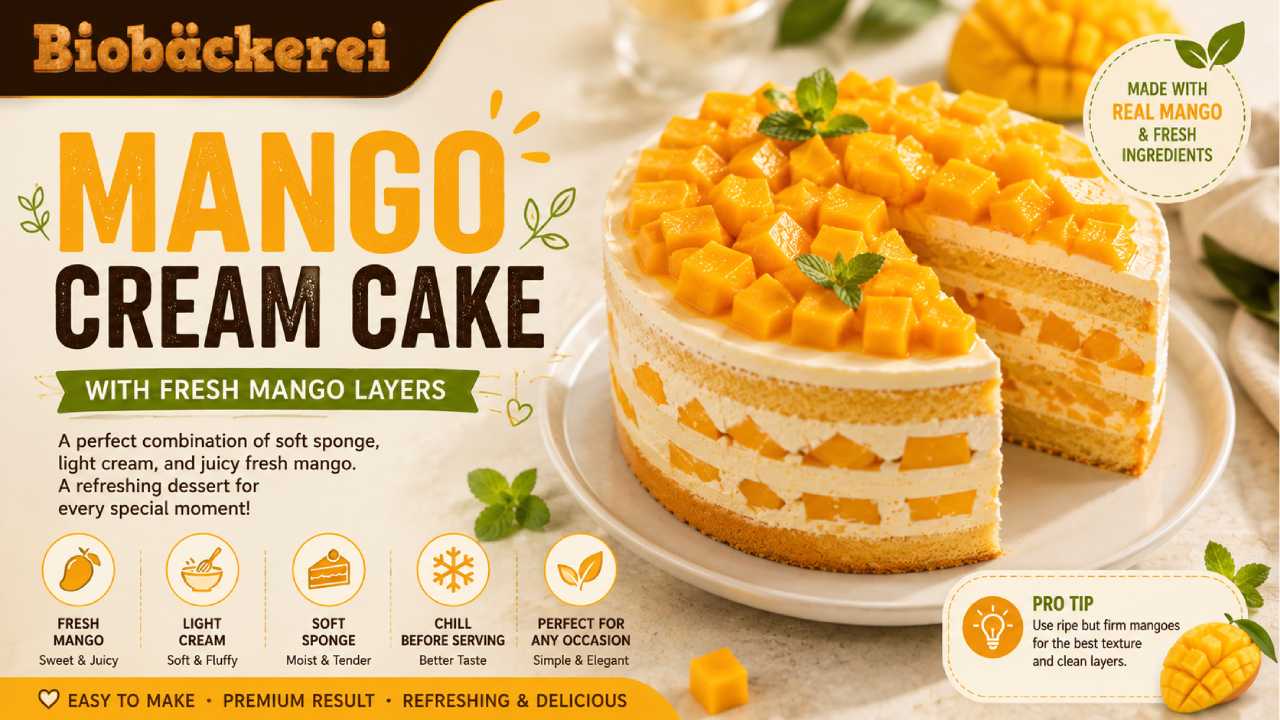
Mango Cream Cake with Fresh Fruit Layers for a Light and Refreshing Dessert
Biobaeckerei – A good Mango Cream Cake Recipe is all about balance. The cake should feel soft, while the cream needs to stay light and smooth. Most importantly, ripe mango should remain the star of every slice. This dessert combines an airy sponge cake with whipped cream and layers of fresh fruit. As a result, it feels lighter than cakes covered with rich buttercream. Mango also contributes natural sweetness, fragrance, and a bright golden color. For the best result, choose ripe yet firm mangoes. Very soft fruit can release excess juice and make the cake unstable. Meanwhile, underripe mango may taste sour and lack aroma. This cake works beautifully for birthdays, afternoon gatherings, or warm-weather celebrations. It can also be prepared ahead because chilling helps the layers settle. Although the finished cake looks elegant, the basic technique is approachable. Careful whipping, gentle folding, and proper chilling make the biggest difference.
Read Also: Crumbl Soda Week Goes Viral With Cola and Dirty Soda Desserts
Ingredients for a Soft and Airy Mango Cream Cake
For one 8-inch or 20-centimeter cake, prepare 4 large eggs, 100 grams granulated sugar, 100 grams cake flour, 30 grams unsalted butter, 30 milliliters whole milk, and 1 teaspoon vanilla extract. For the filling and decoration, use about 450 milliliters cold heavy whipping cream, 45 grams powdered sugar, and 2 to 3 ripe mangoes. Choose cream with enough fat to whip firmly, ideally around 35 percent fat or higher. You can also prepare a simple syrup using 40 grams sugar and 60 milliliters water. The syrup is optional, but a thin coating helps keep the sponge moist after refrigeration. In addition, reserve several attractive mango pieces for decorating the top. Keeping the ingredient list relatively short allows the fruit flavor to remain prominent. Before starting, bring the eggs closer to room temperature. However, keep the whipping cream refrigerated until needed. These small temperature details make each component easier to prepare successfully.
Bake the Sponge Until Light, Springy, and Golden
First, preheat the oven to 170°C or 340°F. Line the bottom of an 8-inch round cake pan with parchment paper. Next, combine the eggs and granulated sugar in a large bowl. Whip them until the mixture becomes pale, thick, and greatly increased in volume. When the whisk is lifted, the mixture should briefly leave a visible ribbon on the surface. Afterward, sift in the cake flour gradually. Fold it gently with a spatula rather than stirring aggressively. This step protects the air incorporated into the eggs. Meanwhile, combine the melted butter, milk, and vanilla. Mix a small amount of batter into this liquid first. Then, gently fold it back into the main batter. Pour everything into the prepared pan and bake for roughly 25–30 minutes. Baking times vary between ovens, so check the center before removing it. A properly baked sponge should spring back lightly when touched and should not contain wet batter in the middle.
Fresh Mango Creates the Cake’s Signature Flavor
While the sponge cools, prepare the mango. Peel the fruit and carefully remove the flesh from the pit. Next, cut most of it into small cubes or thin slices for the filling. Keep several larger pieces for the final decoration. This is where fruit selection becomes especially important. Mango that is ripe but still firm is easier to cut and produces cleaner cake layers. Moreover, it is less likely to release excessive moisture into the whipped cream. Naturally sweet mango also means the cream does not need much added sugar. Depending on availability, varieties with smooth flesh and minimal fiber work particularly well. Before assembling the cake, place freshly cut mango on a paper towel briefly if its surface is very wet. However, avoid pressing the fruit aggressively. You want to remove only excess surface moisture. This simple preparation helps the finished Mango Cream Cake Recipe remain neat after slicing while preserving the juicy texture that makes fresh mango so appealing.
Whipped Cream Should Be Light but Stable Enough for Layering
Cold ingredients make whipped cream much easier to handle. Therefore, keep the heavy cream refrigerated until the sponge and mango are ready. Pour the cream into a clean bowl and add powdered sugar. Begin whipping at a moderate speed. As the cream thickens, pay close attention to its texture. For filling and frosting, aim for medium to firm peaks that can hold their shape. However, stop before the cream becomes grainy. Overwhipping can eventually separate the fat from the liquid and ruin the smooth texture. The amount of sugar can also be adjusted according to the sweetness of the mango. If the fruit is exceptionally sweet, a mildly sweetened cream creates better balance. Once whipped, use the cream promptly or keep it chilled. During assembly, avoid leaving the finished cream in a warm kitchen for extended periods. Dairy-based fillings require refrigeration, and maintaining a cool temperature also makes the cake easier to frost neatly.
Build Each Layer Without Overloading the Cake
Once completely cool, remove the sponge from its pan and slice it horizontally into two or three even layers. Place the first layer on a cake board or serving plate. Brush it lightly with simple syrup if desired. Next, spread an even layer of whipped cream across the surface. Arrange mango pieces over the cream, leaving a small margin near the edge. Add another thin layer of cream to help secure the fruit. Then, position the next sponge layer on top. Repeat the process until the cake is assembled. The temptation to add a huge amount of mango can be strong. However, excessive filling makes the layers more likely to slide. A balanced amount produces cleaner slices and better structural stability. Once assembled, apply a thin coating of whipped cream around the top and sides. Chill the cake briefly before adding the final coating. This short rest allows the cream to firm and makes the finishing process considerably easier.
Simple Decoration Keeps Fresh Mango at Center Stage
A mango cream cake does not need complicated piping to look impressive. In fact, simple decoration often suits its fresh character better. Smooth the final layer of whipped cream over the chilled cake. Then, arrange mango cubes, slices, or thin mango ribbons across the top. You can concentrate the fruit in the center for a clean, modern appearance. Alternatively, arrange overlapping mango slices in a circular pattern. A few mint leaves can add contrast, although they are optional. Avoid placing very wet fruit directly onto the cake too far in advance because moisture can affect the cream’s appearance. For the same reason, freshly decorated mango cakes look their best when served relatively soon after decorating. If you want sharper slices, refrigerate the completed cake before cutting. Use a long, sharp knife and wipe the blade clean between portions. This small step reveals the contrasting layers of golden sponge, white cream, and bright mango much more clearly.
Chilling Is Essential for Better Texture and Cleaner Slices
Patience becomes surprisingly important after assembling the cake. Refrigerate it for at least two to four hours before serving. During this period, the whipped cream firms and the layers become more stable. Meanwhile, a lightly syruped sponge absorbs a small amount of moisture. Consequently, the cake develops a tender texture without becoming soggy. Chilling also makes slicing easier. However, remember that this dessert contains whipped dairy cream and fresh fruit. It should remain refrigerated rather than sitting at room temperature for extended periods. For the best quality, store the cake covered in the refrigerator and enjoy it while the mango remains fresh. Freezing is generally less ideal for a fully assembled version because thawed fresh mango can lose its original texture and release liquid. If advance preparation is necessary, bake the sponge earlier instead. The cooled sponge can be wrapped well, while the cream and fresh mango can be prepared closer to assembly time.
A Successful Mango Cream Cake Depends on Balance
The charm of this Mango Cream Cake Recipe comes from three contrasting elements. The sponge provides structure, whipped cream contributes softness, and fresh mango delivers juicy sweetness. None of these components should overpower the others. Therefore, avoid making the sponge excessively sweet or covering the fruit with heavy layers of cream. Technique also matters more than elaborate decoration. Whip the eggs sufficiently, fold the flour gently, and let the sponge cool completely. Likewise, use cold cream and stop whipping once it reaches the right consistency. Finally, select mangoes that are fragrant, ripe, and firm enough to slice. These straightforward details create a dessert that feels polished without becoming unnecessarily complicated. When served chilled, every bite combines airy cake, cool cream, and naturally sweet fruit. That balance makes mango cream cake especially enjoyable during warmer weather. More importantly, it proves that an elegant fresh-fruit cake can rely on simple ingredients when each component is prepared with care.
