
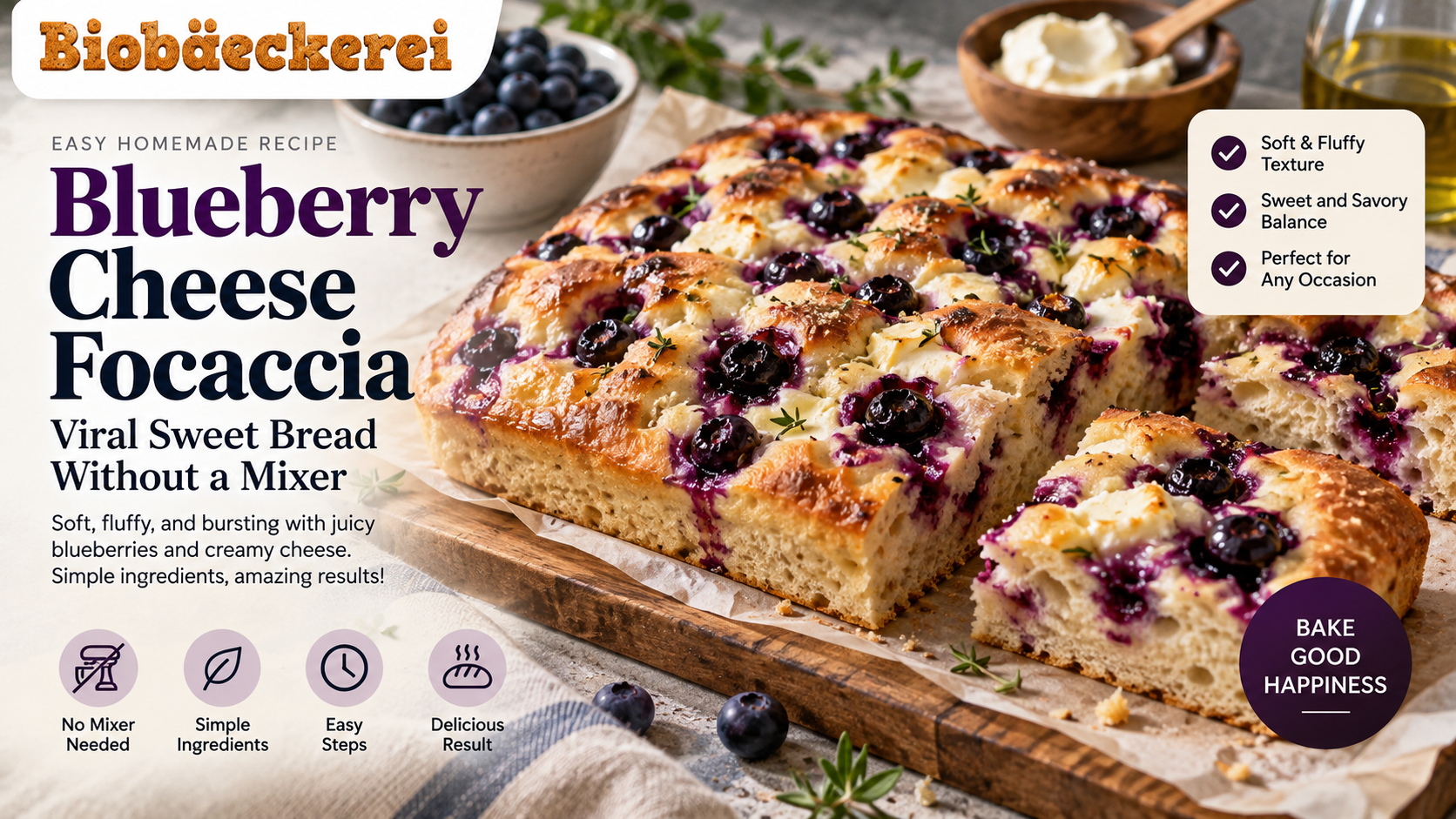
Blueberry Cheese Focaccia Recipe, Viral Sweet Bread Without a Mixer
Biobaeckerei – Blueberry Cheese Focaccia brings a playful dessert twist to the rustic Italian bread known for its airy crumb and dimpled surface. Instead of relying only on savory toppings, this version combines juicy blueberries with creamy cheese and a lightly sweet dough. Better still, the bread can be prepared without a stand mixer. Time, folding, and proper fermentation do much of the work normally associated with intensive kneading. The result is a soft focaccia with crisp golden edges, pockets of melted cheese, and bursts of fruit in every slice. Although social media has helped popularize creative focaccia variations, the technique behind good bread still matters more than appearance. Yeast needs time to ferment, while a relatively moist dough helps create an open texture. Meanwhile, gentle handling preserves the gas formed during fermentation. This recipe keeps those principles intact while transforming classic focaccia into an approachable homemade treat.
Read Also: Chickpea Spinach Curry, A Wholesome Bowl Packed with Flavor
Why Blueberry Cheese Focaccia Works So Well
The appeal of Blueberry Cheese Focaccia comes from contrast. Blueberries provide tartness and natural sweetness, while cream cheese gives each bite a smooth, rich character. Meanwhile, the bread itself offers a mild yeasty flavor that prevents the topping from becoming overwhelmingly sweet. Focaccia also provides an ideal base because its dimpled surface naturally holds toppings. However, this recipe should not be treated exactly like a cake. It remains a yeast bread, so fermentation determines much of its texture. A properly risen dough should feel airy and slightly jiggly before baking. In addition, the fruit needs to be distributed rather than buried deeply into the dough. Too much moisture concentrated in one area can leave the crumb gummy. Therefore, use the blueberries with some restraint. Small pieces of cream cheese should also be spaced across the surface. This creates distinct pockets of fruit, bread, and creamy cheese instead of one heavy layer.
No Mixer Is Needed for an Airy Focaccia Dough
A stand mixer can make bread preparation convenient, but it is not essential for focaccia. In fact, high-hydration dough develops structure through a combination of hydration, fermentation, and folding. Once flour meets water, gluten-forming proteins begin creating a network. Resting gives that network time to develop. A few gentle stretch-and-fold rounds can then strengthen the dough without prolonged hand kneading. This approach is especially useful for home bakers who do not own specialized equipment. However, the dough will feel stickier than a typical sandwich-bread dough. Resist the temptation to keep adding flour until it becomes firm. Excess flour can produce a denser result. Instead, lightly wet or oil your hands before handling the dough. After several folds and sufficient fermentation, it should become smoother and more elastic. This simple technique makes Blueberry Cheese Focaccia accessible while still allowing the bread to develop a pleasantly light interior.
Ingredients for Blueberry Cheese Focaccia
This recipe makes one medium focaccia, suitable for an approximately 23 × 33 cm baking pan. Measure ingredients by weight whenever possible because flour can vary considerably when measured with cups. You will need 400 g bread flour, 320 g lukewarm water, 7 g instant yeast, 35 g granulated sugar, 8 g fine salt, and 25 g olive oil for the dough. For the topping, prepare about 120 g fresh blueberries and 120 g cream cheese. Cut the cream cheese into small pieces while it is cold because this makes it easier to distribute. You will also need about one tablespoon of sugar for a lightly caramelized finish. A small amount of olive oil is useful for coating the pan and your hands. Optionally, add finely grated lemon zest after baking for a brighter aroma. Avoid adding too many wet toppings because excess liquid can interfere with browning and leave the center overly moist.
How to Mix the Dough Without a Mixer
- Place the lukewarm water, instant yeast, and sugar in a large bowl. Stir briefly until combined.
- Add the bread flour and salt. Mix with a sturdy spoon or spatula until no large patches of dry flour remain.
- Add the olive oil. Fold the dough several times until most of the oil is incorporated.
- Cover the bowl and leave the dough to rest for about 20 minutes. This rest makes the sticky dough easier to handle.
- Wet your hands lightly. Lift one side of the dough and fold it toward the center. Rotate the bowl and repeat from the other sides.
- Cover the dough again. Repeat the folding process two or three more times at intervals of about 20 minutes.
- After the final fold, cover the bowl and allow the dough to rise until noticeably expanded and airy. Depending on room temperature, this may take roughly 60–90 minutes.
Shape the Dough Gently to Preserve the Air
Once the first rise is complete, generously oil the baking pan. Transfer the dough carefully so you do not remove all the gas created during fermentation. Turn it once so both sides receive a light coating of oil. Then, gently stretch the dough toward the corners. If it springs back strongly, stop and let it rest for 10–15 minutes. After resting, continue stretching without forcing it. This small pause allows the gluten to relax and makes shaping easier. Next, cover the pan and leave the dough for its final proof. It should become visibly puffy before baking. Depending on temperature, this may take approximately 30–60 minutes. However, use the appearance of the dough rather than the clock alone. Fermentation moves faster in a warm kitchen and slower in a cool one. Proper proofing is important because underproofed focaccia can become dense, while severely overproofed dough may lose strength.
Add Blueberries and Cream Cheese After Proofing
Preheat the oven to 220°C before finishing the topping. Once the dough looks puffy, lightly coat your fingertips with olive oil. Press your fingers into the surface to create the characteristic focaccia dimples. Be gentle enough to retain plenty of air inside. Next, distribute the blueberries evenly across the dough. Press some berries lightly into the dimples, but do not crush all of them. Add small pieces of cold cream cheese between the berries. Then, sprinkle approximately one tablespoon of sugar across the top. The sugar adds sweetness and can encourage light caramelization around the fruit. However, avoid creating a thick sugar layer because it may burn before the bread finishes baking. A small drizzle of olive oil can also be added if desired. At this stage, the focaccia should look colorful but not overloaded. Leaving visible areas of dough helps the surface brown properly and keeps the finished bread balanced.
Bake Until the Edges Turn Deep Golden
Place the pan on the middle rack of the preheated oven. Bake the Blueberry Cheese Focaccia at 220°C for approximately 20–25 minutes. Oven performance varies, so begin checking near the lower end of that range. The bread is ready when the edges appear deeply golden and the center looks fully baked rather than wet. Blueberries may burst as they heat, creating small purple pools across the surface. Meanwhile, the cream cheese should soften and lightly color around its edges. If the top browns too quickly while the center still needs time, loosely shield it with foil for the remaining baking period. After removing the focaccia from the oven, allow it to rest in the pan for several minutes. Then, transfer it to a rack when practical. Cooling prevents steam from remaining trapped beneath the bread. For the cleanest slices, wait until the crumb has had time to settle.
Fresh Blueberries Usually Give the Easiest Result
Fresh blueberries are convenient because they add relatively controlled moisture to the dough. Frozen berries can also work, but they may release more liquid as they thaw. If using frozen blueberries, adding them while still frozen can help limit staining and excessive juice during preparation. However, baking time may need a small adjustment. Regardless of which type you choose, avoid piling fruit heavily in the center. Focaccia needs exposed dough to bake evenly. The same principle applies to cream cheese. Large blocks can create heavy, underbaked pockets around them. Small pieces provide better distribution and make each slice more balanced. For additional flavor, lemon zest can be scattered over the bread after baking. Vanilla may also be added sparingly to the dough if a more dessert-like profile is preferred. Nevertheless, the combination of blueberry and cream cheese already provides enough character without requiring many additional ingredients.
A Few Simple Mistakes Can Make Focaccia Dense
The most common temptation with sticky focaccia dough is adding too much flour. However, a wetter dough helps support the open, tender crumb associated with this bread style. Therefore, use wet or lightly oiled hands instead of repeatedly dusting the dough with flour. Another mistake is rushing fermentation. Yeast needs enough time to produce gas and flavor. Conversely, leaving dough for too long in a very warm environment can weaken its structure. Watch the dough rather than following timing blindly. Finally, avoid aggressively pressing the dough after its final rise. Dimples are important, but flattening the entire surface can remove much of the trapped gas. Ingredient temperature also matters. Water should be comfortably warm rather than hot because excessive heat can damage yeast. With these basic points under control, a mixer becomes far less important. Good focaccia depends more on fermentation, hydration, and patient handling.
Blueberry Cheese Focaccia Is Best Enjoyed Fresh
This sweet focaccia is especially enjoyable after it has cooled enough for the crumb and cheese to settle. The exterior retains some crispness, while the interior remains soft. Meanwhile, warm blueberries provide bright bursts of fruit flavor. Because the recipe contains cream cheese, leftovers should not remain at room temperature for extended periods. Refrigerate them in a covered container. Chilling can make bread firmer, so gently reheating a portion before serving can improve its texture. For longer storage, individual pieces can also be frozen after cooling completely. The bread works well as a breakfast treat, afternoon snack, or casual dessert. More importantly, Blueberry Cheese Focaccia demonstrates that visually impressive bread does not require complicated equipment. A bowl, baking pan, spatula, and a little patience are enough. The viral appearance may draw people toward the recipe, but good fermentation and thoughtful ingredient balance are what make it worth baking again.
