Basque Burnt Chocolate Cake Takes the Burnt Cake Trend to a New Level
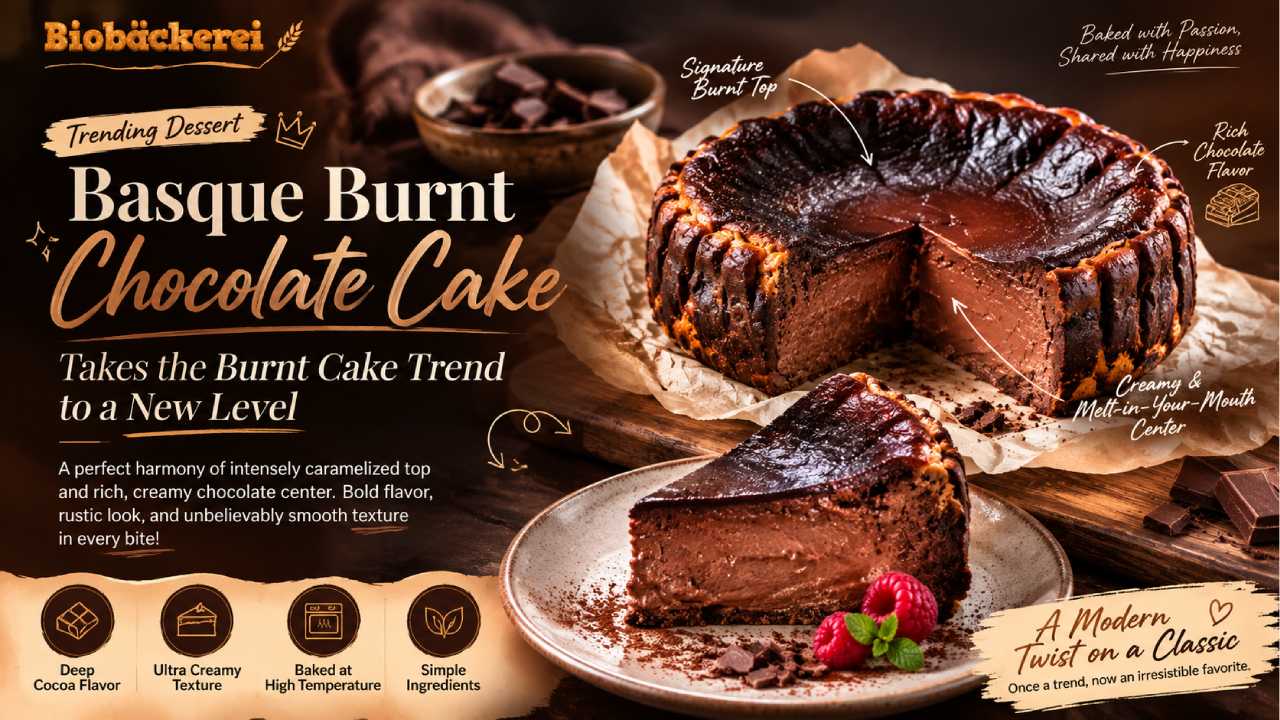
Biobaeckerei – Basque Burnt Chocolate Cake takes the familiar character of Basque-style burnt cheesecake and pushes it toward a richer chocolate experience. The original style is known for its deeply browned surface, soft center, and deliberately rustic appearance. Chocolate adds another layer to that formula. Cocoa and melted chocolate can deepen the roasted notes created during high-temperature baking. As a result, the dessert offers contrast in both flavor and texture. The outside develops an intensely baked character, while the center can remain creamy when properly prepared. Moreover, the cake does not depend on elaborate decoration to attract attention. Its dark, uneven surface is part of the appeal. That makes it especially suited to modern dessert culture, where imperfect finishes can look intentional and inviting. Although recipes vary, the essential idea remains simple. The cake should balance chocolate richness with the distinctive burnt exterior associated with Basque-style cheesecake rather than becoming an ordinary dense chocolate cheesecake.
Read Also: Sweet Soy Chicken Recipe: Tender, Savory, and Full of Flavor
The Basque Cheesecake Story Started in San Sebastián
To understand this chocolate variation, it helps to look at the dessert behind it. Basque burnt cheesecake is widely associated with La Viña, a bar in San Sebastián, Spain. Chef Santiago Rivera developed the now-famous cheesecake there around 1990. Unlike traditional American-style cheesecake, the Basque version usually has no biscuit crust. Instead, it relies on cream cheese, eggs, sugar, and cream to create its distinctive structure. More importantly, it is baked at a relatively high temperature. That technique produces the dramatically browned surface that once might have looked like a baking mistake. However, the dark exterior became its signature. Over time, variations spread internationally, and bakers began adding flavors such as coffee, matcha, and chocolate. Therefore, Basque Burnt Chocolate Cake is best understood as a contemporary variation inspired by that established style. Chocolate does not replace the original identity. Instead, it gives bakers another way to explore the contrast between a deeply baked exterior and a softer interior.
Chocolate Makes the Burnt Character Feel More Intense
Adding chocolate changes more than the color of the cake. It also changes how the caramelized and roasted flavors are perceived. Cocoa naturally brings bitter, earthy, and roasted notes. Meanwhile, dark chocolate contributes richness and a lingering cocoa finish. When these flavors meet the browned surface of a Basque-style cheesecake, the result can feel more intense than the classic version. However, balance matters. Too much chocolate may make the filling excessively dense. On the other hand, too much sugar can hide the complex cocoa character. Therefore, many successful versions aim for a middle ground. Cream cheese should still provide tang, while cream keeps the texture smooth. Chocolate then becomes a strong supporting flavor rather than overwhelming everything else. A small amount of salt can also sharpen the contrast between sweetness and cocoa. In my view, this balance explains much of the dessert’s appeal. It delivers the comfort of chocolate cake while preserving the creamy, slightly tangy identity expected from Basque-style cheesecake.
A Creamy Center Creates the Most Important Texture Contrast
The center is one of the defining features of a good Basque Burnt Chocolate Cake. Ideally, it should contrast clearly with the dark exterior. Depending on the recipe and baking time, the middle may range from softly set to notably creamy. However, it should not simply resemble an underbaked conventional cake. Eggs, cream cheese, cream, and chocolate need enough heat to form a cohesive filling. At the same time, excessive baking can remove the soft texture that makes this style distinctive. Therefore, timing becomes important. The cake may still wobble slightly in the center when removed from the oven. It continues to set as it cools. Moreover, refrigeration changes its texture considerably. A chilled slice tends to become firmer and denser, while a cake served closer to room temperature can feel softer and creamier. This flexibility allows bakers to adjust the eating experience without changing the recipe. Ultimately, the contrast between the almost scorched-looking top and smooth center gives the dessert its strongest visual and sensory identity.
High-Temperature Baking Creates the Signature Dark Surface
A pale top would miss one of the most recognizable features of this dessert. Basque-style cheesecake relies on strong surface browning, which develops through high-temperature baking and reactions involving sugars and proteins. Consequently, the cake can emerge with a top ranging from deep brown to nearly black in some areas. However, the goal is controlled browning rather than turning the entire cake dry and bitter. Oven performance also matters because actual temperatures can vary from the displayed setting. For that reason, visual cues are useful alongside baking time. The edges should appear set, while the middle can remain softer. Meanwhile, parchment paper is commonly used to line the pan. Its crumpled folds create the irregular sides associated with the rustic Basque appearance. This technique also makes removal easier. Most importantly, bakers should resist the temptation to chase a perfectly smooth surface. Cracks, wrinkles, and uneven browning belong to the character of Basque Burnt Chocolate Cake. Here, imperfection is not something that needs to be hidden.
Simple Ingredients Make Technique Even More Important
Despite its dramatic appearance, the ingredient list can remain surprisingly straightforward. A typical chocolate variation uses full-fat cream cheese, sugar, eggs, heavy cream, chocolate, and sometimes cocoa powder. A small amount of flour or another starch may also appear, depending on the desired texture. Because the formula is relatively simple, ingredient handling becomes important. Cream cheese that is too cold can be difficult to blend smoothly. Therefore, bringing it closer to room temperature usually makes mixing easier. Melted chocolate should also be incorporated carefully so it blends evenly with the batter. In addition, aggressive mixing after adding eggs can introduce unnecessary air. Too much trapped air may encourage excessive rising and collapsing. Some collapse is normal for Basque cheesecake, but the interior should remain pleasantly dense and creamy. Furthermore, ingredient quality is noticeable in a dessert with so few components. Chocolate with a flavor you enjoy eating on its own is generally a sensible choice. The recipe may look simple, yet small technical decisions strongly influence the final texture.
Dark Chocolate Can Keep the Dessert Rich Without Becoming Too Sweet
Chocolate selection can noticeably change the personality of the cake. Dark chocolate generally gives Basque Burnt Chocolate Cake a deeper cocoa profile and can prevent the dessert from tasting excessively sweet. However, choosing the highest cocoa percentage is not automatically better. Very bitter chocolate may dominate the cream cheese and create a harsher finish. Conversely, sweeter chocolate can make the cake softer in flavor but may require adjustments elsewhere in the recipe. Cocoa powder introduces another variable. Natural and Dutch-process cocoa have different acidity and flavor characteristics, so they are not always interchangeable in every baking formula. Nevertheless, Basque cheesecake recipes vary widely, and some rely mainly on melted chocolate rather than cocoa powder. The safest approach is to follow the specific formula being used instead of making major substitutions without adjusting other ingredients. From a flavor perspective, moderate bitterness works particularly well here. It complements the browned surface and balances the richness of cream cheese. As a result, each bite can feel indulgent without becoming overwhelmingly sweet.
Cooling Time Is Part of the Baking Process
Cutting the cake immediately after it leaves the oven can produce a very different result from waiting. The filling remains delicate while hot, and the structure continues to develop during cooling. Therefore, patience becomes part of the technique. First, the cake should generally cool in its pan until it becomes easier to handle. Afterward, it can be chilled if a firmer texture is preferred. Refrigeration also makes clean slicing easier. However, serving temperature changes the experience. Straight from the refrigerator, the chocolate filling can taste dense and almost truffle-like. After sitting at room temperature for a while, the texture usually softens and the chocolate aroma becomes more noticeable. This creates an interesting advantage. One cake can offer several textures depending on how it is served. Moreover, Basque-style cheesecake naturally sinks somewhat as it cools. That change should not automatically be treated as failure. The wrinkled top and slightly collapsed center are part of its rustic identity. In this dessert, visual perfection matters far less than texture and flavor.
Minimal Decoration Lets the Burnt Cake Speak for Itself
One reason Basque Burnt Chocolate Cake works well visually is that it needs very little decoration. The deeply browned top already creates a dramatic focal point. Therefore, thick frosting or elaborate piping can distract from its defining character. A clean slice on a simple plate is often enough. Nevertheless, restrained additions can complement the flavor. Fresh berries provide acidity, while lightly whipped cream can soften the intensity of dark chocolate. A small amount of sea salt may also highlight the cocoa notes. Meanwhile, coffee pairs naturally with the roasted character of the cake. The key is restraint. Unlike layer cakes, which often use decoration as part of their identity, Basque-style cakes gain character from the baking process itself. Their folds, cracks, dark patches, and sunken center tell the visual story. This approach also fits contemporary food photography. The dessert looks handmade rather than mechanically perfect. As a result, its imperfections can make it more inviting, especially when the first slice reveals the contrasting creamy chocolate interior.
Basque Burnt Chocolate Cake Shows Why the Style Keeps Evolving
The continuing appeal of Basque-style cheesecake comes from a simple but flexible formula. Its recognizable burnt surface and creamy interior provide a foundation that can accept new flavors without losing its identity. Chocolate is particularly effective because it naturally complements roasted and caramelized notes. Therefore, Basque Burnt Chocolate Cake feels less like a novelty and more like a logical extension of the original dessert. It combines the tang of cream cheese with cocoa richness, while high-temperature baking adds another layer of complexity. Moreover, the cake fits current preferences for desserts that look distinctive without requiring elaborate decoration. Bakers can serve it casually at home or present it as a sophisticated café dessert. Still, technique remains more important than appearance alone. Proper mixing, controlled baking, and enough cooling time help create the contrast that defines the style. When those elements come together, the result demonstrates why a seemingly “burnt” cake can deliver such a refined combination of flavor, texture, and visual character.
