
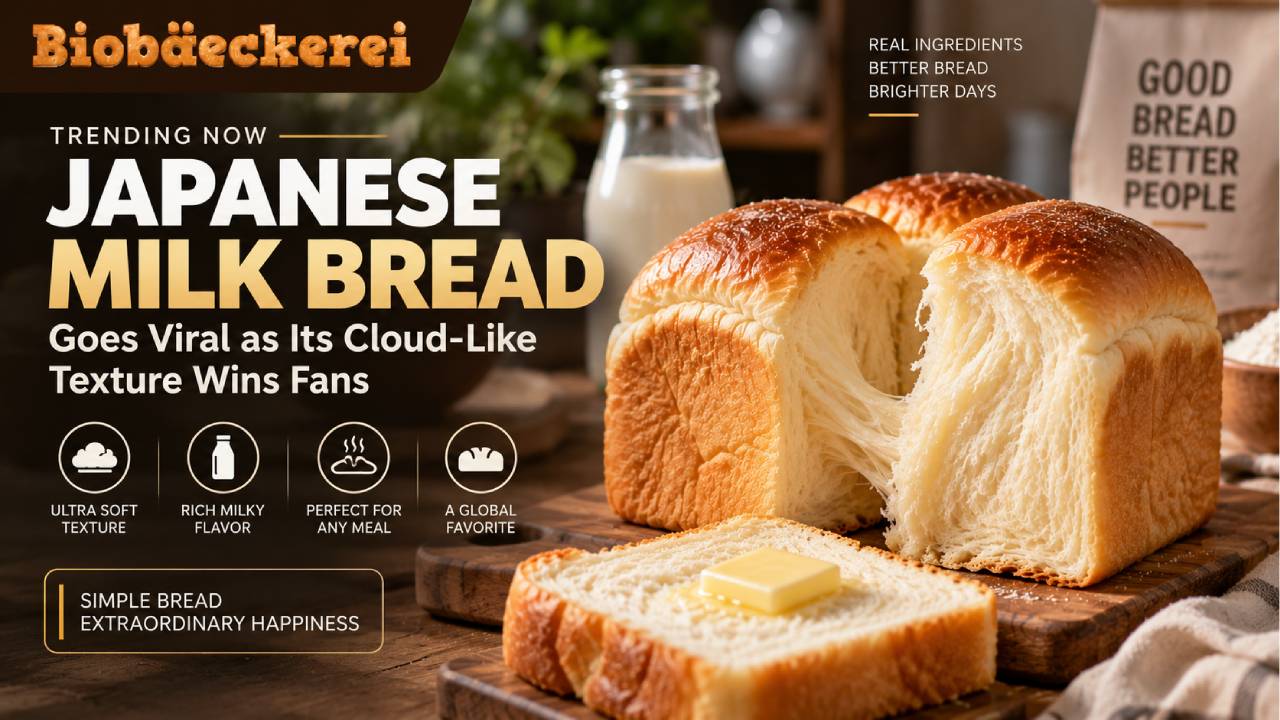
Japanese Milk Bread Goes Viral as Its Cloud-Like Texture Wins Fans
Biobaeckerei – Japanese Milk Bread is winning attention for its exceptionally soft texture, gentle sweetness, and delicate pull-apart crumb. Often associated with Japanese shokupan, this bread looks simple at first glance. However, its texture sets it apart from many everyday loaves. A popular technique behind that softness is tangzhong, a cooked flour-and-liquid mixture that helps dough retain moisture. As a result, the bread can stay tender for longer when prepared and stored properly. Its clean appearance also makes it highly photogenic. Tear open a warm loaf, and the fine strands inside create an instantly tempting image. Therefore, it is easy to understand why milk bread works so well in bakery displays and food content. Still, its appeal is not only visual. The mild flavor makes it suitable for breakfast, sandwiches, toast, or sweet toppings. That combination of comfort and versatility keeps this Japanese-style bread interesting.
Read Also: Roasted Tomato Pasta, a Simple and Flavorful Italian-Inspired Recipe
What Makes Japanese Milk Bread Different?
The first thing people usually notice about Japanese Milk Bread is its texture. The crumb feels light, moist, and remarkably tender. At the same time, the crust is usually thin rather than heavily crisp. This gives the entire loaf a soft character from the first bite to the last. Milk, butter, sugar, and eggs may appear in different recipes. However, formulas vary between bakeries and home bakers. Shokupan itself can also be made in several styles. Therefore, not every Japanese milk bread recipe uses exactly the same ingredients. What matters most is the balance between structure and tenderness. Proper gluten development allows the dough to rise while keeping its fine crumb. Meanwhile, controlled fermentation adds flavor without making the bread heavy. Consequently, the finished loaf feels rich but still surprisingly airy. That contrast is one reason the bread has become such an appealing bakery staple.
Tangzhong Helps Create the Signature Soft Crumb
Tangzhong is frequently used when making soft Asian-style breads. The method involves heating a portion of flour with liquid before adding it to the main dough. During heating, the starch gelatinizes and absorbs more water. Consequently, the dough can hold additional moisture. This helps produce a softer crumb and may slow the rate at which the bread becomes firm. The method is simple, yet temperature and consistency still matter. The mixture should become smooth and thick before it is cooled. After that, it can be combined with the remaining ingredients. However, tangzhong is not the only technique used for Japanese-style bread. Some bakers use yudane, another method that treats flour with hot or boiling water. Both approaches aim to improve softness and moisture retention. For home bakers, tangzhong remains attractive because it requires only basic equipment. A saucepan, whisk, and careful mixing are usually enough to begin.
Its Pull-Apart Texture Makes Every Slice Tempting
Texture plays a major role in the appeal of Japanese Milk Bread. Instead of producing a coarse interior, a well-made loaf develops a fine and elastic crumb. When pulled apart by hand, the bread can separate into soft strands. That visual quality has become closely associated with the style. However, achieving it requires more than simply adding milk to dough. Gluten must develop properly during kneading. Fermentation also needs enough time to create volume. In addition, shaping affects the final structure. Many bakers divide the dough, roll each portion, and place the pieces neatly inside a loaf pan. As the dough proofs, those pieces expand and connect. The result can be a tall loaf with an even interior. Still, overproofing may weaken the structure. Underproofing can also produce a dense result. Therefore, bakers should watch the dough itself instead of relying only on the clock.
A Mild Flavor Makes the Bread Highly Versatile
Another strength of Japanese milk bread is its gentle flavor. The loaf is usually slightly sweet, but it does not need to taste like dessert. Therefore, it can move easily between sweet and savory dishes. At breakfast, thick slices work well with butter, fruit preserves, or honey. Meanwhile, toasted milk bread can develop a lightly crisp exterior while keeping a soft center. It can also serve as the base for sandwiches. Japanese-style egg sandwiches are one familiar pairing, although many fillings work equally well. In addition, the bread can support richer combinations without overpowering them. This versatility gives bakeries plenty of room for creativity. A basic dough can inspire filled buns, toast variations, or other soft bread products. For consumers, that flexibility also makes one loaf useful across several meals. Instead of being a novelty with only one purpose, milk bread can become an everyday option.
Social Media Amplifies Its Visual Appeal
Food trends often spread faster when a dish has an instantly recognizable visual feature. Japanese Milk Bread fits that pattern perfectly. Its tall shape, pale fluffy crumb, and pull-apart texture look impressive in short videos. A baker only needs to tear a fresh loaf open to reveal its delicate interior. As a result, viewers can almost imagine the softness through the screen. However, social media visibility alone does not explain its lasting appeal. A viral food needs to deliver a satisfying experience after the camera stops recording. Milk bread has an advantage because its texture is genuinely distinctive when made well. Moreover, the loaf has a familiar flavor profile. Consumers do not need to adjust to unusual spices or challenging ingredients. Therefore, it combines novelty with comfort. That balance makes the bread accessible to both adventurous food lovers and people who simply want a soft loaf for breakfast.
Bakeries Can Give the Classic Loaf a Modern Twist
The basic character of milk bread leaves plenty of space for variation. Bakeries can keep the traditional loaf simple or add flavors that suit local preferences. Matcha, chocolate, cheese, black sesame, and red bean can complement a soft bread base. Meanwhile, modern bakeries may experiment with cream fillings or savory combinations. Still, additional ingredients should not overwhelm the bread’s main attraction. The crumb should remain soft, light, and pleasant to eat. Too much filling can make the loaf heavy. Likewise, excessive sugar may hide its delicate flavor. Therefore, balance matters more than novelty. A thoughtful variation should preserve the qualities that made the original style appealing. This is especially important for bakeries hoping to turn a temporary trend into a regular menu item. Customers may initially arrive because of an eye-catching flavor. However, they are more likely to return when texture and consistency meet expectations.
Making Milk Bread at Home Requires Patience
Home bakers can make Japanese-style milk bread without professional equipment. However, patience is essential. Enriched dough can feel sticky during the early stages of mixing. Therefore, adding too much flour immediately can create a dry loaf. Instead, knead the dough until it becomes smoother and more elastic. Then, allow enough time for fermentation. Room temperature can affect how quickly the dough rises, so fixed timing should only serve as a guide. After the first rise, shape the dough gently and place it in the pan. The second proof is equally important because it determines much of the loaf’s final volume. Meanwhile, the oven should be properly preheated. Once baked, the loaf needs a short cooling period before slicing. Cutting it immediately may compress the delicate crumb. Although the process takes time, each stage teaches useful bread-making skills. The reward is a soft loaf with a noticeably different texture.
Freshness Is Part of the Milk Bread Experience
Freshness can dramatically affect how bread tastes and feels. Japanese milk bread is especially enjoyable when its crumb remains moist and tender. Therefore, storage deserves attention after baking or buying a loaf. Once completely cool, bread should be protected from excessive air exposure. An airtight container or suitable bread bag can help reduce moisture loss. However, refrigeration is not always the best solution for ordinary bread because cool temperatures can accelerate starch retrogradation and make bread feel stale faster. Freezing is often more practical for longer storage. Individual slices can be frozen and reheated when needed. As a result, consumers do not need to finish an entire loaf immediately. Toasting can also give older slices a new texture. The outside becomes lightly crisp while the center remains pleasant. Good storage may seem like a minor detail, but it helps preserve the quality that makes this bread special.
Simple Ingredients Still Demand Good Technique
A beautiful loaf does not depend on expensive ingredients alone. Flour quality matters, but technique has an equally important role. Accurate measurement helps maintain the intended hydration. Meanwhile, proper kneading develops the gluten network needed to trap gas during fermentation. Yeast also requires suitable conditions to work effectively. Therefore, very hot liquid should not be added directly to yeast unless a specific method calls for it. Salt, sugar, and fat also influence dough behavior. Their proportions need to remain balanced. In addition, bakers should learn to judge dough development by touch and appearance. A recipe may suggest a specific kneading time, yet mixers and hand-kneading methods differ. For that reason, visual cues are useful. Smooth, elastic dough generally indicates stronger gluten development. Experience eventually makes those signs easier to recognize. This combination of simple ingredients and careful technique gives Japanese milk bread much of its charm.
Japanese Milk Bread Has More Than Viral Appeal
The popularity of Japanese Milk Bread makes sense in an era filled with visual food trends. Yet the bread offers more than an attractive social media moment. Its soft crumb, mild sweetness, and flexible uses give it practical value. Furthermore, techniques such as tangzhong show how a small change in bread-making can influence moisture and texture. That detail gives curious home bakers something new to learn. At the same time, bakeries can adapt the loaf without abandoning its basic identity. The strongest versions do not rely only on unusual toppings or dramatic presentation. Instead, they focus on texture, fermentation, and consistency. Trends will naturally change over time. However, foods built around comfort and versatility often have a better chance of remaining relevant. Japanese milk bread fits that description well. Its current popularity may attract first-time buyers, but its cloud-like softness can be the reason they return.
