
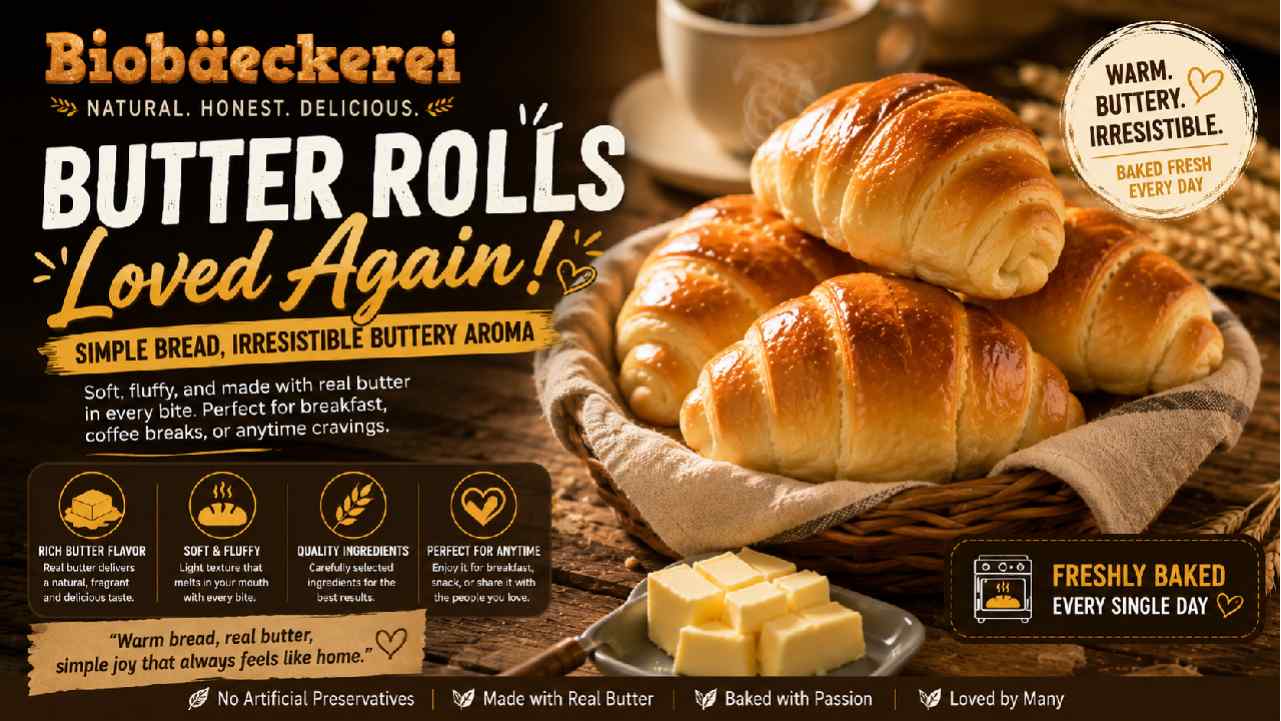
Butter Rolls Are Trending, Simple Bread With an Irresistible Buttery Aroma
Biobaeckerei – Butter rolls are proving that bread does not need complicated fillings or extravagant decorations to feel special. Their appeal comes from a familiar combination: soft dough, rich butter, gentle sweetness, and an inviting aroma from the oven. Across bakeries and social media feeds, simple breads with glossy tops and tender interiors continue to attract attention. Butter rolls fit naturally into that preference because they look comforting rather than overly elaborate. However, their simplicity can be deceptive. Good butter rolls depend on careful fermentation, balanced ingredients, and proper baking. Butter also needs to complement the dough instead of overwhelming it. The result should feel light enough to enjoy on its own while retaining a noticeable buttery character. That balance explains why this humble bread works equally well for breakfast, afternoon coffee, or a casual snack. In a food culture filled with constant novelty, its greatest strength may simply be familiarity done exceptionally well.
Read Also: Blueberry Lavender Lemonade Blends Fruity Freshness with Floral Notes
Why Simple Butter Rolls Feel Special Again
Modern bakery counters often compete through dramatic colors, elaborate toppings, and unusual flavor combinations. Butter rolls move in almost the opposite direction. They rely on ingredients people already know, including flour, butter, milk or water, yeast, sugar, and salt. Therefore, the experience comes from technique rather than novelty. A well-made roll offers a soft crumb, thin golden crust, and enough butter aroma to become noticeable before the first bite. This simplicity also makes the bread visually approachable. Instead of looking like a dessert reserved for special occasions, a warm butter roll feels suitable for everyday eating. Moreover, simple foods can trigger a sense of familiarity. The smell of freshly baked bread and melted butter is instantly recognizable to many people. In my view, that emotional accessibility helps explain the renewed interest. Consumers may enjoy experimental pastries, but there is still room for bread that delivers pleasure without requiring a complicated explanation.
Butter Creates More Than Just a Rich Flavor
Butter plays several roles in enriched bread dough. Most obviously, it contributes dairy flavor and aroma. However, fat also affects texture by interacting with the dough structure. When the formula and mixing process are properly controlled, butter helps create a softer and more tender eating experience. Bakers must still consider quantity carefully. Too little butter may leave the bread without the richness people expect. On the other hand, excessive fat can affect dough handling and make the finished roll feel unnecessarily heavy. Temperature matters as well. Butter that is too cold can be difficult to incorporate evenly. Meanwhile, excessively warm butter can make the dough greasy and harder to manage. For this reason, professional bread making often depends on controlling dough temperature as much as following ingredient measurements. The unmistakable aroma of butter rolls may seem effortless when they leave the oven, yet achieving it consistently requires an understanding of how fat behaves inside enriched dough.
Fermentation Is the Quiet Force Behind a Soft Roll
Butter may receive most of the attention, but fermentation is equally important. Yeast produces carbon dioxide as it metabolizes available sugars. That gas becomes trapped within the developing dough structure and helps the bread expand. As a result, properly fermented dough can produce a lighter crumb. Time also contributes to flavor development. However, fermentation needs balance. Underproofed rolls may bake with a dense texture and limited volume. In contrast, dough that proofs for too long can lose strength and become difficult to handle. Temperature influences the process as well, which is why a recipe’s fermentation time should usually be treated as guidance rather than an absolute rule. Bakers often observe the dough itself to judge readiness. This point is especially useful for home bakers because kitchens can vary considerably in temperature. Ultimately, the soft interior associated with a satisfying butter roll comes from the interaction of ingredients, gluten development, fermentation, shaping, and baking rather than from butter alone.
The Golden Surface Adds to the Experience
Before anyone tastes a butter roll, appearance creates the first impression. A warm golden surface immediately suggests fresh bread and gentle richness. Bakers can achieve that finish in several ways, depending on the recipe. An egg wash may produce a deeper color and more noticeable shine. Milk can create a softer finish, while melted butter brushed onto freshly baked rolls adds aroma and a subtle gloss. Browning during baking also involves complex chemical reactions, including the Maillard reaction between amino compounds and reducing sugars. These reactions contribute both color and flavor. Therefore, a beautifully browned roll is not merely decorative. Its surface carries toasted notes that complement the richer interior. Nevertheless, darker does not always mean better. Excessive baking can dry the crumb before the crust becomes visually appealing. Good results depend on balancing oven temperature, baking time, dough size, and formula. When those elements align, the golden surface becomes part of what makes butter rolls so inviting.
Social Media Favors Food With Strong Visual Simplicity
Food trends now travel quickly through short videos and photographs. Butter rolls are naturally suited to this environment. A baker can show the entire experience through a few simple moments: shaping smooth dough, opening the oven, brushing hot rolls with butter, and pulling apart the finished bread. The interior texture becomes especially effective on camera because viewers can immediately see whether the crumb appears soft. However, online popularity should not be confused with a measurable global trend unless platform data supports that conclusion. What can be said more safely is that visually simple bakery products are highly compatible with social content. They do not require lengthy explanations to communicate their appeal. A golden roll with a glossy butter finish is immediately recognizable. Moreover, the ingredients are familiar enough for viewers to imagine the aroma and texture. That combination of visual clarity and sensory familiarity gives butter rolls many of the characteristics that help food content attract attention online.
Butter Rolls Are Different From Laminated Pastries
A butter roll should not automatically be confused with a croissant or another laminated pastry. Although both can contain substantial amounts of butter, their production methods can be very different. Traditional croissants rely on lamination. Bakers repeatedly fold layers of dough and butter to create the characteristic flaky structure. Many soft butter rolls, meanwhile, use enriched bread dough in which butter is incorporated into the dough itself. Some recipes may also place additional butter inside during shaping. Consequently, their texture tends to be soft, fluffy, or slightly chewy rather than dramatically flaky. This distinction matters because the eating experience is different. A croissant emphasizes crisp layers and delicate shards. A soft butter roll focuses more on a tender crumb and comforting bread texture. Of course, bakeries may create hybrid products that blur these categories. Still, understanding the basic difference helps consumers know what to expect and prevents every buttery crescent-shaped bread from being described as the same product.
Quality Butter Can Make a Noticeable Difference
Because butter is central to the flavor, its quality can noticeably influence the finished bread. Butter contains milk fat, water, and milk solids, but composition and flavor can vary among products. Cultured butter, for example, may offer a more complex and slightly tangy character because cream undergoes fermentation before churning. Other butter styles may taste cleaner or milder. Salted and unsalted versions also behave differently from a seasoning perspective. Many bakers prefer unsalted butter because it allows them to control the amount of salt in the recipe more precisely. However, the best choice depends on the intended flavor profile. More expensive butter does not automatically guarantee better bread. Flour quality, fermentation, mixing, shaping, and baking remain essential. Still, when a recipe intentionally puts butter at the center of the experience, its aroma becomes harder to hide. A good ingredient can therefore make a simple roll feel surprisingly luxurious without requiring additional fillings or toppings.
Butter Rolls Fit Several Moments of the Day
Another reason these rolls remain appealing is their versatility. They can be served warm at breakfast with coffee or tea. Later in the day, the same bread works as a simple snack. A less sweet version can also accompany soup, eggs, or savory dishes. Meanwhile, slightly sweeter rolls can be served with jam or other spreads. This flexibility separates butter rolls from pastries that are strongly tied to dessert. Their flavor is rich but usually neutral enough to move between sweet and savory pairings. Portion size also matters. Small individual rolls are easy to share and can be served without additional preparation. Larger versions may feel more substantial for breakfast. However, the simplest way to enjoy them remains one of the best: warm, freshly baked, and lightly brushed with butter. When the bread itself is well made, additional toppings become optional rather than necessary. That simplicity is precisely what gives the product its everyday charm.
Freshness Matters More With Simple Bread
Simple bread leaves very little room to disguise declining quality. A freshly baked butter roll should have a tender interior and pleasant crust. Over time, however, bread undergoes staling as its internal structure changes. Moisture also migrates within the product. As a result, yesterday’s roll may feel noticeably different from one that has just cooled from the oven. Proper storage can slow quality loss, although it cannot completely preserve the characteristics of fresh bread. Airtight storage helps limit moisture loss, while freezing can be useful when rolls need to be kept longer. Gentle reheating may restore some softness and aroma before serving. Refrigeration, meanwhile, is not always the best choice for ordinary bread because staling can occur more rapidly at refrigerator temperatures under many conditions. Of course, fillings or other perishable ingredients may require different storage rules. For plain butter rolls, understanding freshness is important because their appeal depends heavily on texture and aroma rather than decorative elements.
The Appeal of Butter Rolls Comes Back to Comfort
Food trends can change quickly, but familiar flavors have remarkable staying power. Butter rolls capture that idea particularly well. They are visually simple, easy to understand, and versatile enough for different occasions. More importantly, they deliver several sensory pleasures at once. Warm bread provides softness and subtle sweetness. Butter contributes richness and aroma. A golden crust adds gentle toasted flavors. None of those elements is unusual on its own. Together, however, they create a satisfying experience that feels both ordinary and indulgent. This is why butter rolls do not need an extravagant reinvention to remain interesting. Their appeal depends on executing basic bread-making techniques well. Social media may introduce the bread to new audiences or inspire new shapes. Yet the reason people return for another piece is much older than any online trend. Sometimes, warm bread and the aroma of butter are already enough.
