
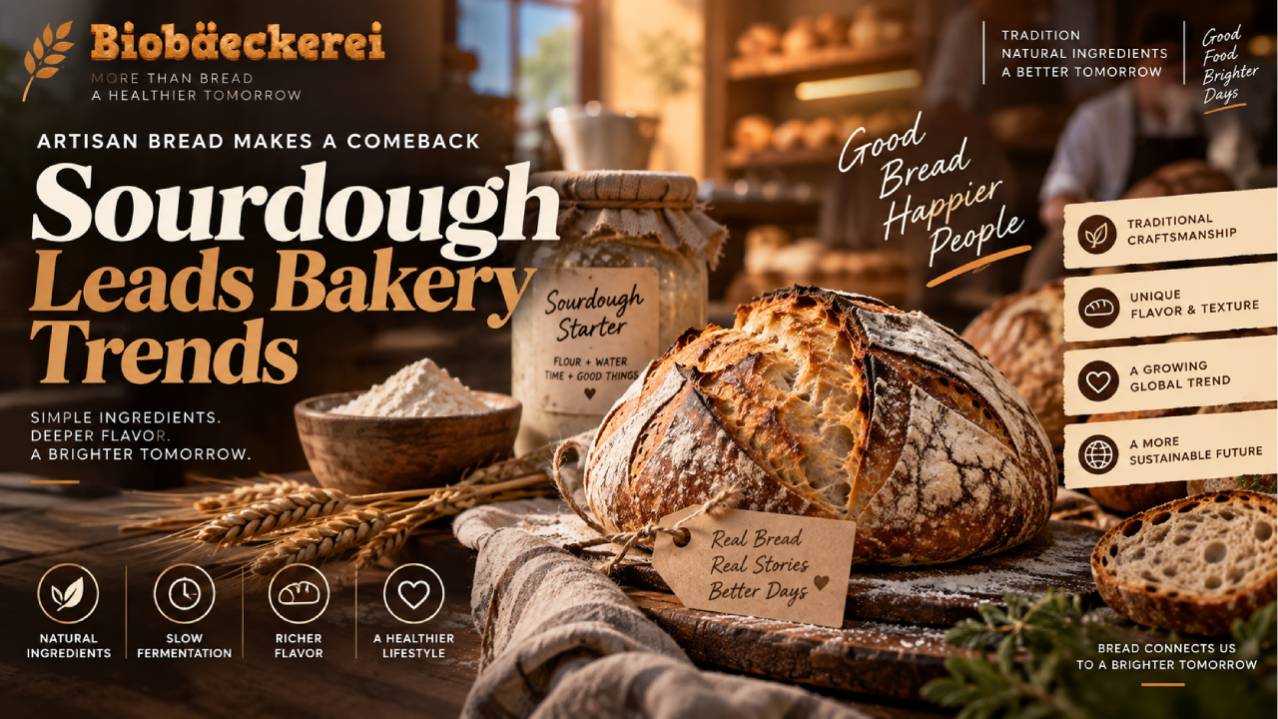
Artisan Bread Makes a Comeback as Sourdough Leads Bakery Trends
Biobaeckerei – Artisan Sourdough Bread is enjoying renewed attention as consumers look for bread with character, texture, and traditional craftsmanship. Unlike highly standardized loaves, artisan bread often emphasizes fermentation, careful shaping, and small-batch production. Sourdough fits naturally into this movement because it relies on a living starter rather than conventional baker’s yeast alone. The starter contains communities of yeasts and lactic acid bacteria that contribute to fermentation. As a result, each loaf can develop distinctive aromas, acidity, crust, and crumb. However, sourdough is not simply an aesthetic bakery trend. Its preparation requires time and attention. Bakers must monitor fermentation, dough temperature, hydration, and starter activity. Therefore, the renewed interest in sourdough also reflects a wider appreciation for slower food production. Consumers are not only buying bread. In many cases, they are also buying into the story, technique, and craftsmanship behind every loaf.
Read Also: Thai Red Ruby Dessert, A Refreshing Sweet Treat from Thailand
Sourdough Fermentation Creates Its Distinctive Character
The defining feature of sourdough begins with fermentation. A sourdough starter contains flour and water populated by microorganisms, including lactic acid bacteria and yeasts. These microorganisms work together as the dough develops. During fermentation, they produce compounds that influence flavor, acidity, aroma, and dough structure. Consequently, sourdough can taste noticeably different from bread made through faster production methods. Fermentation time also matters. Longer fermentation allows more biochemical changes to occur before baking. However, the final result depends on several variables. Flour type, temperature, hydration, starter condition, and fermentation schedule can all change the loaf. This explains why two bakeries can follow similar principles yet produce very different sourdough. From a culinary perspective, that variation is part of the appeal. Each baker can develop a recognizable style while working with the same basic ingredients: flour, water, salt, and starter.
Consumers Are Rediscovering the Value of Craftsmanship
Modern bakery culture increasingly combines convenience with curiosity. Consumers still want accessible food, yet many also appreciate products that show visible craftsmanship. Artisan bread answers that interest through hand-shaped loaves, long fermentation, distinctive scoring, and carefully developed crusts. Sourdough has become especially recognizable within this category. Social media has also made the baking process highly visual. A loaf opening dramatically along its score or revealing an airy crumb can immediately capture attention. Still, appearance is only part of the experience. Customers often notice aroma, chewiness, crust, acidity, and freshness once they taste the bread. Therefore, successful artisan bakeries need more than attractive photographs. They need consistent production. That balance between handmade character and reliable quality can be difficult to achieve. Nevertheless, it is also what separates serious artisan baking from a trend based only on presentation.
Texture Gives Artisan Sourdough a Strong Identity
One reason Artisan Sourdough Bread stands apart is its texture. A well-made loaf can combine a firm crust with a moist and elastic interior. Depending on the recipe, the crumb may be open and irregular or tighter and more structured. Neither style automatically indicates better bread. Instead, the ideal crumb depends on the flour, hydration, fermentation, and intended use. For example, an extremely open crumb can look impressive. However, it may be less practical for sandwiches or spreads. Meanwhile, a more even structure can provide better functionality without sacrificing flavor. The crust also plays an important role. Proper baking creates aroma and complexity through browning reactions at the surface. Therefore, artisan bread should be judged as a complete product rather than by large air pockets alone. Flavor, structure, crust, freshness, and balance matter together. This practical approach also helps consumers look beyond viral bakery aesthetics.
Sourdough Has Nutritional Interest, but Claims Need Context
Sourdough is often promoted online as automatically healthier than every other type of bread. The reality is more nuanced. Research suggests sourdough fermentation can influence factors such as mineral bioavailability, starch digestion, and post-meal glucose responses. However, results depend on flour type, fermentation conditions, recipe, and the person eating the bread. Therefore, sourdough should not be treated as a universal health food. Whole-grain sourdough, for instance, can have a different nutritional profile from a loaf made mostly with refined white flour. Portion size and overall dietary patterns also remain important. In addition, ordinary wheat sourdough still contains gluten. It is not automatically suitable for people with celiac disease. This distinction matters because social media often turns complex nutrition research into simple claims. A more accurate view is that fermentation can change bread in interesting ways. Yet the nutritional value of the final loaf still depends on its ingredients and production method.
Small Bakeries Can Turn Sourdough into a Signature Product
The artisan bread movement creates opportunities for independent bakeries because sourdough can develop a strong local identity. A bakery may experiment with whole grains, seeds, herbs, cheese, olives, or locally available ingredients. However, the foundation still needs consistency. Customers who return for a favorite loaf expect a familiar level of quality. Therefore, bakers must control fermentation carefully even when production remains handcrafted. Starter maintenance becomes especially important. Temperature changes can alter fermentation speed, while flour characteristics can affect water absorption. As a result, professional sourdough baking combines intuition with measurement. Bakers may track dough temperature, fermentation time, hydration, and starter ratios rather than relying entirely on visual judgment. This technical discipline does not remove the craft from artisan baking. Instead, it supports consistency. For small businesses, that combination can become a valuable advantage. A memorable loaf can encourage repeat customers while giving the bakery a product that feels difficult to replicate elsewhere.
Sourdough Is Inspiring More Than Traditional Round Loaves
The renewed popularity of sourdough is also expanding beyond the classic boule. Bakers increasingly apply sourdough fermentation to focaccia, baguettes, sandwich loaves, pizza dough, rolls, and sweet baked goods. This flexibility helps the category reach customers who may not want a large rustic loaf. In addition, familiar formats make sourdough easier to include in everyday meals. A softer sandwich loaf, for example, serves a different purpose from a deeply caramelized country-style boule. Meanwhile, sourdough focaccia provides a platform for vegetables, herbs, cheese, and seasonal toppings. This creative expansion keeps artisan baking from becoming repetitive. However, adding more products also increases production complexity. Each dough may require different fermentation times and handling techniques. Therefore, bakeries need to balance experimentation with operational control. When that balance works, sourdough becomes more than one product on the shelf. It becomes a fermentation method that supports an entire bakery menu.
The Future of Artisan Bread Depends on Quality Beyond Hype
Artisan Sourdough Bread may be fashionable again, but lasting success will depend on more than online popularity. Customers can be attracted by dramatic scoring and beautiful crumb shots. However, they return when bread tastes good and remains consistent. That puts craftsmanship at the center of the trend. Bakers need to understand fermentation rather than simply extend proofing times. They also need to select ingredients that support the style of bread they want to create. Meanwhile, consumers are becoming more familiar with terms such as starter, hydration, bulk fermentation, and cold proofing. This growing knowledge can raise expectations across the bakery market. Therefore, the strongest artisan bakeries will likely combine tradition with careful process control. Sourdough has survived for centuries because fermentation is fundamentally useful, not because it photographs well. Its current popularity simply gives an old technique another opportunity to connect with a new generation of bread lovers.
