
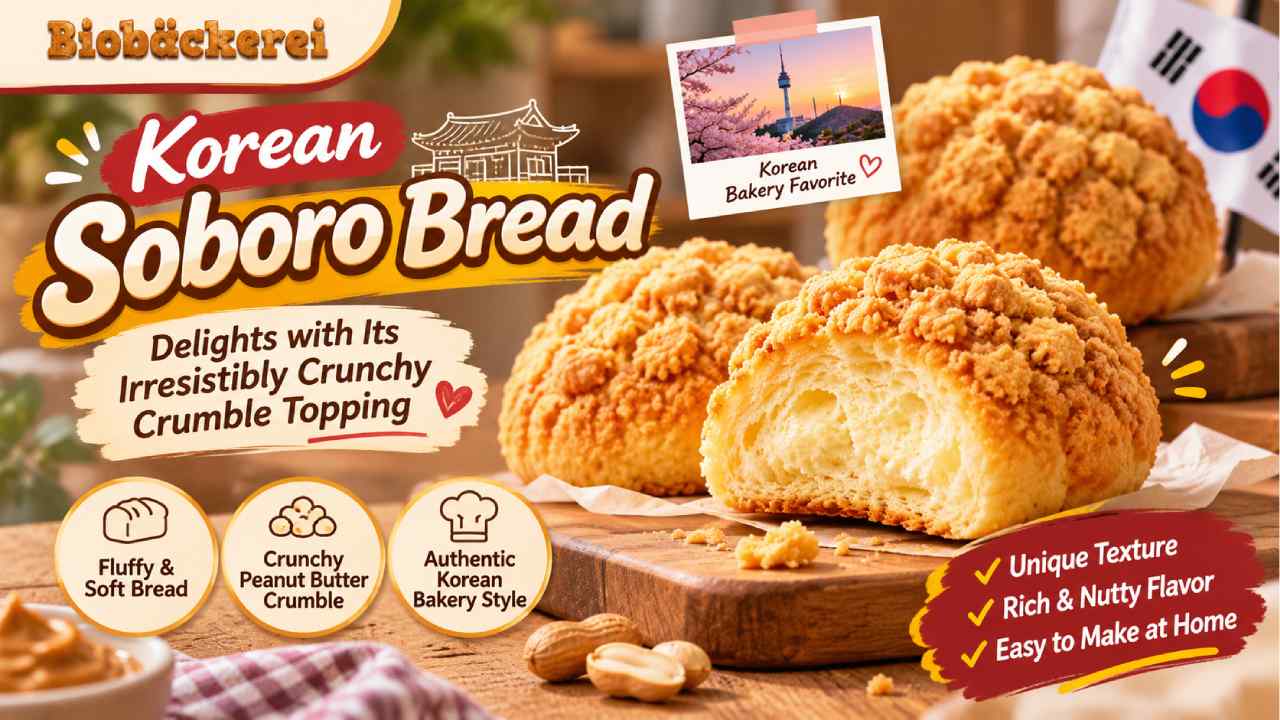
Korean Soboro Bread Delights with Its Irresistibly Crunchy Crumble Topping
Biobaeckerei – Korean Soboro Bread introduces a delicious combination of fluffy bread and a crunchy crumble topping. This popular Korean bakery treat features a soft interior beneath a golden, slightly sweet crust. Moreover, its distinctive peanut butter aroma creates an inviting experience with every bite. Unlike ordinary sweet buns, soboro bread offers two contrasting textures in one serving. The crumbly surface provides a satisfying crunch, while the interior remains tender and airy. Meanwhile, its balanced sweetness makes it suitable for breakfast or an afternoon snack. Many Korean bakeries offer this bread alongside other classic pastries. However, its rustic appearance remains one of its most recognizable characteristics. The uneven topping develops attractive golden tones during baking. With simple ingredients and careful preparation, home bakers can recreate this Korean bakery favorite. Its comforting flavor makes it particularly enjoyable alongside warm milk, coffee, or tea.
Read Also: Lemon Ricotta Semifreddo, A Refreshing Italian Frozen Dessert
The Korean Bakery Tradition Behind Soboro Bread
Korean Soboro Bread, also known as soboro-ppang, is a familiar sweet bun in South Korean bakeries. Some people also call it gombo-ppang because of its distinctive uneven surface. The word soboro comes from Japanese culinary terminology associated with a crumbly texture. However, the Korean bread has developed its own recognizable character within local bakery culture. Its topping commonly combines flour, butter, sugar, and peanut butter. Furthermore, this combination creates a richer flavor than many conventional streusel toppings. The bread itself usually consists of a lightly sweetened yeast dough. Meanwhile, the crunchy exterior provides an enjoyable contrast to the soft center. Although its appearance resembles Japanese melon pan, the topping and flavor profile differ. Soboro bread generally features a more irregular and crumbly surface. Therefore, its unique texture remains an important part of its identity within Korean baking traditions.
Peanut Butter Crumble Creates the Signature Flavor
The crumble topping plays an essential role in defining Korean Soboro Bread. Peanut butter introduces a nutty aroma that complements the sweetness of the dough. Additionally, butter contributes richness and helps create a delicate, crumbly consistency. Sugar provides sweetness while supporting the development of a golden surface during baking. Meanwhile, flour gives the topping enough structure to maintain its distinctive texture. However, excessive mixing can turn the crumble into a dense paste. Therefore, combine the ingredients gently until small, irregular crumbs appear. The topping should remain slightly moist but easy to separate. Furthermore, chilling the mixture briefly can make it easier to handle. During baking, the crumble develops a crisp exterior that contrasts beautifully with the fluffy bread. This simple combination demonstrates how thoughtful ingredient selection can create a memorable pastry without complicated decorations or expensive baking equipment.
Ingredients for Making Authentic-Style Korean Soboro Bread
Preparing Korean Soboro Bread requires basic baking ingredients and a flavorful peanut butter topping. Bread flour provides sufficient structure for the yeast dough. Meanwhile, milk and butter contribute softness and richness. The following recipe produces approximately ten medium-sized buns.
For the bread dough:
● 300 g bread flour
● 150 ml lukewarm whole milk
● 1 large egg
● 40 g granulated sugar
● 5 g instant yeast
● 4 g salt
● 35 g unsalted butter, softened
For the peanut butter crumble:
● 150 g all-purpose flour
● 60 g unsalted butter, softened
● 50 g creamy peanut butter
● 70 g granulated sugar
● 1 egg yolk
● 15 g honey
● ½ teaspoon baking powder
● ¼ teaspoon salt
Additional ingredients:
● Water for attaching the crumble
● Extra flour for handling the dough, if necessary
Recipe information:
● Preparation time: 30 minutes
● Proofing time: 90–120 minutes
● Baking time: 18–22 minutes
● Servings: 10 buns
● Difficulty level: Intermediate
How to Make Korean Soboro Bread Step by Step
Making Korean Soboro Bread requires proper kneading, fermentation, and topping preparation. First, develop a smooth dough with sufficient elasticity. Meanwhile, prepare the peanut butter crumble separately. Allow the dough to rise before shaping each portion. Finally, apply the topping carefully to create its characteristic rustic appearance.
Step-by-step instructions:
- Combine bread flour, sugar, instant yeast, and salt in a mixing bowl.
- Add the lukewarm milk and egg.
- Mix until a rough dough forms.
- Knead the dough until it becomes slightly elastic.
- Gradually incorporate the softened butter.
- Continue kneading until the dough becomes smooth and stretchy.
- Cover the dough and let it rise until approximately doubled in size.
- Meanwhile, combine softened butter, peanut butter, sugar, honey, and egg yolk.
- Add all-purpose flour, baking powder, and salt.
- Mix gently until irregular crumbs form.
- Divide the risen dough into ten equal portions.
- Shape each portion into a smooth round bun.
- Lightly moisten the top of each bun with water.
- Press the moistened surface into the crumble mixture.
- Arrange the buns on a parchment-lined baking tray.
- Allow them to rise again for approximately 30–45 minutes.
- Preheat the oven to 180°C.
- Bake for 18–22 minutes until golden brown and fully cooked.
- Transfer the buns to a wire rack.
- Allow them to cool slightly before serving.
Proper Dough Fermentation Produces a Soft and Fluffy Interior
A successful Korean Soboro Bread begins with properly developed yeast dough. Kneading helps build the gluten network that supports the bread’s structure. Furthermore, fermentation allows yeast to produce gas within the dough. These gas pockets contribute to the light texture after baking. However, insufficient fermentation can result in dense and heavy buns. Excessive fermentation may also weaken the dough and affect its shape. Therefore, observe the dough rather than relying entirely on a fixed schedule. Room temperature can significantly influence fermentation speed. Meanwhile, milk, eggs, and butter enrich the dough and contribute to its tenderness. Adding butter after initial kneading helps the gluten develop more effectively. Bakers should also avoid adding excessive flour when the dough feels slightly sticky. With proper handling, the finished bread develops a soft interior that complements its crunchy peanut butter topping.
Baking Techniques Help Maintain a Perfectly Crunchy Topping
Achieving a crunchy crumble requires careful attention to oven temperature and ingredient consistency. Korean Soboro Bread generally develops an attractive golden crust at a moderate baking temperature. However, excessive heat can darken the topping before the dough finishes cooking. Therefore, preheat the oven thoroughly and place the baking tray near the middle rack. Additionally, avoid pressing the crumble too firmly into the dough. Gentle pressure helps the topping remain attached without losing its irregular structure. Meanwhile, leaving enough space between buns allows heat to circulate evenly. Once baking finishes, transfer the bread to a wire rack. This step prevents moisture from accumulating underneath the buns. Avoid covering them while they remain warm because trapped steam can soften the topping. These practical techniques help preserve the contrast between the delicate bread and its pleasantly crunchy exterior.
Essential Tips for Making Korean Soboro Bread Successfully
Small adjustments can improve the texture and flavor of Korean Soboro Bread. Moreover, understanding the characteristics of each ingredient helps prevent common baking mistakes. Pay particular attention to dough moisture, fermentation, and crumble consistency. The following tips can support a more consistent baking experience at home.
- Use bread flour to develop a strong and elastic dough.
- Choose creamy peanut butter for easier crumble preparation.
- Avoid using excessively hot milk when mixing the yeast.
- Knead the dough until it becomes smooth and stretchy.
- Allow sufficient fermentation based on the dough’s appearance.
- Mix the crumble gently to preserve its irregular texture.
- Lightly moisten each bun before attaching the topping.
- Avoid overcrowding the baking tray.
- Monitor the bread during the final minutes of baking.
- Cool the buns on a wire rack to maintain their crispness.
- Inform guests that the traditional-style topping contains peanuts.
Modern Soboro Bread Variations Introduce Exciting New Flavors
Korean Soboro Bread offers an excellent foundation for creative flavor combinations. Chocolate lovers can incorporate cocoa powder into the crumble mixture. Meanwhile, matcha powder introduces an earthy flavor that complements the sweet dough. Some contemporary variations also feature custard or sweet red bean fillings. Furthermore, cream cheese can provide a slightly tangy contrast to the nutty topping. Bakers may experiment with black sesame for a deeper roasted aroma. However, additional ingredients can change the moisture and consistency of the crumble. Therefore, introduce new flavors gradually to maintain the desired texture. Sunflower seed butter may provide an alternative for people avoiding peanuts, although cross-contact requires careful attention. Additionally, smaller buns can create attractive individual portions for gatherings. These variations demonstrate the flexibility of Korean bakery creations. Nevertheless, the classic combination of fluffy bread and peanut butter crumble remains a distinctive starting point.
Korean Soboro Bread Inspires Creative Bakery Business Opportunities
The recognizable appearance of Korean Soboro Bread offers interesting possibilities for contemporary bakery menus. Its combination of familiar ingredients and distinctive textures can appeal to customers seeking something different. Moreover, individual portions make the bread convenient for takeaway purchases. Bakery owners can introduce classic peanut butter buns alongside seasonal flavor variations. However, consistent product quality remains essential when developing a commercial recipe. Ingredient costs, preparation time, and portion sizes require careful consideration. Meanwhile, attractive packaging can help communicate the product’s Korean bakery inspiration. Packaging should also protect the crumble from excessive moisture and physical damage. Furthermore, clear allergen information is particularly important because traditional-style soboro bread contains peanuts, wheat, milk, and eggs. Small production trials can help businesses evaluate customer preferences before expanding their menus. With thoughtful development, this comforting bread could become an appealing addition to modern bakery collections.
Proper Storage Preserves the Bread’s Freshness and Texture
Proper storage helps maintain the quality of Korean Soboro Bread after baking. For the best experience, enjoy the buns on the day of preparation. However, completely cooled, unfilled buns can remain in an airtight container at room temperature for approximately one to two days. The crumble may gradually soften as moisture moves from the bread into the topping. Therefore, briefly reheating the buns can help restore some crispness. Use an oven at approximately 150°C for five to eight minutes. Meanwhile, freezing provides an alternative for longer storage. Wrap each cooled bun individually and place it inside a freezer-safe container. For the best quality, consume frozen buns within one month. Allow them to thaw before reheating. Furthermore, variations containing custard or cream cheese require appropriate refrigeration. Careful storage and reheating help preserve the comforting aroma, fluffy interior, and distinctive crumble that make soboro bread enjoyable.
