
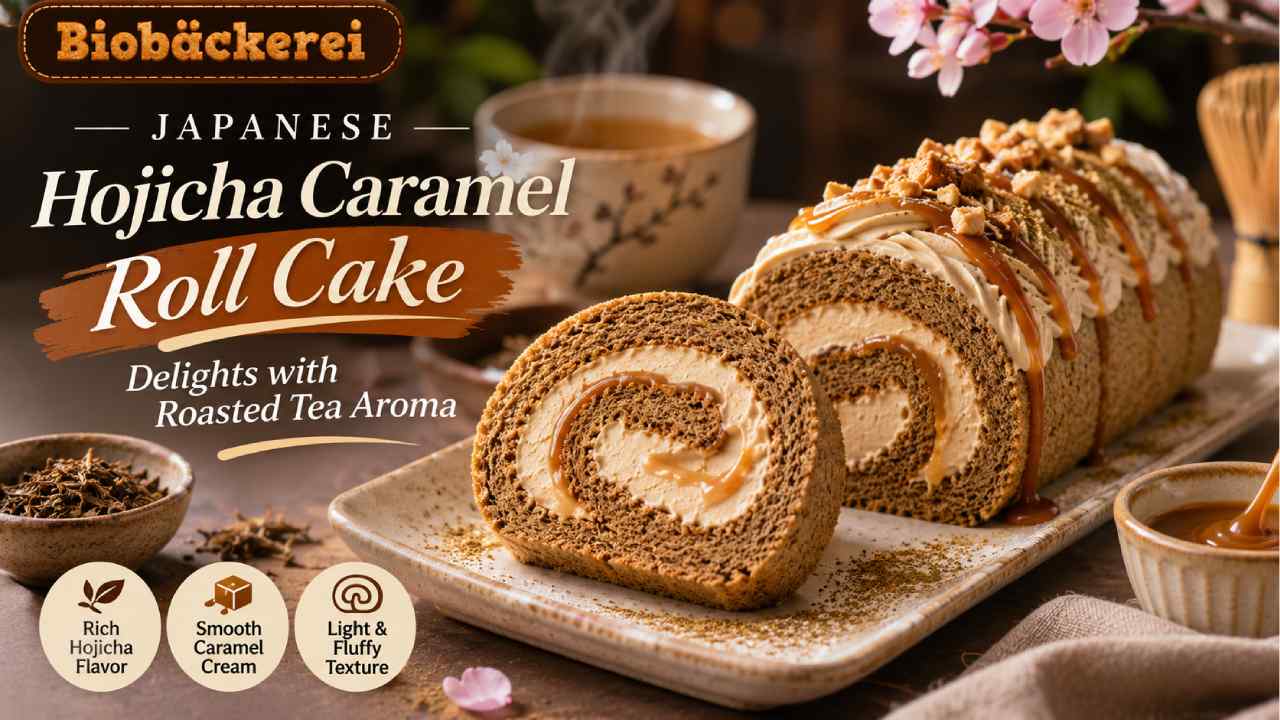
Japanese Hojicha Caramel Roll Cake Delights with Roasted Tea Aroma
Biobaeckerei – Japanese desserts are admired for their delicate textures, balanced sweetness, and elegant presentation. Among these creations, Japanese Hojicha Caramel Roll Cake offers a particularly comforting flavor combination. This dessert combines a fluffy sponge infused with roasted green tea and a smooth caramel cream filling. Unlike matcha, hojicha develops its distinctive aroma through a roasting process. As a result, it delivers warm, nutty notes with a gentle toasted character. Meanwhile, caramel introduces a buttery sweetness that complements the tea beautifully. Together, these ingredients create a dessert that feels sophisticated without becoming overly complicated. Moreover, the cake’s soft spiral makes every slice visually appealing. Its light texture also provides a pleasant contrast to the rich filling. Whether served during afternoon tea or at a family celebration, this Japanese-inspired roll cake offers something memorable. The combination of fragrance, texture, and subtle sweetness makes it especially appealing to dessert enthusiasts.
Read Also: Japanese Mont Blanc Cake with Beautiful Chestnut Cream Swirls
Understanding Hojicha and Its Distinctive Roasted Tea Flavor
Hojicha is a Japanese green tea known for its warm aroma and roasted flavor. Unlike traditional steamed green teas, hojicha undergoes an additional roasting process. This technique changes the tea’s color and develops its characteristic toasted notes. Consequently, hojicha often tastes less grassy than matcha or sencha. Its flavor may suggest roasted nuts, caramel, and gentle earthy undertones. However, the exact taste depends on the tea leaves and roasting conditions. For baking, finely ground hojicha powder works particularly well because it blends easily into cake batter. In addition, its brown color gives desserts a naturally warm appearance. When combined with dairy ingredients, the roasted aroma becomes softer and more rounded. This makes hojicha an excellent choice for cream-based desserts. Furthermore, its distinctive flavor offers an alternative to more familiar chocolate or vanilla cakes. Understanding these characteristics helps bakers create a dessert with a balanced and recognizable roasted tea profile.
Essential Ingredients for a Soft Hojicha Caramel Roll Cake
Creating a successful Japanese Hojicha Caramel Roll Cake begins with carefully selected ingredients. The sponge requires eggs, cake flour, sugar, milk, oil, and hojicha powder. Each ingredient contributes to the cake’s structure and texture. Eggs provide volume, while cake flour helps produce a tender crumb. Meanwhile, vegetable oil keeps the sponge flexible enough for rolling. The hojicha powder adds its signature roasted tea aroma without requiring additional flavoring. For the filling, heavy whipping cream creates a smooth and airy texture. Caramel sauce introduces sweetness and a deeper toasted flavor. However, the caramel should be cooled completely before mixing it with whipped cream. Otherwise, the cream may lose its structure. Additionally, using cold cream helps achieve a stable filling. Fresh ingredients and accurate measurements are important because roll cakes require a delicate balance. With proper preparation, the finished dessert develops a soft sponge, creamy center, and beautifully defined spiral.
Ingredients for the Hojicha Sponge Cake:
● 4 large eggs, separated
● 70 g granulated sugar, divided
● 65 g cake flour
● 10 g finely ground hojicha powder
● 45 ml whole milk
● 35 ml neutral vegetable oil
● 1 teaspoon vanilla extract
● ¼ teaspoon salt
Ingredients for the Caramel Sauce:
● 70 g granulated sugar
● 20 ml water
● 60 ml heavy cream, warmed
● 15 g unsalted butter
● ¼ teaspoon sea salt
Ingredients for the Caramel Cream Filling:
● 220 ml cold heavy whipping cream
● 45 g cooled caramel sauce
● 15 g powdered sugar, optional
Optional Decoration:
● 1 teaspoon hojicha powder for dusting
● 20 g toasted almond slices
● 2 tablespoons extra caramel sauce
Preparation Time: 30 minutes
Baking Time: 12–15 minutes
Cooling and Chilling Time: 2 hours
Servings: 8 slices
Recommended Pan: 28 × 28 cm shallow baking tray
How to Prepare a Light and Flexible Hojicha Sponge Cake
The sponge is the foundation of a beautiful Japanese Hojicha Caramel Roll Cake. Therefore, creating a light yet flexible texture is essential. Begin by preheating the oven to 170°C and lining a shallow baking tray with parchment paper. Next, combine the egg yolks with a portion of the sugar, milk, oil, and vanilla. Whisk until the mixture becomes smooth. Meanwhile, sift the cake flour and hojicha powder together to remove lumps. Gently incorporate the dry ingredients into the yolk mixture. In another bowl, beat the egg whites with salt until foamy. Gradually add the remaining sugar and continue whipping until medium peaks form. Then, fold the meringue into the hojicha batter in several additions. Avoid aggressive mixing because it can remove the air needed for a fluffy sponge. Finally, spread the batter evenly and bake until the surface feels lightly springy.
Step-by-Step Sponge Instructions:
- Preheat the oven to 170°C and line a 28 × 28 cm baking tray.
- Separate the eggs into two clean mixing bowls.
- Whisk the egg yolks with 20 g sugar, milk, oil, and vanilla.
- Sift the cake flour and hojicha powder into the yolk mixture.
- Beat the egg whites with salt until foamy.
- Gradually add the remaining 50 g sugar and whip until medium peaks form.
- Fold the whipped egg whites gently into the hojicha batter.
- Spread the batter evenly across the prepared tray.
- Bake for 12–15 minutes until the sponge springs back when touched.
- Remove the cake and allow it to cool briefly before rolling.
Making Homemade Salted Caramel with a Rich Buttery Flavor
Caramel provides the sweet contrast that makes this roll cake especially satisfying. However, achieving the right flavor requires careful attention during cooking. Begin by combining sugar and water in a small, heavy-bottomed saucepan. Heat the mixture over medium heat without stirring once it begins boiling. As the sugar cooks, its color gradually changes from clear to golden amber. Meanwhile, warm the heavy cream in a separate container. Once the caramel reaches a medium amber color, remove the saucepan from the heat. Carefully add the warm cream in small amounts because the mixture will bubble vigorously. Next, stir in the butter and sea salt until smooth. The finished caramel should taste rich, buttery, and slightly salty. Avoid cooking the sugar until it becomes very dark, as this can introduce excessive bitterness. Finally, allow the sauce to cool completely before incorporating it into the whipped cream filling.
Steps for Preparing Salted Caramel:
- Combine sugar and water in a heavy-bottomed saucepan.
- Heat over medium heat until the sugar dissolves.
- Continue cooking without stirring until the mixture becomes amber.
- Remove the saucepan from the heat.
- Carefully add warm heavy cream in small portions.
- Stir in butter and sea salt until fully incorporated.
- Transfer the caramel to a heatproof bowl.
- Allow it to cool completely before using.
Preparing Silky Caramel Cream for the Perfect Cake Filling
A smooth caramel cream transforms the hojicha sponge into a delicate bakery-style dessert. Unlike traditional buttercream, whipped caramel cream feels lighter and less dense. First, place the cold heavy cream in a chilled mixing bowl. Add the powdered sugar if a sweeter filling is preferred. Next, whip the cream until it begins to thicken and forms soft peaks. Gradually add the completely cooled caramel sauce while continuing to mix at low speed. Once the cream reaches medium peaks, stop whipping. Overmixing can produce a grainy texture and make the filling difficult to spread. Furthermore, the caramel should be thick enough to blend without introducing excessive liquid. If the sauce remains warm, refrigerate it before use. The finished cream should have a pale caramel color and a gentle roasted sweetness. This balanced filling complements the hojicha sponge while maintaining the dessert’s soft, elegant texture.
Steps for Making Caramel Cream:
- Chill the mixing bowl and heavy whipping cream.
- Pour the cream into the bowl.
- Add powdered sugar if desired.
- Whip until soft peaks begin to form.
- Gradually incorporate the cooled caramel sauce.
- Continue whipping until medium peaks form.
- Refrigerate the filling briefly if it becomes too soft.
- Keep the cream chilled until ready to assemble.
Rolling the Hojicha Cake Without Cracks or Breakage
Rolling the sponge correctly is one of the most important steps in this recipe. A soft cake can crack when handled carelessly, especially after cooling completely in a flat position. Therefore, begin shaping the sponge while it remains slightly warm. Place a clean sheet of parchment paper over the baked cake. Carefully turn the sponge onto the paper and remove the original baking liner. Next, gently roll the cake with the parchment paper inside to establish its shape. Allow it to cool completely in this position. Once cooled, carefully unroll the sponge and spread the caramel cream across the surface. Leave a small border near the final edge to prevent overflow. Then, roll the cake again using gentle, even pressure. Avoid squeezing because the filling may escape. Finally, wrap the finished roll in parchment paper and refrigerate it until firm enough to slice neatly.
Steps for Assembling the Roll Cake:
- Place the warm sponge on clean parchment paper.
- Carefully remove the baking liner.
- Gently roll the sponge with parchment paper inside.
- Allow the rolled sponge to cool completely.
- Carefully unroll the cake without forcing it flat.
- Spread the caramel cream evenly over the surface.
- Leave approximately 2 cm uncovered along the final edge.
- Roll the sponge gently into a compact spiral.
- Wrap the cake securely in parchment paper.
- Refrigerate for at least 2 hours before slicing.
Why Hojicha and Caramel Create Such a Balanced Dessert
The combination of hojicha and caramel works because both ingredients share complementary roasted flavor notes. Hojicha develops its toasted character during tea processing, while caramel gains complexity through heated sugar. As a result, the two ingredients create a layered flavor experience. However, their sweetness and intensity differ considerably. Hojicha contributes a mild earthy bitterness that can balance the richness of caramel. Meanwhile, caramel introduces buttery sweetness and a smooth finish. The sponge’s airy texture also prevents the dessert from feeling excessively heavy. In addition, whipped cream softens the stronger roasted notes and creates a pleasant mouthfeel. This balance makes the cake suitable for people who enjoy desserts with moderate sweetness. Nevertheless, the final flavor depends on the quality of the tea powder and caramel preparation. Using too much hojicha may introduce excessive bitterness. Therefore, accurate measurements help preserve the dessert’s delicate Japanese-inspired character.
Elegant Serving Ideas for Japanese Hojicha Caramel Roll Cake
Presentation can make Japanese Hojicha Caramel Roll Cake look as impressive as it tastes. Fortunately, the dessert requires only a few decorative elements. Begin by trimming the ends of the chilled roll to reveal its beautiful spiral. Next, dust the surface lightly with hojicha powder for a natural finish. A small drizzle of caramel sauce can add shine and emphasize the cake’s flavor. Meanwhile, toasted almond slices provide a pleasant crunchy contrast. For a more minimalist presentation, serve each slice on a simple ceramic plate. Neutral colors such as cream, beige, or charcoal complement the cake’s warm brown tones. Additionally, a cup of freshly brewed hojicha creates a harmonious pairing. Unsweetened green tea or black coffee also works well because these beverages balance the creamy filling. Whether served at home or during a special gathering, thoughtful presentation can transform this simple roll cake into an elegant dessert.
Common Baking Mistakes and Storage Tips for Better Results
Even experienced bakers can encounter difficulties when preparing delicate roll cakes. One common mistake is overbaking the sponge, which can make it dry and prone to cracking. Therefore, check the cake near the end of the recommended baking time. Another problem occurs when egg whites are whipped until excessively stiff. This can make folding difficult and reduce the batter’s smoothness. Additionally, warm caramel should never be added directly to whipped cream because it may destabilize the filling. Rolling the sponge too tightly can also force the cream out of the sides. For storage, keep the finished cake covered in the refrigerator at 4°C or below. It is best enjoyed within two to three days for optimal texture and freshness. Avoid leaving the cream-filled cake at room temperature for extended periods. With careful handling and proper storage, each slice can retain its soft texture, aromatic flavor, and attractive spiral.
