
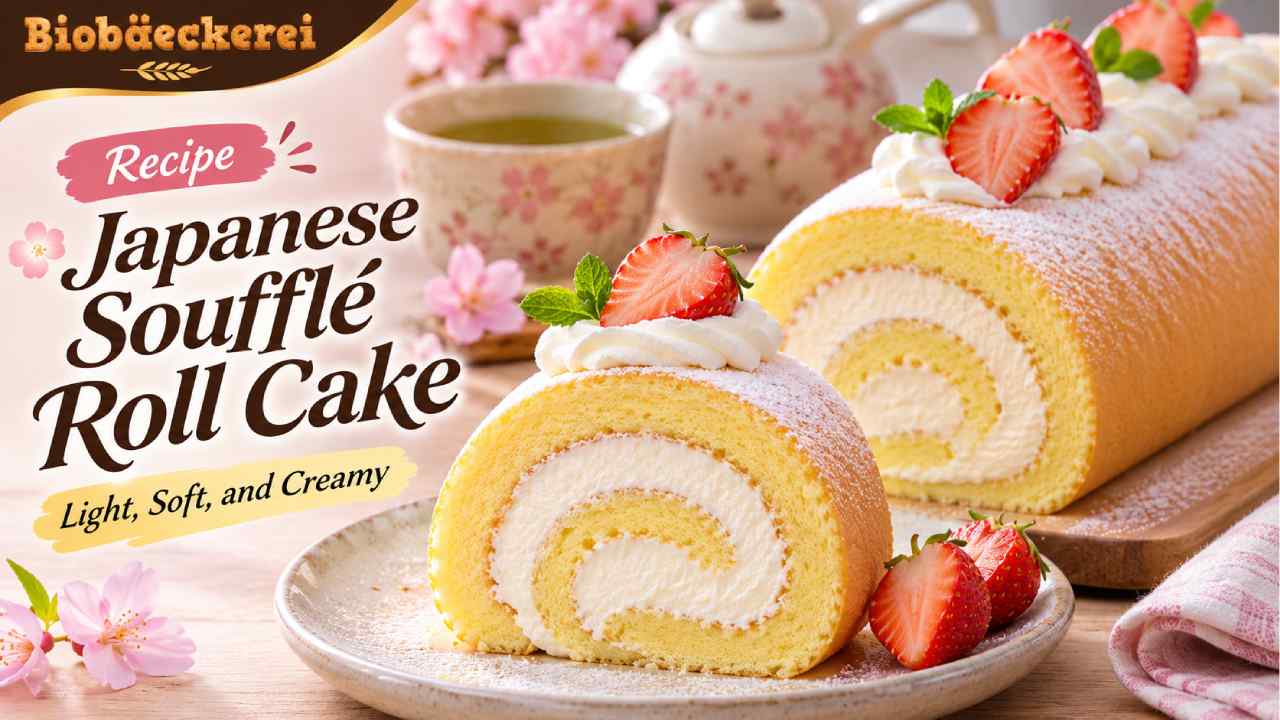
Japanese Soufflé Roll Cake Recipe: Light, Soft, and Creamy
Biobaeckerei – Japanese desserts often stand out because they favor delicate textures over heavy sweetness. A Japanese soufflé roll cake captures that idea beautifully. It combines a soft, airy sponge with smooth whipped cream, creating a dessert that feels surprisingly light with every bite. Unlike a dense butter cake, this roll relies heavily on properly whipped eggs and careful folding. Therefore, technique matters just as much as the ingredients. The cake also has an elegant appearance, yet it does not require complicated decoration. Once sliced, the spiral of pale sponge and white cream becomes the main attraction. Better still, the recipe can work for afternoon tea, birthdays, family gatherings, or a simple weekend baking project. With patience and a few practical techniques, home bakers can recreate the signature softness associated with Japanese-style cakes.
Read Also: Molten Matcha Cake with a Rich and Creamy Center
Why Japanese Soufflé Roll Cake Feels So Light
The defining quality of a Japanese soufflé roll cake is its remarkably tender sponge. Instead of relying on large amounts of butter, the recipe builds volume mainly through eggs. Whipped egg whites trap tiny pockets of air, which expand during baking and give the cake its airy structure. Meanwhile, the yolk mixture adds richness without making the sponge overly heavy. This balance creates a cake that bends easily when rolled. However, the texture depends on gentle handling. Overmixing the batter can remove too much trapped air, while undermixing may leave uneven streaks of meringue. For that reason, folding should be slow and controlled. A flexible spatula works especially well because it can reach the bottom of the bowl. When the technique is correct, the finished sponge feels springy, moist, and almost cloud-like rather than dry or crumbly.
Ingredients for a Soft and Flexible Sponge
A reliable sponge begins with simple ingredients measured accurately. Prepare 4 large eggs and separate the whites from the yolks. You will also need 60 grams of cake flour, 65 grams of granulated sugar, 40 grams of whole milk, 30 grams of neutral vegetable oil, and 1 teaspoon of vanilla extract. A small pinch of salt can sharpen the overall flavor. For the filling, prepare 200 milliliters of cold heavy whipping cream and about 20 grams of powdered sugar. Cake flour is especially useful because its lower protein content helps produce a finer and softer crumb. Meanwhile, neutral oil keeps the sponge flexible even after chilling. Before mixing, bring the eggs and milk closer to room temperature. However, keep the whipping cream cold until needed. Accurate measurements matter here because even small changes can affect moisture, volume, and the cake’s ability to roll without cracking.
Build the Batter Without Losing Its Air
Start by preheating the oven to 170°C and lining a rectangular baking pan, approximately 25 x 30 centimeters, with parchment paper. Next, whisk the egg yolks with about one-third of the sugar until slightly pale. Add the milk, vegetable oil, and vanilla, then whisk until the mixture looks smooth. Sift in the cake flour and salt. Stir only until no obvious dry flour remains. In a separate clean bowl, beat the egg whites until foamy. Gradually add the remaining sugar while continuing to beat. Stop when the meringue reaches soft-to-medium peaks. The tip should curve slightly rather than standing extremely stiff. Afterward, fold one-third of the meringue into the yolk mixture to lighten it. Add the remaining meringue in two batches. Use broad, gentle folding motions so the batter stays airy and evenly combined.
Bake Carefully to Protect the Delicate Texture
Pour the finished batter into the prepared pan and spread it gently toward the corners. Avoid repeatedly pressing the surface because excessive handling can release valuable air. Lightly tap the pan once or twice against the counter to remove unusually large bubbles. Then bake for approximately 13 to 16 minutes. Baking time can vary because ovens distribute heat differently. Therefore, watch the cake rather than relying only on the timer. The surface should look lightly golden, while the center should spring back when touched gently. Overbaking is one of the most common reasons roll cakes crack. Once baked, remove the pan from the oven and let the sponge rest briefly. Transfer it carefully onto a clean sheet of parchment paper. Peel away the baking paper slowly so the surface stays intact. At this stage, the cake should remain soft, flexible, and slightly warm.
Prepare a Cream Filling That Stays Smooth
While the sponge cools, prepare the whipped cream filling. Pour the cold heavy cream into a chilled bowl, then add the powdered sugar. Beat at medium speed until the cream forms medium peaks. It should hold its shape but still look smooth and silky. Extremely stiff whipped cream can make rolling harder and may create an uneven filling. In contrast, cream that is too loose can squeeze out from both ends. Therefore, stop whipping as soon as the texture becomes stable enough to spread. Vanilla can be added for a gentle aroma, although keeping the filling simple allows the delicate sponge to remain noticeable. For another variation, fresh strawberries, mango, or peaches can be added in small pieces. Still, avoid using too much fruit because extra moisture and weight can weaken the structure. A balanced filling usually produces the cleanest spiral after slicing.
Roll the Cake Slowly to Prevent Cracks
Rolling is the moment that often makes home bakers nervous, yet a flexible sponge makes the process much easier. Place the cooled cake with its preferred presentation side facing downward. Spread the whipped cream evenly across the sponge, leaving a small margin around the edges. Add slightly more cream near the starting edge because this helps create a rounded center. Next, use the parchment paper to lift the first edge and begin rolling firmly but gently. Do not squeeze the cake. Instead, guide it forward while keeping the roll compact. Once finished, wrap the entire cake tightly in parchment paper or food-safe wrap. Place it in the refrigerator for at least one hour. Chilling allows the cream to firm up and helps the cake maintain its cylindrical shape. As a result, slicing becomes easier and the spiral appears much cleaner.
Small Baking Details Make a Noticeable Difference
Several small details can determine whether the cake becomes fluffy or disappointing. First, the mixing bowl for the egg whites must be clean and free from grease. Even a small amount of oil or yolk can prevent the whites from whipping properly. Second, avoid beating the meringue until it becomes dry and clumpy. A softer meringue blends more easily into the batter and supports a flexible sponge. Additionally, do not leave the finished batter sitting for too long before baking because trapped air gradually escapes. Oven temperature also deserves attention. If the heat is too high, the exterior can set before the center expands evenly. Conversely, insufficient heat may produce a dense or sticky sponge. In my view, successful roll cake baking is less about complicated ingredients and more about controlling air, moisture, temperature, and timing throughout the process.
Creative Variations Keep the Recipe Interesting
Once the basic Japanese soufflé roll cake becomes familiar, the recipe offers plenty of room for experimentation. Matcha powder can replace a small portion of the flour for an earthy Japanese-inspired flavor. Cocoa powder creates a chocolate version, while finely grated citrus zest adds a brighter aroma. For the filling, mascarpone can be blended with whipped cream for extra richness. Fresh berries also provide acidity that balances the mild sweetness of the sponge. However, every addition should remain moderate. The charm of this dessert comes from its light texture, so heavy fillings can easily overpower it. Another appealing variation uses a thin layer of strawberry jam beneath the whipped cream. This creates stronger color contrast when the cake is sliced. Ultimately, the best variations preserve the soft sponge while adding flavor rather than unnecessary weight.
Serving the Roll Cake for the Best Experience
After chilling, unwrap the cake and trim the ends with a sharp knife for a cleaner presentation. Wipe the blade between cuts because cream can quickly collect along the edge. For neat slices, use a gentle sawing motion instead of pressing straight downward. The Japanese soufflé roll cake tastes best when served cool but not frozen. Allowing each slice to sit for several minutes before eating can make the sponge feel even softer. Pair it with unsweetened green tea, black coffee, or a light jasmine tea to balance the creamy filling. Unlike heavier frosted cakes, this dessert leaves a delicate finish on the palate. That quality explains much of its appeal. It looks refined enough for a special occasion, yet its ingredients remain approachable for home baking. More importantly, each slice highlights what makes Japanese-style desserts memorable: restraint, softness, balance, and careful attention to texture.
