
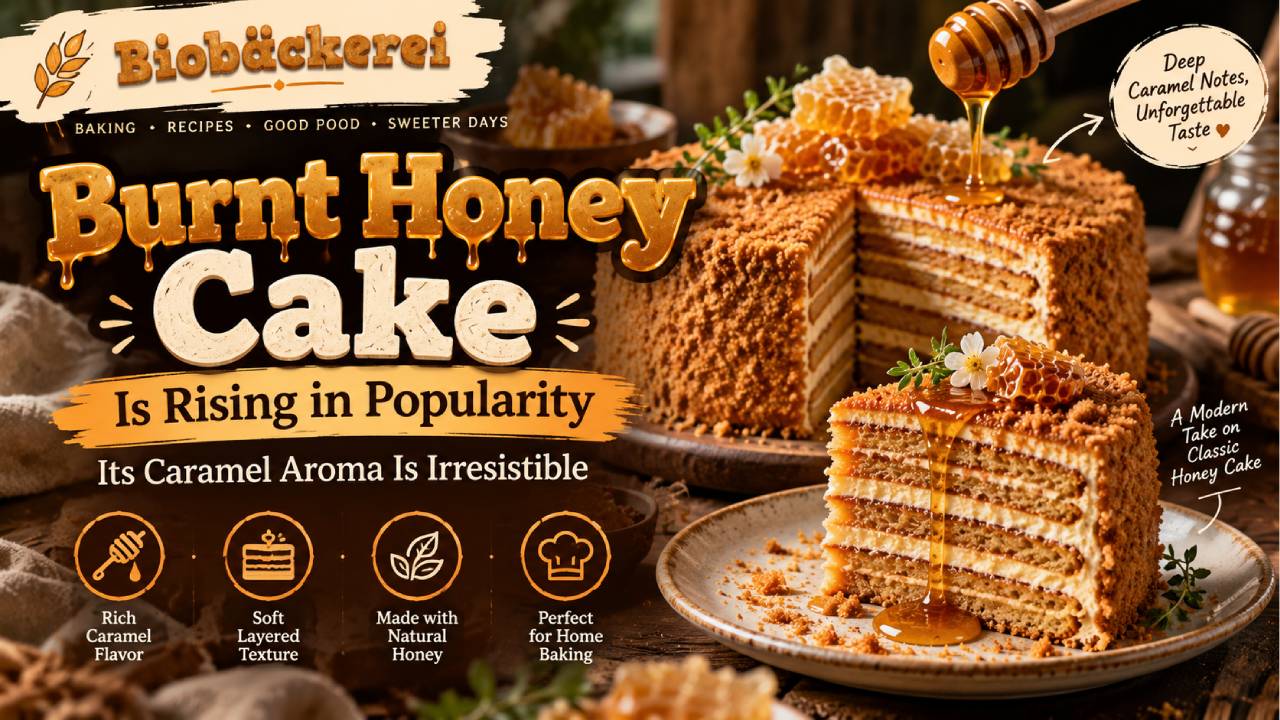
Burnt Honey Cake Is Rising in Popularity, Its Caramel Aroma Is Irresistible
Biobaeckerei – Burnt Honey Cake turns an everyday ingredient into something surprisingly complex. Instead of relying only on honey’s familiar floral sweetness, the recipe cooks part of the honey until its flavor becomes darker and more intense. That step introduces toasted and caramel-like notes, which give the finished cake its distinctive personality. The concept is especially appealing in a layered cake because the darker sweetness can balance a creamy filling. Meanwhile, thin cake layers gradually soften after assembly, creating a tender texture when sliced. Although the phrase “burnt honey” sounds dramatic, the goal is controlled caramelization rather than actually burning the ingredient until it becomes bitter. Therefore, careful heat control matters. When prepared properly, the cake offers sweetness, gentle bitterness, creaminess, and warm honey aromas in every bite.
Read Also: Banana Chocolate Chip Cake with a Soft, Moist Crumb
Burnt Honey Has a More Complex Flavor Than Regular Honey
Honey contains several types of sugars, along with water and numerous minor compounds that contribute to its aroma and flavor. Heating changes that sensory profile. As the honey becomes darker, its bright floral character can shift toward deeper toasted and caramel-like notes. However, temperature control remains essential because excessive heating can produce unpleasant bitterness. For home bakers, visual cues are often helpful. The honey should become noticeably darker and smell intensely toasted, but it should not develop an acrid aroma. Moreover, residual heat continues cooking the mixture after the pan leaves the stove. Adding fresh honey later can restore some of the lighter aroma lost during heating. This combination of dark and fresh honey gives the cake greater flavor depth without allowing one bitter note to dominate.
Layered Honey Cakes Have Strong Eastern European Roots
The layered structure may remind many bakers of medovik, a honey cake strongly associated with Russian and broader Eastern European baking traditions. Medovik generally combines multiple thin honey-flavored cake layers with a creamy filling. After assembly, the cake rests so moisture from the filling can soften those layers. Burnt Honey Cake follows a similar structural idea in many modern interpretations, although recipes vary considerably. Therefore, it is better to describe it as a modern honey-layer cake inspired by established layered honey-cake traditions rather than claim one universal formula. Some versions use sour cream, while others combine cream cheese or whipped cream. Likewise, layer thickness and honey intensity can change. What remains consistent is the appealing contrast between thin cake layers and a soft filling that develops after resting.
The Resting Time Makes a Noticeable Difference
Freshly assembled layers may feel firmer than expected. However, that texture changes as the cake rests. Moisture from the filling gradually moves into the cake layers, making them softer and easier to cut. Therefore, Burnt Honey Cake often tastes better after several hours in the refrigerator. Overnight resting can be particularly useful when the layers are thin. This technique also makes the dessert convenient for entertaining because bakers can prepare it ahead of time. Nevertheless, the cake should remain refrigerated when its filling contains dairy products. Before serving, allowing individual slices a short period outside the refrigerator can soften the filling slightly. The resulting texture should feel tender and creamy rather than dry or rigid. Consequently, patience becomes part of the recipe rather than an optional finishing step.
Ingredients for a Homemade Burnt Honey Cake
This recipe makes an approximately 20 cm layered cake with a balanced honey and caramel profile. Exact results can vary depending on the honey and oven used.
For the burnt honey:
● 120 g honey
● 30 ml water
● 30 g additional honey, added after cooking
For the cake layers:
● 115 g unsalted butter
● 100 g granulated sugar
● 2 large eggs
● 80 g prepared burnt honey mixture
● 1 teaspoon baking soda
● ¼ teaspoon fine salt
● 350 g all-purpose flour, plus extra if needed
For the cream filling:
● 400 g full-fat sour cream
● 250 g mascarpone or full-fat cream cheese
● 80 g icing sugar
● 1 teaspoon vanilla extract
● 2 tablespoons honey
For decoration:
● Cake crumbs
● A small drizzle of honey, optional
The filling should remain thick enough to stay between the layers. Therefore, avoid using an unusually watery sour cream.
How to Make the Burnt Honey Mixture
1. Place 120 g of honey and the water in a medium saucepan. Heat gently until the mixture begins to simmer.
2. Continue cooking over medium-low heat. Stir or swirl occasionally so the honey darkens evenly.
3. Watch the color carefully. Remove the pan once the honey becomes deep amber and develops a pronounced toasted aroma.
4. Allow the mixture to settle briefly. Then carefully stir in the additional 30 g of fresh honey.
5. Let the burnt honey cool until warm before adding it to the cake mixture.
Avoid cooking the honey until it smells sharply burnt. The aim is a dark caramel character with mild bitterness, not blackened sugar. In addition, use a saucepan with enough headroom because hot honey can bubble vigorously.
How to Prepare the Thin Honey Cake Layers
1. Preheat the oven to 180°C conventional or 160°C fan. Line baking trays with parchment paper.
2. Melt the butter gently. Add the sugar and stir until combined.
3. Whisk in the eggs gradually. Then add 80 g of the cooled burnt honey mixture.
4. Stir in the baking soda and salt.
5. Add the flour gradually until a soft dough forms. Avoid adding unnecessary flour because a dry dough can produce tougher layers.
6. Divide the dough into eight equal portions.
7. Roll each portion very thinly between sheets of parchment. Cut or mark approximately 20 cm circles.
8. Bake each layer for roughly 5–7 minutes, or until golden brown. Oven performance varies, so monitor the first batch closely.
9. Trim the layers while they are still slightly warm. Keep the scraps because they can become decorative crumbs.
Allow every layer to cool completely before assembling the cake.
A Tangy Cream Filling Balances the Caramel Sweetness
A cake built around honey can become overly sweet if the filling is equally sugary. For that reason, sour cream works particularly well. Its acidity provides contrast, while mascarpone or cream cheese adds body. To prepare the filling, beat the mascarpone or cream cheese briefly until smooth. Next, add icing sugar, vanilla, and honey. Finally, fold or whisk in the sour cream until the mixture becomes smooth and spreadable. Avoid excessive whipping because some dairy mixtures can loosen when overworked. Taste the cream before assembly. If the honey itself is especially sweet, the filling may not need additional sugar. Conversely, a darker and more bitter burnt honey can handle slightly more sweetness. This flexible approach helps preserve the most important characteristic of Burnt Honey Cake: balance.
Assemble the Cake with Thin, Even Layers of Cream
Place the first cake layer on a serving plate or cake board. Spread a thin, even layer of cream across its surface. Next, place another cake layer on top and repeat the process. Continue until all eight layers are stacked. Cover the top and sides with the remaining cream. Then crush the reserved cake scraps into fine crumbs and press them gently around the exterior. The crumbs provide texture while giving the cake a classic layered-honey appearance. After assembly, refrigerate the cake for at least 8 hours, preferably overnight. This waiting period allows the filling to soften the baked layers. Moreover, the honey, caramel, vanilla, and dairy flavors become more integrated. When ready to serve, cut the cake with a sharp knife and wipe the blade between slices to reveal cleaner layers.
Small Details Can Improve the Final Result
Several simple techniques can make Burnt Honey Cake more reliable. First, choose a honey with a flavor you genuinely enjoy because it remains noticeable after baking. Second, keep the layers thin and relatively uniform. Thick layers need more time to soften and may make the cake feel heavy. Third, monitor the burnt honey continuously. The transition from deeply caramelized to unpleasantly bitter can happen quickly. In addition, weigh the dough portions if you want cleaner, more even layers. Finally, give the assembled cake enough resting time. Cutting it too soon can create a firmer texture and less cohesive flavor. For decoration, restraint usually works best. Cake crumbs, a light honey drizzle, or a few toasted nuts can complement the dessert without distracting from its layered appearance.
Burnt Honey Cake Fits the Growing Taste for Complex Desserts
One reason this style of cake feels contemporary is its balance of familiar and unexpected flavors. Honey is comforting, while its darker toasted character introduces complexity. Similarly, the cream filling brings richness but also acidity. That contrast prevents the dessert from tasting one-dimensional. Visually, the repeated layers also make an impressive slice without requiring elaborate decoration. This combination works particularly well for cafés, bakeries, and home bakers seeking a dessert that feels sophisticated but recognizable. Still, describing the cake as “viral” or universally trending requires current market evidence. Its real culinary appeal does not depend on that label. The technique itself offers enough interest: transform honey through controlled heat, balance it with tangy cream, and allow time to create the final texture.
Burnt Honey Cake Makes Caramelized Honey the Main Attraction
Burnt Honey Cake proves that honey can offer much more than straightforward sweetness. Controlled heating creates deeper toasted and caramel-like flavors, while fresh honey preserves some floral character. Thin cake layers provide structure, and the tangy cream gradually turns them tender during refrigeration. As a result, each slice delivers several contrasting sensations without becoming overly complicated. The recipe also rewards careful preparation. Heat management determines the quality of the burnt honey, while even layers improve texture. Most importantly, sufficient resting time brings the entire cake together. For anyone who enjoys layered desserts with caramel depth and gentle honey sweetness, this cake offers a distinctive alternative to conventional sponge-and-frosting combinations.
