
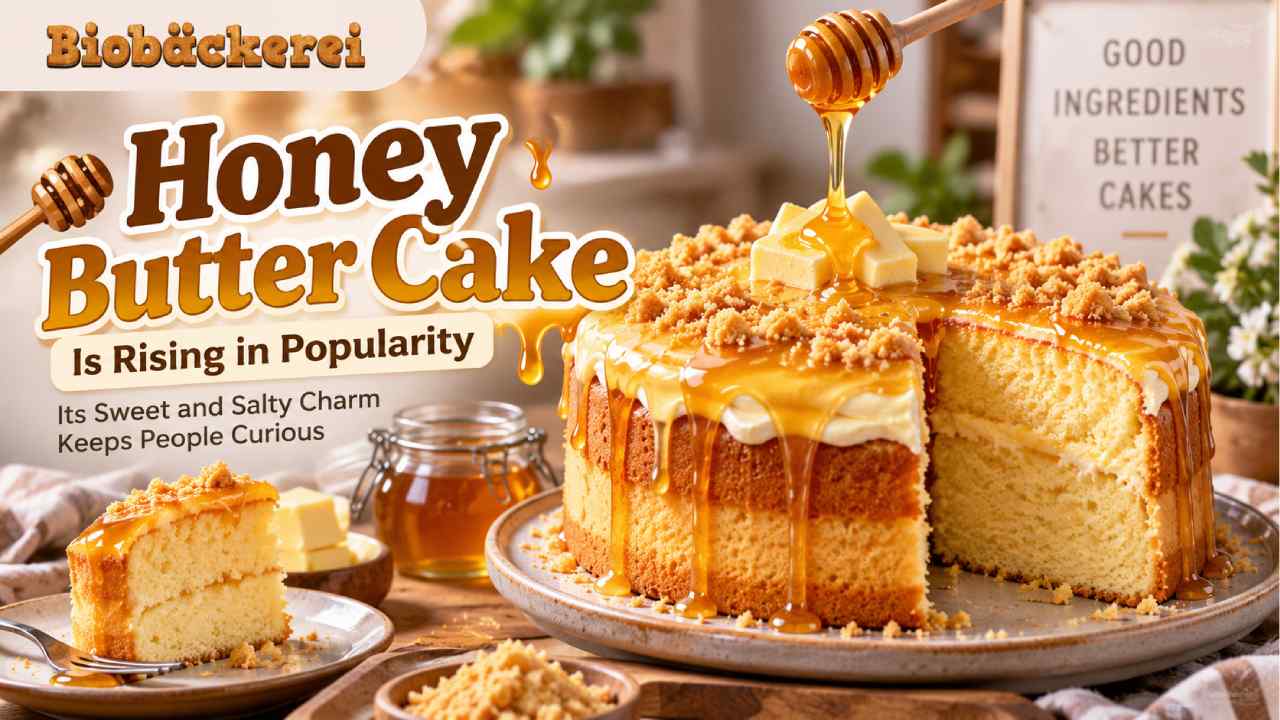
Honey Butter Cake Is Rising in Popularity With Its Sweet and Salty Charm
Biobaeckerei – Honey Butter Cake is gaining attention as bakers continue to explore desserts that balance sweetness with a subtle savory edge. The idea is simple: combine the floral sweetness of honey with the rich flavor of butter in a soft cake. Yet, that familiar pairing can produce a surprisingly memorable dessert. Honey and butter have long appeared together in bread, biscuits, pancakes, and other baked goods. Therefore, the cake itself should not be described as an entirely new invention. What feels fresh is the way modern bakeries can present the combination. Some versions use honey in the batter, while others add honey buttercream or a glossy honey finish. A small amount of salt can also sharpen the flavor. As a result, the dessert offers more complexity than a cake built around sweetness alone. Its warm golden appearance also gives it an inviting, homemade character.
Read Also: India Tightens Food Safety Rules as Thousands Lose Licenses
Why Honey and Butter Work So Well Together
The appeal of Honey Butter Cake begins with contrast. Honey contributes sweetness and distinctive aromatic notes. Meanwhile, butter adds richness and a creamy dairy flavor. A touch of salt can make both elements seem more pronounced. This sweet-and-salty relationship is already familiar in foods such as salted caramel. However, honey creates a different profile because its flavor depends partly on its floral source. Clover honey, orange blossom honey, and other varieties can produce noticeably different aromas. Butter also plays more than one role in baking. Beyond flavor, it affects tenderness, richness, and mouthfeel. Therefore, the final result depends on more than simply mixing two popular ingredients. Bakers need to balance sweetness, fat, salt, and moisture. When those elements work together, the cake can taste rich without becoming overwhelmingly sweet. That balance is arguably one of the strongest reasons this flavor combination feels so satisfying.
Honey Changes More Than the Sweetness of a Cake
Using honey in baking requires some understanding of how the ingredient behaves. Unlike granulated sugar, honey contains water as well as several types of sugars. Consequently, replacing sugar with honey on a one-to-one basis can change the texture and moisture of a recipe. Honey also contains reducing sugars that can contribute to browning during baking. Therefore, cakes made with it may develop color differently from recipes sweetened only with granulated sugar. This is important when developing Honey Butter Cake because adding more honey does not automatically create a better result. Too much can alter the structure or make the sweetness dominate the butter. For that reason, tested recipes usually balance liquid and dry ingredients rather than treating every sweetener as interchangeable. From a culinary perspective, this technical detail makes honey especially interesting. It contributes aroma, sweetness, moisture, and color at the same time, giving bakers several variables to manage.
A Pinch of Salt Can Make the Flavor Feel More Complete
Salt may sound like a minor ingredient in dessert, but it can have a noticeable effect. In Honey Butter Cake, a measured amount of salt helps create contrast against the honey. The goal is not to make the cake taste obviously salty. Instead, salt can reduce the impression of one-dimensional sweetness and allow other flavors to stand out. This principle is common across pastry making. It explains why many cookie, caramel, chocolate, and cake recipes contain salt even when they are clearly sweet foods. Salted butter can also contribute to the profile, although its salt content varies among products. Therefore, bakers who want tighter control may prefer unsalted butter and add salt separately. Personally, this is where the cake becomes more interesting than its simple name suggests. Honey supplies aroma, butter creates richness, and salt provides contrast. Together, those elements can create a layered flavor without requiring an overly complicated ingredient list.
Texture Matters Just as Much as Honey Butter Flavor
A memorable cake needs more than an appealing flavor combination. Texture plays an equally important role. Ideally, Honey Butter Cake should feel tender and moist without becoming heavy or greasy. The exact texture will depend on the recipe. A loaf-style version may have a tighter crumb, while a layered celebration cake can be lighter and paired with frosting. Ingredient temperature, mixing technique, flour choice, and baking time can all affect the result. Overmixing after adding flour may encourage excess gluten development in some cake batters. Meanwhile, baking for too long can remove moisture and leave the crumb dry. Honey can help contribute moisture, but it cannot compensate for poor technique. Therefore, careful preparation remains essential. A cake that looks beautiful but feels dense or dry may disappoint after the first bite. In contrast, a balanced crumb allows the honey aroma and buttery richness to linger more pleasantly.
Modern Bakeries Can Give the Cake Many Different Personalities
There is no single universal formula for Honey Butter Cake. That flexibility gives pastry chefs and home bakers plenty of room to experiment. One version might be a simple butter cake brushed with honey after baking. Another could feature several layers with honey buttercream between them. Bakers can also introduce toasted nuts, vanilla, cinnamon, citrus zest, or a small amount of caramel. However, additional flavors should support rather than overwhelm the central pairing. Honey is especially sensitive because delicate varieties can disappear behind stronger ingredients. Presentation can also change the dessert’s personality. A rustic loaf dusted lightly with sugar creates a comforting impression. Meanwhile, a layered cake with smooth frosting feels more suitable for celebrations. This versatility makes the concept attractive for cafés and bakeries. One basic flavor idea can be adapted into slices, mini cakes, cupcakes, or seasonal specials while retaining a recognizable identity.
Social Media Can Help Simple Desserts Find New Audiences
Food trends increasingly develop through a mixture of bakery menus, creator content, short videos, and visually appealing photographs. Honey Butter Cake fits naturally into that environment. Golden cake layers, melting butter, flowing honey, and glossy toppings create strong visual cues. In addition, the name communicates the main flavors immediately. However, online visibility should not be confused with proof that one dessert dominates the global market. Trends can differ greatly between cities, platforms, and communities. Therefore, it is safer to describe honey butter cake as an emerging or attention-grabbing concept rather than claim that it has become the world’s biggest cake trend. This distinction also makes culinary writing more credible. Viral presentation can encourage someone to try a dessert once, but flavor determines whether they order it again. In that sense, social media can introduce the cake, while a well-balanced recipe has to do the harder work of building lasting appeal.
Honey Butter Cake Can Pair Naturally With Coffee and Tea
Desserts often become more enjoyable when paired thoughtfully with drinks. The buttery richness of Honey Butter Cake makes coffee an obvious partner. Coffee’s roasted and slightly bitter character can contrast with the sweetness of honey. Black tea can provide a similar effect, especially when the cake has a rich frosting. Meanwhile, lighter teas may work better with versions that use floral honey and minimal decoration. The pairing does not need to be complicated. In fact, a simple drink may be preferable because the cake already contains several overlapping flavors. This quality could make honey butter cake especially suitable for café menus. A modest slice can accompany an afternoon drink without requiring elaborate plating. Moreover, bakeries can adjust the cake’s sweetness according to the intended beverage. A sweeter version may suit strong black coffee, while a lighter version could work with tea. Thoughtful pairing turns a simple cake break into a more complete experience.
Its Future Depends on Flavor Rather Than Viral Attention
Whether Honey Butter Cake becomes a lasting café favorite will ultimately depend on execution. Honey and butter already have enduring places in cooking, so the flavor foundation is not dependent on a temporary internet trend. Nevertheless, a cake still needs good texture, balanced sweetness, quality ingredients, and consistent preparation. The strongest versions will likely avoid excessive toppings that hide the central flavors. Instead, they can let honey provide aroma while butter contributes richness and salt creates gentle contrast. This approach also leaves room for regional interpretation. Bakers can select local honey or pair the cake with ingredients familiar to their customers. Therefore, the concept has more possibilities than its simple name might suggest. Trends will inevitably change, and another photogenic dessert will eventually attract attention. Yet, a well-made honey butter cake does not need to survive on novelty alone. Its familiar ingredients can give it a comforting appeal long after the initial curiosity fades.
