Mochi Donuts Are Still in Demand, Their Chewy Texture Sets Them Apart From Regular Donuts
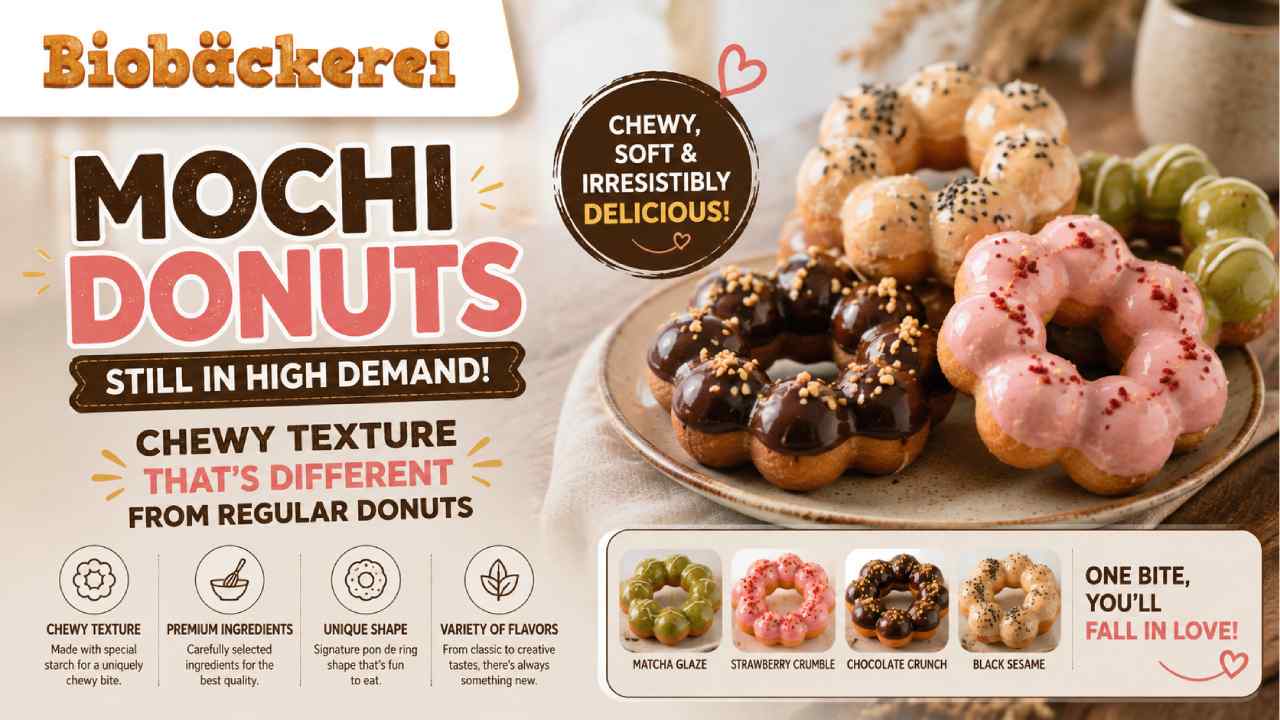
Biobaeckerei – Mochi donuts continue to attract dessert lovers with a texture that feels noticeably different from conventional donuts. Instead of relying only on a soft and fluffy crumb, these treats are known for a pleasantly chewy bite. Their distinctive appearance also makes them easy to recognize. Many versions feature connected round pieces that form a ring, creating a playful shape that can be pulled apart by hand. Meanwhile, colorful glazes and toppings give bakeries plenty of room for experimentation. However, the term “mochi donut” can refer to more than one style of pastry. Recipes and ingredients vary between shops and regions. Therefore, their characteristic chewiness depends heavily on the starches, flour, and preparation method used.
Read Also: Musakhan Recipes Turn Chicken, Sumac, and Onions Into a Flavorful Feast
The Story of Mochi Donuts Has More Than One Influence
Although the name immediately suggests Japanese mochi, the modern mochi donut has a more complex background. One important milestone came from Japan’s Mister Donut, which introduced its Pon de Ring in 2003. The connected-ball design became highly recognizable and later influenced the appearance associated with many modern mochi donuts. However, Pon de Ring should not simply be described as traditional mochi shaped into a donut. Separately, Hawaiian-style butter mochi and other rice-flour desserts helped popularize chewy baked textures. Over time, bakeries created their own versions using ingredients such as glutinous rice flour or tapioca starch. As a result, today’s “mochi donut” is better understood as a broad modern dessert category rather than one standardized historical recipe.
What Gives Mochi Donuts Their Famous Chewy Texture?
The texture comes primarily from the starch composition of the dough. Traditional yeast-raised donuts usually depend heavily on wheat flour. Wheat proteins can form gluten, which helps create an airy and bread-like structure. In contrast, many mochi donut recipes incorporate glutinous rice flour, tapioca starch, or another starch-rich ingredient. These ingredients behave differently when heated and hydrated. The starch granules absorb water and undergo gelatinization, contributing to a stretchy and chewy consistency. Therefore, the difference is not simply about frying time. The formula itself plays a major role. Some recipes combine wheat flour with specialty starches, while others rely more heavily on rice-based ingredients. This variation explains why one shop’s mochi donut can feel considerably chewier than another.
Mochi Donuts and Traditional Donuts Feel Different From the First Bite
The contrast becomes obvious when both desserts are tasted side by side. A classic yeast donut is generally light, fluffy, and tender. Meanwhile, cake donuts tend to have a denser and more crumbly structure. Mochi donuts occupy another textural space. Depending on the recipe, the exterior can become lightly crisp while the center remains springy and chewy. That combination creates resistance when bitten without necessarily making the pastry tough. In my view, this textural contrast is one of the strongest reasons people remember the dessert. Consumers are not simply tasting another flavored donut. They are experiencing a familiar food format with an unexpectedly different mouthfeel.
The Signature Ring Shape Adds to Its Appeal
Texture is only part of the attraction. The recognizable ring of connected dough balls has become strongly associated with modern mochi donuts. Instead of one continuous circle, several small rounded sections are joined together before cooking. This structure makes the donut visually distinctive. Moreover, individual sections can often be separated easily. That gives eating the pastry a more interactive quality. From a branding perspective, the silhouette is also valuable because customers can recognize the product quickly in photos. However, not every mochi donut uses this exact shape. Some bakeries sell conventional ring-shaped or round versions while maintaining a chewy starch-based dough. Therefore, shape alone does not determine whether a pastry belongs to the broader mochi donut category.
Creative Glazes Have Helped Expand the Trend
Mochi donuts provide a relatively neutral base for a wide range of flavors. Matcha remains an obvious pairing because its earthy bitterness can balance a sweet glaze. Black sesame offers a deeper roasted profile. Meanwhile, ube, chocolate, strawberry, coffee, and various fruit flavors provide additional options. Some shops also use seasonal toppings to keep menus changing throughout the year. This flexibility has helped the pastry move beyond a single novelty flavor. Customers can return and experience a different version without abandoning the characteristic chewy texture. In addition, contrasting glaze colors make the donuts visually striking. That combination of flavor variety and recognizable presentation works particularly well in contemporary dessert businesses.
Social Media Has Made Their Appearance Especially Valuable
Modern food trends are strongly influenced by visual presentation. Mochi donuts naturally fit that environment. Their symmetrical shape, smooth glaze, and colorful toppings photograph well. A box containing several different flavors can create an immediately recognizable visual pattern. Consequently, the product has gained additional exposure through short videos, food photography, and bakery content. However, visual appeal alone rarely sustains a food trend indefinitely. Customers eventually return because they enjoy the eating experience. Mochi donuts have an advantage here because their texture offers something that photographs cannot communicate. People may first notice the appearance online, but the chewy bite gives them another reason to remember the product.
Freshness Can Significantly Affect the Eating Experience
Like many fried pastries, mochi donuts are generally at their best when relatively fresh. Their appeal depends on a balance between the exterior and chewy interior. Over time, moisture migration and changes in starch structure can alter that balance. The glaze can also absorb moisture or lose its ideal consistency. Therefore, storage matters. Different recipes respond differently to refrigeration and reheating, so instructions from the bakery are worth following. This point is especially important because consumers sometimes expect every mochi donut to remain equally soft for several days. In reality, freshness, formulation, humidity, and storage conditions can noticeably change the texture.
Mochi Does Not Automatically Mean Gluten-Free
The word “mochi” can create a common misunderstanding. Traditional Japanese mochi is typically made from glutinous rice and is naturally free from wheat. However, a product labeled as a mochi donut is not automatically gluten-free. Some recipes combine rice flour or tapioca starch with wheat flour. Other bakeries may prepare the donuts in kitchens where wheat products are handled. Therefore, people who must avoid gluten should not rely on the product name alone. They should check the ingredient list and ask about preparation practices. The same principle applies to other allergens. Mochi donuts may contain milk, eggs, soy, nuts, or other ingredients depending on the recipe and toppings.
“Glutinous Rice” Does Not Mean the Rice Contains Gluten
Another source of confusion comes from the term “glutinous rice.” Despite its name, glutinous rice does not contain gluten in the same sense as wheat, barley, or rye. The word refers to the sticky texture the rice develops after cooking. It is also commonly called sticky rice or sweet rice. This distinction matters when discussing mochi-based foods accurately. Nevertheless, a finished mochi donut may still contain gluten if wheat flour is included elsewhere in the recipe. Therefore, understanding one ingredient does not reveal the complete allergen profile of the final pastry.
Mochi Donuts Are Not Necessarily a Healthier Donut
Their rice or tapioca-based ingredients sometimes create a health halo around mochi donuts. However, being different from a regular donut does not automatically make them nutritionally superior. Many versions are still fried and topped with sweet glazes. Their calorie, sugar, and fat content varies according to size, recipe, frying method, and toppings. Therefore, broad claims that mochi donuts are inherently healthier should be treated cautiously. A simpler approach is to view them for what they are: a dessert. They can fit into an overall balanced eating pattern, but their distinctive texture does not transform them into a health food.
Why Mochi Donuts Continue to Stand Out
Mochi donuts combine several characteristics that make a food trend easier to sustain. They have a recognizable appearance, customizable flavors, and a texture that differs from established donut categories. More importantly, they provide familiarity and novelty at the same time. Customers already understand the basic idea of a donut, yet the chewy center changes the experience enough to feel new. Their evolution also demonstrates how modern foods can draw inspiration from several culinary traditions without fitting neatly into one historical definition. Ultimately, the lasting appeal of mochi donuts is not difficult to understand. Their playful appearance may attract the first glance, but their springy and chewy texture is what truly separates them from an ordinary donut.
