
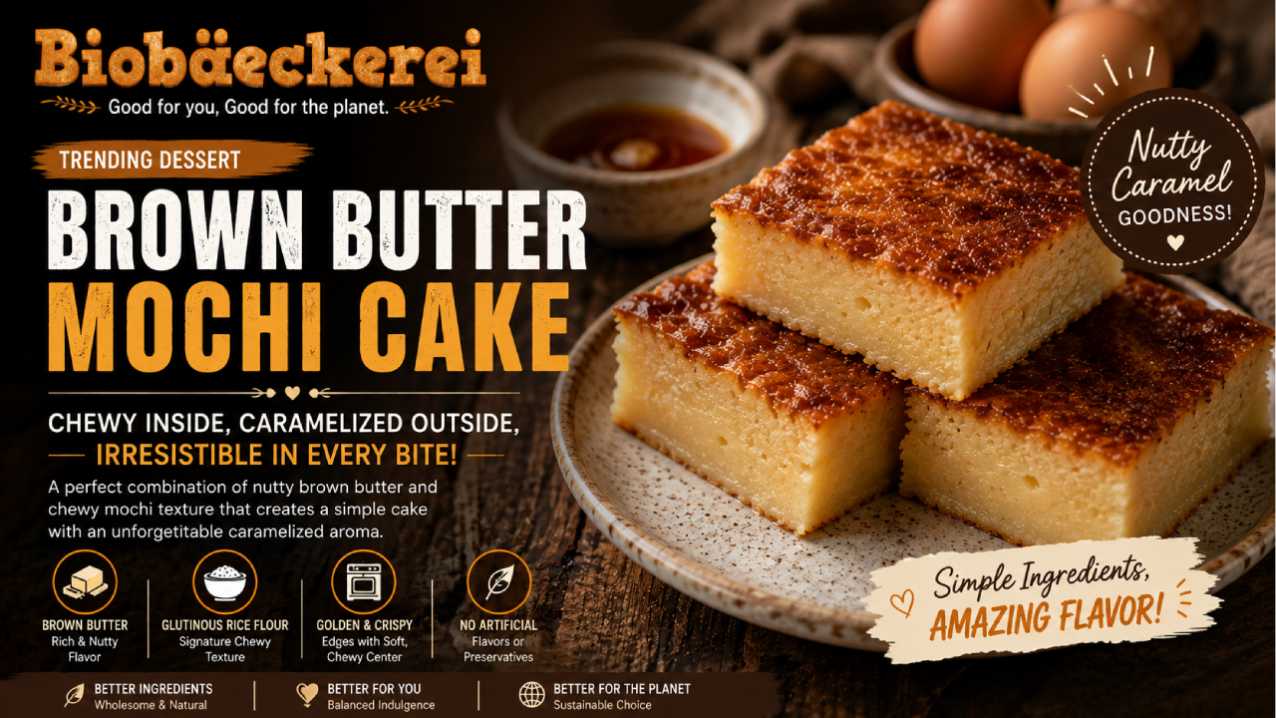
Brown Butter Mochi Cake Is Trending for Its Chewy Caramel Flavor
Biobaeckerei – Brown Butter Mochi Cake is gaining attention for a simple reason: every bite offers an interesting contrast. The center is soft and chewy, while the edges can become lightly crisp after baking. Meanwhile, browned butter adds toasted, nutty notes that complement the cake’s gentle sweetness. This combination gives familiar mochi-inspired textures a richer flavor profile. Unlike a classic wheat-flour cake, this dessert typically relies on glutinous rice flour for its signature elasticity. Despite its name, glutinous rice flour does not contain gluten. Instead, the word “glutinous” describes the sticky texture of the cooked rice. As a result, the finished cake feels distinctly different from a traditional sponge cake. Its appeal also goes beyond texture. The golden surface, neat slices, and dense interior make the dessert visually attractive. Therefore, it works equally well as a homemade treat or an eye-catching addition to a dessert table.
Read Also: Greek Yogurt Fruit Salad with Fresh Fruits and Creamy Dressing
Brown Butter Creates the Signature Toasted Aroma
Ordinary melted butter provides richness, but brown butter adds another layer of flavor. The process begins by gently heating butter until its water evaporates. Next, the milk solids start to toast and gradually turn golden brown. This reaction creates aromas often described as nutty, toasted, and caramel-like. However, brown butter is not literally caramel. Traditional caramel develops when sugar is heated and undergoes caramelization. Brown butter gets much of its distinctive character from browned milk solids and Maillard reactions. Still, the resulting flavors can remind people of caramel and toasted nuts. Timing is important because butter can move quickly from beautifully browned to burnt. Therefore, it should be removed from the heat once the milk solids become deep golden brown and smell fragrant. That extra step may seem small, yet it transforms the overall character of a simple mochi cake.
Glutinous Rice Flour Gives the Cake Its Chewy Center
The distinctive texture of Brown Butter Mochi Cake comes primarily from glutinous rice flour. When hydrated and heated, its starches create a sticky and pleasantly elastic structure. Consequently, the cake does not develop the airy crumb associated with standard butter cake. Instead, each slice feels dense, tender, and chewy. This texture is one reason mochi-style baked desserts stand apart from conventional cakes. However, using the correct flour matters. Regular rice flour and glutinous rice flour behave differently during baking. Replacing one with the other can significantly change the finished texture. Additionally, the batter often contains eggs, milk or coconut milk, sugar, and butter. These ingredients soften the rice-flour base and add richness. Because recipes vary, some versions are more custardy while others are firmer. Nevertheless, the goal remains similar: a satisfying chew without creating a heavy or unpleasantly gummy center.
The Crispy Edges Add an Important Texture Contrast
A good mochi cake is not defined by chewiness alone. The edges can provide an equally enjoyable part of the experience. As the batter bakes, the portions touching the hot pan lose moisture faster. Therefore, they may develop a slightly firmer and more caramelized exterior. Meanwhile, the center retains more moisture and stays chewy. This contrast creates several textures within one simple slice. In my view, that difference is one of the dessert’s strongest qualities. A completely uniform texture could easily become monotonous. Instead, a browned corner piece feels noticeably different from a soft center slice. Using a metal baking pan can encourage more pronounced edge browning than some other materials. However, baking temperature and recipe composition also matter. The goal is not to dry the entire cake. Rather, bakers should aim for a set center, golden surface, and pleasantly chewy interior.
Why This Dessert Works So Well With Modern Flavor Trends
Modern desserts increasingly combine familiar comfort with unexpected textures. Brown Butter Mochi Cake fits naturally into that movement. Brown butter is already popular in cookies, brownies, and cakes because it provides complexity without requiring unusual ingredients. At the same time, chewy textures have become increasingly visible across contemporary dessert menus. Combining both ideas produces something recognizable yet different. Moreover, the cake can accommodate many complementary flavors. Toasted sesame adds earthiness, while coconut can enhance its tropical character. Matcha provides mild bitterness, whereas chocolate creates a richer profile. A small amount of sea salt can also sharpen the butter’s toasted notes. Nevertheless, restraint matters. Adding too many flavors may hide the characteristic combination of browned butter and glutinous rice flour. For that reason, a well-balanced version often feels more memorable than an overloaded one.
A Simple Brown Butter Mochi Cake Recipe to Try
Making this dessert at home does not require complicated pastry techniques. However, measuring ingredients accurately helps produce consistent results. For a basic version, prepare 225 grams glutinous rice flour, 100 grams unsalted butter, 150 grams sugar, 2 large eggs, 350 milliliters whole milk, 1 teaspoon vanilla extract, 1 teaspoon baking powder, and a small pinch of salt. First, brown the butter over medium-low heat. Stir or swirl it regularly until the milk solids become golden and fragrant. Then, allow it to cool slightly. In a separate bowl, whisk the eggs, sugar, milk, and vanilla until combined. Add the brown butter gradually. Next, whisk in the glutinous rice flour, baking powder, and salt until the batter is smooth. Pour the mixture into a lined or well-greased baking pan. Finally, bake at about 175°C (350°F) until the surface is golden and the center appears set.
Cooling the Cake Is Just as Important as Baking It
Cutting a mochi cake immediately after it leaves the oven can be tempting. However, patience usually produces cleaner slices. The internal structure continues to settle while the cake cools. Therefore, allowing it to rest helps the chewy crumb become more stable. A very hot cake may appear softer or wetter than expected. Once cooled, its characteristic elasticity becomes easier to appreciate. Use a sharp knife when portioning the cake. Lightly cleaning the blade between cuts can also produce neater edges. Furthermore, avoid overbaking simply because the center looks softer than a traditional cake. Mochi-style cakes naturally have a moist, dense texture. Excessive baking can make the edges tough and reduce the pleasant chewiness. Because ovens vary, visual cues are useful alongside baking time. Look for a golden top, set edges, and a center that no longer appears liquid.
Small Adjustments Can Make the Flavor More Balanced
Brown butter has a deep flavor, but balance prevents the cake from becoming overly rich. Salt is particularly useful because a small amount can sharpen both sweetness and toasted butter notes. Vanilla adds warmth without dominating the main flavors. Meanwhile, reducing excessive sugar can allow the nuttiness of the browned butter to stand out more clearly. Bakers can also experiment with coconut milk for a different aromatic profile. However, changing liquid ingredients may affect the final texture. Therefore, adjustments should be made carefully. Toppings can remain simple as well. Toasted sesame seeds or finely shredded coconut can add texture without overwhelming the cake. For a more indulgent variation, dark chocolate can provide gentle bitterness. Regardless of the variation, the strongest versions maintain a clear identity. The chewy rice-flour center and fragrant brown butter should remain the stars.
Proper Storage Helps Preserve the Mochi-Like Texture
Because this cake contains significant moisture, storage affects its texture. Once completely cool, place the slices in an airtight container. Leaving them exposed for too long can dry the surface and make the edges harder. Refrigeration may be appropriate depending on the recipe and ingredients used, especially for longer storage. However, cold temperatures can temporarily firm the rice starches and change the cake’s texture. Allowing a refrigerated slice to return closer to room temperature can improve its softness. A brief, gentle reheating may also restore some tenderness. Still, food safety should always take priority. Cakes containing dairy and eggs should not remain at warm room temperature for extended periods. Additionally, homemade products lack the preservatives found in many commercial baked goods. Therefore, preparing reasonable portions and consuming them while fresh usually gives the best experience.
Brown Butter Mochi Cake Shows Why Simple Desserts Can Stand Out
Ultimately, Brown Butter Mochi Cake succeeds because it does not depend on complicated decoration. Its personality comes from texture and aroma. Glutinous rice flour creates the distinctive chewy bite, while browned butter provides toasted, nutty depth. Meanwhile, golden edges add contrast to the softer center. Those elements make each slice interesting without requiring an elaborate ingredient list. The dessert also provides plenty of room for experimentation. Coconut, sesame, matcha, chocolate, or sea salt can create different interpretations. However, the basic version already offers a satisfying balance. That simplicity may explain why the concept feels so suited to today’s dessert culture. People are increasingly interested in foods that deliver a memorable sensory experience as well as attractive presentation. Brown Butter Mochi Cake does both. It looks understated at first, yet the first chewy bite reveals exactly why this caramel-scented dessert deserves attention.
