Basque Cheesecake Bun Is Turning Heads, Bread and Cheesecake Become One
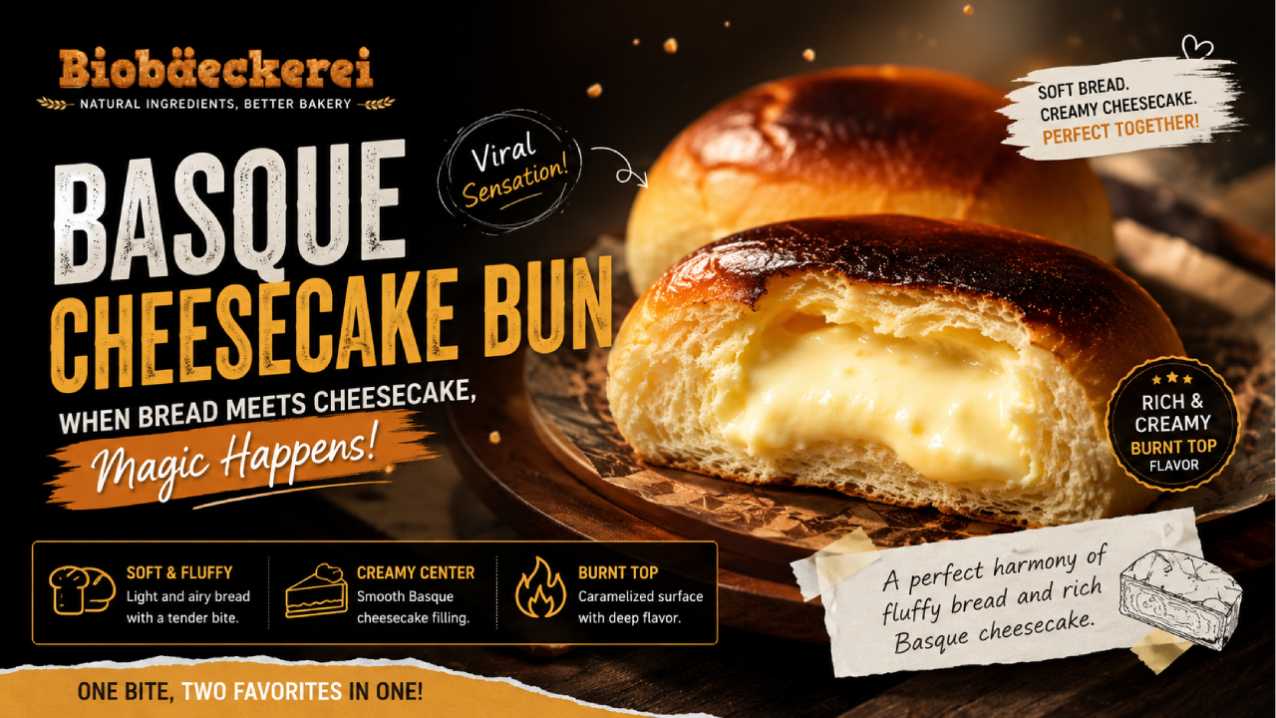
Biobaeckerei – The Basque Cheesecake Bun is attracting dessert lovers with a simple yet tempting idea. It combines soft bread with a rich cheesecake-style filling and a deeply browned top. Instead of choosing between bread and cheesecake, diners can enjoy elements of both in one portion. The concept draws inspiration from Basque burnt cheesecake, which is known for its dark caramelized surface and creamy center. However, the bun version turns that familiar dessert profile into something easier to hold and share. The contrast is its strongest appeal. Soft, lightly chewy bread surrounds a creamy filling, while the browned surface adds deeper roasted notes. Moreover, its compact shape makes it highly photogenic. Once sliced open, the pale cream cheese center creates an attractive contrast against the golden bread. That combination of flavor, texture, and appearance explains why this hybrid pastry fits naturally into today’s bakery culture.
Read Also: Beef Vegetable Soup Recipe with Rich Savory Broth
Basque Burnt Cheesecake Inspires the Flavor
To understand the bun, it helps to look at the dessert behind its name. Basque burnt cheesecake is closely associated with San Sebastián in Spain’s Basque Country. Chef Santiago Rivera of La Viña is widely credited with developing the famous version in the 1990s. Unlike classic American cheesecake, it is normally baked without a cookie crust. High heat creates its signature dark surface, while the interior remains soft and creamy. Over time, this distinctive style spread far beyond Spain. Bakers adapted its flavor into cakes, tarts, ice cream, and other desserts. The Basque Cheesecake Bun follows the same creative path rather than representing one fixed traditional recipe. Therefore, recipes can differ considerably between bakeries. Some place cheesecake batter inside the dough, while others create an open center for the filling. What connects them is the recognizable combination of cream cheese richness and caramelized flavor.
The Burnt Top Is Part of the Experience
At first glance, the dark surface may look overbaked. However, controlled browning is exactly what gives Basque-style cheesecake its personality. During baking, heat encourages browning reactions on the surface. As a result, the top develops deeper aromas and a slightly bitter edge. That bitterness is useful because cream cheese fillings can otherwise taste overwhelmingly rich. Meanwhile, sugar provides sweetness, and dairy ingredients create a smooth mouthfeel. The bun adds another layer to this balance. Bread has a milder flavor, so it acts as a neutral base for the stronger cheesecake center. Consequently, every bite can move between sweet, creamy, savory, and toasted notes. Still, there is a difference between intentional caramelization and actual burning. A successful version should taste pleasantly roasted rather than acrid. That small distinction can determine whether the pastry feels balanced or simply overcooked.
Soft Bread Makes the Rich Filling Easier to Enjoy
Texture plays an equally important role. A whole slice of cheesecake can feel dense, especially after a large meal. By contrast, a cheesecake bun distributes that richness through a softer bread structure. Many modern bakery versions use enriched dough containing ingredients such as milk, butter, eggs, or sugar. These ingredients can produce a tender crumb when the dough is mixed and fermented correctly. Then, the cream cheese component introduces a contrasting texture. Depending on the recipe, it may remain custard-like or become firmer after cooling. This contrast makes the pastry more interesting than a bun filled with ordinary sweet cream. Furthermore, bread provides enough structure to make the dessert portable. Consumers can enjoy it without the plate and fork normally associated with cheesecake. That practical quality is one reason hybrid bakery products can work particularly well for cafés and takeaway counters.
Cream Cheese Remains the Star Ingredient
Although the bread matters, cream cheese remains central to the identity of a Basque Cheesecake Bun. A typical cheesecake-inspired mixture may include cream cheese, sugar, egg, and cream. However, exact formulas vary because the filling must work with the bread and the chosen baking method. Bakers need to consider moisture carefully. Too much liquid can make the dough around the filling wet. On the other hand, an overly firm mixture may lose the luxurious texture associated with cheesecake. Temperature also matters. Cream cheese that is properly softened generally blends more smoothly with other ingredients. Meanwhile, excessive mixing can introduce unnecessary air, depending on the desired result. Therefore, successful versions require more than simply placing cheesecake batter inside bread. The filling and dough need to be designed as one product. When that balance works, the creamy center complements the bread rather than overwhelming it.
Social Media Gives Hybrid Pastries a Natural Stage
The popularity of visually striking bakery items has changed how new desserts gain attention. A pastry no longer needs an elaborate decoration to look impressive online. Sometimes, one clean cross-section is enough. The Basque Cheesecake Bun fits this format perfectly. From the outside, it may resemble a deeply browned bun. Once opened, however, the creamy center becomes visible. That reveal creates the kind of visual contrast that performs well in short-form food content. In addition, consumers immediately recognize both parts of the concept. Cheesecake is familiar, and soft bread is familiar. Combining them creates novelty without making the flavor difficult to understand. This approach has appeared across modern bakery culture, where croissants, doughnuts, buns, and cakes increasingly borrow elements from one another. Nevertheless, social media attention alone cannot sustain a product. The pastry still needs balanced sweetness, good texture, and consistent quality to encourage repeat purchases.
A Good Version Should Not Be Excessively Sweet
One potential weakness of hybrid desserts is excessive richness. Bread, sugar, butter, cream cheese, and cream can quickly create a heavy combination. Therefore, balance becomes crucial. A well-designed Basque Cheesecake Bun does not need extreme sweetness. In fact, the slightly tangy character of cream cheese should remain noticeable. Salt can also help sharpen the flavor and prevent the filling from tasting flat. Meanwhile, the caramelized surface introduces mild bitterness. Together, these elements create more complexity than sugar alone. Portion size also matters. Because the filling is rich, a moderately sized bun may be more enjoyable than an oversized version. From a baker’s perspective, this balance can also make the product more versatile. It can work as an afternoon snack, café pastry, or dessert. Ultimately, indulgence feels more satisfying when different flavors remain distinguishable rather than merging into one overwhelmingly sweet bite.
Freshness Can Change the Entire Texture
Freshness has a noticeable effect on this type of pastry because bread and cheesecake behave differently over time. Bread generally tastes best when its crumb remains soft and moist. Cheesecake filling, meanwhile, often becomes firmer when chilled. Therefore, storage can change the eating experience considerably. A freshly baked and properly cooled bun may offer a soft exterior with a creamy center. Refrigeration can make the filling denser while also firming the bread. For food safety, products containing substantial dairy and egg fillings should be handled and stored appropriately rather than left at room temperature indefinitely. Consumers should follow the bakery’s storage guidance. If the bun has been chilled, some versions may taste better after a short period outside the refrigerator, provided safe handling practices are followed. This small detail matters because temperature influences aroma, softness, and the perceived richness of cream cheese.
The Trend Reflects a Bigger Shift in Modern Bakeries
The Basque Cheesecake Bun also reflects a broader movement in contemporary baking. Bakers increasingly combine recognizable foods rather than creating entirely unfamiliar flavors. This strategy gives customers something new while preserving a sense of comfort. Similar thinking has produced croissant hybrids, filled milk breads, dessert sandwiches, and laminated pastries with unconventional fillings. Asian bakery culture has been particularly influential in popularizing soft bread textures alongside creative sweet fillings. Meanwhile, Basque burnt cheesecake has become an internationally recognizable dessert style. Bringing these ideas together feels like a natural extension of both trends. However, it is useful to separate modern adaptation from culinary origin. Basque burnt cheesecake has a specific history connected with San Sebastián, while the bun is a contemporary fusion format. Recognizing that distinction makes the story more accurate and gives readers useful culinary context.
Different Bakeries Can Create Their Own Interpretation
There is no single universal formula for a Basque Cheesecake Bun. That flexibility is part of its appeal. One bakery may use a round brioche-style dough with cheesecake in the center. Another may use soft milk bread and expose the filling at the top before baking. Some versions emphasize the dark Basque-style surface, while others focus more heavily on a flowing cream cheese center. Bakers can also adjust sweetness, saltiness, and bread density. However, too many additions can weaken the original idea. Strong chocolate sauces, excessive toppings, or heavily flavored creams may hide the contrast between bread and cheesecake. In my view, the strongest versions are often visually simple. A golden bun, a caramelized cheesecake surface, and a creamy center already provide enough character. The concept works because diners can understand it immediately, even before taking the first bite.
Why Basque Cheesecake Bun Has Lasting Potential
Food trends often disappear once their novelty fades. However, the Basque Cheesecake Bun has several qualities that could give it a longer life. First, its ingredients are familiar. Second, the format is practical for cafés and bakeries. Third, its flavor can be adjusted without completely changing its identity. Most importantly, the product offers genuine textural contrast rather than relying only on unusual presentation. The soft bread provides comfort, while the cheesecake filling delivers indulgence. Meanwhile, the browned surface adds the characteristic roasted note that makes Basque-style cheesecake distinctive. This combination also leaves room for bakeries to create signature versions. Some may emphasize a softer center, while others may prefer stronger caramelization. Therefore, the pastry can evolve while keeping its basic identity recognizable.
Bread and Cheesecake Find a Surprisingly Natural Match
The appeal of the Basque Cheesecake Bun ultimately comes from contrast. It brings together fluffy bread and creamy cheesecake without making either element completely disappear. The browned surface provides aroma and character, while the cream cheese filling adds richness. At the same time, the bread keeps the dessert approachable and portable. That balance explains why the concept feels more convincing than a novelty created only for photographs. It also demonstrates how modern bakery trends often grow through reinterpretation. A famous dessert does not have to remain in its original form to inspire something interesting. Still, quality remains essential. Good dough, balanced filling, careful baking, and proper handling matter more than viral presentation. When those elements come together, the result is a pastry that feels familiar on the first bite yet different enough to make people curious about the next one.
