
Pretzel Croissant Hybrid Combines Two Bakery Classics in One Irresistible Pastry
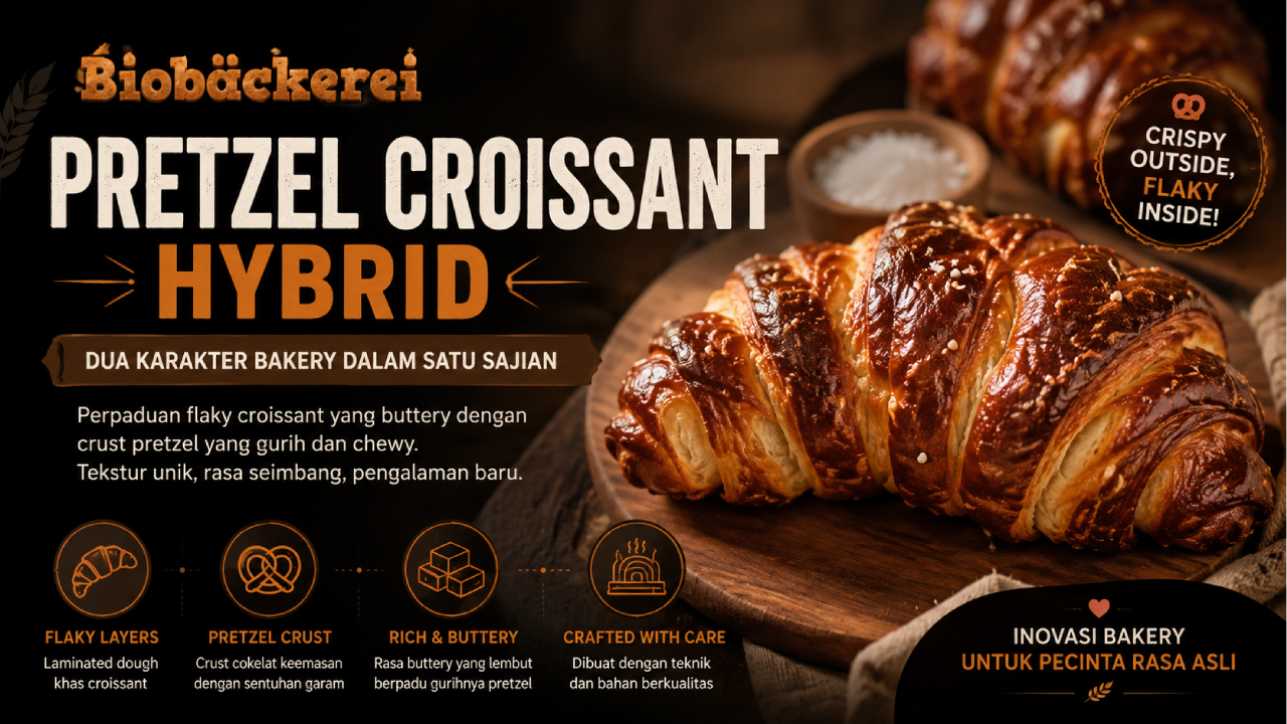
Biobaeckerei – The Pretzel Croissant Hybrid brings together two familiar bakery ideas in one creative pastry. At first glance, it may resemble a classic croissant with curved layers and a beautifully browned exterior. However, the first bite reveals a different personality. The interior aims for the light, laminated character associated with croissants. Meanwhile, the outside borrows the savory appeal of a pretzel-style crust. This contrast creates an experience that feels familiar yet surprisingly different. Hybrid pastries are not new to modern bakeries. Bakers have long experimented with combining recognizable formats to create fresh textures and flavors. Still, this particular pairing makes culinary sense because both products depend heavily on dough technique. The real challenge lies in maintaining distinct croissant layers while developing the darker, slightly chewy exterior expected from a pretzel. When those elements remain balanced, the pastry becomes more than a novelty. Instead, it offers a thoughtful combination of crispness, tenderness, butteriness, and savory depth.
Read Also: Healthy Pumpkin Soup Brings Creamy Comfort Without Heavy Cream
Laminated Croissant Dough Creates Its Flaky Interior
A successful Pretzel Croissant Hybrid begins with laminated dough. Traditional croissants achieve their characteristic structure through repeated folding of dough and butter. These folds create alternating layers. During baking, water in the butter and dough turns into steam. As a result, the layers separate and expand. However, temperature control is crucial throughout this process. If the butter becomes too warm, it can blend into the dough instead of remaining in distinct sheets. Conversely, butter that becomes excessively cold may crack during rolling. Therefore, experienced bakers aim for dough and butter with compatible flexibility. The number and style of folds can vary between formulas, yet the principle remains similar. Lamination creates the delicate internal architecture that distinguishes a croissant from ordinary bread. For this hybrid pastry, preserving that structure becomes particularly important. The pretzel-inspired treatment should enhance the exterior without destroying the layers underneath. Consequently, careful fermentation, shaping, and handling matter just as much as the ingredients themselves.
Pretzel-Style Treatment Changes the Surface Dramatically
What transforms laminated pastry into a Pretzel Croissant Hybrid is its pretzel-inspired exterior. Traditional pretzels are commonly treated with an alkaline solution before baking. This alkaline environment accelerates browning reactions at the surface. Therefore, pretzels develop their recognizable deep brown color, distinctive aroma, and characteristic crust. Professional pretzel production may use food-grade lye under controlled procedures. Home recipes often use baking soda instead because it is easier to handle. However, these approaches are not identical and can produce different results. In a croissant hybrid, the treatment requires extra care because laminated dough is more delicate than ordinary pretzel dough. Excessive handling can compress layers or interfere with the pastry’s structure. Therefore, bakery formulas may adapt the technique rather than simply copying a standard pretzel process. Coarse salt can then reinforce the savory identity. Ultimately, the goal is not to turn a croissant completely into a pretzel. Instead, the surface treatment should add recognizable pretzel characteristics while allowing the laminated interior to remain the star.
Flaky and Chewy Textures Make Every Bite More Interesting
Texture is arguably the strongest appeal of a Pretzel Croissant Hybrid. A well-made version can offer several sensations within one bite. The outer surface may feel firm and slightly chewy. Beneath it, laminated layers provide a lighter and more delicate texture. Meanwhile, the center remains tender rather than dry. This contrast separates the pastry from a conventional croissant or soft pretzel. A standard croissant usually emphasizes crisp flakes and an airy honeycomb interior. By comparison, a pretzel generally delivers more chew and a denser crumb. Combining both concepts requires restraint. Too much pretzel character can overwhelm the laminated structure. On the other hand, an extremely delicate exterior may make the hybrid taste like an ordinary salted croissant. Therefore, balance becomes the defining element. From a baker’s perspective, this makes the pastry technically interesting. From a customer’s perspective, the changing textures simply make eating it more enjoyable. That sensory contrast is also one reason hybrid pastries continue to attract attention in artisan bakery displays.
Butter and Salt Create a Simple but Powerful Flavor Contrast
The flavor profile of a Pretzel Croissant Hybrid does not require complicated fillings. Butter and salt already provide a compelling foundation. Croissant dough contributes richness and a gentle dairy aroma. Meanwhile, the pretzel-style exterior introduces deeper toasted notes. A scattering of coarse salt can sharpen those flavors without adding unnecessary complexity. Therefore, the pastry can work particularly well as a savory breakfast or afternoon snack. However, salt needs careful control. Too much can dominate the butter and make the pastry tiring to eat. Too little may weaken its pretzel identity. This balance is one reason a seemingly simple hybrid can demand considerable testing. Bakers must also consider how fermentation affects flavor. A properly fermented laminated dough can develop more aromatic complexity than a rushed version. As a result, the final pastry can offer more than a salty crust and buttery center. In my view, the most successful version should let each component remain recognizable. You should notice the croissant first, discover the pretzel character next, and enjoy how naturally they meet.
Creative Fillings Can Turn the Hybrid into a Savory Meal
Although the basic Pretzel Croissant Hybrid can stand alone, its savory profile creates plenty of room for experimentation. Cheese is an obvious partner because its richness works naturally with both pretzels and croissants. Mustard-inspired spreads can also reinforce the European bakery character. Meanwhile, herbs, roasted vegetables, or carefully chosen savory fillings can transform the pastry into a more substantial meal. However, bakers should avoid overfilling laminated dough. Heavy or wet fillings may interfere with expansion during baking. They can also overwhelm the textural contrast that makes the hybrid distinctive. Therefore, restraint remains important. Another approach is to bake the pastry plain and use it as a sandwich base afterward. Its salty exterior can pair well with eggs, cheese, vegetables, or other breakfast ingredients. This versatility gives the hybrid commercial potential beyond social-media novelty. A bakery could offer one basic version alongside several seasonal variations. As long as the laminated structure remains visible, customers can still recognize the craftsmanship behind the original concept.
Hybrid Pastries Reflect a Broader Culture of Bakery Experimentation
The Pretzel Croissant Hybrid belongs to a much wider movement of creative pastry combinations. Modern bakeries regularly reinterpret established products by borrowing shapes, fillings, techniques, or textures from other foods. Some combinations become short-lived trends. Others survive because the flavors genuinely complement each other. Croissants are especially suitable for experimentation because laminated dough provides a versatile base. It can accommodate sweet fillings, savory toppings, alternative shapes, and different finishing techniques. However, innovation works best when it respects the fundamentals. A visually dramatic pastry means little if the lamination is poor or the dough tastes underdeveloped. Likewise, combining two famous bakery products does not automatically create something better. The hybrid must offer a reason for both elements to exist together. In this case, the combination has a logical foundation. Croissants provide buttery layers, while pretzel techniques contribute a deeper crust and savory personality. Consequently, the pastry feels less like a gimmick and more like a deliberate exploration of contrasting bakery textures.
Temperature Control Remains Essential During Preparation
Making a Pretzel Croissant Hybrid requires attention long before the pastry enters the oven. Temperature is especially important during lamination. The butter needs to remain cool enough to stay separate from the dough. At the same time, it must remain flexible enough for rolling. Bakers often chill the dough between folds to maintain this balance. Fermentation also requires careful judgment. Underproofed dough may produce a dense interior, while excessive proofing can weaken the structure. The additional pretzel-style finishing step creates another variable. Because laminated dough contains delicate layers, rough handling can reduce volume. Therefore, each stage should be planned around preserving those layers. Baking temperature then determines how effectively the pastry rises, browns, and develops a crisp exterior. These technical details explain why professional-looking laminated pastries are difficult to reproduce consistently. Nevertheless, that challenge is part of their appeal. The finished product displays its craftsmanship openly. Every visible layer tells a story about folding, resting, temperature, fermentation, and precise handling.
Presentation Helps the Pretzel Croissant Stand Out in Bakery Displays
Visual appeal plays an important role in the popularity of the Pretzel Croissant Hybrid. Its deep brown surface can immediately distinguish it from the golden croissants beside it. Coarse salt adds another recognizable detail, while curved shaping keeps a connection to traditional viennoiserie. When cut open, the layered interior creates an even stronger visual contrast. This appearance naturally suits bakery counters and food photography. However, presentation should support quality rather than hide weaknesses. Excessive toppings can cover the surface and distract from the lamination. Likewise, elaborate decoration may make the pastry difficult to eat. A cleaner approach often works better. A glossy brown exterior, visible layers, and a restrained amount of salt already communicate the concept clearly. Artisan bakeries can also experiment with knots or other shapes, provided the structure remains suitable for laminated dough. Ultimately, customers often decide what to try before taking the first bite. A distinctive appearance can attract attention, but excellent texture is what encourages them to order it again.
Pretzel Croissant Hybrid Has More Potential Than a Passing Trend
The Pretzel Croissant Hybrid demonstrates why bakery innovation does not always require completely new ingredients. Sometimes, creativity comes from understanding existing techniques and connecting them thoughtfully. Croissant lamination contributes delicate layers and buttery richness. Pretzel-inspired finishing adds darker browning, saltiness, and a contrasting exterior. Together, those qualities create a pastry with a clear identity. Still, execution determines whether the idea succeeds. Poor lamination can make the center heavy, while aggressive surface treatment may compromise the delicate dough. Therefore, technical discipline remains essential. The pastry also benefits from its versatility. It can be served plain, paired with coffee, transformed into a breakfast sandwich, or adapted with savory fillings. That flexibility could help it remain relevant even after the initial curiosity fades. More importantly, the hybrid represents an interesting direction for contemporary baking. Rather than replacing classic pastries, it celebrates them through reinterpretation. When craftsmanship comes first, familiar bakery traditions can meet in unexpected ways without losing the qualities that made them popular in the first place.
