
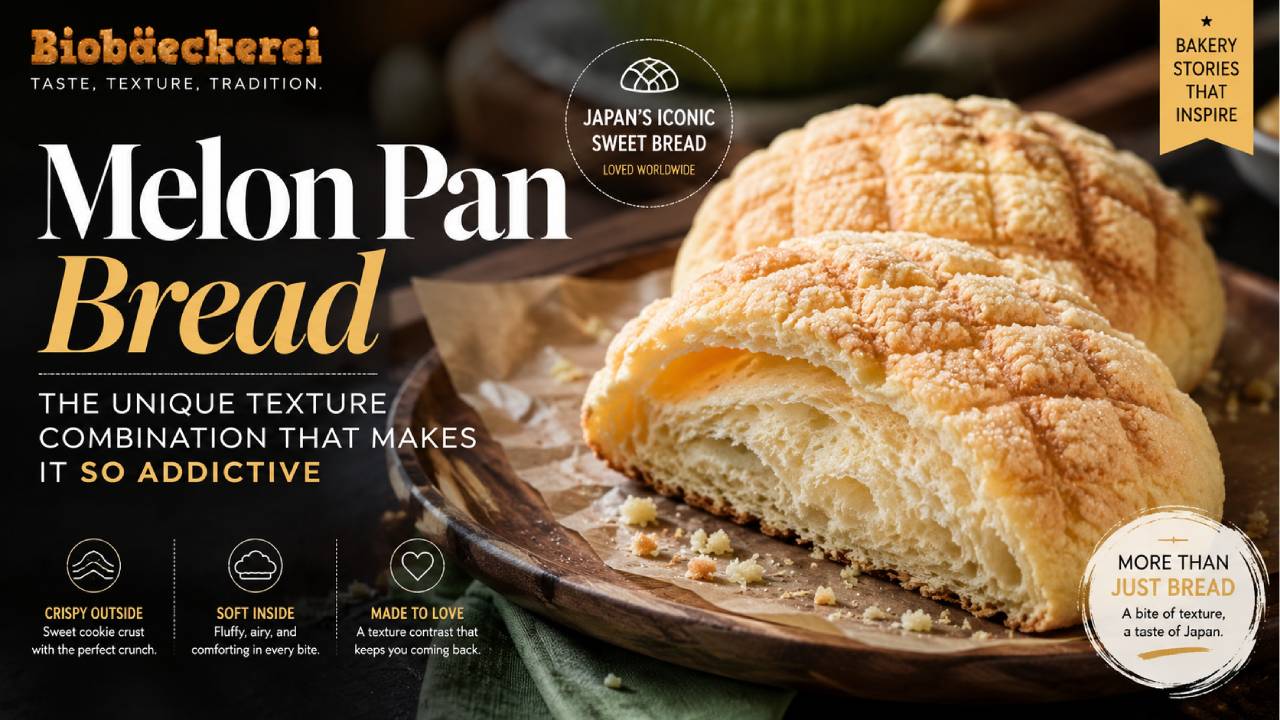
Melon Pan Bread: The Unique Texture Combination That Makes It Irresistible
Biobaeckerei – Melon Pan Bread has earned a special place in the hearts of bread lovers around the world. At first glance, it looks simple. However, one bite quickly reveals why this Japanese bakery favorite continues to attract loyal fans. The contrast between its crunchy outer layer and its soft interior creates a sensory experience that feels both comforting and exciting. As global interest in Japanese food culture continues to grow, Melon Pan Bread has become one of the most recognizable sweet breads beyond Japan. Moreover, its distinctive texture makes it stand out from many other bakery products that rely solely on flavor to impress customers.
The Story Behind Melon Pan Bread
Although its name suggests a connection to melon fruit, Melon Pan Bread traditionally contains no melon at all. Instead, the name comes from the crisscross pattern on the surface, which resembles the appearance of a melon. Over time, this bread evolved into a beloved snack found in bakeries, convenience stores, and specialty cafes throughout Japan.
Interestingly, food historians believe the bread was influenced by European baking techniques introduced to Japan many decades ago. Nevertheless, Japanese bakers transformed the concept into something uniquely their own. As a result, Melon Pan Bread became a cultural icon that blends international inspiration with local creativity.
The Secret Behind Its Crispy Outer Shell
One of the most appealing aspects of Melon Pan Bread is its cookie-like crust. Unlike ordinary bread, the surface is covered with a thin layer of sweet dough before baking. During the baking process, this layer develops a delicate crispness that contrasts beautifully with the soft bread underneath.
Furthermore, the crust provides more than just texture. It also delivers a subtle sweetness that enhances every bite. Many bakery enthusiasts believe this crispy coating is the defining feature that separates Melon Pan Bread from other sweet breads. Consequently, bakers pay close attention to achieving the perfect balance between crunch and tenderness.
Why The Interior Feels So Soft And Light
While the crust receives much of the attention, the interior plays an equally important role. Melon Pan Bread is typically made using enriched dough, which contains ingredients such as milk, butter, and eggs. These ingredients contribute to a softer and more delicate crumb structure.
As the bread bakes, the moisture remains trapped inside, creating a fluffy texture that almost melts in the mouth. Therefore, each bite delivers two completely different sensations at once. This dual-texture experience is one of the main reasons people find Melon Pan Bread so memorable and satisfying.
The Psychology Of Texture In Food Enjoyment
Food scientists often explain that texture has a powerful influence on how people perceive flavor. In many cases, consumers associate crunchy foods with freshness and quality. At the same time, soft foods create feelings of comfort and indulgence. Melon Pan Bread successfully combines both characteristics in a single product.
Because of this unique combination, the bread activates multiple sensory responses simultaneously. As a result, the eating experience becomes more engaging and enjoyable. In my opinion, this texture contrast is one reason why people frequently crave Melon Pan Bread even after trying it only once.
Regional Variations Keep The Tradition Fresh
Although the classic version remains popular, many bakeries have introduced creative variations. Some feature fillings such as chocolate, custard, or matcha cream. Others incorporate fruit flavors into the crust while maintaining the traditional texture profile.
These innovations help keep Melon Pan Bread relevant for modern consumers. At the same time, they allow bakers to experiment without abandoning the bread’s original identity. Consequently, customers can enjoy familiar textures while discovering exciting new flavors during each visit to a bakery.
The Rise Of Melon Pan Bread Beyond Japan
In recent years, Japanese bakery culture has expanded significantly across the globe. As more consumers seek authentic international foods, Melon Pan Bread has gained popularity in countries throughout Asia, North America, and Europe. Social media has also played a major role in introducing the bread to new audiences.
Photos and videos highlighting the crispy crust often attract millions of views online. Therefore, curiosity frequently turns into demand. Many specialty bakeries now include Melon Pan Bread on their menus because customers actively search for it after seeing it featured on digital platforms.
Why Bakers Love Creating Melon Pan Bread
From a baker’s perspective, Melon Pan Bread offers a rewarding challenge. Achieving the perfect crust requires careful dough preparation and precise baking conditions. Meanwhile, the interior must remain soft and airy without becoming dry.
Because both elements must work together harmoniously, the bread showcases a baker’s technical skills. Additionally, customers immediately notice when the balance is achieved correctly. For this reason, many professional bakers consider Melon Pan Bread a product that demonstrates craftsmanship and attention to detail.
The Comfort Food Appeal That Never Fades
Every culture has comfort foods that evoke warmth and familiarity. In Japan, Melon Pan Bread often fills that role. Whether purchased from a neighborhood bakery or enjoyed during a train journey, the bread creates a simple yet satisfying moment.
Moreover, its approachable flavor profile appeals to both children and adults. Unlike heavily flavored desserts, it relies on texture and subtle sweetness to create enjoyment. As a result, it remains timeless despite changing food trends. This lasting appeal explains why generations continue to embrace Melon Pan Bread as a beloved everyday treat.
How Texture Turned Melon Pan Bread Into A Global Favorite
The success of Melon Pan Bread demonstrates that great food does not always require complex ingredients. Instead, the magic often comes from thoughtful execution and balance. By combining a crisp cookie crust with a fluffy bread interior, it delivers an experience that feels unique from the first bite to the last.
As global food culture becomes increasingly interconnected, products with distinctive characteristics naturally attract attention. Melon Pan Bread stands out because it offers something many baked goods cannot: two contrasting textures working together perfectly. Therefore, its growing international popularity is not surprising. Rather, it is a testament to how texture can transform a simple bread into an unforgettable culinary experience.
