
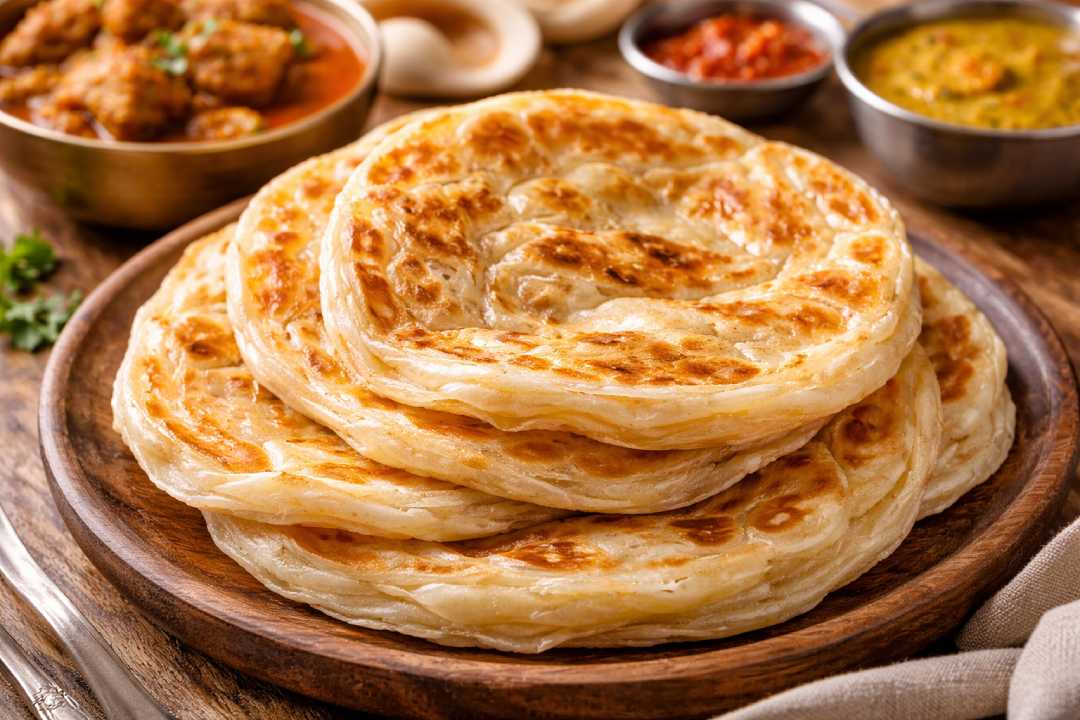
Roti Canai: The Flaky Malaysian Flatbread Loved Across Southeast Asia
Biobaeckerei – Roti Canai has become one of the most recognizable street foods in Southeast Asia, celebrated for its crispy layers and rich cultural heritage. At first glance, this Malaysian flatbread may look simple; however, its preparation requires skill, patience, and years of practice. Because of its unique flaky texture and comforting flavor, Roti Canai is often enjoyed as a breakfast staple, a late-night snack, or even a satisfying meal paired with flavorful curries. Over time, the dish has traveled beyond Malaysia and gained popularity across neighboring countries such as Singapore, Thailand, and Indonesia. As a result, food lovers around the world are beginning to recognize Roti Canai not only as a delicious flatbread but also as a symbol of Southeast Asia’s vibrant street food culture.
“Read Also: Almond Lemon Cake: A Low-Carb Dessert Perfect for Your Diet“
The Cultural Story Behind Roti Canai
Roti Canai is more than just a popular flatbread. In fact, it represents a culinary story that connects cultures across Southeast Asia. Originally influenced by Indian Muslim traders who migrated to Malaysia centuries ago, Roti Canai slowly evolved into a beloved street food enjoyed by millions today. While the roots trace back to South Indian paratha-style bread, the Malaysian version developed its own unique identity. Because of this cultural blending, Roti Canai perfectly reflects Malaysia’s diverse food heritage.
Today, the dish is commonly served at roadside eateries known as “mamak stalls,” where locals gather early in the morning or late at night. Interestingly, the experience of watching a chef skillfully stretch and flip the dough is almost as satisfying as eating the bread itself. Moreover, the comforting smell of buttery dough hitting a hot griddle often draws customers from across the street. In many ways, Roti Canai has become a symbol of everyday Malaysian life. As a result, travelers visiting Southeast Asia often seek this dish first when exploring local cuisine.
Why Roti Canai Has a Perfectly Flaky Texture
One of the most fascinating characteristics of Roti Canai is its flaky texture. At first glance, it may look simple, yet the process behind it requires remarkable skill. The dough contains flour, water, eggs, and fat, usually margarine or ghee. However, the real secret lies in how the dough is stretched and folded repeatedly. This technique creates multiple thin layers that turn crispy when cooked.
Furthermore, the dough is usually rested for several hours before cooking. Because of this resting process, gluten develops properly and allows the dough to stretch extremely thin without tearing. As a result, the final bread becomes light, flaky, and slightly crispy outside while remaining soft inside. Many food experts often compare this layering technique to laminated dough used in croissants. Nevertheless, Roti Canai remains simpler and more rustic. Consequently, this perfect balance between crispness and softness is the reason why so many people fall in love with Roti Canai after their first bite.
The Traditional Way Roti Canai Is Prepared
Preparing Roti Canai is both an art and a performance. Skilled cooks begin by rolling small dough balls and coating them with oil to prevent drying. After that, each ball is flattened and carefully stretched until it becomes almost transparent. At this stage, experienced chefs swing the dough in wide circles through the air. This dramatic movement is not merely for show. Instead, it helps thin the dough evenly while creating elasticity.
Once stretched, the dough is folded into a square or spiral shape. Then it is placed onto a hot griddle and cooked with a generous amount of butter or margarine. Within minutes, the surface turns golden brown and slightly crisp. Finally, the bread is lightly crushed by hand to enhance its flakiness. Because of this final step, the layers separate beautifully when pulled apart. Therefore, the cooking process itself contributes directly to the distinctive texture that defines authentic Roti Canai.
Popular Variations of Roti Canai Across Southeast Asia
Although the classic version remains the most popular, Roti Canai has inspired many creative variations. For instance, one famous variation is Roti Telur, which includes egg cooked directly inside the dough. Another favorite is Roti Bom, a sweeter version filled with condensed milk and sugar. These variations demonstrate how versatile the bread can be.
In addition, neighboring countries have embraced their own interpretations of the dish. In Thailand, a similar bread called “Roti” is often served with bananas and chocolate. Meanwhile, in Singapore, Roti Prata closely resembles the Malaysian style but sometimes includes fillings like cheese or mushrooms. Despite these differences, the core idea remains the same: a flaky flatbread cooked on a griddle and served fresh. Therefore, while regional flavors may vary, the heart of Roti Canai continues to unite food cultures throughout Southeast Asia.
The Best Ways to Enjoy Roti Canai
Eating Roti Canai is not only about flavor but also about pairing. Traditionally, the bread is served with dhal curry made from lentils. The mild, earthy taste of dhal complements the buttery layers of the bread perfectly. In many places, diners also enjoy it with chicken curry or fish curry for a richer flavor experience.
Interestingly, many locals prefer tearing the bread by hand instead of using utensils. This method allows the flaky layers to absorb curry more effectively. As a result, every bite becomes deeply flavorful. Additionally, some people enjoy Roti Canai with sweet toppings such as sugar, honey, or condensed milk. Because of its adaptable taste, the bread works equally well as a savory breakfast or a sweet snack. Consequently, this flexibility has helped Roti Canai remain relevant in modern food culture.
Why Roti Canai Became a Street Food Icon
Street food culture plays a major role in the popularity of Roti Canai. Across Malaysia and Singapore, mamak stalls operate nearly twenty-four hours a day. Because of this accessibility, Roti Canai has become a go-to comfort food for students, workers, and travelers alike. Moreover, the affordability of the dish makes it accessible to almost everyone.
Beyond convenience, the atmosphere surrounding these stalls adds to the charm. People gather to chat, drink tea, and enjoy freshly cooked bread straight from the griddle. In many ways, these stalls function as social spaces where communities connect. Therefore, Roti Canai is not simply a meal but part of a daily ritual shared by locals. This social element explains why the dish continues to thrive even in an era dominated by fast-food chains.
Nutritional Perspective of Roti Canai
From a nutritional standpoint, Roti Canai offers both benefits and considerations. On one hand, it provides carbohydrates that supply quick energy. This quality makes it a satisfying breakfast option for people starting their day. Additionally, when paired with dhal curry, it offers plant-based protein and fiber.
However, moderation remains important. Because the bread contains butter or margarine, it can be relatively high in fat and calories. Consequently, nutrition experts often recommend balancing it with vegetables or lighter side dishes. For example, combining Roti Canai with lentil curry or vegetable curry can create a more balanced meal. Therefore, while the dish is undeniably delicious, mindful portion control ensures it remains part of a healthy diet.
The Global Rise of Roti Canai
Over the past decade, Roti Canai has begun gaining international recognition. As Southeast Asian cuisine becomes more popular worldwide, this humble flatbread has started appearing in restaurants across Europe, Australia, and North America. Food enthusiasts often describe it as a cross between Indian paratha and French pastry due to its flaky texture.
Furthermore, social media has played a significant role in its global exposure. Videos showing chefs stretching the dough dramatically often go viral, capturing the curiosity of viewers around the world. As a result, many international food lovers now seek authentic Roti Canai when traveling to Malaysia or Singapore. In my opinion, this growing recognition reflects a broader appreciation for traditional street foods that carry cultural history. Ultimately, Roti Canai stands as a powerful reminder that simple dishes often hold the deepest culinary stories.
