
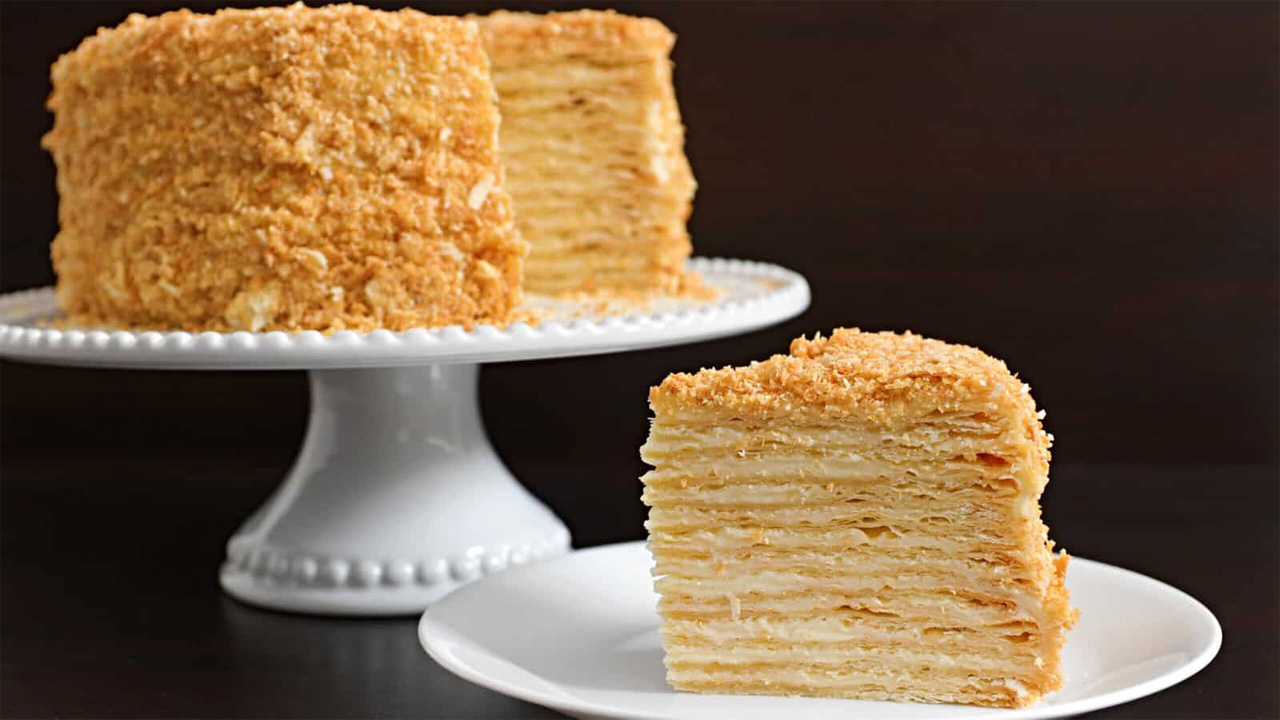
Napoleon Cake, a Legendary Layered Dessert Rooted in History
Biobaeckerei – Napoleon cake is not merely a dessert, but a culinary symbol closely tied to history and tradition. According to popular legend, the cake was created to commemorate the centennial victory of Russia over the French army in 1812. Its many delicate layers were seen as a reflection of grandeur and resilience, making it a fitting tribute to a moment of national pride. Over time, the cake evolved from a commemorative dish into a beloved staple of celebratory tables.
Napoleon Cake as a Festive Icon in Russia
In Russian culture, Napoleon cake holds a special place during holidays and family celebrations. Its presence on the table often signifies togetherness and festivity. The soft pastry layers combined with rich pastry cream create a comforting dessert that appeals across generations. More than just a sweet treat, the cake carries emotional value, connecting families through shared traditions and memories.
Different Names, One Classic Dessert Across Europe
Although strongly associated with Russia, Napoleon cake has close counterparts in other countries. In France, it is famously known as millefeuille, meaning “a thousand layers.” In the United Kingdom, it goes by the name vanilla slice, while in Belgium it is called tompouce. These variations highlight how a single dessert concept adapts to different cultures while preserving its layered essence.
Also Read : Choosing Organic Food: A Simple Step Toward Healthier Living
A Texture That Truly Melts in the Mouth
One of the defining characteristics of Napoleon cake is its exceptionally soft texture. Thin pastry sheets alternate with smooth cream, creating a balance that feels light yet indulgent. Each bite delivers a gentle melt-in-the-mouth sensation, making the cake enjoyable without feeling overwhelming. This delicate structure is precisely what keeps the dessert timeless and widely appreciated.
Napoleon Cake in Modern Culinary Culture
As culinary trends evolve, Napoleon cake continues to find its place in modern kitchens. Contemporary bakers experiment with presentation, flavors, and fillings while maintaining the classic layered form. These adaptations allow the dessert to remain relevant without losing its identity, bridging traditional recipes with modern tastes and aesthetics.
Making Napoleon Cake at Home
Despite its elegant appearance, Napoleon cake can be made at home with patience and attention to detail. While assembling multiple layers requires precision, the ingredients themselves remain relatively simple. Many home bakers find satisfaction in recreating this classic dessert, turning the baking process into a rewarding experience that culminates in a timeless treat.
A Dessert That Transcends Time and Borders
Napoleon cake stands as a reminder that food can preserve history, culture, and shared identity. Its journey across borders and generations proves that great culinary creations are not defined solely by taste, but also by the stories they carry. Layer by layer, Napoleon cake continues to endure as a dessert that connects the past with the present.
