
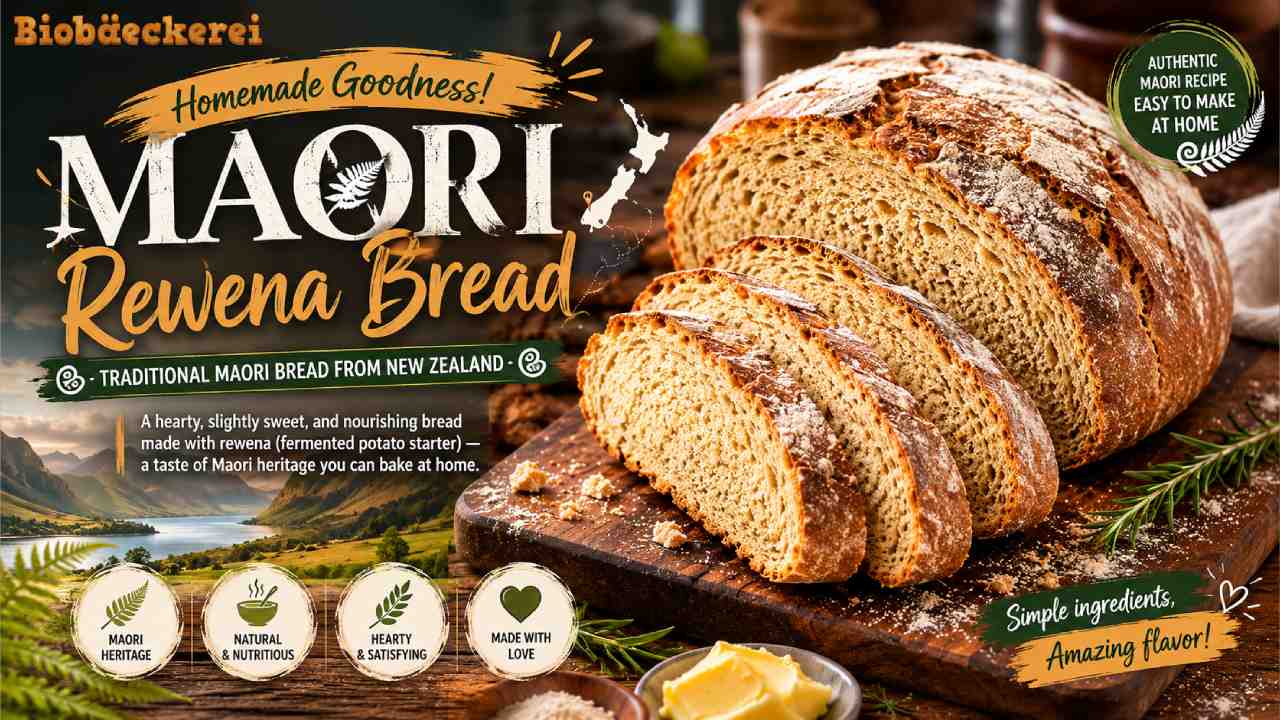
Recipe for Making Maori Rewena Bread from New Zealand at Home
Biobaeckerei – Maori Rewena Bread is gaining attention among home bakers worldwide because of its unique flavor, soft texture, and cultural roots. What’s remarkable is that this traditional New Zealand potato sourdough connects people to Maori heritage while remaining accessible to modern kitchens. Unlike ordinary bread, Rewena combines simple ingredients with a living starter called a “bug,” creating a bread that is both comforting and historically rich.
Moreover, this bread demonstrates how food carries stories across generations. Families pass down Rewena recipes orally, preserving the knowledge of fermentation, kneading, and baking techniques. Consequently, each loaf becomes a testament to tradition, patience, and skill. Interestingly, home bakers often note that the subtle tang and aroma of Rewena instantly evoke memories of communal baking and festive occasions in Maori households.
Read also: Banana Nice Cream Is Becoming a Popular Healthy Dessert That Tastes Like Real Ice Cream
Origins of Maori Rewena Bread
Maori Rewena Bread originated from early interactions between Maori communities and European settlers in New Zealand. Initially, settlers introduced European fermentation techniques, while the Maori contributed the use of potatoes as a natural starter. Therefore, the bread became a fusion of cultures and traditions.
Subsequently, Rewena gained popularity for daily meals and communal celebrations. Families used it during special events, showcasing both practicality and heritage. Today, it remains an emblem of Maori culture and New Zealand culinary identity. In addition, bakers emphasize that every starter or “bug” captures local microbes, which influence flavor uniquely for each household.
Understanding the Potato Starter “Bug”
The “bug” is a fermented mixture of mashed potatoes, flour, sugar, and water. Bakers feed and maintain it regularly, allowing natural yeast and bacteria to develop. As a result, the starter leavens the dough while creating a mild sour tang.
Interestingly, Rewena’s flavor depends heavily on the bug’s fermentation. Longer fermentation produces deeper tanginess, while shorter fermentation yields a milder taste. Consequently, the baker’s attention and consistency define the bread’s quality. In many ways, the starter transforms simple ingredients into a living, flavorful element that makes Rewena distinct.
Preparing the Dough
Bakers mix the active bug with flour, salt, and sometimes additional mashed potatoes to form a sticky, workable dough. They knead the dough thoroughly to develop gluten and distribute the starter evenly. Then, they allow the dough to rise until it doubles in size, ensuring proper aeration and texture.
Meanwhile, bakers monitor hydration carefully. Too little water results in a dense loaf, while too much makes it sticky and hard to shape. Consequently, achieving the right dough consistency is a combination of observation, skill, and experience.
Shaping and Baking Rewena Bread
After the first rise, bakers shape the dough into loaves or rolls. Traditionally, the bread has a rustic, oblong appearance. Then, bakers allow the dough to undergo a second rise before baking in a preheated oven.
During baking, the heat forms a golden crust while maintaining a soft, airy interior. Interestingly, the aroma released during baking often signals readiness and delights the senses. Consequently, baking Rewena becomes both a technical and sensory experience, connecting bakers to tradition and family rituals.
Read also: Adaptogen Desserts Are Going Viral for Their Claim to Help Relax and Stabilize Your Mood
Flavor and Texture
Maori Rewena Bread has a subtle sourness from the fermented starter, a slightly sweet undertone from potatoes, and a soft, tender crumb. The golden crust contrasts with the delicate interior, creating a satisfying mouthfeel. Furthermore, the tang complements both sweet and savory accompaniments, making the bread versatile for any meal.
Bakers note that slight variations in starter strength or dough hydration produce noticeable differences in texture. Therefore, Rewena is uniquely personalized for each household. This variability demonstrates the living nature of the bread and the intimacy of traditional baking practices.
Serving Traditions and Cultural Significance
Families often serve Rewena Bread with butter, jam, or savory fillings during communal meals. It represents hospitality, heritage, and continuity. Interestingly, preparing the bread together fosters intergenerational learning, with older family members teaching younger ones the secrets of the bug and kneading techniques.
Moreover, Rewena is integral to Maori cultural identity. Sharing the bread reinforces community bonds and conveys care. Consequently, the bread is more than a food item; it embodies tradition, storytelling, and familial connection.
Modern Adaptations and Global Recognition
Today, chefs and home bakers worldwide experiment with Rewena Bread. Some incorporate whole grains, seeds, or gluten-free flour while maintaining the characteristic potato starter. In addition, artisan bakeries showcase Rewena as part of heritage bread menus, attracting global attention.
Interestingly, the revival of Rewena reflects a broader trend toward valuing traditional, fermented, and artisanal foods. Its enduring appeal shows that heritage recipes continue to inspire contemporary bakers, emphasizing the relevance of culture and technique alongside taste.
