
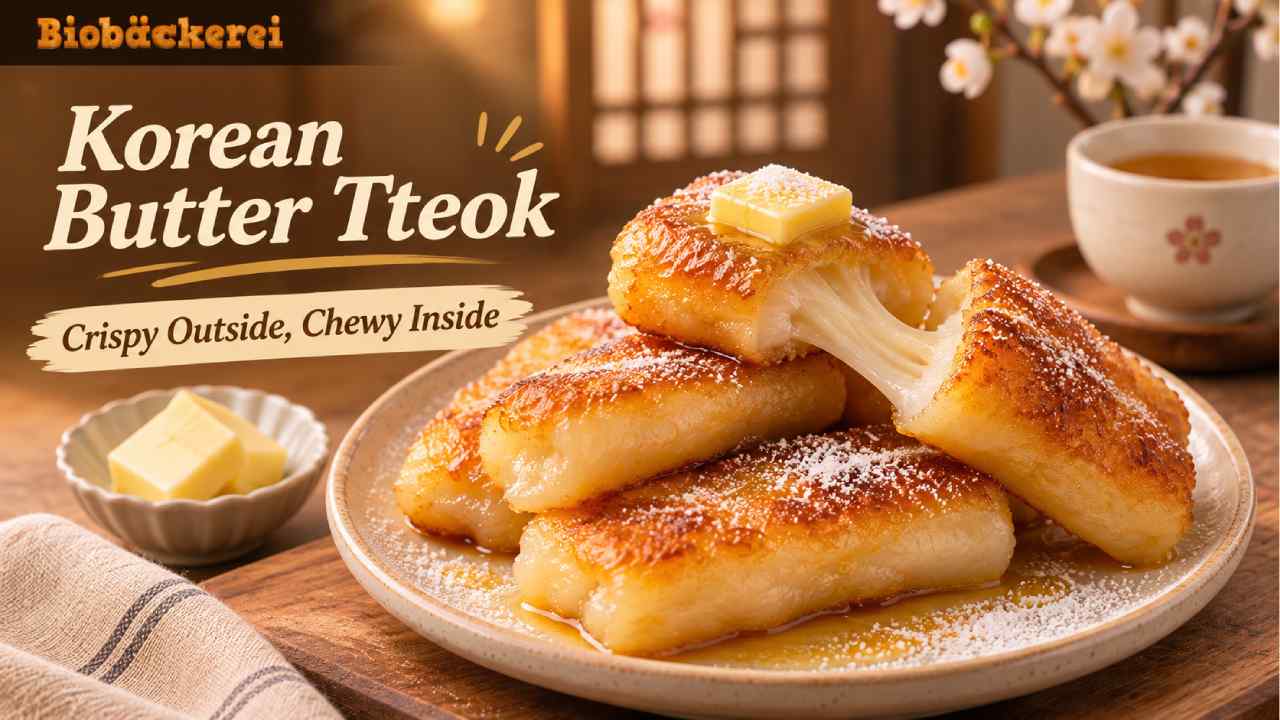
Korean Butter Tteok Recipe with a Crispy and Chewy Texture
Biobaeckerei – Korean Butter Tteok is a delightful rice cake snack that combines a crispy exterior with a pleasantly chewy center. Its rich buttery aroma makes every bite feel warm and comforting. Unlike traditional steamed rice cakes, this modern variation develops a golden crust during cooking. Meanwhile, its soft interior retains the distinctive elasticity of Korean tteok. The contrast creates an enjoyable experience without requiring complicated ingredients. Moreover, a touch of sugar balances the savory richness of butter. This combination makes the snack suitable for afternoon tea, casual gatherings, or homemade desserts. Although Korean rice cakes appear in many traditional dishes, butter-based variations offer a more contemporary flavor. With the right ingredients and cooking technique, anyone can recreate this delicious Korean-inspired treat at home.
Read Also: Bánh Khoai Mì Nướng, Vietnam’s Delightfully Chewy Cassava Cake
Discovering the Appeal of Korean Butter Rice Cakes
Korean cuisine features various rice cakes with different shapes, textures, and preparation methods. Tteok itself refers to a broad category of Korean rice cakes. Some varieties use glutinous rice, while others contain regular rice flour. However, Butter Tteok introduces a different experience through its rich flavor and crispy surface. Butter adds a fragrant aroma while helping the exterior develop an appealing golden color. Meanwhile, glutinous rice flour provides the characteristic chewy texture. This modern preparation shares some similarities with baked butter mochi. Nevertheless, individual recipes may differ in sweetness, ingredients, and cooking methods. From a culinary perspective, the contrast between crispness and elasticity makes this dessert particularly interesting. Furthermore, its simple appearance allows the natural flavors of butter and rice to stand out.
Simple Ingredients for Korean Butter Tteok
Preparing Korean Butter Tteok requires several accessible baking ingredients. Glutinous rice flour forms the foundation, while milk helps create a smooth batter. Additionally, melted butter contributes richness and a fragrant finish. Use the following measurements for approximately 12 small rice cakes.
Recipe Information:
● Preparation time: 15 minutes
● Baking time: 25–30 minutes
● Total time: 40–45 minutes
● Servings: 12 pieces
● Difficulty level: Easy
Ingredients:
● 200 grams of glutinous rice flour
● 180 ml of whole milk
● 60 grams of unsalted butter, melted
● 60 grams of granulated sugar
● 1 large egg
● ½ teaspoon of baking powder
● ½ teaspoon of vanilla extract
● ¼ teaspoon of salt
● 1 tablespoon of melted butter for greasing
These ingredients create a balanced flavor with a pleasantly chewy interior. Moreover, you can adjust the sweetness according to your personal preference.
Preparing the Batter for a Smooth and Chewy Center
A well-prepared batter plays an important role in achieving the desired texture. Therefore, combine the ingredients carefully before moving to the baking process.
- Preheat the oven to 180°C (356°F).
- Lightly grease a 12-cup muffin pan with melted butter.
- Combine glutinous rice flour, baking powder, and salt in a mixing bowl.
- In another bowl, whisk the egg, sugar, milk, and vanilla extract.
- Add the melted butter once it has cooled slightly.
- Gradually pour the wet mixture into the dry ingredients.
- Whisk until the batter becomes smooth and free from large lumps.
- Divide the batter evenly among the prepared muffin cups.
Unlike wheat flour batter, glutinous rice flour does not develop gluten through mixing. However, smooth and even mixing helps produce a consistent texture throughout each rice cake.
Baking Butter Tteok Until Golden and Crispy
Once the batter is ready, the baking process develops the signature crispy exterior. Proper oven temperature also helps maintain a soft and chewy center.
- Place the muffin pan on the middle oven rack.
- Bake for approximately 25–30 minutes.
- Check whether the edges have developed a golden-brown color.
- Continue baking briefly if the centers still appear wet.
- Remove the pan once the rice cakes are set.
- Allow them to cool for about five minutes.
- Carefully transfer the rice cakes onto a wire rack.
- Serve them warm for the best texture.
Meanwhile, avoid covering the freshly baked rice cakes. Trapped steam can soften their crispy surface. Baking times may also vary depending on the oven and the size of each portion.
The Secret Behind Its Crispy Exterior and Chewy Interior
The distinctive texture of Korean Butter Tteok comes primarily from glutinous rice flour. This ingredient contains a high proportion of amylopectin, a component of starch. When heat and moisture interact, the starch gelatinizes and creates a sticky, elastic texture. Meanwhile, butter and sugar contribute to browning and flavor development. The exposed surface gradually loses moisture during baking, which helps form a crisp crust. However, the interior retains more moisture and remains pleasantly chewy. Greasing the baking pan also encourages browning around the edges. Therefore, metal muffin pans can be a practical choice for this recipe. Silicone molds may produce a softer exterior because they transfer heat differently. Understanding these basic cooking principles makes it easier to achieve a satisfying balance between crispness and chewiness.
Creative Flavor Variations for a Modern Korean Dessert
Although the classic butter flavor remains appealing, this recipe offers plenty of room for creativity. For instance, matcha powder introduces an earthy flavor and an attractive green appearance. Meanwhile, black sesame powder provides a deeper, nuttier character. Chocolate lovers can incorporate a small amount of cocoa powder for a richer taste. Additionally, honey can serve as a light topping after baking. Those who enjoy contrasting flavors may sprinkle a little sea salt over the warm rice cakes. However, excessive liquid ingredients can change the batter’s consistency. Therefore, start with small adjustments when experimenting with new flavors. Korean Butter Tteok also pairs beautifully with iced coffee, matcha lattes, and warm roasted barley tea. These combinations create a pleasant café-style dessert experience at home.
Practical Tips for Perfect Homemade Butter Tteok
Small adjustments can make a noticeable difference when preparing homemade rice cakes. Therefore, pay attention to ingredient selection, oven temperature, and storage methods.
- Use glutinous rice flour instead of ordinary rice flour.
- Allow refrigerated ingredients to approach room temperature before mixing.
- Avoid adding hot butter directly to the egg mixture.
- Grease the muffin pan evenly to encourage a golden crust.
- Preheat the oven fully before baking.
- Cool the rice cakes on a wire rack to prevent trapped moisture.
- Refrigerate leftovers in an airtight container within two hours.
- Reheat at 160°C for approximately five to eight minutes to restore crispness.
Korean Butter Tteok tastes best shortly after baking. However, gentle reheating can improve its texture after refrigeration. Serve smaller portions alongside unsweetened tea for a balanced afternoon treat.
