
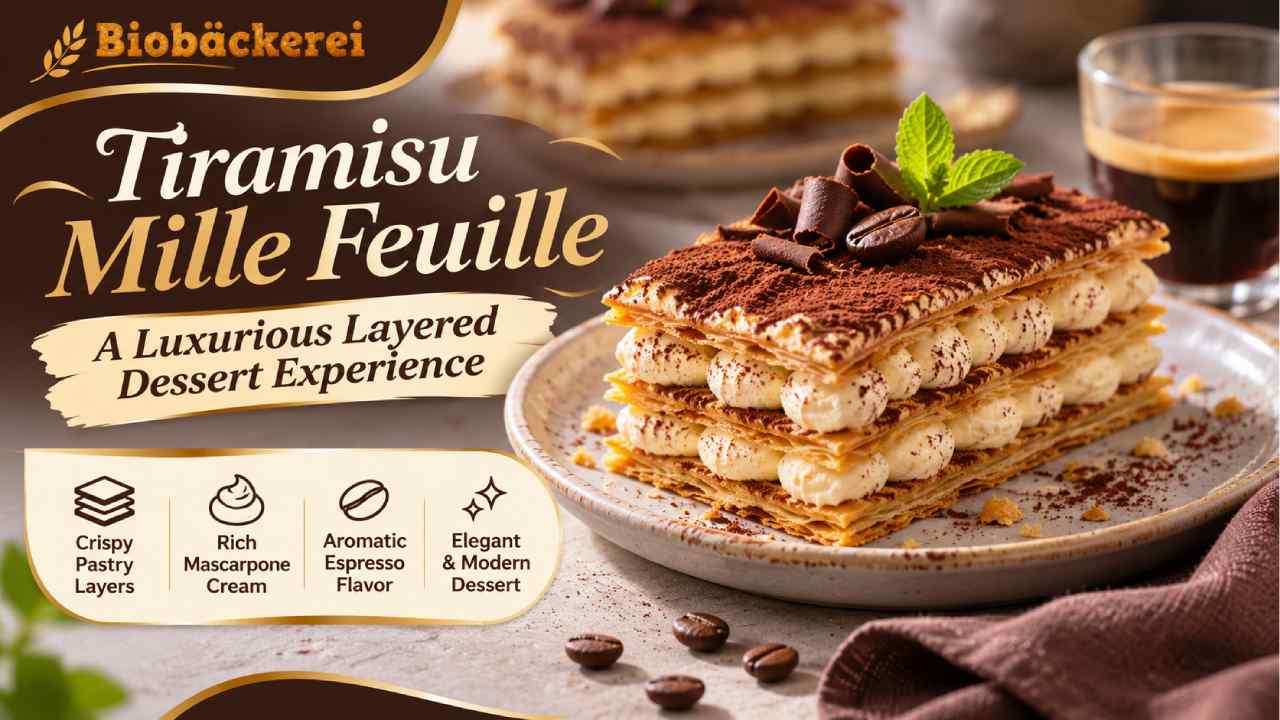
Tiramisu Mille Feuille Delivers a Luxurious Layered Dessert Experience
Biobaeckerei – Tiramisu Mille Feuille introduces an elegant dessert that combines delicate pastry layers with rich coffee-flavored cream. This creative fusion brings together the distinctive characteristics of French pastry and traditional Italian tiramisu. Moreover, its contrasting textures create an enjoyable experience with every bite. The golden puff pastry provides a satisfying crunch, while mascarpone cream delivers a smooth and delicate sensation. Meanwhile, espresso adds a gentle bitterness that balances the sweetness. A light dusting of cocoa powder further enhances its visual appeal. Unlike conventional tiramisu, this dessert replaces soft ladyfingers with crisp pastry sheets. As a result, it offers a completely different texture while maintaining familiar flavors. Its sophisticated appearance also makes it suitable for special celebrations and afternoon gatherings. With thoughtful preparation, Tiramisu Mille Feuille can bring the elegance of a premium pastry shop into a home kitchen.
Read Also: Lemon Ricotta Semifreddo, A Refreshing Italian Frozen Dessert
French and Italian Pastry Traditions Create a Unique Dessert
Tiramisu Mille Feuille draws inspiration from two distinctive European culinary traditions. Traditional mille-feuille features layers of puff pastry separated by cream or custard. Meanwhile, Italian tiramisu typically combines coffee-soaked ladyfingers, mascarpone, eggs, sugar, and cocoa powder. Both desserts offer recognizable flavors and textures. However, combining their elements creates an entirely different culinary experience. The French pastry contributes crispness and delicate layers, while Italian-inspired cream introduces richness and aromatic coffee notes. Furthermore, the combination allows bakers to explore different presentation styles. Individual rectangular portions can create an elegant restaurant-style appearance. Alternatively, larger portions can become an attractive centerpiece for celebrations. This dessert represents a contemporary interpretation rather than an established traditional European recipe. Nevertheless, its balanced combination demonstrates how classic culinary techniques can inspire modern creations. The result is a sophisticated pastry that feels familiar yet refreshingly different.
Crispy Puff Pastry Creates the Signature Layered Texture
The delicate crunch of puff pastry plays an essential role in Tiramisu Mille Feuille. During baking, moisture within the dough and butter produces steam. Consequently, the pastry expands and develops numerous thin layers. However, mille-feuille requires relatively flat pastry sheets for stable assembly. Bakers often place another baking tray above the dough to control excessive expansion. Additionally, piercing the pastry lightly with a fork can help regulate its rise. Proper baking allows the layers to develop a golden color and crisp texture. Meanwhile, cooling the pastry completely prevents trapped heat from softening the cream. The contrast between crunchy pastry and smooth mascarpone becomes especially noticeable when the dessert is freshly assembled. Therefore, careful preparation matters more than complicated decoration. Using quality butter-based puff pastry can also enhance its flavor. These techniques help create the refined texture associated with elegant layered desserts.
Ingredients for Making Tiramisu Mille Feuille at Home
Preparing Tiramisu Mille Feuille requires a balanced combination of puff pastry, mascarpone, espresso, and cocoa powder. This recipe uses an egg-free mascarpone filling for convenient preparation. Furthermore, ready-made puff pastry simplifies the baking process without sacrificing its characteristic layered texture. The following quantities produce approximately six individual dessert portions.
For the crispy pastry layers:
● 500 g ready-made puff pastry
● 2 tablespoons powdered sugar
For the mascarpone cream:
● 250 g mascarpone cheese
● 200 ml cold heavy whipping cream
● 50 g powdered sugar
● 1 teaspoon vanilla extract
● 1 tablespoon cooled espresso
For the coffee mixture:
● 60 ml freshly brewed espresso
● 1 teaspoon granulated sugar
For decoration:
● 2 tablespoons unsweetened cocoa powder
● Dark chocolate shavings, as needed
● Chocolate-covered coffee beans, optional
● Powdered sugar, as needed
Recipe information:
● Preparation time: 25 minutes
● Baking time: 25–35 minutes
● Cooling time: 30 minutes
● Servings: 6 portions
● Difficulty level: Intermediate
How to Make Tiramisu Mille Feuille Step by Step
Making Tiramisu Mille Feuille becomes easier when each component receives proper attention. First, prepare the pastry sheets and bake them until golden. Meanwhile, make the mascarpone cream using chilled ingredients. The filling should remain smooth yet firm enough to support the pastry layers. However, excessive mixing can cause mascarpone cream to separate. Therefore, use gentle mixing techniques and stop once the desired consistency appears. Afterward, allow the baked pastry to cool completely before assembly. Apply the espresso mixture sparingly to preserve the crispy texture. Finally, arrange alternating layers of pastry and cream before adding the cocoa powder.
Step-by-step instructions:
- Preheat the oven to 200°C or 180°C for a fan-assisted oven.
- Roll the puff pastry to approximately 3 mm thick.
- Cut the pastry into 18 equal rectangles.
- Arrange the rectangles on baking trays lined with parchment paper.
- Pierce each pastry rectangle lightly with a fork.
- Cover the pastry with another sheet of parchment paper.
- Place a second baking tray on top to control expansion.
- Bake for approximately 20–25 minutes.
- Remove the upper tray and continue baking until golden and crisp.
- Transfer the pastry sheets to a cooling rack.
- Gently combine mascarpone, powdered sugar, vanilla, and one tablespoon of cooled espresso.
- Whip the cold heavy cream separately until medium-stiff peaks form.
- Carefully fold the whipped cream into the mascarpone mixture.
- Combine the remaining espresso with granulated sugar and allow it to cool.
- Lightly brush one side of the pastry with the coffee mixture.
- Pipe mascarpone cream onto the first pastry layer.
- Add another pastry sheet and repeat the cream layer.
- Finish with the third pastry sheet and decorative cream.
- Dust the surface with unsweetened cocoa powder.
- Add chocolate shavings and serve shortly after assembly.
Mascarpone Cream Provides a Smooth and Delicate Filling
Mascarpone cream gives Tiramisu Mille Feuille its distinctive richness and luxurious mouthfeel. This Italian dairy product contains a high proportion of fat, contributing to its naturally smooth consistency. Moreover, combining mascarpone with whipped cream creates a lighter filling suitable for layered pastries. The addition of powdered sugar provides sweetness without introducing a noticeably grainy texture. Meanwhile, vanilla enhances the aroma and complements the coffee flavor. However, maintaining the correct ingredient temperature remains important. Cold whipping cream generally develops a more stable structure during mixing. Additionally, mascarpone requires gentle handling to prevent separation. The finished cream should hold its shape when piped between pastry sheets. Therefore, avoid adding excessive espresso directly into the filling. Too much liquid can weaken its consistency. A balanced mascarpone mixture creates a pleasant contrast against the crispy pastry while preserving the recognizable character of tiramisu.
Espresso and Cocoa Deliver a Balanced Bittersweet Flavor
Coffee and cocoa contribute much of the distinctive flavor associated with Tiramisu Mille Feuille. Freshly brewed espresso introduces aromatic bitterness that complements the sweetness of mascarpone cream. Furthermore, unsweetened cocoa powder adds depth without making the dessert excessively sweet. However, the coffee mixture requires careful application because puff pastry absorbs moisture. Unlike traditional tiramisu, this dessert depends on maintaining a crisp structure. Therefore, lightly brushing the pastry works better than soaking it. Meanwhile, dark chocolate shavings can introduce additional texture and complexity. Bakers may also adjust the coffee intensity according to personal preferences. Decaffeinated espresso offers an alternative for those who prefer less caffeine. Additionally, the recipe does not require alcohol to achieve an enjoyable flavor. The combination of coffee, cocoa, butter, and cream creates a sophisticated dessert with several complementary characteristics. Each ingredient contributes its own flavor without overwhelming the others.
Essential Tips for Keeping Tiramisu Mille Feuille Crispy
Maintaining the crispness of Tiramisu Mille Feuille requires attention to moisture, temperature, and assembly time. Puff pastry naturally softens when it remains in contact with moist fillings. Consequently, preparing the individual components separately can improve the final texture. Allow the pastry to cool completely before adding mascarpone cream. Additionally, avoid using excessive coffee syrup because it can quickly soften the delicate layers. For extra protection, a thin coating of melted chocolate can create a moisture barrier. However, the chocolate should set completely before assembly. Meanwhile, store the prepared cream in the refrigerator until needed. Keep the baked pastry in an airtight container at room temperature. Assemble the dessert shortly before serving for the best contrast between textures. These simple techniques can significantly improve the eating experience. A freshly assembled mille-feuille offers a more satisfying crunch than one left with cream for several hours.
Creative Tiramisu Mille Feuille Variations Worth Exploring
Tiramisu Mille Feuille provides an excellent foundation for experimenting with contemporary dessert flavors. Chocolate lovers can introduce a thin layer of dark chocolate ganache between the pastry sheets. Meanwhile, matcha powder offers an earthy alternative to traditional cocoa. Pistachio cream can also create a richer variation with a distinctive nutty flavor. Furthermore, fresh strawberries provide gentle acidity that complements mascarpone. However, fruit should be dried carefully before assembly to reduce excess moisture. Another interesting option involves adding finely chopped roasted hazelnuts for additional crunch. Bakers can also experiment with circular or square pastry shapes to create different presentations. Nevertheless, maintaining a balance between sweetness, bitterness, and richness remains important. Too many additions may hide the delicate flavor of the original dessert. With thoughtful adjustments, a single pastry concept can inspire several attractive creations. This flexibility makes it particularly appealing for home bakers and contemporary dessert menus.
Elegant Presentation Enhances the Luxury Dessert Experience
The visual presentation of Tiramisu Mille Feuille contributes significantly to its sophisticated appeal. Neatly arranged pastry sheets create an attractive structure that immediately highlights the dessert’s layers. Additionally, piping mascarpone cream into evenly spaced portions produces a refined bakery-style appearance. A light cocoa dusting adds contrast against the pale cream and golden pastry. Meanwhile, chocolate curls or coffee beans can provide a simple finishing touch. However, elaborate decorations are unnecessary because the layered structure already creates visual interest. Serving the dessert on a neutral ceramic plate helps emphasize its natural colors. Furthermore, individual portions offer an elegant option for dinner parties and afternoon gatherings. The dessert pairs naturally with espresso, black coffee, or unsweetened tea. These beverages can balance its creamy richness. Thoughtful presentation transforms familiar ingredients into an inviting culinary experience without requiring complicated professional equipment.
Proper Storage Helps Preserve Flavor and Dessert Quality
Proper storage is important because Tiramisu Mille Feuille contains a dairy-based filling. The mascarpone cream should remain refrigerated at 4°C or below until assembly. Meanwhile, completely cooled pastry sheets can stay in an airtight container at room temperature. Keeping these components separate helps preserve their individual textures. However, assembled portions should remain refrigerated when they are not being served. For the best quality, enjoy the finished dessert on the same day. Refrigerated leftovers can generally be consumed within two days when handled safely. Nevertheless, the pastry will gradually lose its crispness as it absorbs moisture. Avoid leaving the assembled dessert at room temperature for more than two hours. Additionally, freezing the finished pastry is not ideal because thawing may affect both the cream and pastry texture. Careful preparation and timely assembly help maintain the luxurious qualities that make this dessert particularly enjoyable.
