
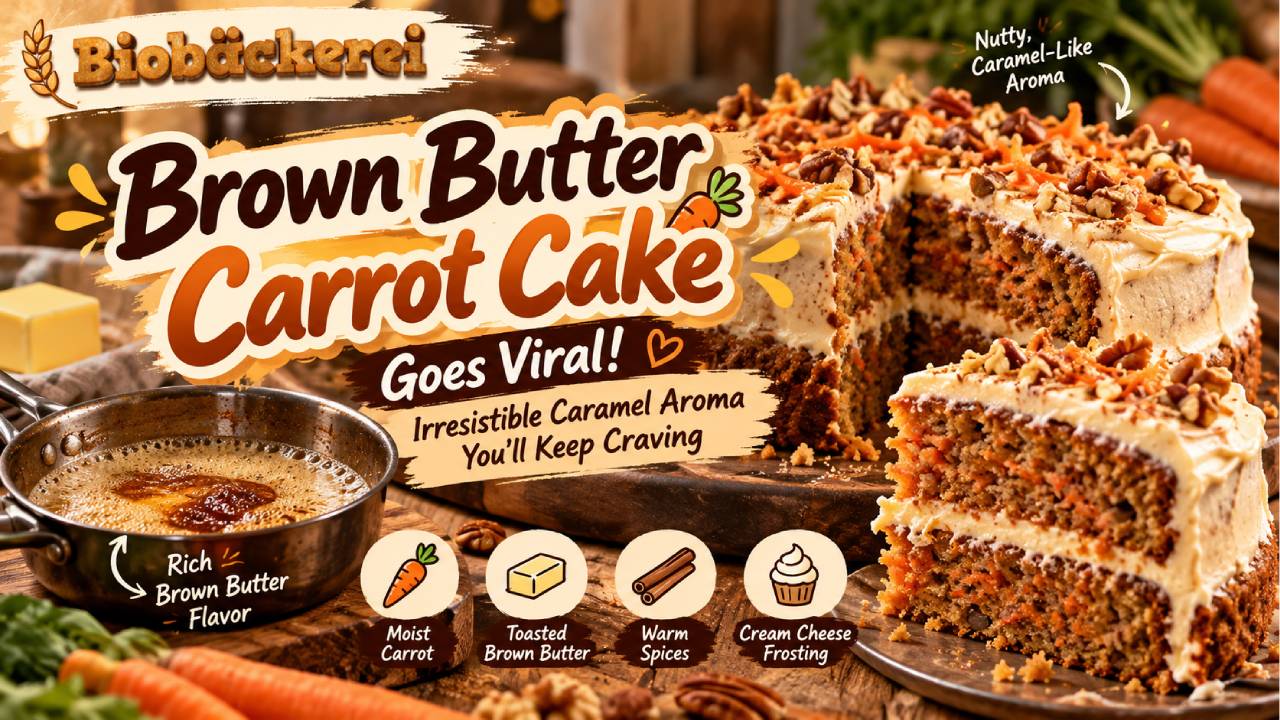
Brown Butter Carrot Cake Goes Viral With Irresistible Caramel Aroma
Biobaeckerei – Brown Butter Carrot Cake takes the familiar comfort of carrot cake and gives it a deeper, toastier personality. Instead of using ordinary melted butter or neutral oil alone, this version relies on butter that has been gently browned. During that process, the milk solids toast and develop nutty, caramel-like aromas. As a result, the finished cake tastes richer without losing the warm character people expect from carrot cake. Freshly grated carrots still provide moisture and subtle sweetness. Meanwhile, cinnamon and other warm spices can complement the browned butter beautifully. The combination feels familiar at first, yet every bite reveals another layer of flavor. That contrast also helps explain why the dessert works so well in modern baking content. A golden slice topped with creamy frosting looks instantly inviting. More importantly, the aroma that develops during baking makes the experience memorable long before the first slice reaches the plate.
Read Also: Mizusawa Udon Transformed Into Craft Beer in Unique Japanese Innovation
Brown Butter Creates the Signature Caramel-Like Aroma
The most important step starts before the cake batter comes together. Butter contains water, fat, and milk solids. When butter is heated, its water gradually evaporates. After that, the milk solids begin to brown. This process produces toasted and nutty aromas through browning reactions. However, brown butter does not literally become caramel, since traditional caramel comes from heated sugar. Instead, its roasted flavor can remind people of caramel, hazelnuts, and toasted dairy. That distinction matters when describing Brown Butter Carrot Cake accurately. Making brown butter also requires attention because the transition from golden to burnt can happen quickly. A light-colored saucepan makes the changing color easier to observe. Once the milk solids become golden brown and smell nutty, the pan should come off the heat. The browned bits at the bottom are especially flavorful, so they should usually remain in the butter rather than being discarded.
Fresh Carrots Keep the Cake Moist and Tender
Carrots do more than give this dessert its name. Their natural moisture contributes to the soft texture associated with a good carrot cake. Finely or moderately grated carrots distribute more evenly through the batter than very large pieces. Consequently, each slice gets a balanced amount of carrot without becoming chunky. Freshly grated carrots are often preferable because pre-shredded versions can be relatively dry and firm. Still, the cake requires balance. Too much moisture can make the center heavy, while excessive flour may create a dry crumb. Accurate measurements therefore become important. In addition, the batter should not be aggressively mixed after adding flour. Overmixing encourages additional gluten development, which can make a tender cake feel tougher. A gentle folding technique usually works better. When the proportions are right, carrots, eggs, fat, and flour create a moist but structured crumb. Brown butter then adds flavor depth without taking away the comforting softness that defines classic carrot cake.
Warm Spices Make the Brown Butter Taste Even Deeper
Aromatic spices provide another layer of character. Cinnamon remains a natural partner for carrot cake because its warmth complements both carrots and browned butter. Ginger, nutmeg, cloves, or allspice can also appear in recipes. However, using every spice heavily can overwhelm the cake. A restrained blend usually allows the brown butter to remain noticeable. Salt also deserves attention because a small amount can sharpen sweetness and make toasted flavors clearer. Meanwhile, vanilla can soften the overall profile and connect the cake with its frosting. Some bakers also add toasted pecans or walnuts for extra texture. Nuts echo the naturally nutty aroma of browned butter, creating a more unified flavor. Raisins, pineapple, and coconut are other traditional additions found in certain carrot cake styles. Nevertheless, they are optional rather than essential. For a Brown Butter Carrot Cake, keeping the ingredient list focused can make its signature toasted-butter character easier to appreciate.
Cream Cheese Frosting Adds a Tangy Counterpoint
Carrot cake and cream cheese frosting have become a familiar pairing for good reason. The cake offers sweetness, spice, and rich toasted notes. Cream cheese, meanwhile, introduces mild tanginess that can balance those flavors. A well-made frosting should feel creamy enough to spread while remaining stable on a completely cooled cake. Butter, cream cheese, powdered sugar, and vanilla commonly form the base. However, ratios vary depending on the desired sweetness and firmness. Adding too much powdered sugar can hide the natural tang of the cream cheese. Therefore, sweetness should support rather than dominate the cake. Brown butter can even appear in some frosting variations, although this creates a much richer final dessert. For a more balanced approach, regular cream cheese frosting allows the toasted flavor inside the cake to stand apart. A thin layer between cake tiers and a neat coating outside can provide enough richness without overwhelming the moist crumb.
Small Baking Details Can Make a Noticeable Difference
Successful Brown Butter Carrot Cake depends on more than an appealing ingredient list. Temperature, measurements, and mixing technique all influence the final crumb. First, allow very hot brown butter to cool before combining it with ingredients that could react poorly to excessive heat. Next, weigh flour when possible because packing flour into a measuring cup can unintentionally add too much. Eggs should blend smoothly into the mixture, while dry ingredients need only enough mixing to disappear into the batter. In addition, prepare cake pans properly to reduce sticking. Oven temperature also matters. An oven running significantly hotter than expected can brown the edges before the center finishes baking. Conversely, low heat may extend baking and affect texture. Because ovens vary, visual cues and a cake tester can help determine doneness. Finally, allow the layers to cool fully before frosting. Warm cake can melt cream cheese frosting and turn a beautiful dessert into a frustrating mess.
The Viral Appeal Goes Beyond Its Good Looks
Food trends often gain attention because they combine visual appeal with a simple twist on something familiar. Brown butter carrot cake fits that formula naturally. Carrot cake already has a recognizable identity, while browned butter adds an easy-to-understand upgrade. Moreover, the transformation of ordinary butter into a fragrant golden ingredient creates satisfying baking content. Viewers can watch the butter foam, change color, and develop toasted specks. Then comes the cake itself, with its moist crumb and creamy frosting. These elements make the dessert especially photogenic. Yet its appeal does not depend solely on social media presentation. Brown butter introduces genuine flavor complexity through a well-established cooking technique. Therefore, the trend has practical culinary value rather than functioning as decoration alone. Home bakers can also apply the same browning technique to cookies, banana bread, frostings, and other desserts. In that sense, the cake can become an introduction to a useful baking skill.
Balanced Flavor Keeps Every Slice Worth Another Bite
The strongest version of Brown Butter Carrot Cake is not simply the sweetest or richest one. Balance matters more. Carrots provide moisture and mild natural sweetness. Brown butter contributes roasted, nutty depth. Spices bring warmth, while cream cheese frosting adds a contrasting tang. When those components remain balanced, each bite feels rich without becoming exhausting. Texture also plays an important role. The crumb should remain tender, while optional toasted nuts can add a gentle crunch. Meanwhile, the frosting should complement the cake instead of hiding its flavor. This balance is what turns a trendy recipe into something worth baking again. Brown butter may be the headline ingredient, but the technique works best when it supports the classic personality of carrot cake. The final reward arrives when the cake is sliced: a moist interior, warm spice aroma, creamy topping, and deep toasted fragrance that makes an ordinary kitchen smell remarkably close to a bakery.
