
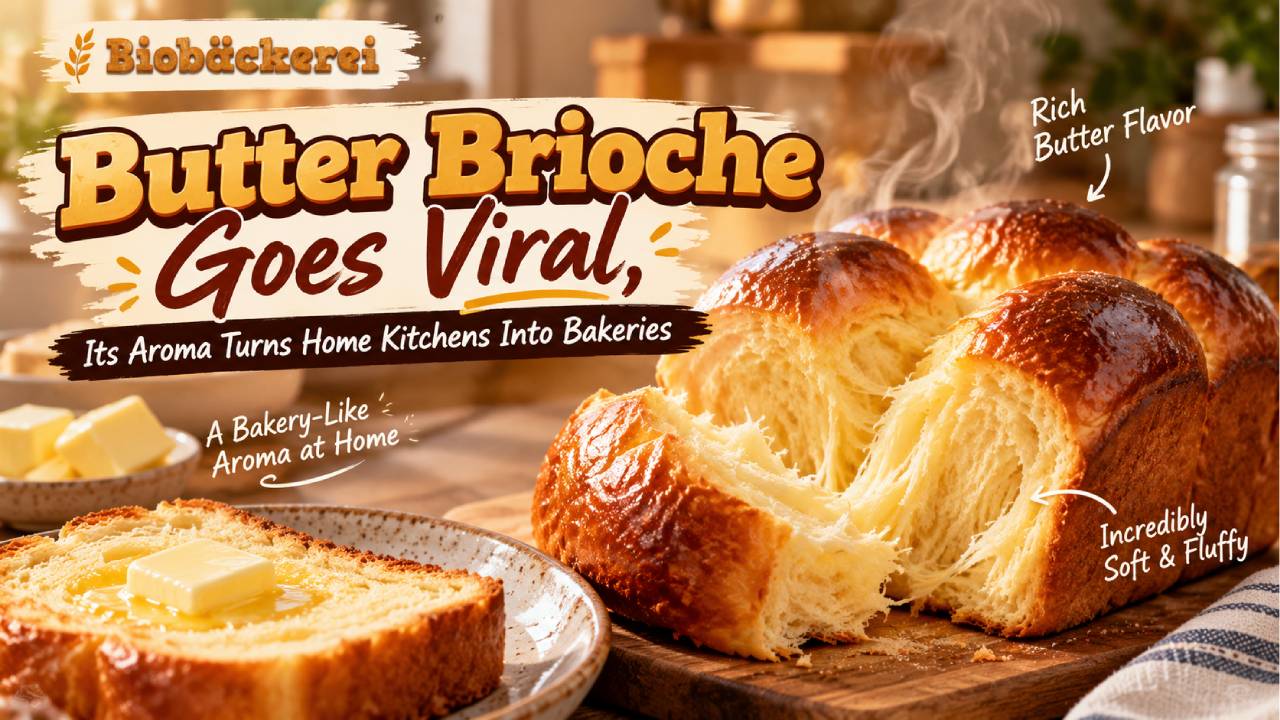
Butter Brioche Goes Viral, Its Aroma Turns Home Kitchens Into Bakeries
Biobaeckerei – Few breads create the same sense of comfort as freshly baked Butter Brioche. The French bread stands out because its dough contains generous amounts of butter and eggs. As a result, the crumb feels tender, rich, and almost cake-like. Its golden crust also makes the bread instantly appealing when it leaves the oven. More importantly, the aroma can transform an ordinary kitchen into something that feels like a small neighborhood bakery. That experience helps explain why brioche works so well in modern food content. Videos showing glossy dough, soft layers, and bread being pulled apart are naturally satisfying to watch. However, the appeal goes beyond appearance. Brioche combines familiar ingredients with a technique that feels rewarding to master. Therefore, home bakers can enjoy both the baking process and the final result. Whether served plain or toasted, a well-made loaf delivers a buttery flavor without needing complicated toppings.
Read Also: Creamy Miso Caramel Pudding with a Rich Umami Twist
Why Butter Makes Brioche Different From Regular Bread
Traditional lean bread usually depends on flour, water, yeast, and salt. Brioche takes a different approach. It belongs to the family of enriched breads because the dough includes eggs, butter, and often milk and sugar. These ingredients change both flavor and texture. Butter adds richness while coating parts of the flour structure with fat. Meanwhile, eggs contribute moisture, color, fat, and protein. Sugar brings mild sweetness and also supports browning during baking. Therefore, finished brioche feels noticeably softer than a basic white loaf. However, the extra fat also makes dough development more demanding. Bakers usually need to establish enough gluten before gradually incorporating softened butter. If too much butter enters weak dough too quickly, the mixture can become greasy and difficult to handle. For this reason, patience matters. A successful brioche dough eventually becomes smooth, elastic, and supple. That transformation is one of the most satisfying parts of making Butter Brioche at home.
The Bakery-Like Aroma Starts Before the Loaf Is Finished
The fragrance of brioche is more than a pleasant side effect. Several ingredients contribute to the aroma that fills the kitchen during baking. Butter provides creamy and dairy-rich notes. Meanwhile, fermentation produces additional aromatic compounds as yeast works through the dough. Once the loaf enters the oven, heat triggers further changes. The crust develops through browning reactions, including the Maillard reaction, which occurs between amino acids and reducing sugars. Caramelization can also contribute to the finished aroma and color. Together, these processes create toasted, nutty, buttery, and lightly sweet notes. That is why the smell becomes especially noticeable toward the final stage of baking. In my view, this sensory experience is one reason enriched breads remain so memorable. People often notice the fragrance before they even see the finished loaf. Therefore, homemade brioche offers more than texture and flavor. It creates an atmosphere that can make a home kitchen feel remarkably close to a professional bakery.
Proper Gluten Development Creates the Signature Soft Crumb
A rich ingredient list alone cannot guarantee good brioche. Technique remains essential, especially during mixing. Flour proteins need enough hydration and mechanical work to build a gluten network. That structure later traps gas produced during fermentation. Consequently, the dough expands instead of collapsing. Because brioche contains plenty of fat, bakers often develop the dough before adding all the butter. The butter should also be soft enough to blend smoothly, but it should not be melted. Gradual incorporation helps maintain the dough structure. After sufficient mixing, the dough should appear smoother and more elastic. A small piece can often stretch into a thin membrane before tearing. Bakers commonly call this the windowpane test. Still, temperature deserves attention. Excessive mixing can warm the dough and soften the butter too much. Therefore, stopping briefly when the dough becomes overly warm can help. Careful gluten development ultimately produces the light, shreddable crumb associated with excellent Butter Brioche.
Slow Fermentation Can Make Brioche Easier to Handle
Time can become a valuable ingredient when making brioche. After the initial fermentation, many bakers refrigerate the enriched dough before shaping it. This step offers several practical advantages. First, cold butter becomes firmer. Consequently, the dough feels less sticky and easier to divide or shape. Second, extended fermentation can contribute to a more developed flavor. However, fermentation time depends on yeast quantity, dough temperature, and refrigerator conditions. Therefore, the dough itself should guide the baker rather than the clock alone. Chilling also makes elaborate shapes easier to produce. Braids, rolls, buns, and traditional brioche forms become more manageable when the dough is cool. Once shaped, the bread needs a final proof before baking. Rushing this stage may produce a dense crumb. On the other hand, excessive proofing can weaken the structure. The ideal loaf should enter the oven visibly expanded while still retaining enough strength for additional oven spring.
A Golden Finish Makes Butter Brioche Irresistible
Appearance matters almost as much as texture when brioche reaches the oven. An egg wash is commonly brushed across the surface before baking. This coating encourages a glossy, deeply golden finish. However, applying it gently is important because aggressive brushing can deflate delicate proofed dough. Oven temperature also deserves attention. If the heat is too intense, the crust may darken before the center finishes baking. Conversely, insufficient heat can leave the loaf pale and underdeveloped. The exact baking time depends on the size and shape of the bread. Small brioche buns naturally bake faster than a large loaf. Therefore, visual cues should work alongside temperature and timing. A finished brioche should have a well-browned exterior and a fully baked center. After baking, patience remains useful. Cutting into the loaf immediately can compress the hot crumb. Allowing it to cool helps the interior stabilize while preserving its soft and delicate structure.
Butter Brioche Works Far Beyond the Breakfast Table
Although Butter Brioche feels luxurious on its own, its versatility makes it even more useful. Fresh slices pair naturally with butter, fruit preserves, or honey. Toasting brings another layer of flavor because the surface becomes crisp while the center stays tender. Brioche is also a classic choice for French toast. Its enriched crumb absorbs a custard mixture well while maintaining enough structure during cooking. Moreover, brioche buns work beautifully for sandwiches and burgers when a softer bread is desired. Slightly stale slices do not need to go to waste either. They can become bread pudding or other baked desserts. This versatility gives home bakers several ways to use one batch. However, balance remains important when pairing brioche with rich fillings. Since the bread already contains butter and eggs, simple accompaniments often work especially well. Fresh fruit, lightly salted butter, or a modest layer of jam can complement its flavor without overwhelming the bread itself.
Simple Details Separate Good Brioche From Great Brioche
The best brioche usually comes from careful execution rather than complicated ingredients. Accurate weighing helps maintain consistency because enriched dough can react noticeably to small changes in flour or liquid. Ingredient temperature also matters. Butter that is too cold may resist incorporation, while melted butter can change the dough’s structure. In addition, bakers should avoid adding excessive flour simply because the dough initially feels sticky. Brioche naturally starts softer than many lean breads. As gluten develops, the texture becomes easier to manage. Fermentation also requires observation. A warm kitchen can accelerate yeast activity, while a cool room may slow it down. Therefore, recipes should be treated as guides rather than rigid timers. These details explain why brioche rewards practice. Each batch teaches the baker something about dough texture, temperature, and fermentation. When those elements come together, Butter Brioche delivers the qualities people love most: a glossy crust, delicate crumb, rich flavor, and an unforgettable bakery-like aroma.
