Sprinkle Embroidery Cake Goes Viral as Cake Decorating Gets More Creative
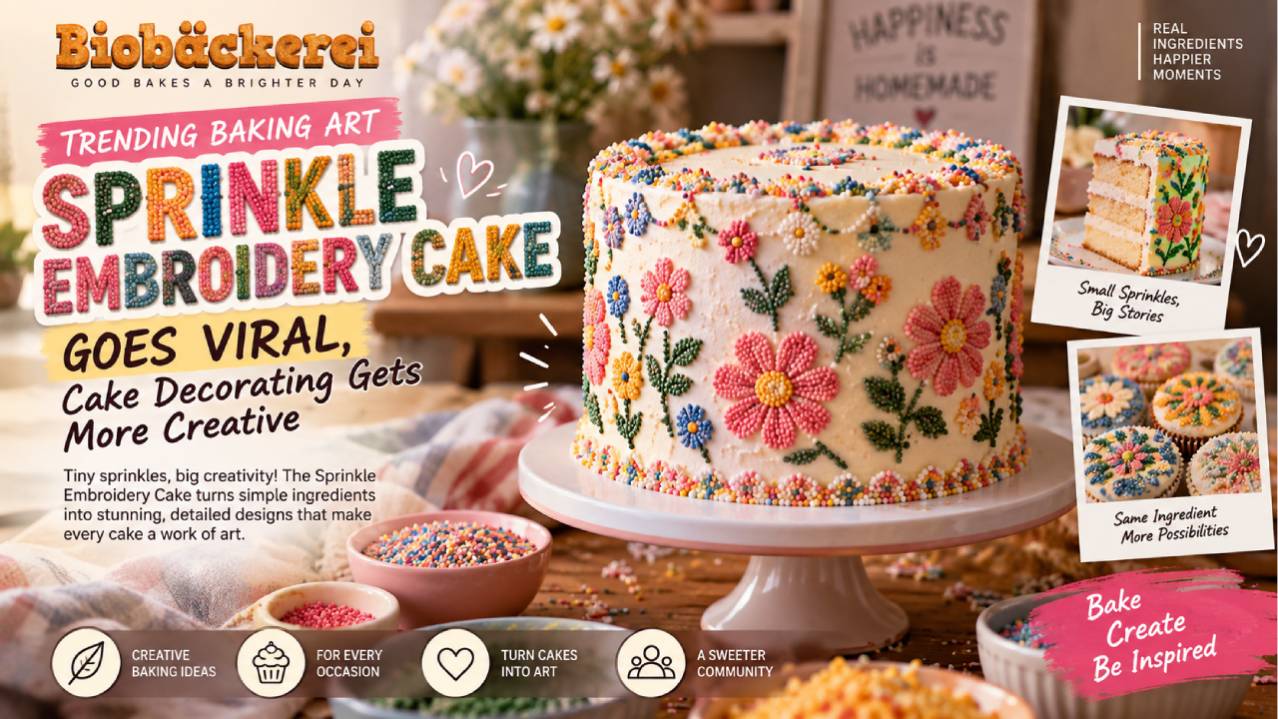
Biobaeckerei – A cake can taste delicious, yet its appearance often creates the first impression. That idea is especially clear with Sprinkle Embroidery Cake, a decorative style that uses tiny sprinkles to build detailed patterns. Instead of scattering decorations randomly, bakers arrange them with greater control. As a result, the surface can resemble embroidered fabric, mosaics, or intricate beadwork. Floral shapes work particularly well because different sprinkle colors can define petals, leaves, and borders. Moreover, the technique combines familiar baking materials with a more artistic approach. The cake remains recognizable as a celebration dessert. However, its carefully arranged surface gives it the character of a handmade art piece. This balance between food and visual craft explains why the concept fits naturally into today’s highly visual baking culture.
Read Also: Halloween Chocolate Cake, The Perfect Sweet Treat for a Spooky Night
The Embroidery Effect Comes From Careful Placement
The word “embroidery” describes the visual result rather than actual textile work. Bakers first prepare a smooth frosting surface. Then, they create a pattern that acts as a guide. Small sprinkles, sugar pearls, or other edible decorations can follow those lines. Consequently, clusters of color begin to resemble stitched details. The process requires patience because random placement will not produce the same effect. A fine pair of food-safe tweezers can provide greater control for intricate areas. Meanwhile, larger sections can use slightly bigger decorative pieces. Contrast also matters. Bright decorations stand out clearly against white or pale buttercream. On darker frosting, lighter and metallic-looking sugar decorations can create stronger definition. Therefore, planning the color palette before decorating can make the finished design feel more cohesive.
Social Media Makes Detailed Cakes Easy to Notice
Highly visual desserts have an obvious advantage on short-form video platforms. Viewers can understand the transformation without needing a long explanation. First, they see a plain cake. Next, small decorations gradually form a pattern. Finally, the finished design reveals an intricate surface. That progression works naturally for time-lapse and close-up videos. However, describing every popular cake as “viral” can be misleading without platform-specific engagement data. It is more accurate to say that detailed decorating techniques are well suited to visual social media. They provide satisfying transformation footage and strong final images. In addition, viewers can easily adapt the concept using different colors or motifs. This repeatability helps decorative ideas circulate between home bakers, professional decorators, and food-content creators.
Floral Patterns Give the Technique an Embroidered Character
Flowers are a natural match for Sprinkle Embroidery Cake because botanical designs already have a long history in decorative arts. A baker can create a central flower and build smaller elements around it. Different sprinkle shapes can represent petals, stems, leaves, and tiny buds. Meanwhile, carefully spaced dots can imitate decorative stitching. The cake does not need to become completely covered. In fact, leaving areas of clean frosting can make detailed sections appear more sophisticated. A border around the top edge is another practical option. Alternatively, bakers can create one statement motif on the side of the cake. These approaches reduce visual clutter while preserving the embroidery effect. Most importantly, the pattern should remain readable from a normal viewing distance. Tiny details are impressive, but a strong overall composition gives the design greater impact.
Buttercream Creates a Practical Canvas for Decoration
A stable surface makes detailed sprinkle placement much easier. Buttercream is useful because decorators can smooth it while still leaving enough tackiness for decorations to adhere. However, the exact working time depends on the frosting recipe and room temperature. Therefore, bakers should test a small section before covering the entire cake. If the surface becomes too firm, sprinkles may not attach easily. Conversely, very soft frosting can shift when pressure is applied. A chilled cake can also provide greater stability during detailed work, although the surface must still accept the decorations. Another option is to pipe small buttercream details first. Sprinkles can then be pressed into those shapes to add texture. This method creates more depth than placing everything directly onto a flat surface.
Color Planning Can Turn a Simple Cake Into a Statement Piece
Color is one of the strongest elements in this decorating style. A limited palette often produces a cleaner result than using every available sprinkle. For example, pink, red, and green can create a botanical theme. Blue and white can produce a porcelain-inspired appearance. Meanwhile, pastel combinations work well for birthdays and spring celebrations. The base frosting also influences the final effect. Neutral buttercream allows colorful decorations to dominate. On the other hand, a tinted base can create a more dramatic composition. Bakers should also consider the cake’s purpose. A children’s celebration may suit brighter colors, while a wedding design might use softer shades and delicate pearls. Therefore, Sprinkle Embroidery Cake can adapt to different occasions without losing its distinctive handcrafted character.
Texture Makes the Cake Interesting From Every Angle
Traditional smooth cakes rely heavily on piping, flowers, or toppers for visual depth. Sprinkle embroidery adds texture directly to the cake’s surface. When light reaches the tiny sugar pieces, shadows and highlights make the pattern more dimensional. Different sprinkle sizes can strengthen that effect. However, balance remains important. Large decorations can overpower fine motifs, while pieces that are too small may disappear from a distance. Mixing shapes strategically usually works better than combining them without a plan. For instance, long sprinkles can create lines. Small pearls can define centers or borders. Flat confetti sprinkles can fill larger areas. Together, those components give bakers a wider visual vocabulary. As a result, the cake can look detailed from nearby while maintaining a clear design from across the table.
Home Bakers Can Start With a Simple Pattern
Beginners do not need to create an elaborate cake on their first attempt. A small floral border provides an easier starting point. First, frost and smooth the cake. Next, lightly mark the intended pattern without cutting deeply into the frosting. Then, work on one section at a time. Place larger decorative pieces before filling gaps with smaller ones. This order helps maintain the main shape. In addition, keep unused sprinkles separated by color and size. That preparation reduces interruptions during decorating. Food-safe tweezers can help with precise placement, but simple designs may also be completed carefully by hand. Above all, avoid rushing. The visual appeal comes from deliberate placement. Therefore, a smaller, tidy design often looks better than an ambitious pattern completed without enough control.
Creative Cake Decorating Is Moving Toward Personal Expression
The appeal of Sprinkle Embroidery Cake reflects a broader idea in modern baking: decoration can express personality. Bakers increasingly treat the cake surface as a creative canvas. One person may choose vintage flowers, while another may prefer geometric patterns. Others can adapt colors to a wedding, birthday, or seasonal theme. Consequently, the technique does not require every cake to look identical. That flexibility is one of its strongest qualities. The materials are familiar, yet their arrangement can feel completely different. Moreover, the finished cake carries visible evidence of handwork. In a world filled with polished digital images, that handcrafted detail can feel especially appealing. Sprinkle embroidery therefore offers more than decoration. It turns a simple collection of colorful sugar pieces into a personalized design that celebrates both baking and creativity.
